
Tibet Travel Permits and Acclimatization: A 2026 Planning Guide
本页尚未提供您的语言版本,暂以英文原文展示。
Foreign travelers need a properly arranged Tibet visit, not just a flight to Lhasa. Start with the permit process and route approval, then choose a minimum 8-10 day itinerary with two calm nights in Lhasa before adding higher-altitude areas. Nationality, route and current policy all affect feasibility, so verify the exact case before paying for flights.
Foreign travelers need a properly arranged Tibet visit, not just a flight to Lhasa. Start with the permit process and route approval, then choose a minimum 8-10 day itinerary with two calm nights in Lhasa before adding higher-altitude areas. Nationality, route and current policy all affect feasibility, so verify the exact case before paying for flights.
A Tibetan travel permit is normally arranged through an authorized local operator and is tied to a guided itinerary, vehicle and traveler list. Additional permits may be required for specific regions. Do not assume that a standard China visa or visa-free entry automatically covers Tibet. Send clear passport details, nationality and full route to the operator early. Carry the original passport and permit documents, and avoid changing hotels or route without confirming that the paperwork remains valid.
A conservative first route is Lhasa for acclimatization, then a shorter cultural extension or a gradual move to lower-altitude valleys. Shigatse, Nyingchi and remote western areas have different road time, altitude and permit requirements. Do not schedule a high pass on the first day. A 10-day plan should leave room for rest, weather and acclimatization rather than matching every advertised highlight. Travelers with limited time should remove distance, not remove the acclimatization nights.
Spring through autumn is the main visitor window, but snow, road closures and local conditions can affect mountain routes. Winter can be quieter and clearer in some areas but colder and less flexible. Tibetan festivals change demand and transport. Build one weather day into any route beyond Lhasa and keep domestic flight or rail connections flexible. Verify current opening hours and permit lead times close to travel.
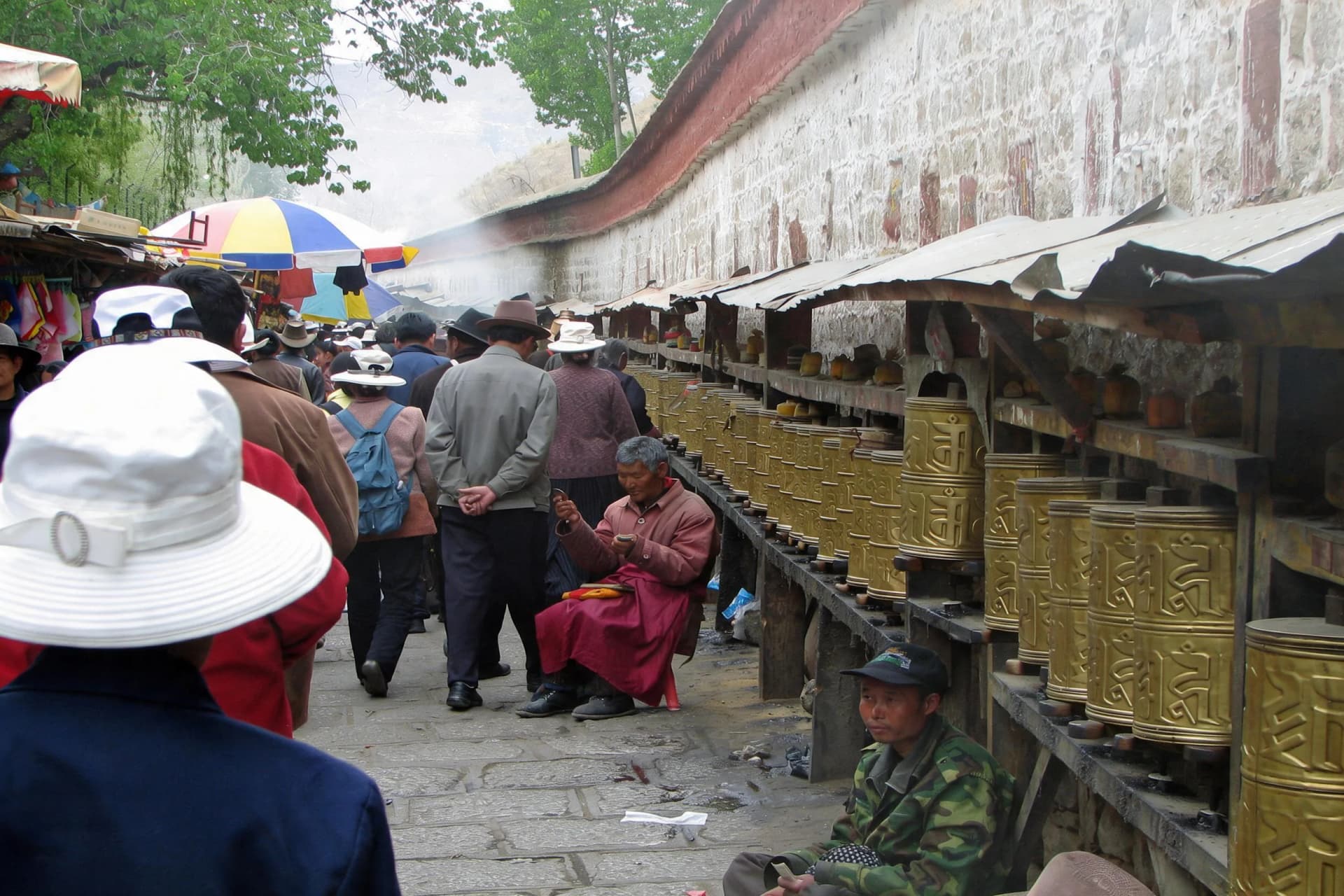
Barkhor and monasteries are active religious spaces, not backdrops. Walk clockwise where customary, avoid touching statues and do not photograph monks, worshippers or private ceremonies without permission. Dress modestly and ask before photographing children. Use a Tibetan or experienced local guide who can explain etiquette and avoid treating religious practice as a performance. Tourism income should be directed through legitimate local businesses rather than informal arrangements.
The main risks are invalid permits, unrealistic altitude plans and overambitious driving. Verify operator authorization, vehicle insurance and emergency support. Travel insurance should explicitly cover the planned altitude and medical evacuation; many standard policies exclude it. Keep a paper copy of emergency contacts and medication prescriptions. If Lhasa feels difficult on arrival, do not push to a higher remote region simply because the itinerary was prepaid.
Build the permit timeline backwards. The operator needs a complete passport image, occupation, route and dates before applying, and paperwork should be checked again before domestic flights or rail. Keep the itinerary stable after approval; changing cities or adding remote areas can require new arrangements.
Pack for strong sun, cold mornings and dry air, even in the same day. A wide-brim hat, lip balm, sunglasses and refillable bottle help, while a pulse oximeter can support monitoring if advised by a clinician but cannot replace medical judgment. Children and older travelers should follow the same gradual ascent and be assessed sooner if symptoms are unusual.
Build the transport plan around one realistic arrival, one primary route and one contingency. A short line on a map can become a half-day transfer in mountains, traffic or bad weather, so ask suppliers for door-to-door time rather than distance alone. Confirm luggage capacity, child-seat availability and whether the driver is licensed for commercial passengers. Avoid unprotected same-day connections between an international flight and a remote transfer; an overnight buffer near the airport or railway station is usually cheaper than rebuilding a disrupted itinerary.
Use a planning budget that separates transport, accommodation, tickets, food, guides and insurance. Customer-facing ChinaMira prices are shown in USD; if Alipay, WeChat Pay or bank transfer is selected, the relevant CNY amount appears at checkout or on the invoice in smaller type. Do not judge a service only by its headline price. Check inclusions, cancellation terms, guide language, vehicle age, medical support and emergency procedures. Pay through verified company channels and independently confirm any change of bank details.
Plan in a deliberate sequence: confirm the route and operating season, identify the city where permits or reservations must be handled, secure a licensed local operator in writing, then book transport and accommodation. Keep passport details consistent across every booking, save Chinese addresses offline and verify cancellation and weather terms before payment. Leave one recovery half-day after the main arrival and one buffer before departure; those blocks are more valuable than squeezing in another attraction.
实用信息
- Lhasa altitude
- Approximately 3,650 meters
- Suggested first visit
- 8-10 days with two calm Lhasa nights
- Permit dependency
- Passport, nationality, guide, vehicle and route
- Insurance check
- Confirm altitude and evacuation coverage
- Emergency numbers
- Police 110, ambulance 120, fire 119
常见问题
Can foreigners visit Tibet independently?
The practical requirement is an organized itinerary with authorized local arrangements and permits. Verify the current rule for your nationality and exact route before booking.
How many days should I allow for acclimatization in Lhasa?
Two calm nights is a conservative starting point. Travelers continuing above 4,000 meters should add gradual acclimatization rather than rushing higher.
Does travel insurance cover Tibet?
Not automatically. Check altitude limits, trekking or remote-area exclusions and medical-evacuation coverage in writing.
继续探索
Plan with ChinaMira
Turn this into a trip
Use this guide as a starting point — we can handle the route, guides, trains and the visa invitation letter.