
Is China Safe for American Tourists? An Honest 2026 Answer
Yes, China is safe for American tourists in 2026 with ordinary big-city precautions. Mainland China sits at State Department Level 2: Exercise Increased Caution, the same tier as France and Germany, and its intentional homicide rate was 0.5 per 100,000 in 2020 versus 6.5 in the US in 2022. Visas cost $140; 240-hour transit is visa-free.
Yes, China is safe for American tourists in 2026, provided you stay in the ordinary tourist corridors and keep normal big-city precautions. Mainland China sits at State Department Level 2: Exercise Increased Caution, the same tier as France and Germany, and recorded 0.5 intentional homicides per 100,000 people in 2020, against 6.5 in the US in 2022.
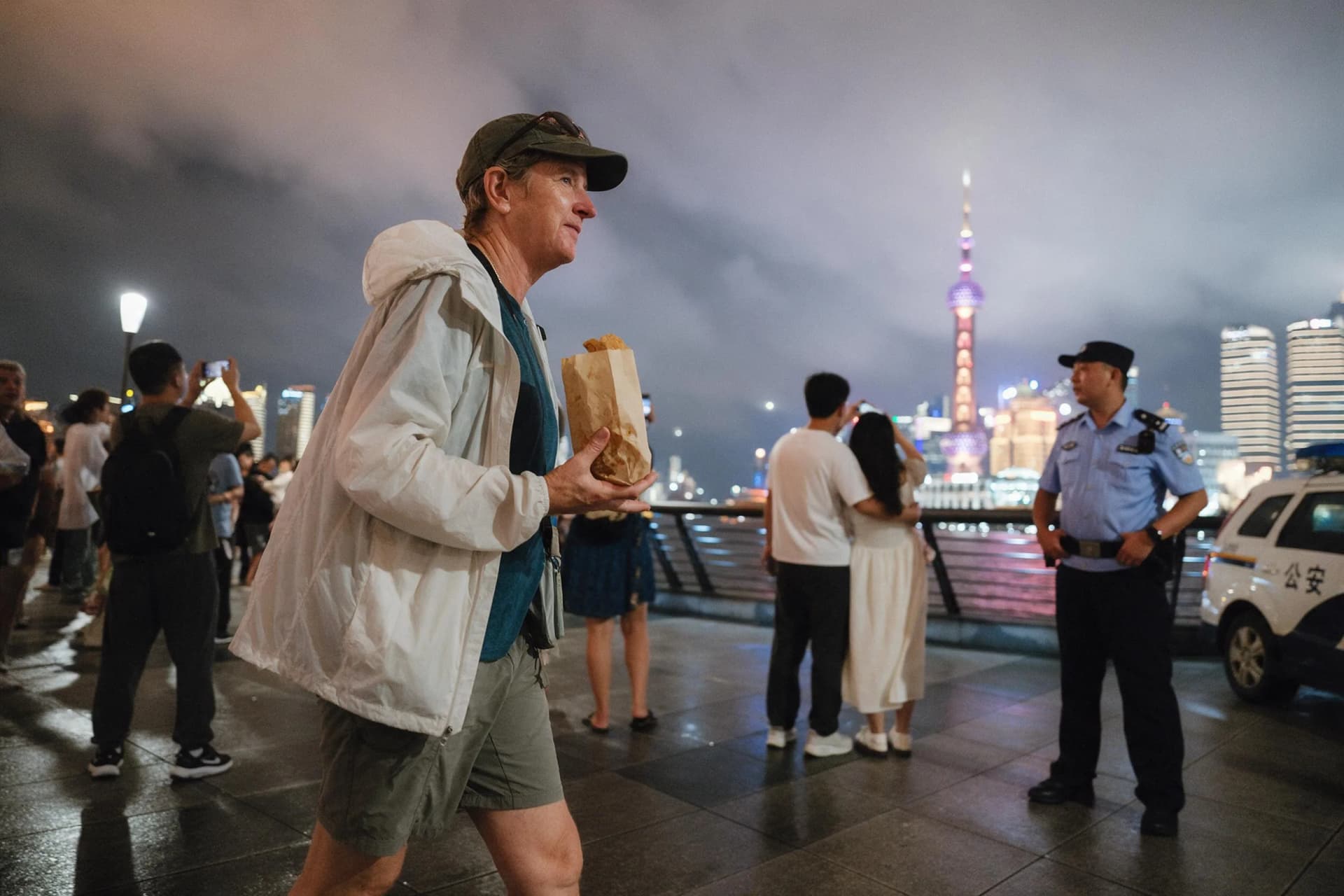
It is 9:40 p.m. on a wet September Tuesday in Shanghai, and you are walking back from the Bund with a paper bag of soup dumplings. The promenade is busy with couples taking photos, a cleaner hosing the pavement, and two officers chatting near a parked cruiser. Nobody looks twice at your backpack. That slightly boring, ordinary feeling is the honest texture of an American trip to China now, and the real risks yield to ten minutes of planning.
Start with what Washington actually says. The State Department keeps mainland China at Level 2: Exercise Increased Caution, matching France, Germany and the United Kingdom, and its advisory targets two narrow contexts: arbitrary enforcement of local laws, including exit bans, and restricted regions such as Xinjiang and the China-India frontier, which carry stronger area-specific warnings. None of that describes a week in Beijing, Shanghai, Xi'an or Chengdu. Read the advisory before you book, then treat it as a planning document rather than a verdict on the country.
The street-level picture is what surprises first-time visitors. China recorded 0.5 intentional homicides per 100,000 people in 2020, according to World Bank data drawn from UNODC, compared with 6.5 per 100,000 in the United States in 2022. Private gun ownership is effectively nil, and violent crime between strangers is rare enough that locals think nothing of walking home at midnight or leaving a phone on a cafe table. As a visibly foreign visitor you will draw curiosity and the occasional selfie request, especially in smaller cities, not aggression. Solo women travelers consistently describe harassment as less common than in many Western cities.
The genuine dangers are mundane. Traffic tops the list: electric scooters are silent, fast and often ignore red lights, sometimes riding on sidewalks, so look both ways even on a one-way street. Petty theft happens in crowds, so keep your phone in a front pocket on the Shanghai or Beijing metro at rush hour. The classic scam is the tea-house or art-student invitation near Tiananmen Square and the Bund, where a stranger steers you into an overpriced "cultural experience"; walking away costs nothing. Tap water is never drinkable in mainland China, street food is safer than its reputation when cooked hot and busy, and Beijing's winter air turns gray and gritty from December into January.
Load the practical numbers into your phone before departure. Police is 110, fire is 119, ambulance is 120 and traffic police is 122; English-speaking operators are not guaranteed, so save your hotel address in Chinese characters. China's 24-hour consular protection hotline, 12308, takes calls from foreigners, and the US Embassy in Beijing handles American Citizen Services at +86 10 8531 3000. The CDC recommends routine vaccines plus hepatitis A and typhoid, with a global measles precaution notice in place since May 28, 2025. Insurance is cheap: a 7-day 2026 Asia policy for a 30-year-old ran from $16 with Trip.com to $42 with SafetyWing and $93 with World Nomads, and medical evacuation matters most. Hospitals frequently ask for payment or a guarantee before treatment.
Paperwork matters more than street smarts. A US tourist visa costs a flat $140 for regular service, and the consulate fee table is valid through December 31, 2026; express adds $25 and rush adds $37. Because the 10-year multiple-entry L visa costs the same as a single entry, ask for it. If you are only passing through to a third country, the 240-hour visa-free transit policy, in force since December 17, 2024, lets US passport holders stay up to 10 days through 60 ports across 24 provinces. Hotels register your stay, but a private apartment means registering at a local police station within 24 hours. Carry your passport; it is the one document officers may ask to see.
Two habits keep a trip smooth. First, respect the rules you can and cannot see: do not photograph military sites, police officers or border areas, and avoid political arguments with strangers. Second, accept that China runs on phones. Add a foreign card to Alipay or WeChat Pay before you fly, and install a travel eSIM or working VPN if you rely on Google and WhatsApp. Police presence in tourist districts is heavy and cameras are everywhere, which most visitors experience as reassurance rather than surveillance, and it is a large part of why street crime stays so low.
None of this makes China risk-free; it makes China ordinary. Travelers who run into trouble usually break a simple rule: they overstay a transit exemption, ride a scooter without a helmet, or wander into a restricted region without permits. Handle the paperwork, insure the medical side, watch the traffic, and the country rewards you with the safest big-city streets most Americans will ever walk. Tell ChinaMira your dates and cities, and we will build the visa timeline, arrival plan and neighborhood safety notes into one itinerary.
Good to know
- State Department advisory (2026)
- Mainland China: Level 2, Exercise Increased Caution, the same tier as France, Germany and the UK; stronger area-specific warnings cover Xinjiang, the China-India border and other restricted regions (travel.state.gov, updated March 2026)
- Violent crime rate
- 0.5 intentional homicides per 100,000 people in China (2020, World Bank data from UNODC) versus 6.5 per 100,000 in the United States (2022)
- US tourist visa cost (2026)
- $140 flat fee for any number of entries, valid through December 31, 2026; express service adds $25 and rush adds $37; 10-year multiple-entry L visas have been issued to Americans since 2014
- 240-hour visa-free transit
- US passport holders transiting to a third country can stay up to 240 hours (10 days) through 60 ports in 24 provinces, in force since December 17, 2024
- Emergency and consular numbers
- 110 police, 119 fire, 120 ambulance, 122 traffic; 12308 24-hour consular protection hotline; US Embassy Beijing +86 10 8531 3000
- Travel insurance cost (2026)
- A 7-day Asia policy for a 30-year-old ranged from $16 (Trip.com) and $42 (SafetyWing) to $93 (World Nomads), with medical evacuation the priority coverage (Trip.com guide, June 15, 2026)
Frequently asked questions
Is China safe for American tourists right now?
As of March 2026, mainland China is at State Department Level 2: Exercise Increased Caution, and the country recorded 0.5 intentional homicides per 100,000 people in 2020 against 6.5 per 100,000 in the United States in 2022. Violent crime against visitors is rare; traffic, tea-house scams and petty theft in crowds are the realistic risks.
Do US citizens need a visa to enter China in 2026?
For tourism, yes. A US tourist visa costs a flat $140 for regular service and the consulate fee table runs through December 31, 2026, with 10-year multiple-entry L visas available. If you are transiting to a third country, the 240-hour visa-free policy, effective December 17, 2024, gives US passport holders up to 10 days through 60 ports in 24 provinces.
What is the emergency number in China for Americans?
In China, dial 110 for police, 119 for fire, 120 for an ambulance and 122 for traffic accidents; English is not guaranteed. Save 12308, China's 24-hour consular protection hotline, and the US Embassy in Beijing at +86 10 8531 3000, with consulates in Shanghai, Guangzhou, Shenyang and Wuhan.
Is China safe for solo and female travelers?
Yes. In 2026, solo women describe China's big cities as calmer than most US downtowns after dark: homicides sit at 0.5 per 100,000, harassment is uncommon, and metro stations stay staffed until roughly 11 p.m. The practical cautions are unlicensed taxis outside stations, pickpockets on packed metro lines and silent electric scooters, not violent crime.
What are the biggest safety risks in China for tourists?
Traffic is the number one risk: electric scooters are silent, fast and often ignore red lights, including on sidewalks. After that come overpriced tea-house scams near Tiananmen Square, petty theft on packed metro lines, tap water that is never safe to drink, and Beijing winter air that can turn gray and gritty from December to January.
Keep exploring
Plan with ChinaMira
Turn this into a trip
Use this guide as a starting point — we can handle the route, guides, trains and the visa invitation letter.