
City Guide
Chengdu Travel Guide: Pandas, Teahouses and Slow Sichuan Days
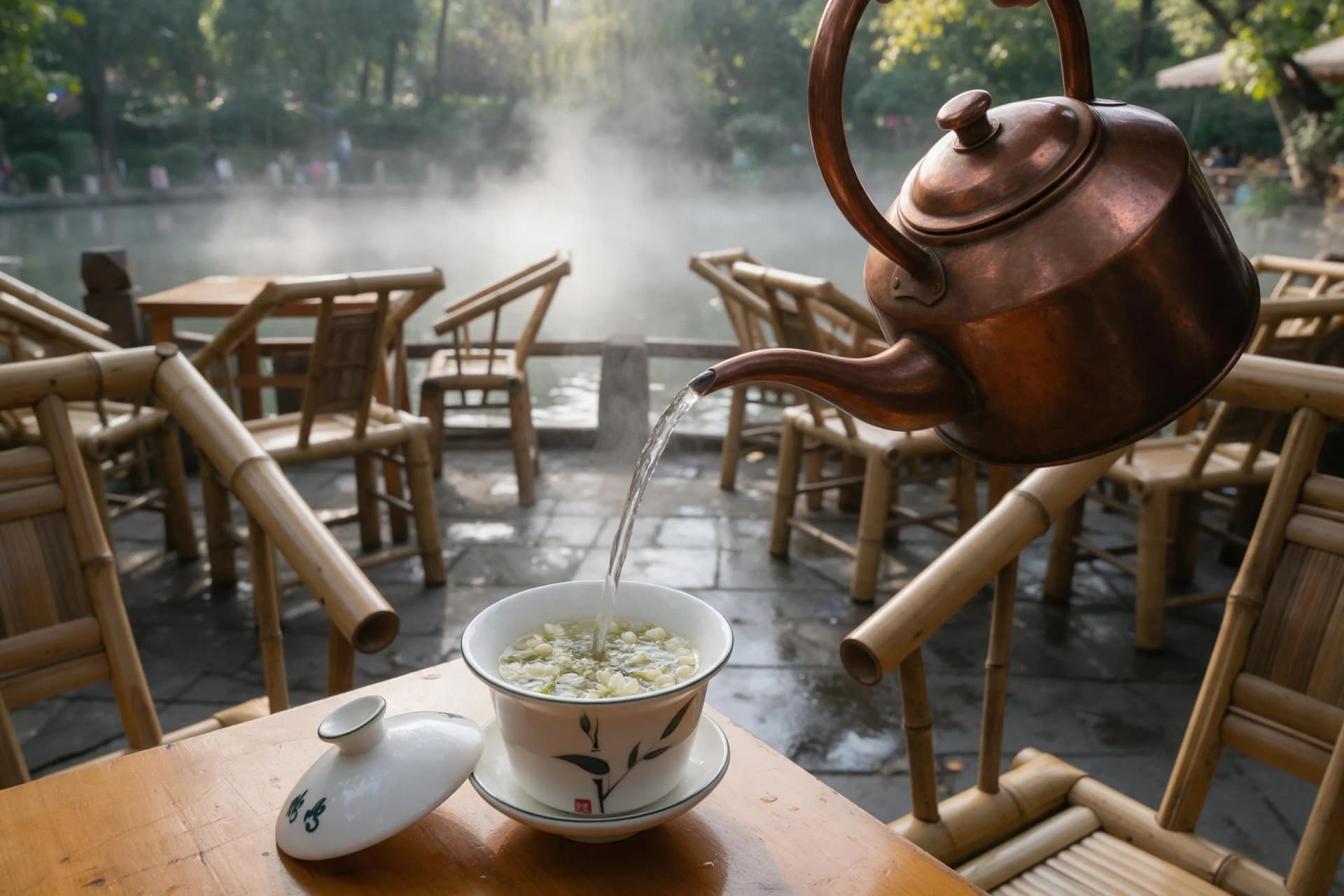
Chengdu is China's slow city: pandas at dawn, jasmine tea in People's Park and hotpot after dark. This guide covers when to visit, how to move between Tianfu and Shuangliu airports, where to eat in Yulin and Jianshe Road, and how to plan the Panda Base, teahouses and day trips to Dujiangyan and Leshan.
Chengdu does not rush. The capital of Sichuan Province spreads across the flat Chengdu Plain, home to more than 20 million people, yet its rhythm feels closer to a village square than a metropolis. You notice it first in the teahouses: retirees with covered cups, students with laptops, grandmothers watching ear cleaners work the crowd, everyone sharing the same shade. The city's old nickname, the Land of Abundance, comes from the irrigation works that still water these fields after two thousand years. Come expecting pandas, peppercorns and traffic; leave remembering the unhurried afternoons in between.
The obvious first stop is the Chengdu Research Base of Giant Panda Breeding in the northern Chenghua District. Pandas eat and play in the cool early hours, so aim to arrive at opening, around 7:30 a.m., and reserve your ticket online the night before — the base sells out in peak season and admission costs about 55 yuan. Follow the shaded loop past the cub nursery and the bamboo groves, and give yourself three hours. If you want thinner crowds and a chance to join a volunteer program, the Dujiangyan and Bifengxia bases are worth the extra drive.
Chengdu's teahouses are the city's living room. Heming Teahouse in People's Park is the classic: bamboo armchairs, a small lake busy with paddle boats, jasmine tea refilled from a long-spouted kettle for a few dozen yuan, and the click of mahjong tiles under the willows. Sit long enough and an ear cleaner will appear with tuning forks and a knowing smile. Nearby, Wenshu Monastery serves vegetarian meals and tea in a courtyard that stays cool even in August. Order a covered-cup gaiwan of jasmine or bamboo-leaf tea, and treat each free refill as an invitation to stay a little longer.
Then there is the food, the real reason many travelers never leave. Sichuan cooking is not only heat; it is ma (numbing) and la (spicy) built on Sichuan peppercorn, fermented bean paste and chili oil. Start with a hotpot dinner, where everyone cooks tripe, beef, tofu skin and lotus root in a bubbling pot of beef tallow, and ask for wei la, meaning mildly spicy, if you want to taste anything after the first bite. Chuanchuan skewers, dan dan noodles, mapo tofu and cold noodles in sesame sauce are cheaper and just as memorable. Yulin, Jianshe Road and the lanes around Kuanzhai Alley are reliable for a first night.
Between meals, Chengdu rewards slow wandering. Kuanzhai Alley pairs restored Qing-era courtyards with teahouses and cafes; Jinli and the Wuhou Shrine carry the Three Kingdoms stories; Qingcheng Mountain and the ancient Dujiangyan irrigation site make an easy day trip by high-speed train. In the evening, catch a Sichuan opera face-changing performance, then walk the illuminated banks of the Jin River. For the giant Buddha at Leshan, take an early train and book a return seat before you go.
Getting around is simpler than it looks. Chengdu has two airports: Shuangliu, close to town, and the vast Tianfu International about 50 kilometers southeast. Metro Line 18 links Tianfu with the city center in roughly an hour, Line 10 serves Shuangliu, and fares stay between 2 and 8 yuan. Download Alipay or WeChat Pay before you fly — nearly every stall, teahouse and ticket machine accepts a QR code, and foreign cards can be linked. DiDi handles taxis without Mandarin, and high-speed trains reach Chongqing in about an hour and Xi'an in three to four.
Stay near Tianfu Square or Chunxi Road for convenience, in Yulin if food is the priority, or beside the Panda Base if pandas are. Spring, from March to May, and autumn, from September to November, bring the kindest weather and the biggest crowds; summer is humid and busy, while winter is grey but quiet and cheap. Rain falls in every season, which is precisely when a teahouse makes the most sense.
Give Chengdu at least three full days — one for pandas, one for temples and alleys, one for eating — and keep a fourth open for whatever the city suggests. Book Panda Base tickets and high-speed rail seats early, pack layers for damp evenings, and arrive hungry. Chengdu rarely hurries, and it rewards travelers who do not either. Start with the teahouse, and let the city set the pace.
Good to know
- Airports
- Tianfu International (TFU) is about 50 km southeast, reached by Metro Line 18; Shuangliu (CTU) is closer and served by Metro Line 10.
- Metro fares
- 2 to 8 yuan per ride, roughly 6:30 a.m. to 11:00 p.m.; scan Alipay or WeChat Pay at the gate.
- Best months
- March to May and September to November for mild weather; expect rain in every season.
- Panda Base
- Chengdu Research Base of Giant Panda Breeding, Chenghua District; about 55 yuan, opens around 7:30 a.m.
- Language
- Mandarin with a strong Sichuan accent; English is limited outside hotels, airports and major sights.
- Tipping
- Not expected in restaurants, teahouses or taxis; service charges are rare.
Frequently asked questions
How many days do you need in Chengdu?
Three full days is a comfortable minimum: one morning for the Panda Base, one day for People's Park teahouses, Kuanzhai Alley and Wenshu Monastery, and one day for food and a Sichuan opera show. Add a fourth or fifth day for Leshan, Dujiangyan or Qingcheng Mountain.
Is Chengdu easy to visit if you do not speak Chinese?
Yes. The metro, airport and major sights are signed in English, Alipay and WeChat Pay remove most cash problems, and DiDi lets you book taxis by map pin. English is limited in small restaurants, so keep a translation app and photos of dishes you want to order.
What is the best time of year to visit Chengdu?
March to May and September to November offer the mildest temperatures and the clearest days, though they are also the busiest. Summer is hot and humid, and winter is cool, grey and damp but much quieter, with cheaper hotels and shorter queues.
Should you book Panda Base tickets in advance?
Yes. Tickets sell out during holidays, weekends and school breaks, and daily visitor numbers are capped. Reserve online the night before, arrive at opening around 7:30 a.m. when the pandas are active, and bring your passport, since it is checked at the gate.