
City Guide
Chongqing Travel Guide: Welcome to China's 8D Mountain City
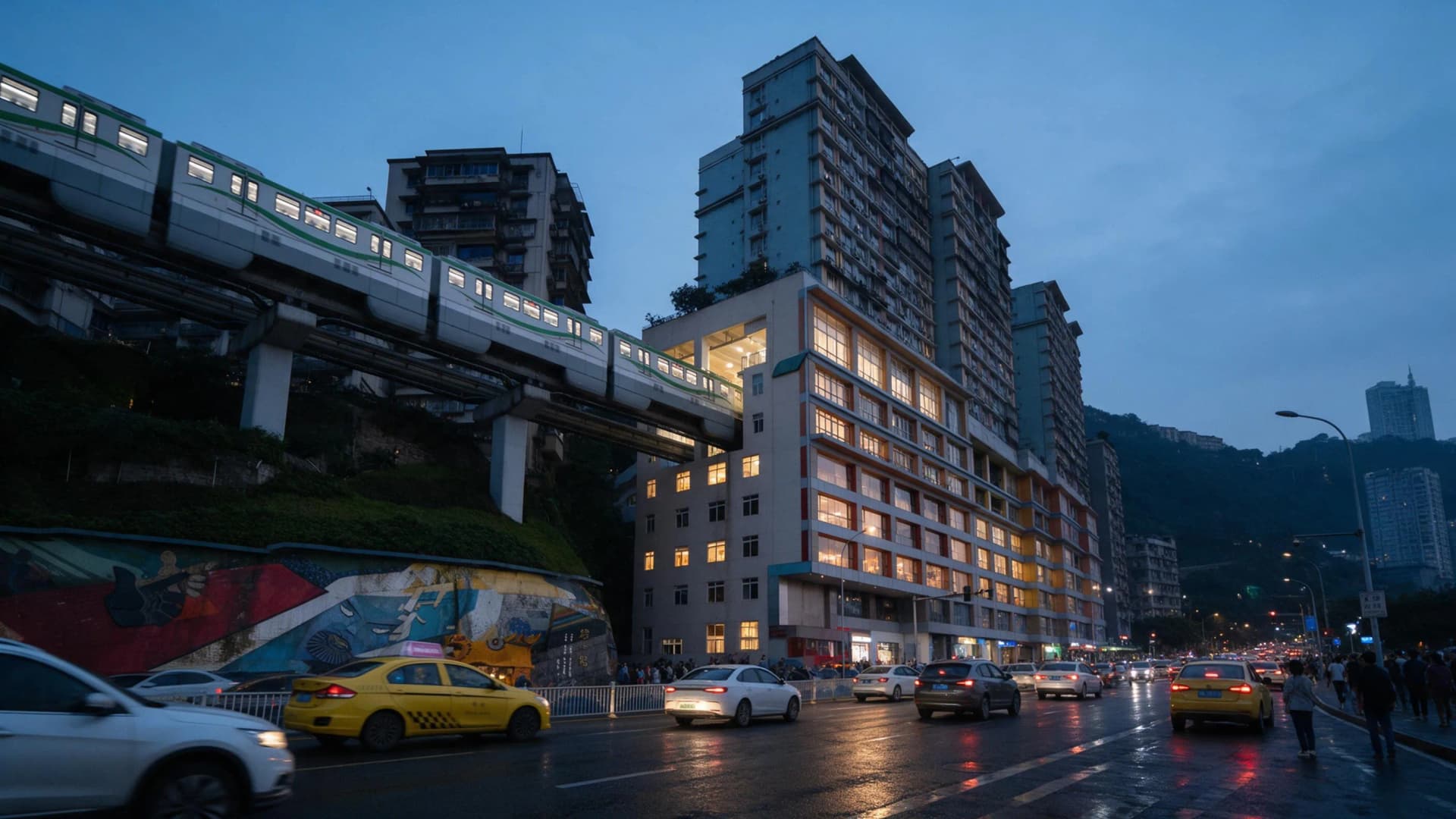
Chongqing, China's sprawling 'Mountain City' where the Yangtze and Jialing Rivers meet, rewards travelers who embrace its vertigo-inducing layers. This guide covers the stilted alleys of Hongya Cave, the monorail that tunnels through an apartment block, the city's legendary hotpot, and the best times to visit.
Some cities introduce themselves with a single postcard view. Chongqing, China's largest municipality and home to more than thirty million people, introduces itself with a dare: a tangle of bridges, elevators, and skyways stacked up steep hillsides where the Yangtze and Jialing Rivers meet. Locals call it the Mountain City, while travelers have adopted a newer nickname: the '8D' city, because its streets fold over one another like a science-fiction set that somehow runs on real life. Arrive expecting disorientation, and you will leave charmed by it.
The secret to enjoying Chongqing is letting go of the idea that streets should behave. Because the city center climbs the hillside in tiers, buildings that look three blocks apart on a map may actually be forty floors apart in reality. Pedestrians walk out of an eleventh-floor lobby and find themselves at street level again; elevators and cable cars are ordinary commuting tools, not tourist attractions. This is why the city feels so cinematic by day and positively electric after dark, when the lights of each layer switch on and the whole mountainside seems to hover above the river.
Begin downtown in Jiefangbei, the walking street at the heart of the old city, then follow the crowds downhill as sunset approaches. By dusk you will be standing in front of Hongya Cave, a fantasy of gold-lit stilt houses stacked eleven stories high along the Jialing waterfront. Despite the name, it is less a cave than a cliff-hugging re-creation of the old Ba-yu river town, full of teahouses, craft stalls, and balconies made for watching boats trace the confluence of the two rivers. Come back after dark and the reflections shimmer; bring your widest lens.
No visit is complete without riding the city's transport, which doubles as the city's greatest show. At Liziba Station, Line 2's monorail glides straight through the middle of a residential apartment building, and a dedicated observation platform lets you watch commuters and tourists alike pop out of a wall of windows. Then cross the river the old-fashioned way on the Yangtze River Cableway, a yellow gondola that has ferried people over the water since 1987 and now floats you above rooftops and freighters. Even an ordinary ride on Line 2 along the river cliffs feels like sightseeing, so grab a window seat and let Chongqing do the driving.
After all that fresh air, Chongqing's famous hotpot will reset your sense of adventure. Born more than a century ago among the boatmen and dockworkers of the river wharves, the city's fire-red broth is a shared pot of history: sliced beef and tripe, lotus root, and greens cooked at the table until your face flushes and your spirit lifts. Order the classic nine-grid pot if you want to share without losing your ingredients, and choose the milder broth if you are spice-shy. Some of the best meals happen in hillside bunkers carved out during the war years, now steamy, crowded hotpot halls. Pair it all with a bowl of xiaomian, the city's beloved peppery noodles, and you understand why locals call Chongqing the hotpot capital of China.
For a quieter day, wander Ciqikou Ancient Town on the Jialing's bank, where stone lanes wind past chipped-tile roofs, fudge vendors, and teahouses pouring jasmine since before the skyscrapers rose. Meander Shancheng Alley's stilted walkways for the classic climb-up-the-mountain experience, or visit the Three Gorges Museum to understand the river that built this region. In late autumn, look for golden ginkgo trees at Baolun Temple in Ciqikou; in spring, Eling Park's cherry blossoms and river panoramas are worth the climb.
When you are ready to trade neon for nature, Chongqing's outlying wonders deserve at least two extra days. The Dazu Rock Carvings, a UNESCO World Heritage site about two hours away, hold more than fifty thousand Buddhist sculptures carved into cliff faces over a thousand years ago. Head south for the dramatic karst landscapes of Wulong, where the Three Natural Bridges — vast limestone arches that have starred in Chinese blockbuster films — tower over emerald gorges. For the classic Chinese journey, continue from Chongqing's port down the Yangtze through the Three Gorges, a multi-day cruise that has moved poets and travelers for centuries.
Plan for spring (March to May) or autumn (September to November), when the humidity eases and the light is kind; Chongqing's summers can push past 40°C (104°F), and its famous winter fog, while atmospheric, can swallow the skyline. Pack comfortable walking shoes — the city is one giant staircase — and carry an umbrella even in the dry months. Chinese ride-hailing and metro apps work smoothly, and most hotels sit within easy reach of Line 1 or Line 2. Just remember: when your map insists the riverside is one block away, trust the stairs, not the screen.
Chongqing rarely looks like the picture you imagined, and that is exactly its gift. It asks you to slow down, get a little lost, share a boiling pot with strangers, and look up often. When you are ready to plan your own climb through the Mountain City — whether it is three days of lantern-lit alleys or a week that ends on a Yangtze cruise — our China travel specialists will shape an itinerary around your pace, your appetite, and your sense of adventure. The city is waiting, at a thousand different elevations.
Good to know
- Best time to visit
- March-May and October-November bring 15-25 degrees C days and the clearest river views. July-August tops 40 degrees C with heavy humidity; December-February is grey, foggy and cheapest, with shorter queues. Avoid Golden Week (1-7 October) and Chinese New Year, when hotels and trains sell out.
- Getting there
- Jiangbei International (CKG) is about 25 km northeast; Metro Line 10 reaches the centre in roughly 35 minutes for CNY 7, and a metered taxi costs about CNY 80-120. Chengdu is 1-2 hours away by high-speed rail, with second class from about CNY 154 on the fastest G trains.
- Getting around
- Metro and monorail fares are distance-based from CNY 2, and Line 2's elevated stretch through Liziba doubles as a sightseeing ride. The Yangtze River Cableway runs about 8 a.m.-10 p.m.; a five-minute crossing is CNY 30 one-way or CNY 50 round trip, and weekday queues are far shorter.
- Tickets and sights to budget for
- Hongya Cave entry is free and its lights come on around 6:30 p.m. The Dazu Rock Carvings are about 100 km west, a two-hour drive: Baoding Mountain costs CNY 115 peak and CNY 100 from December to February, Beishan CNY 70/50, and the combined ticket CNY 140/120.
- Hotpot, noodles and teahouse tea
- Allow CNY 50-100 per person for nine-grid hotpot; at Pei Jie Old Hot Pot by Hongya Cave, order maodu (beef tripe), beef aorta and sliced potato, and ask for the mild or split pot if needed. A bowl of xiaomian noodles costs CNY 8-15, and tea at Jiaotong Teahouse in Huangjueping is CNY 8 a cup.
- Visa and entry
- China's 240-hour (10-day) visa-free transit covers 55 nationalities arriving at Chongqing Jiangbei with a confirmed onward ticket to a third country or region and at least three months' passport validity remaining. Other travellers need a tourist (L) visa, so confirm current rules with China's National Immigration Administration before booking.
Frequently asked questions
How many days do you need in Chongqing?
Three full days is the sweet spot for downtown Chongqing: Jiefangbei and Hongya Cave, the Yangtze River Cableway, Liziba and at least one nine-grid hotpot dinner. Add a fourth day for the Dazu Rock Carvings, about a two-hour drive west, where the combined Baoding and Beishan ticket costs around CNY 140.
When is the best time to visit Chongqing?
March to May and October to November are the comfortable windows, with daytime highs mostly 15-25 degrees C and clearer views from the cableway. July and August regularly push past 40 degrees C with heavy humidity, while December to February is grey and foggy but quiet, cheap and largely queue-free.
How do I get from Chongqing Jiangbei Airport to the city centre?
Jiangbei International (CKG) sits about 25 km northeast of the centre. Metro Line 10 reaches the city in roughly 35 minutes for CNY 7, or Line 3 runs to Lianglukou in about 45 minutes; a metered taxi takes 40-60 minutes and costs about CNY 80-120 depending on traffic.
How do I see the Chongqing monorail that runs through a building?
Ride Metro Line 2 to Liziba station and follow the signs to the viewing platform across the road, where the train slides through the middle floors of the apartment block roughly every 3-5 minutes during service, from about 6:30 a.m. to 10:30 p.m. It is free, and a train usually passes within a few minutes of arriving.
Do I need a visa to visit Chongqing?
Many travellers do not: China's 240-hour (10-day) visa-free transit covers 55 nationalities who arrive at Chongqing Jiangbei with a confirmed onward ticket to a third country or region. Everyone else needs a tourist (L) visa, so check the official NIA eligibility list before you book flights.