
City Guide
Hangzhou Travel Guide: West Lake, Tea Hills, and Slow Days
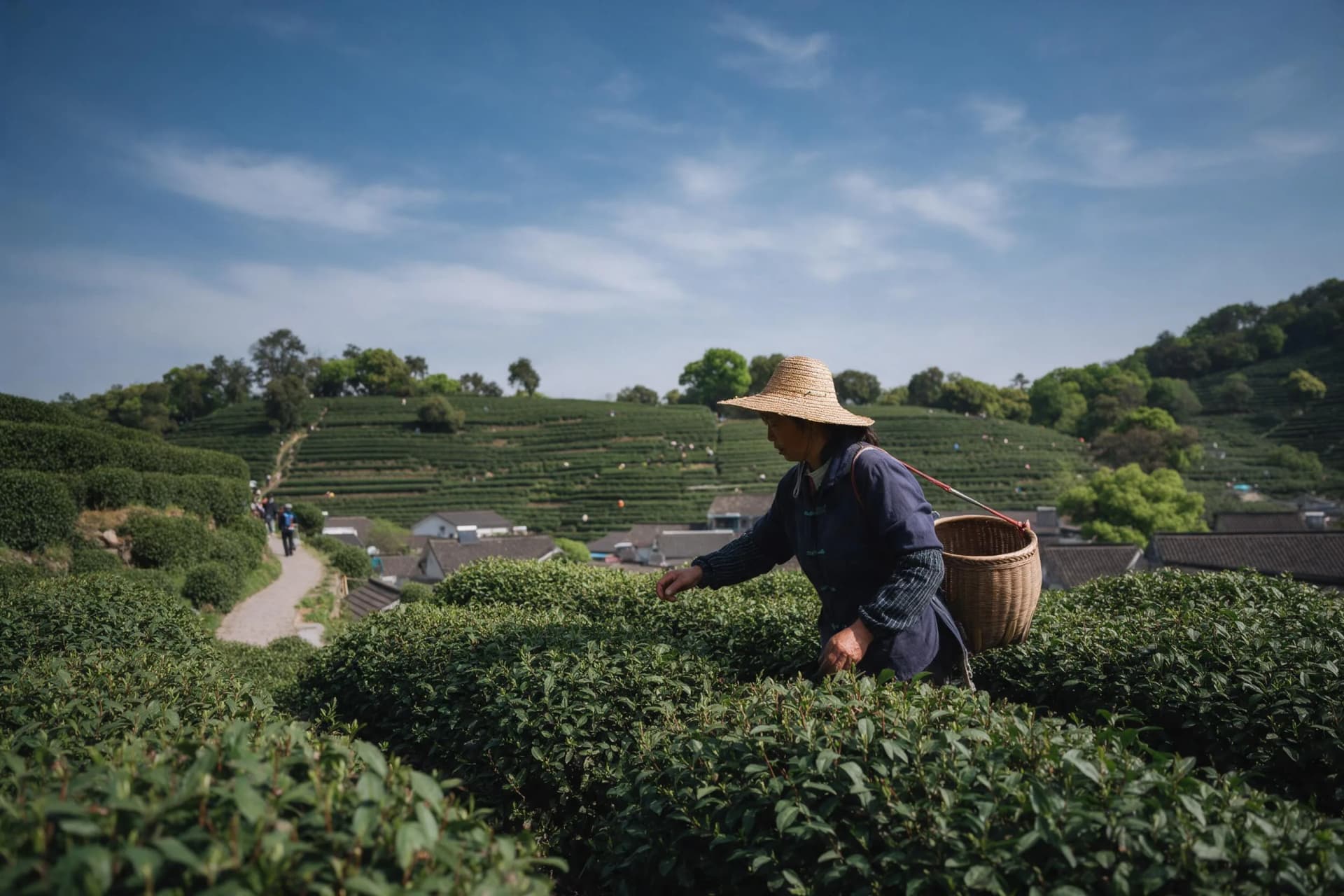
Hangzhou is the China that slows you down: a twelve-million-person city wrapped around a poet's lake, ringed by Longjing tea terraces and temple peaks. This guide covers West Lake at sunrise, tea tastings in Longjing and Meijiawu villages, Lingyin Temple and the Yunqi bamboo grove, the Grand Canal, and the noodle shops and teahouses locals love — plus when to come, how to arrive from Shanghai, and how many days you really need.
Hangzhou has been called heaven on earth for a thousand years, and the phrase still holds up. Capital of Zhejiang province at the head of Hangzhou Bay, this is a city of some twelve million people arranged around a lake that poets, monks, and emperors spent centuries perfecting. Tech companies and a humming modern skyline run the eastern districts, but the reason travelers keep coming back is softer: willow causeways at dawn, tea hills that smell of roasted chestnuts in April, and a pace of life that quietly asks you to slow down.
West Lake is the anchor of any Hangzhou itinerary, and UNESCO inscribed its cultural landscape in 2011 not for wilderness but for the rare beauty of a place shaped gently by human hands. It is free and open around the clock, which means the best hour costs nothing: walk the Su Causeway before 7 a.m., when mist lifts off the water and the hills stack up in layers of gray-green. Later, hire a hand-rowed wooden boat with a standing boatman and drift out to Xiaoyingzhou, the islet where three small stone pagodas rise from the shallows — the scene printed on the back of China's one-yuan note.
Then climb into the tea hills. Longjing, or Dragon Well, is China's most storied green tea, and these terraces have grown it since the eleventh century. In the villages of Longjing and Meijiawu, families still pick two leaves and a bud by hand and press them in a hot wok, filling the lanes with a smell like toasted chestnuts. Spring harvest, from late March through April, is the liveliest time, and the most prized batches are picked before Qingming Festival. Sit down for a tasting, learn how the leaves are poured, and buy from a farmer you have actually met rather than from a roadside stall.
Lingyin Temple, the Soul's Retreat, was founded in 328 AD by an Indian monk who looked at the surrounding peaks and decided the Buddhas belonged there. The approach passes Feilai Feng, the "peak that flew here," whose limestone cliffs are carved with hundreds of Buddhist figures dating back a thousand years. After the incense smoke and tour groups, decompress fifteen minutes away on the Yunqi Bamboo Path, an ancient grove of towering moso bamboo where the air runs several degrees cooler and the only sound is wind moving through the stalks — as close as Hangzhou comes to forest bathing.
History here runs deeper than the Song dynasty. The Grand Canal, UNESCO-listed in 2014, ends its long run from Beijing at Gongchen Bridge, and the neighborhoods along it still move at barge speed. South of there, the Southern Song Imperial Street — today's Zhongshan Middle Road — has been a shopping spine since the twelfth century, and Hefang Street nearby trades in folding fans, silk, scissors, and traditional medicine. For a much longer view, the Liangzhu Archaeological Site, inscribed in 2019, pushes the story of this river delta back five thousand years to a sophisticated jade-working culture.
Eat well, and eat slowly. Hangzhou cooking is gentle, faintly sweet, and built on freshwater ingredients: Dongpo pork braised until it collapses, West Lake vinegar fish, Longjing shrimp stir-fried with tea leaves, and pian'er chuan, a plain bowl of noodles with pickled greens and pork that locals eat for breakfast. Finish with a cup of Longjing at a lakeside teahouse, where refills are endless and nobody hurries you out. For a splurge, book one of the city's celebrated dining rooms; for an ordinary Tuesday, follow the students to a neighborhood noodle shop.
Getting there is easy. Hangzhou East Railway Station is 45 to 60 minutes from Shanghai by high-speed train, and Xiaoshan International Airport links to the city by metro. Around town the subway is clean and cheap; Line 1 drops you at Longxiangqiao, a few minutes' walk from the lake. Spring and autumn are the sweet spots — March to May for tea and blossom, late September to November for clear skies and osmanthus. Summer is hot and humid, winter gray but blissfully quiet. Two full days covers the lake, Lingyin, and a tea village; three lets you add the canal, a wetland park, or a day trip.
Come to Hangzhou for the lake and stay for the way the city exhales. Our ChinaMira specialists know which causeway is empty at sunrise, when the tea terraces are being picked, how to book a boatman who will actually talk with you, and how to slot Hangzhou between Shanghai, Suzhou, and the Yellow Mountains without losing a day to logistics. Send us your dates, your pace, and the things you love — tea, temples, photography, or simply unhurried mornings — and we will shape the itinerary around you.
Good to know
- Best time to visit
- Late March–May for tea and blossom; late September–November for clear, dry days
- Getting there
- 45–60 minutes by high-speed rail from Shanghai Hongqiao to Hangzhou East
- Local transport
- Metro Line 1 to Longxiangqiao, a short walk from West Lake's east shore
- Currency and payments
- Chinese yuan (CNY); Alipay and WeChat Pay are accepted almost everywhere
- Language
- Mandarin, with the Hangzhou dialect among locals; English is limited outside hotels
- Suggested stay
- Two to three nights, ideally spanning a weekday to avoid lake crowds
Frequently asked questions
How many days do you need in Hangzhou?
Two full days cover West Lake, Lingyin Temple, and a Longjing tea village at a relaxed pace. Add a third day for the Grand Canal, Xixi Wetland, or a day trip to Wuzhen or the Yellow Mountains.
What is the best time of year to visit Hangzhou?
Late March through May brings tea harvest, peach blossom, and mild weather, while late September through November offers clear, dry days and fragrant osmanthus. Summer is hot and humid; winter is cold but crowd-free.
Is West Lake free to visit?
Yes. West Lake and its causeways are free and open around the clock. You only pay for extras such as hand-rowed boats, the Xiaoyingzhou ferry, Leifeng Pagoda, and the surrounding gardens.
How do I get to Hangzhou from Shanghai?
Take a high-speed train from Shanghai Hongqiao or Shanghai South to Hangzhou East; the trip takes roughly 45 to 60 minutes, and trains run frequently throughout the day. From Hangzhou East, metro Line 1 reaches the lake area.