
Wonder Story
The Great Wall at Jinshanling
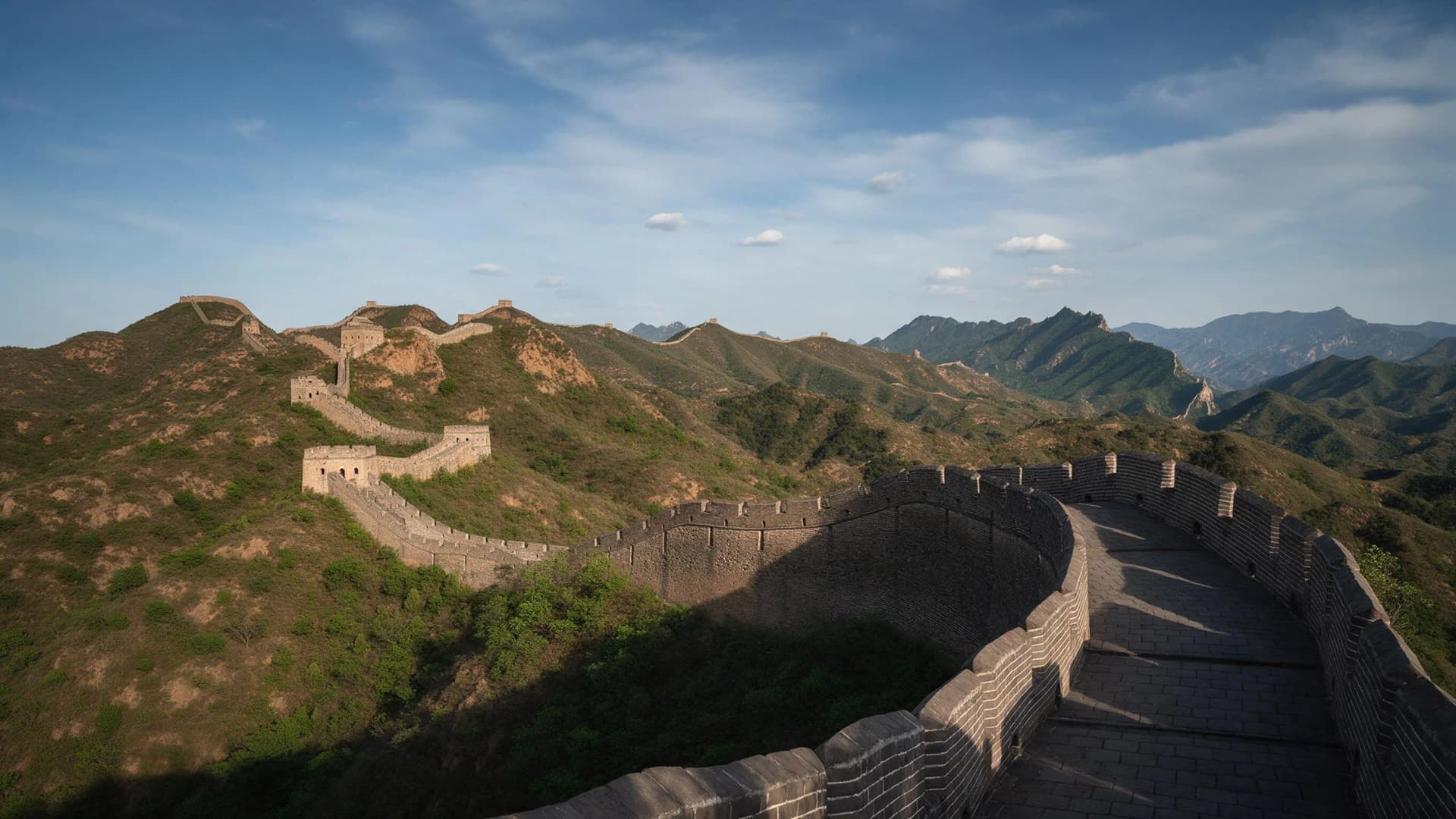
Jinshanling is the stretch of the Great Wall that still feels like a frontier: 67 Ming watchtowers strung across a 10.5-kilometer ridge about two and a half hours from Beijing, with a main gate that opens at 4 a.m. for sunrise. This is the story of Qi Jiguang's brick-and-mortar wall, the towers named for the people who built it, and the blossom, cloud seas, autumn leaves, and snow that transform it through the year, plus tickets, transport, and how to walk it well.
The gate at Jinshanling opens at four in the morning, and the first thing you notice is the quiet. No vendors, no loudspeakers, no queue. You climb in darkness with a headlamp, breath fogging, frost on the stone, until the ridge lightens and the wall appears in both directions at once: watchtower after watchtower marching away over the mountains. This is the stretch of the Great Wall that still feels like a frontier, and the early hour is the reason why.
Jinshanling runs about 10.5 kilometers, or 6.5 miles, across the mountains of Luanping County in Chengde, Hebei Province, roughly 130 kilometers northeast of Beijing, about a two-and-a-half-hour drive. The wall climbs and falls between Longyukou in the west and Wangjing Tower in the east, holding five passes, three beacon towers, and 67 watchtowers. It links to Simatai in the east and Gubeikou in the west. The western half has been carefully restored; the eastern half is left closer to how time made it, crumbling and grass-grown.
The wall here is Ming work, raised in stages. Ming forces under the general Xu Da fortified this frontier in 1383, and the section you walk today was largely rebuilt around 1570 by the general Qi Jiguang, the commander who turned the Great Wall into the brick-and-mortar system most travelers picture. Qi's engineers raised two-story towers close enough together that defenders could sweep every approach with bow and crossbow fire, and they shaped the wall from standardized bricks hauled up the ridge by hand and by mule. In 1987 the Great Wall was inscribed as a UNESCO World Heritage Site, and Jinshanling is part of that listing.
Walking Jinshanling is a real hike, not a promenade. Most visitors start at the main gate and climb to Zhuanduokou Pass, which divides the section into a western and an eastern arm. The stone stairways are steep and uneven, some steps worn into shallow bowls, and a few stretches ask you to use your hands as well as your feet. The reward arrives quickly: towers stand roughly 100 meters apart, each a small fortress with an arched doorway, narrow arrow windows, and a rooftop that opens onto the whole ridgeline. Bilingual plaques name the towers and explain what happened there.
The towers are why Jinshanling feels human. Nearly every one carries a name and a story. General Tower remembers Su Guihua, a woman said to have given her life resisting an invasion. Black Tower and Taochun Tower carry the names of two women, Heigu and Taochun, who helped build this impossible thing. At the eastern end, Wangjing Tower, the tower for viewing the capital, was said to offer a distant glimpse of Beijing on the clearest nights. Small Jinshan Tower, raised by soldiers from Zhejiang and Jiangsu, was named for a hill back home, and that homesickness gave the whole ridge its name: Jinshanling, the Golden Mountain Ridge.
Come for the light. From spring into autumn, humid air pools in the valleys overnight, and early risers are sometimes rewarded with a sea of clouds: the wall floating on a level white layer with only the towers breaking the surface. April brings wild apricot blossom along the ramparts; summer turns the slopes deep green; October sets the ridge on fire with red and orange leaves. After snow, the wall becomes a clean black-and-white drawing. Photographers head for Small Jinshan Tower at sunrise and the western Five-Window Tower at dusk, when the brickwork goes amber and the watchtowers throw long shadows down the slope.
Plan the day before you go. Entry costs 65 yuan in peak season, April 1 to October 31, and 55 yuan in winter. The main gate opens as early as 4 a.m. in the warmer months and closes in the late afternoon, early enough to put you on the wall for sunrise. A cable car near the entrance climbs toward the ridge by Small Jinshan Tower for a separate fee, which keeps the section manageable for families. From Beijing, a private car takes about two and a half hours; a direct tourist bus also runs to the gate, and high-speed trains reach the area with a short taxi ride for the last stretch.
If you continue east toward Simatai, expect an extra fee and a suspension-bridge crossing, and check that the connecting route is open before you commit. The full traverse from the main gate to the eastern end can take four to six hours depending on pace and how often you stop for photographs. In summer, start before dawn to beat both the heat and the crowds; in winter, the wind on the exposed ridge is bitter, so bring a warm layer, gloves, and shoes with real grip. However far you walk, turn around in time to be down before the gate closes.
Jinshanling is the Great Wall for travelers who want to feel it under their feet rather than see it from a railing: quiet, weathered, and long enough to tire your legs. Tell ChinaMira your dates, and a travel designer can arrange a private driver who knows the early gate, a licensed guide to read the tower names and the legends behind them, and the right season for the light you are chasing. We can pair the hike with Gubeikou's wild ridge, a night in a village guesthouse, or the imperial temples of Chengde on the way back to Beijing.
Good to know
- Location
- Luanping County, Chengde, Hebei Province, about 130 km northeast of Beijing
- Wall length
- About 10.5 km (6.5 miles), with 67 watchtowers and 3 beacon towers
- Entrance fee
- 65 yuan peak season (Apr 1–Oct 31); 55 yuan in winter
- Opening hours
- Main gate opens as early as 4 a.m. in the warmer months; closes late afternoon
- Built
- Ming dynasty; fortified in 1383 and largely rebuilt around 1570 by Qi Jiguang
- Getting there
- About 2.5 hours by private car from Beijing, or tourist bus and high-speed rail
Frequently asked questions
How far is Jinshanling from Beijing, and how do I get there?
It is about 130 kilometers northeast of Beijing, roughly a two-and-a-half-hour drive; a private car or direct tourist bus is easiest, with high-speed rail plus a short taxi ride as an alternative.
What does it cost to visit Jinshanling?
Entry is 65 yuan in peak season from April 1 to October 31 and 55 yuan in winter; the cable car near the main entrance costs extra, as does continuing east toward Simatai.
When is the best time to hike Jinshanling?
April and May bring apricot blossom, mist, and mild air; October delivers the clearest light and autumn color; winter offers snow and solitude if you dress for the cold ridge wind.