
Can Foreigners Pay at Chinese Hospitals in 2026?
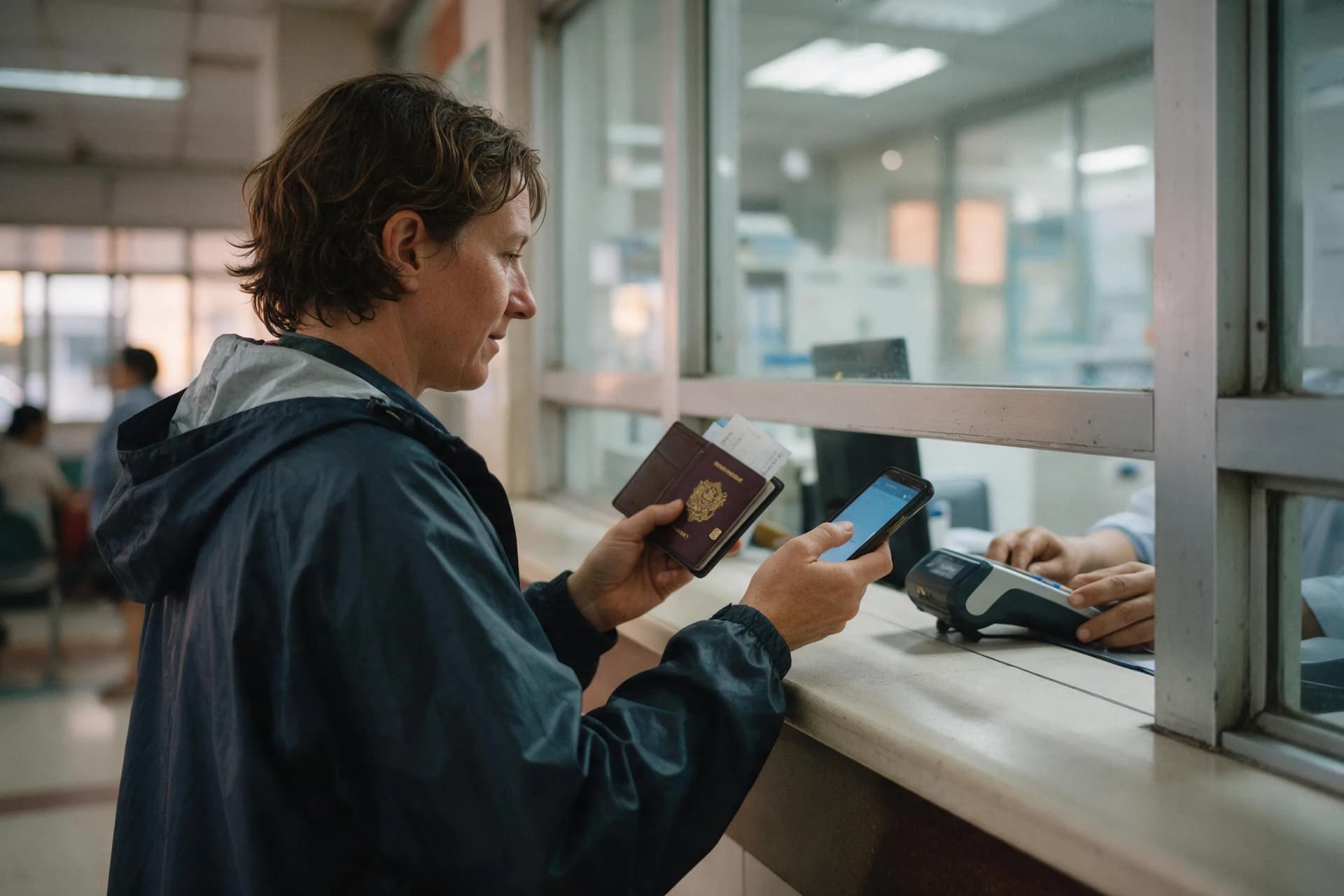
Foreigners can usually pay at Chinese hospitals, but the cashier route matters more than the wallet logo on your phone. This 2026 guide maps payment at registration, tests, pharmacy, admission and discharge; explains when cash, Alipay, WeChat Pay or a physical foreign card may fail; and shows how to protect deposits, receipts and insurance claims.
Yes. Foreigners can pay at Chinese hospitals in 2026 with cash, Alipay, WeChat Pay or, at some international and private facilities, a physical Visa or Mastercard. Because acceptance varies by hospital and cashier, prepare all four routes and keep about $150 cash for a planned visit or admission.
The payment counter is where a manageable appointment can become confusing. A Chinese hospital may collect money at several stages instead of presenting one final bill. The route that works at registration is not guaranteed to work for a CT scan, a prescription or an inpatient deposit. Plan by stage: - Registration: passport, patient record and the first payment. - Consultation: sometimes included at registration, sometimes settled separately. - Tests and pharmacy: separate charges before or after the clinician decides what you need. - Admission deposit: requested before a scheduled inpatient stay. - Discharge settlement: the final balance, refund of unused deposit and collection of records. At an international department, one desk may coordinate much of this. In an ordinary public hospital, expect to move between a registration window, consultation area, cashier and pharmacy.
Start with the payment route, not the queue Before joining a long line, show the bill to an English-speaking staff member or use translation software to ask which cashier handles foreign passports and foreign-funded wallets. Photograph the department name, floor and window number; large hospitals often have several buildings. Keep your passport with you because the name on the hospital record and payment may need to match.
Cash is the most dependable fallback. China's central-bank cash-acceptance rules mean a staffed business should not refuse physical cash for an in-person payment, and hospitals should provide a way to pay it. Practice can still be uneven: a clerk may point at a QR code because that is the usual habit, or lack change for a large note. Stay calm, ask for the cashier supervisor or cash service desk, and carry smaller notes. Split the reserve between two secure places rather than keeping every note in the same wallet.
Alipay and WeChat Pay are the digital defaults for many foreign visitors. Both can support a linked international Visa or Mastercard, but a wallet being accepted is not the same as every funding method working. A hospital payment page, Mini Program or older terminal may reject an internationally funded card even when a nearby shop accepts it. Check the fee shown before confirming, since the platform and your card issuer may both add charges. Scan only a code displayed by the cashier; never improvise by transferring money to an individual.
A physical foreign card is useful at private clinics and international departments that advertise international billing, but do not assume an ordinary public-hospital cashier can process it. Direct card acceptance, signature or PIN requirements and foreign-card terminals vary by site. Ask three precise questions: “Can I pay directly with this Visa or Mastercard?”, “Can I use Alipay or WeChat Pay funded by this foreign card?”, and “If neither works, where can I pay cash?” A general answer that the hospital accepts mobile payment is not enough.
Protect an admission deposit A deposit can be much larger than an outpatient bill, so test your payment route before a planned procedure. Ask whether the deposit is refundable, how unused money is returned, who can collect it and what identification that person needs. If a companion may need to pay while you are being treated, add them to the practical plan and make sure they can reach your passport details, insurer number and a second card. Keep every deposit receipt with the discharge paperwork.
In an emergency, payment administration should not delay getting to care. Go to the nearest emergency department, call 120 if you cannot arrange transport, and bring a phone, passport and one working payment card. Ask staff where your companion can handle registration or payment while you are assessed. Emergency departments operate around the clock, but staffing and English support can be thinner late at night.
Before leaving the hospital, request the itemized official invoice, not just the small payment slip. For an insurance claim, collect the passport copy, itemized invoice, official receipt, diagnosis certificate, discharge summary and insurer notification record. Ask whether the hospital can provide an English summary; a translated copy is easier to submit than photographs of a screen. Direct billing is less common than reimbursement, so contact your insurer early and follow its authorization instructions.
Your preparation should take three steps. At least 72 hours before departure, finish passport verification in Alipay and WeChat Pay, add one Visa or Mastercard to each, tell both card issuers you are traveling, and pack a second physical card plus the $150 cash reserve. After arrival, make one $2 test purchase at a staffed counter and confirm that the charge completed rather than remaining pending. Keep screenshots of the completed transaction, save your insurer's assistance number offline and store the cash separately.
The best hospital payment plan is deliberately redundant: one digital default, one digital backup, one physical card and one cash reserve. That setup lets you focus on the clinician's instructions instead of discovering a cashier gap after tests or before admission. Set up the routes now, test them early in the trip, and carry the record pack to every appointment.
Good to know
- Payment checkpoints
- Plan for up to 5 stages: registration, consultation, tests or pharmacy, admission deposit and discharge settlement.
- Cash reserve
- Keep about $150 in mixed notes for a planned hospital visit, split between two secure places.
- Wallet setup
- Complete passport verification and add a Visa or Mastercard to Alipay and WeChat Pay at least 72 hours before departure.
- Cashier checks
- Ask 3 questions: direct foreign-card acceptance, foreign-funded wallet acceptance and the staffed cash payment point.
- Claim records
- Collect 6 items: passport copy, itemized invoice, official receipt, diagnosis certificate, discharge summary and insurer notification.
- Emergency number
- Call 120 for an ambulance 24 hours a day, or go directly to the nearest hospital emergency department.
Frequently asked questions
Do Chinese hospitals accept foreign credit cards?
Some private hospitals and international departments accept foreign Visa or Mastercard payments directly, but an ordinary public-hospital cashier may not. Ask the exact billing desk before treatment and keep cash plus a foreign-card-funded Alipay or WeChat Pay account as backups.
Can I use Alipay or WeChat Pay at a Chinese hospital?
Many hospital cashiers display payment QR codes, but acceptance and foreign-card funding can differ by branch and terminal. Confirm the displayed fee, scan only the cashier's code and complete a small staffed test payment before relying on the wallet for an expensive hospital bill.
Do I have to pay before treatment at a Chinese hospital?
Routine outpatient care and scheduled admission commonly require registration fees, test payments or a deposit before the next step. Emergency care takes priority, and payment can usually follow assessment, but a companion should be ready to handle the registration desk.
What receipt should I get for travel insurance?
Request an itemized official invoice and receipt showing the patient's name, services, medicines and amounts paid. Also collect the diagnosis certificate, discharge summary, passport copy and insurer case number; confirm translation and original-document requirements with your insurer.
What if a hospital cashier refuses cash?
China's cash-acceptance guidance protects in-person physical-cash payments, so politely ask for a supervisor or the hospital's cash service desk. Do not create a confrontation in an emergency; secure care first, keep the bill and report the refusal through official channels later.
Keep exploring
Sources & verification
Sources used for this guide
Time-sensitive travel details can change. Reconfirm opening hours, prices and entry rules before departure.
- 1pbc.gov.cnpbc.gov.cn
- 2global.alipay.comglobal.alipay.com
- 3pay.weixin.qq.compay.weixin.qq.com
- 4china.usembassy-china.org.cnchina.usembassy-china.org.cn
- 5travel.state.govtravel.state.gov
Local operating context
ChinaMira Travel Team contributes local route and operating knowledge from China. This team byline identifies a real operating group rather than a fictional individual author.
Related journeys
Turn this guide into a real trip
These are currently bookable journeys selected from the place and theme of this guide. Availability is rechecked before display.
Beijing & the Wild Great Wall
Five unhurried days in the capital, pairing the Forbidden City and hutong life with a full day walking the unrestored ridges of Jinshanling.
5 days
Next departure: Mar 15, 2027
Xi'an: Terracotta Warriors & the Silk Road
Four days in the eastern gateway of the Silk Road — the Terracotta Army, the city wall and the food lanes of the Muslim Quarter.
4 days
Next departure: Apr 8, 2027
Plan this trip
Turn this guide into a practical itinerary
Send us the article as context. A ChinaMira specialist can check the route, dates, transport, tickets and the details that need local confirmation.