
Can You Photograph People in China? 2026 Privacy Rules
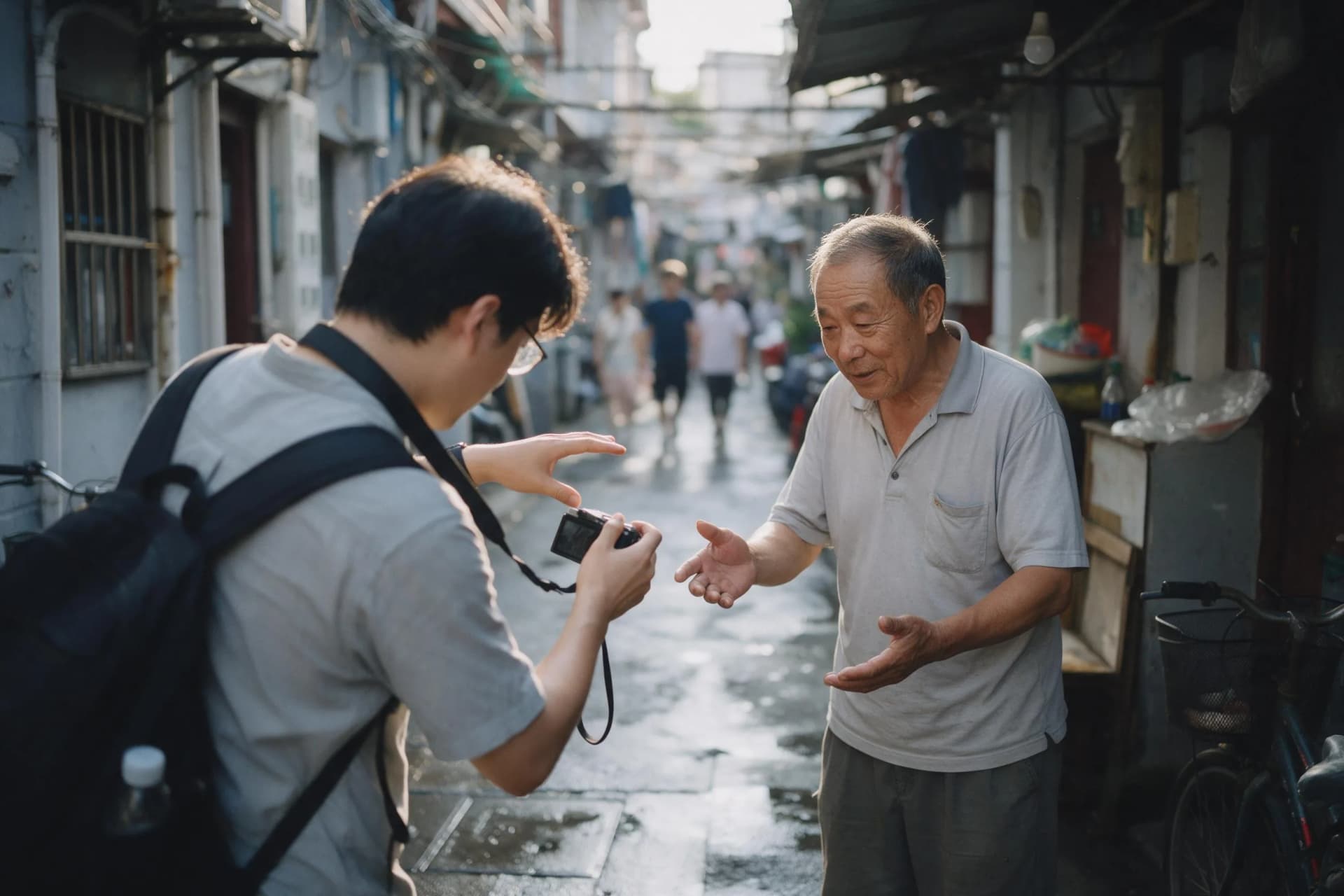
The photo privacy rules in China do not ban candid street photography, but they protect recognizable people. This 2026 guide shows when consent is needed, which Civil Code exceptions might apply, how to ask in 10–20 seconds and when to delete a shot. Use it to photograph respectfully, publish responsibly and read city-specific security signs.
As of 2026, yes, you can usually photograph people in public in China, but publishing a recognizable face generally requires consent unless a Civil Code exception applies. The photo privacy rules in China rest on Articles 1018–1023, effective January 1, 2021. Ask first, avoid private spaces, and delete on request.
Public space is not the same as public permission. Chinese law protects a person’s portrait when their external image is recognizable, whether the picture is a photograph, video frame or edited image. The Civil Code also forbids distorting a portrait or using technology to create a fake one. A busy Shanghai pavement may feel anonymous, but a close, sharp face remains someone’s portrait. For a travel journal, that usually means asking before making a stranger the subject. For a crowd scene where people are small background details, frame carefully, avoid an intrusive angle and crop out anyone who objects.
Before you lift the camera, make three quick decisions. First, is one person the clear subject? If yes, ask. Second, will the image stay in your camera roll, go to friends or family, or be posted, printed, sold or used to promote a business? The wider the audience, the more formal the permission should be. Third, are you in a genuinely public place or inside a shop, gallery, temple, hospital, studio, hotel or someone’s home? Private venues can set stricter photography rules, and a guard’s instruction should end the debate.
For ordinary street portraits, a simple request works better than a long explanation. Hold up your phone or camera, point to it, gesture toward the scene and ask, “May I take your photo?” In Mandarin, try “Nín hǎo, kěyǐ gěi nín pāi zhāng zhào ma?” A smile and an open hand make the intent clear. Wait for an unmistakable yes; silence, a hand raised across the lens or a turned face is not consent. If the subject is a child, ask the parent or guardian. If someone asks you to stop, lower the camera immediately.
China’s Civil Code gives a few reasonable-use exceptions, including necessary use for news reporting, use by state organs carrying out official duties, and unavoidable inclusion while showing a specific public environment. Personal study, art appreciation, classroom teaching and scientific research can also fall within a limited exception. These categories are narrower than many social-media captions suggest. A news photo is not automatically a travel post, and “it was in public” does not turn a paid advertisement into a fair-use scene. If your plan includes tourism marketing, portfolio promotion, stock licensing, a printed product or a brand collaboration, obtain clear commercial permission rather than relying on a crowd exception.
Consent should also cover the way you publish. A person may agree to a private snapshot but not to a magazine advert or an online campaign. For commercial work, write down the subject’s name, the date, the intended channels, the territory, the duration and whether the image can be edited. A short bilingual release or a clear message thread is better than a vague verbal nod. For personal albums, a quick “May I share this online?” is often enough. Copyright in your photograph and portrait rights in the person are separate: owning the image does not erase the need for permission. If the image contains a boarding pass, hotel key, identity document, vehicle plate, medical detail or a child’s school badge, remove that information before sharing.
A Beijing example makes the distinction concrete. The Palace Museum’s published visitor guidance separates ordinary personal sightseeing from commercial filming and photography, which may need prior approval; gallery rules can also restrict flash, tripods or certain objects. Check the current Chinese notice at the entrance because staff instructions and object-level restrictions can change. At any airport, railway checkpoint, military site, border post, police facility, courthouse or government security area, follow posted prohibitions and staff directions rather than assuming that public access means unrestricted photography.
Photographing a stranger is only half of the privacy question. Publishing an image can expose where someone works, lives, worships or receives care, even when the face is partially hidden. Avoid windows into homes, close-ups of worshippers at prayer and pictures that make a child identifiable by uniform or location. A longer lens does not create permission. Nor does a blurred face make an exploitative caption acceptable. When the image has no journalistic or public-interest purpose and the subject is clearly uncomfortable, the respectful choice is simple: do not take it, or delete it.
Save two things before your next walk: the one-sentence permission request and a note explaining where the image may be used. That small pause gives you a usable travel photo and a cleaner reason to share it. Treat this as a sensible travel default, not a substitute for advice on a paid campaign or sensitive documentary project. If you want a route where timing, light and permission stop competing for attention, start with our photography planning theme, then add the city guide for your first stop.
Good to know
- Core legal trigger
- Civil Code Articles 1018–1023 took effect on January 1, 2021. Treat one clear yes as necessary before making or publishing a recognizable person the subject, unless a specific Article 1020 exception applies.
- 10–20 second consent routine
- Make 1 gesture toward the camera, ask 1 simple question in English or Mandarin, state the intended use and wait for 1 unmistakable yes. For anyone under 18, seek the parent or guardian’s permission.
- Publication check
- The Civil Code lists 5 reasonable-use categories in Article 1020, covering areas such as news, official duties, public environments, teaching and research. These exceptions do not automatically cover tourism ads or stock sales.
- Commercial release terms
- Record 6 basics: subject, date, channels, territory, duration and whether editing is allowed. Keep the written permission for as long as the image remains published or licensed.
- Beijing site check
- As of the 2026 visitor guidance, the Palace Museum distinguishes ordinary sightseeing images from commercial filming or photography that may require prior approval. One current staff instruction should override an old blog post.
- Privacy cleanup
- Before posting, check 7 sensitive details: faces, children’s badges, identity documents, hotel keys, boarding passes, license plates and medical or workplace information. Crop or blur them when the scene does not need them.
Frequently asked questions
Can I take photos of strangers on the street in China?
Usually yes, but context matters. If a recognizable person is the main subject and the image will be published, ask for consent unless a Civil Code reasonable-use exception clearly applies. For personal, incidental crowd scenes, stay unobtrusive; stop immediately if the person objects or covers their face.
Do I need permission to post a photo of someone in China online?
Generally, yes, when the person is recognizable and the post is not a genuine news or public-interest use. A private chat is different from a public album or brand account. Ask whether the photo may be shared, tell the person where it will appear, and remove it promptly if they later withdraw permission.
Can I photograph police, military sites or airports in China?
Do not assume that visible public access means photography is allowed. Military sites, police facilities, border checks and security areas commonly prohibit photographs, while airport and station rules can vary by zone. Follow signs and staff instructions, and never photograph a security checkpoint just because other travelers are nearby.
Is a crowded street photo allowed without asking everyone?
A wide scene where people are genuinely incidental may fit the public-environment exception, but that depends on framing, publication and purpose. If you zoom in on one face, make a person the visual anchor or use the picture commercially, switch to an individual consent routine. A crowd is not a blanket release.
Keep exploring
Sources & verification
Sources used for this guide
Time-sensitive travel details can change. Reconfirm opening hours, prices and entry rules before departure.
- 1npc.gov.cnnpc.gov.cn
- 2npc.gov.cnnpc.gov.cn
- 3gov.cngov.cn
- 4dpm.org.cndpm.org.cn
Local operating context
ChinaMira Travel Team contributes local route and operating knowledge from China. This team byline identifies a real operating group rather than a fictional individual author.
Related journeys
Turn this guide into a real trip
These are currently bookable journeys selected from the place and theme of this guide. Availability is rechecked before display.
Beijing & the Wild Great Wall
Five unhurried days in the capital, pairing the Forbidden City and hutong life with a full day walking the unrestored ridges of Jinshanling.
5 days
Next departure: Mar 15, 2027
Xi'an: Terracotta Warriors & the Silk Road
Four days in the eastern gateway of the Silk Road — the Terracotta Army, the city wall and the food lanes of the Muslim Quarter.
4 days
Next departure: Apr 8, 2027
Plan this trip
Turn this guide into a practical itinerary
Send us the article as context. A ChinaMira specialist can check the route, dates, transport, tickets and the details that need local confirmation.