
Spring Festival Travel in China: Crowds, Closures and Family Routes
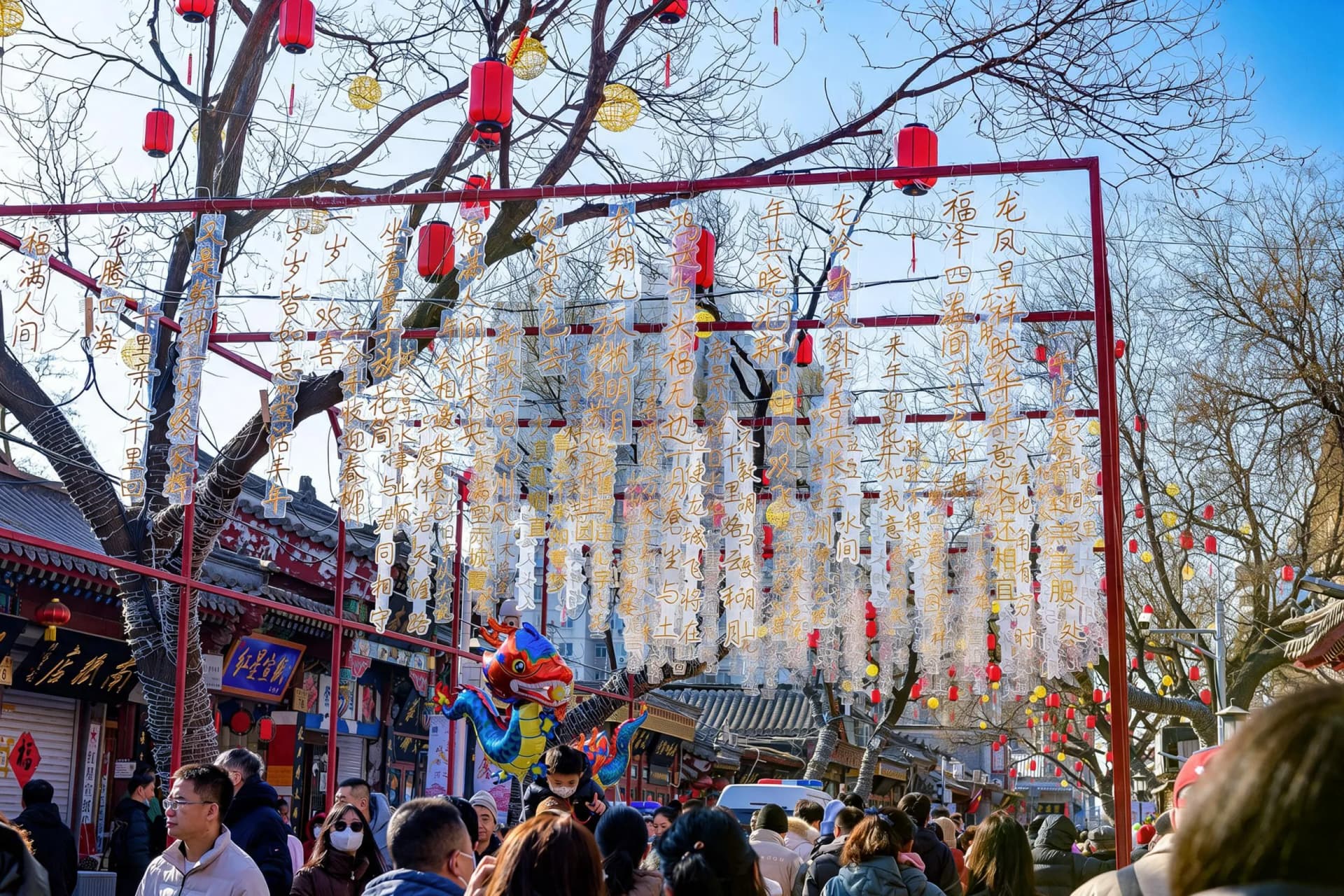
Spring Festival can be a rewarding time to see China, but it is not a normal sightseeing week. Transport demand peaks, some businesses close, families gather privately and holiday dates move each year. Choose one or two cities, book the main rail legs early and treat reunion meals and neighborhood life as the experience rather than expecting every attraction to run at full speed.
Spring Festival can be a rewarding time to see China, but it is not a normal sightseeing week. Transport demand peaks, some businesses close, families gather privately and holiday dates move each year. Choose one or two cities, book the main rail legs early and treat reunion meals and neighborhood life as the experience rather than expecting every attraction to run at full speed.
The strongest Spring Festival experiences are often local: lantern displays, markets, temple fairs, family meals and neighborhood preparations. A guide can explain which events are public and which are private. Major museums and scenic sites may use special hours or reservations. Avoid entering residential courtyards or filming family rituals without an invitation; the festival is a living holiday, not a themed event.
Pick cities with clear transport links and a comfortable hotel base. Beijing, Shanghai, Chengdu, Xi'an and Guangzhou behave differently during the holiday, and smaller towns may have more closures. Keep the first and last two days light. If visiting family, separate the reunion period from tourism and confirm travel dates in writing. Book the international return before adding optional domestic flights.
The holiday period usually spans the lunar New Year and can include adjusted working days before or after. Travel pressure starts before the official first day and extends through the return period. Exact 2027 dates must be checked against the official notice. Temple fairs and lantern events may run on their own schedules, and some restaurants close for several days.
Use high-speed rail where possible, but book early and allow extra time at stations. Airports can be affected by weather and peak demand. Hotels may require prepayment or minimum stays. Restaurants in tourist districts can be crowded while neighborhood options close. Plan food around confirmed openings and carry a small backup meal on arrival day.
Red decorations, family gatherings, fireworks rules and temple customs vary by region. Ask before photographing people or private altars. Dress for cold weather and modestly at temples. Red envelopes are a family and social custom, not a tourist fee. If invited to a meal, follow the host's lead on seating and toasting rather than treating it as a performance.
The most common mistakes are booking a tight multi-city schedule, assuming every restaurant and shop is open and underestimating the emotional and logistical importance of family time. Check local firework rules, transport changes and attraction closures. If weather disrupts a domestic flight, protect the international connection with an overnight buffer and a flexible hotel.
A local guide is most valuable when the visit depends on interpretation, reservations or access: a historic neighborhood, an active temple, a workshop, a remote trail or a food market. Ask what the guide will actually do, whether tickets and transport are included and whether the quoted language is fluent enough for detailed questions. Do not use a guide simply to bypass rules or gain private access that is not officially available. Build independent time into each day so the trip still feels like your own rather than a continuous escorted presentation.
Plan transport around door-to-door time, not map distance. Ask whether the quoted vehicle fits the luggage, whether the driver is licensed for commercial passengers and where the vehicle can stop near the entrance. Keep one realistic recovery block after a long arrival and avoid unprotected same-day connections between an international flight and a remote transfer. A paper copy of hotel names in Chinese and a screenshot of the station or airport meeting point are useful when mobile data is slow.
Separate the planning budget into transport, accommodation, tickets, food, guides and insurance, then check what is actually included. Customer-facing ChinaMira prices are shown in USD; the CNY amount used for Alipay, WeChat Pay or bank transfer appears separately at checkout or on an invoice. Do not select a supplier by headline price alone. Confirm cancellation terms, guide language, vehicle class, medical contingency and emergency support before paying through a verified company channel.
Book in a clear sequence: settle the route and season, confirm any permit or timed reservation, reserve the first hotel and transfer, then add rail or domestic flights. Keep passport details consistent and save all confirmations offline. Share mobility, dietary, prayer, allergy, child or medical requirements in writing before suppliers are reserved. Leave one unscheduled half-day after the main arrival and one buffer before departure; those gaps solve more problems than another rushed attraction.
Good to know
- Holiday basis
- Lunar New Year; dates move annually
- Transport
- Book rail early and add station buffer
- Best approach
- One or two bases with a flexible day
- Business hours
- Confirm restaurants and local services individually
- Emergency numbers
- Police 110, ambulance 120, fire 119
Frequently asked questions
Is Spring Festival a good time for a first China trip?
It can be, if you want festival atmosphere and accept closures and crowds. A first-time sightseeing trip may be easier just before or after the main travel peak.
Do all businesses close?
No, but opening patterns vary widely. Major hotels and attractions often operate, while some independent restaurants and local businesses close for family holidays.
How early should I book trains?
Book as soon as the official sales window opens for the busiest dates, and keep a backup route or departure time.
Keep exploring
Plan with ChinaMira
Turn this into a trip
Use this guide as a starting point — we can handle the route, guides, trains and the visa invitation letter.