
Guizhou Travel Guide: Ethnic Villages, Waterfalls and Mountain Routes
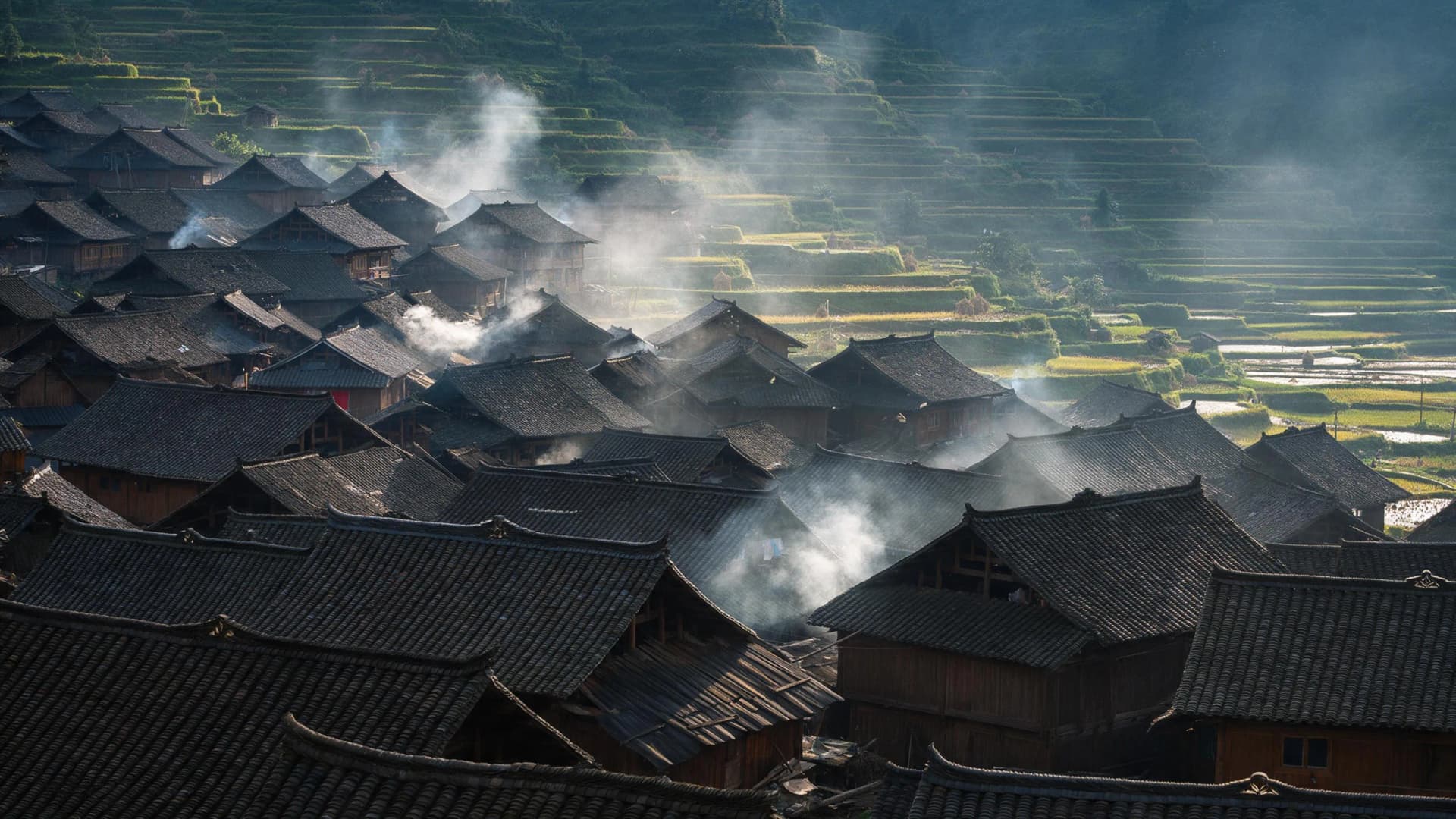
Guizhou works best as a 7-9 day road journey from Guiyang, combining the Miao and Dong village belt with Huangguoshu, Fanjingshan or a slower rural stay. Do not treat villages as free theme parks: arrange visits through a responsible local guide, respect working homes and accept that rain, fog and mountain roads can change the plan.
Guizhou works best as a 7-9 day road journey from Guiyang, combining the Miao and Dong village belt with Huangguoshu, Fanjingshan or a slower rural stay. Do not treat villages as free theme parks: arrange visits through a responsible local guide, respect working homes and accept that rain, fog and mountain roads can change the plan.
Guiyang is the main air and rail gateway. High-speed rail reaches Anshun, Kaili and other hubs, but many villages and mountain entrances still require a private car and driver. Roads can be narrow and foggy, and transfer times are often longer than the straight-line distance suggests. Avoid trying to cover Qiandongnan, Qianxinan and Fanjingshan in a short trip. A circular route with one base per region is calmer than changing hotels every night.
A practical first route is Guiyang, Anshun and Huangguoshu, then Kaili and one or two Miao or Dong villages. Return to Guiyang or continue by rail where the schedule fits. A longer route can add Fanjingshan with a weather buffer. Village visits should include time for ordinary life, not only a staged performance. Markets occur on specific local calendar days, so confirm dates and do not promise that every village will be in festival mode.
Spring and autumn usually balance temperature and rainfall, while summer can be wet and busy. Winter is quieter but cold and misty in the mountains. Local festivals create meaningful cultural windows and also fill nearby hotels, so check both the lunar calendar and cancellation terms. Build a spare afternoon for road delays. If a market or festival is the main reason for the trip, confirm it with more than one local source.
Ask before photographing people, homes, rituals and children. Some ceremonies are closed to visitors, and a camera should be put away when requested. Dress modestly, avoid entering private courtyards and buy food or crafts directly from businesses rather than distributing sweets or money to children. Festival schedules can change; respect community decisions even when they disrupt the itinerary. A guide who speaks the local language can clarify consent and reduce misunderstandings.
Photographers should prioritize light and consent over collecting faces. Families should check car-seat availability, toilet stops and the amount of walking at Huangguoshu or Fanjingshan. Travelers with limited mobility need a route designed around accessible hotels and scenic shuttles rather than assuming all villages can be navigated easily. Food travelers should combine regional specialties with rural markets and tea or fermented-food experiences.
Road time, mountain weather and unclear village access are the biggest risks. Confirm vehicle insurance, driver experience, hiking safety and medical contingency. Cash may help in small villages, but mobile payment should still be set up as the primary backup. Do not schedule a same-day domestic flight after a long rural transfer unless there is a realistic buffer. If a community asks visitors to stay away during a private event, change the route.
Choose one cultural region to understand properly. Qiandongnan alone can justify five days when markets, village walks and road transfers are included. Ask your guide which visits are suitable for independent browsing and which require an introduction from a local host.
Food travelers should explore sour-soup fish, fermented vegetables, rice noodles and market snacks with attention to hygiene and spice levels. Carry a translated allergy card. Photography should support the community rather than interrupt work: buy from local vendors, ask about captions and avoid publishing images of identifiable people without consent.
Build the transport plan around one realistic arrival, one primary route and one contingency. A short line on a map can become a half-day transfer in mountains, traffic or bad weather, so ask suppliers for door-to-door time rather than distance alone. Confirm luggage capacity, child-seat availability and whether the driver is licensed for commercial passengers. Avoid unprotected same-day connections between an international flight and a remote transfer; an overnight buffer near the airport or railway station is usually cheaper than rebuilding a disrupted itinerary.
Use a planning budget that separates transport, accommodation, tickets, food, guides and insurance. Customer-facing ChinaMira prices are shown in USD; if Alipay, WeChat Pay or bank transfer is selected, the relevant CNY amount appears at checkout or on the invoice in smaller type. Do not judge a service only by its headline price. Check inclusions, cancellation terms, guide language, vehicle age, medical support and emergency procedures. Pay through verified company channels and independently confirm any change of bank details.
Plan in a deliberate sequence: confirm the route and operating season, identify the city where permits or reservations must be handled, secure a licensed local operator in writing, then book transport and accommodation. Keep passport details consistent across every booking, save Chinese addresses offline and verify cancellation and weather terms before payment. Leave one recovery half-day after the main arrival and one buffer before departure; those blocks are more valuable than squeezing in another attraction.
Good to know
- Suggested route
- 7-9 days from Guiyang to Anshun and Kaili
- Main transport
- High-speed rail plus private car for rural sections
- Weather
- Rain and fog can change roads and mountain access
- Photography
- Ask consent; do not photograph closed ceremonies
- Emergency numbers
- Police 110, ambulance 120, fire 119
Frequently asked questions
How many days should a first Guizhou trip have?
Seven to nine days is practical for Guiyang, the village belt and one major scenic area. It allows for road time and at least one weather buffer.
Can I visit ethnic villages independently?
Some villages can be reached by public transport, but respectful access, local language and market dates are easier with an experienced guide and private vehicle.
Is Fanjingshan always open?
No. Reservations, weather, maintenance and daily capacity can affect access. Verify current operations and preserve a backup day.
Keep exploring
Plan with ChinaMira
Turn this into a trip
Use this guide as a starting point — we can handle the route, guides, trains and the visa invitation letter.