
Story
What Is the Best eSIM for China Travel in 2026? A Beijing Food Guide
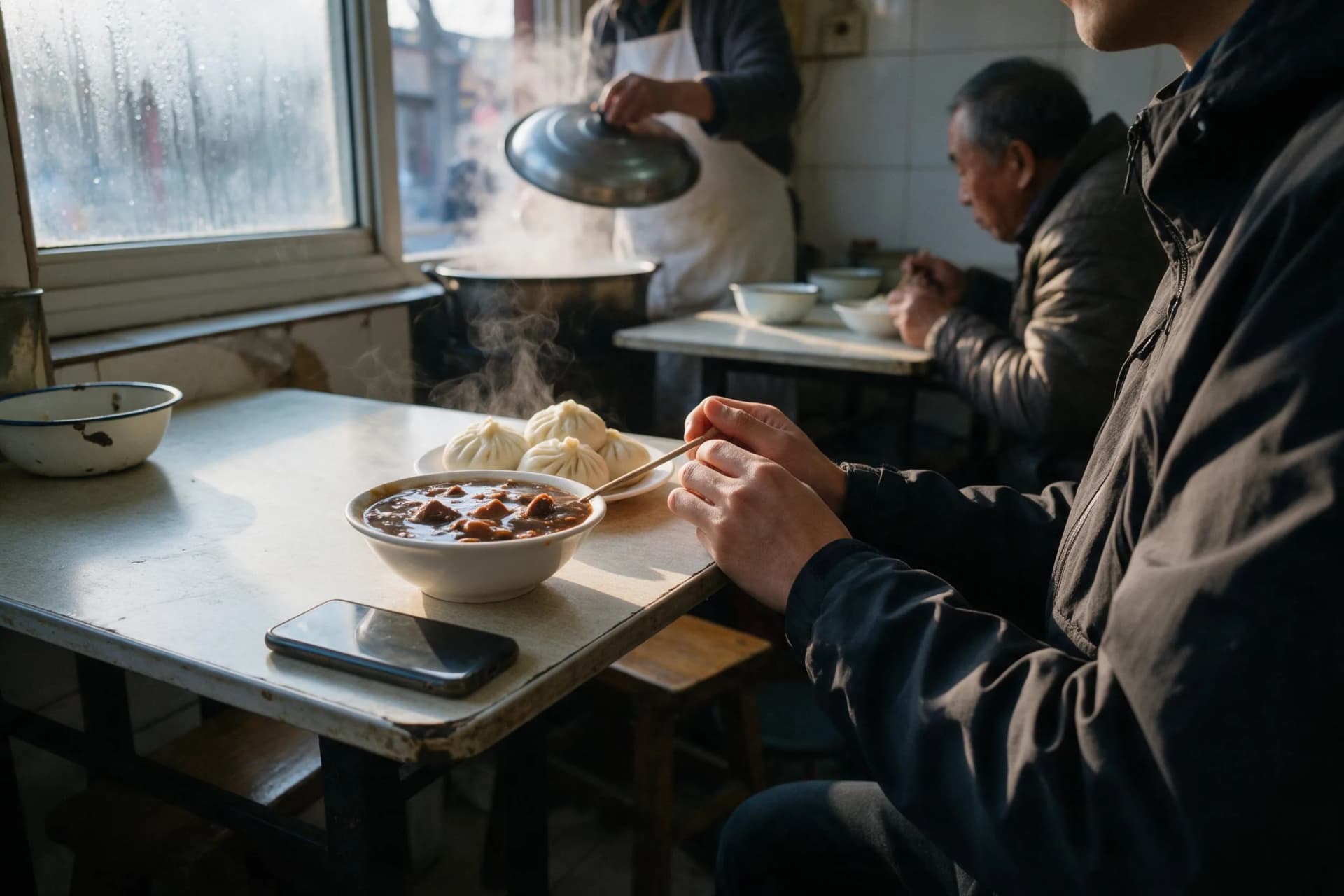
The right eSIM is not just connectivity; it is the quiet infrastructure behind a good eating day in Beijing. This practical 2026 guide names the best-value plans, gives a 15-minute setup checklist, explains coverage limits, and prices five classic dishes plus a Gulou breakfast and reliable vegetarian or halal alternatives.
For a 2026 China trip, the best eSIM default is Airalo or Nomad’s 10 GB/30-day China plan, about $16–$22, if your phone is carrier-unlocked and eSIM-capable. Install it on home Wi-Fi 3–5 days before departure; offshore-routed data normally reaches Google Maps and WhatsApp without a VPN while your home line stays active for bank codes.
My thesis is simple: in Beijing, an eSIM earns its price before lunch. It gets you to a breakfast shop before the buns run out, translates a photographed menu, and keeps DiDi working when a hutong address defeats you. My 2026 shortlist: • Best overall: Airalo or Nomad, 10 GB for 30 days, $16–$22—enough for maps, translation, DiDi and photo backups; confirm hotspot terms. • Heavy streaming: Holafly unlimited, about $6.90 per day, or $48.30 for seven days; choose it only if you will stream or tether a laptop. • Short layover: 1 GB for seven days, near $4.50, covers maps and menu searches, not video. Buy before you fly. Airport Wi-Fi commonly needs an SMS code to a working number.
Setup is a 15-minute task, but the order matters. First, open Settings and confirm the phone shows an EID and accepts a second line; an unlocked iPhone XS/XR or newer, Pixel 3 or newer, and recent Samsung Galaxy models should qualify. Then buy from the provider’s own app or website and install the eSIM 3–5 days before departure while you have reliable home Wi-Fi. Label the new line “China data,” keep its data switch off until landing, and save the activation details in your password manager. Do not delete the eSIM to troubleshoot: many plans cannot be reinstalled without buying another. After arrival, turn on the eSIM line and its data roaming, keep your home line enabled for bank codes, switch mobile data to the eSIM, and turn off data roaming on the home line. Give it 10–15 minutes; if nothing connects, toggle airplane mode for 30 seconds or manually select an available carrier.
Coverage in central Beijing is generally strong on 4G and 5G, but the weak points are predictable: Metro tunnels between stations, deep restaurant basements and some thick-walled courtyard rooms. That matters more to a food day than a sightseeing checklist. Before breakfast, download the Beijing map for offline use and screenshot your destination’s Chinese name and address. Use live data to hail a car or check a queue, not as your only way back to the hotel.
Start on Gulou East Street, east of the Drum Tower, where breakfast shops open around 6:30 a.m. and the best baozi can be gone by 9:30. An easy 2026 breakfast costs RMB 15–30: chaogan (fermented mung-bean porridge) is roughly RMB 12–20, baozi are RMB 3–6 each, and douzhi—the sharply fermented bean drink that divides locals and visitors—is about RMB 3–5. Taste a spoonful before ordering a full glass. The area is roughly an eight-minute walk from Shichahai station on Metro Line 8; arrive early, order at the counter, and keep your phone in your pocket while you eat.
Five signature dishes, with practical 2026 price ranges: • Peking duck: RMB 168–298 for a whole bird that feeds two or three; reserve one to three days ahead at popular houses. • Zhajiangmian: RMB 18–35 for thick noodles with savory bean sauce and shredded vegetables. • Chaogan: RMB 12–20 for the breakfast porridge, usually served with a crisp fried accompaniment. • Baodu: RMB 30–50 for quickly blanched tripe, a texture-first Beijing classic. • Mutton hotpot: RMB 80–150 per person at a sit-down restaurant, before drinks. These are observed menu ranges, not fixed prices; portion size and restaurant style move the total. For duck, book an early table and ask whether side dishes, pancakes and sauces are included.
Vegetarian and halal eaters have solid choices if they plan one meal rather than improvise. Gongdelin, near the Temple of Heaven, is a long-running Buddhist vegetarian restaurant; expect mains around RMB 28–68 and ask for no meat stock or lard. For halal food, head to the Niujie area around Niujie station on Metro Line 19: lamb skewers commonly cost RMB 5–10 each, pastries RMB 6–12, and a simple meal about RMB 30–60. “Halal” signs are widespread but certification is not uniform, so strict diners should confirm ingredients and preparation with the restaurant.
The eSIM also solves the small frictions that make or break a restaurant day. It lets you translate a menu, open a reservation link, check opening hours and call a car without hunting for public Wi-Fi. Set up Alipay or WeChat Pay before the trip and keep a physical card plus a little cash as backup. Save Chinese dish names such as 烤鸭 (roast duck), 炸酱面 (zhajiangmian) and 素菜 (vegetarian dishes) as screenshots. If the connection drops at the table, you still have the address, your payment method and the words you need.
For a seven-day Beijing trip, the $16–$22 data-only plan is the value winner: it leaves more of the food budget for duck and noodles than a $48.30 unlimited eSIM or a $70 carrier roaming pass at $10 per day. Buy three to five days before departure, install at home, label the line, and test it after landing in 15 minutes. Then spend the saved money on breakfast at 7 a.m.—and get to the good baozi before they disappear.
Good to know
- Best-value pick, 2026
- Airalo or Nomad 10 GB/30-day China eSIM, about $16–$22; install 3–5 days before departure and confirm hotspot rules for the exact plan.
- Seven-day cost comparison
- Data-only 10 GB plan: $16–$22. Holafly unlimited at about $6.90/day: $48.30. A US carrier roaming pass at $10/day: $70.
- Setup window
- Allow 15 minutes at home on reliable Wi-Fi, then 10–15 minutes after landing to activate and test data. Keep the home line on for bank codes but disable its data roaming.
- Beijing coverage condition
- Expect strong 4G/5G in central Beijing, with likely gaps in Metro tunnels, deep basements and some courtyard rooms; download an offline map before each meal.
- Gulou breakfast
- Gulou East Street shops open around 6:30 a.m.; best baozi may sell out by 9:30. Breakfast costs RMB 15–30, and Shichahai station on Line 8 is about an eight-minute walk away.
- Five signature dishes, 2026
- Peking duck RMB 168–298 per bird; zhajiangmian RMB 18–35; chaogan RMB 12–20; baodu RMB 30–50; mutton hotpot RMB 80–150 per person.
Frequently asked questions
Does a China eSIM work without a VPN?
A travel eSIM with offshore data routing normally lets you use Google Maps, WhatsApp and Instagram without a separate VPN, because traffic exits outside mainland China. Confirm that feature in the exact plan terms before buying. An official mainland China SIM uses local routing and does not bypass the firewall.
How much data do I need for a one-week China food trip?
Plan on 5–10 GB for a seven-day trip if you use maps, translation, ride-hailing and messaging but stream little video. A 10 GB/30-day travel eSIM costs about $16–$22 in 2026 and is the simplest value choice; unlimited plans around $6.90 per day cost roughly $48.30 for seven days.
Can I install a China eSIM after I land?
Technically yes, but you need working internet to install it, and airport Wi-Fi may require an SMS code to a live number. Installing at home three to five days before departure is safer. Keep the purchased QR code or activation details saved because deleting an installed eSIM can make it impossible to reinstall.
Which phones can use a China travel eSIM?
The phone must be carrier-unlocked and eSIM-capable, such as an iPhone XS/XR or newer, Google Pixel 3 or newer, or a recent Samsung Galaxy model. Check for an EID in the phone settings before buying. Many phones sold for the mainland China market do not support eSIM hardware.
Can I use hotspot data from a China eSIM?
Many travel eSIMs allow hotspot sharing, but some plans restrict it or throttle after a certain amount of data. Check the exact plan terms before purchase if you need to tether a tablet or laptop. For a phone-only food trip, a 10 GB plan normally provides more than enough hotspot flexibility.