
Story
Best eSIM for China Travel 2026: A 3-Day Beijing Itinerary
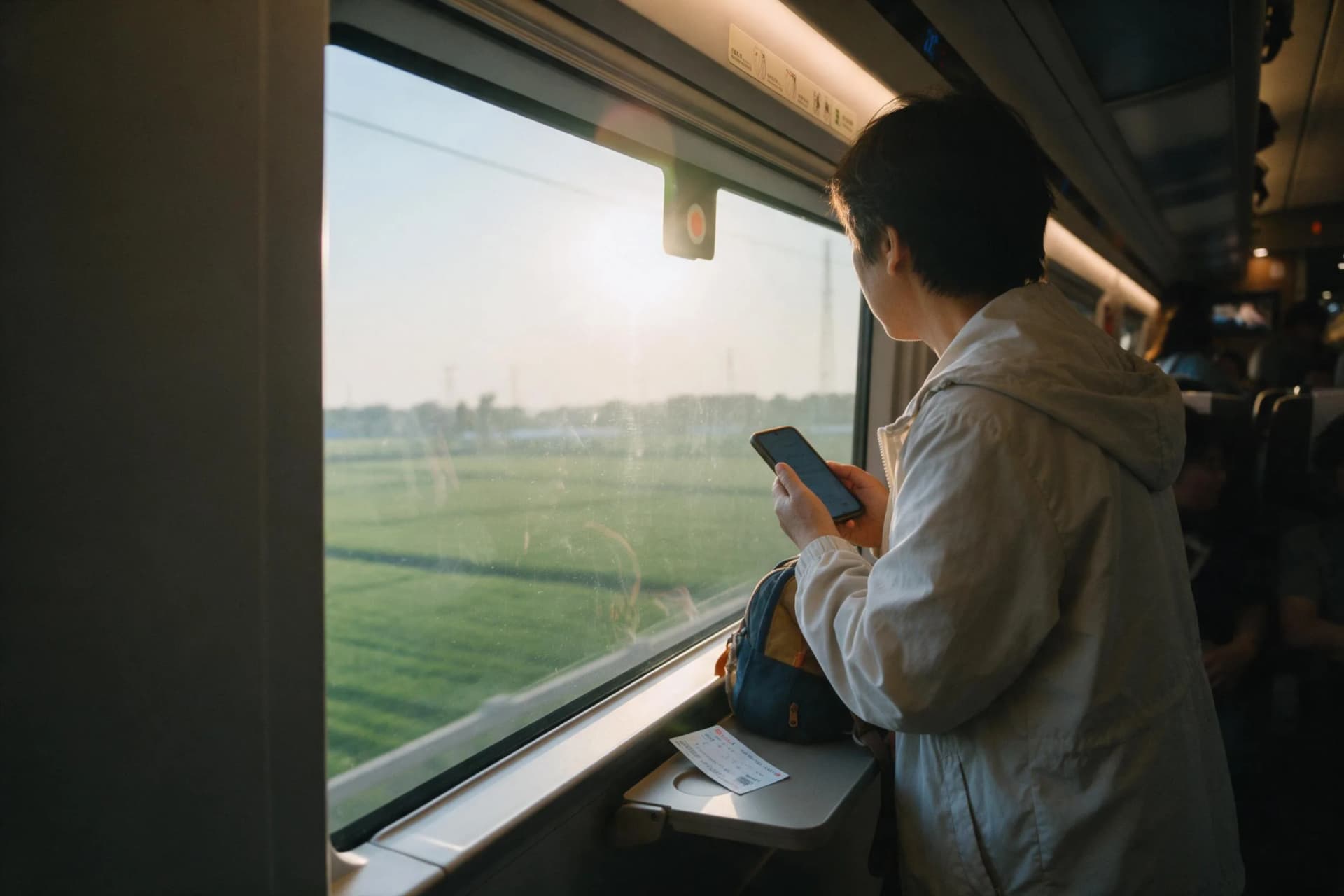
Three days in Beijing runs on one small decision made before you fly: install an international eSIM and your maps, messages and train bookings work from the baggage carousel. This route walks the imperial axis, climbs Mutianyu, and eats through the hutongs, with a timed table for each day and a museum swap for rain.
For a three-day China trip in 2026, buy an international travel eSIM before you fly: on February 10, 2026, Nomad's 10GB China plan cost $22 for 30 days, and because it routes data outside the mainland, Google Maps, Gmail and WhatsApp work without a VPN.
At 6:40 on a cool October morning, Beijing's Drum Tower is still in shadow and the jianbing cart beside it is not. You pay with a QR code, check the Metro line on your phone, and walk to breakfast without breaking stride. That is the quiet luxury of arriving with data already running: no SIM kiosk, no queue, no verification code sent to a phone that cannot receive it. By your first bowl of porridge, the eSIM has done its job.
Setup takes about 10 to 15 minutes, and it happens before you leave home. Buy the plan, install the profile over your own Wi-Fi, label the line "China" in your settings, and turn on data roaming for that line only. Keep your home number active to receive bank and booking codes, and save a screenshot of your hotel address in Chinese. Most providers will not let you install after you enter China, so finish the job at the departure gate.
Here is the three-day route at a glance, with the numbers you need for each day. Day 1, Imperial axis — Transport: Metro Line 1 to Tian'anmen East (CNY 3–7). Entry: Forbidden City CNY 60 in peak season (April 1–October 31), booked with your passport up to 7 days ahead. Meal stop: dumplings and zhajiang noodles near Nanluoguxiang. Timing: gates open 8:30 a.m.; allow three to four hours. Day 2, Mutianyu Great Wall — Transport: the tourist shuttle, or Metro plus the 916 Express. Entry: CNY 45 peak (March 16–November 15), shuttle CNY 15, cable car CNY 140 round trip. Meal stop: a bowl of noodles at the foot of the wall. Timing: first gate 7:30 a.m.; three to four hours on the ramparts. Day 3, Temple of Heaven and the hutongs — Transport: Metro Line 5 to Tiantandongmen. Entry: the through ticket CNY 34 (April 1–October 31). Meal stop: Peking duck near Qianmen. Timing: the park opens at 6:00 a.m.; the halls 8:00 a.m. to 6:00 p.m.
The Forbidden City is calmer in its first hour than it will be all day, so enter at opening and walk the central axis slowly. Past the Hall of Supreme Harmony the courtyards narrow and the tour groups thin, and by the Imperial Garden you can hear sparrows under the yellow eaves. Leave by the north gate, cross into Jingshan Park, and look back south: the whole imperial spine lies below you, roof after roof, with the city's traffic politely out of earshot.
Day two is the one to protect from crowds. The scenic area's official summer notice, valid July 13 to August 10, 2026, lists tourist shuttles leaving Qianmen from 7:00 to 11:00 on a repeating service and returning from P4 between 13:00 and 16:00, with the Dongzhimen route departing at 8:00 and 10:00; reservations are taken by phone, often a day ahead. Ride up and walk down, or the reverse, and leave the middle of the day to everyone else.
On the last day, arrive early enough to see the park before the halls open. The Temple of Heaven opens at 6:00, and the cypress groves belong to tai chi, shuttlecocks and old men flying kites long before the ticket gates fill. A through ticket admits you to the Hall of Prayer, the Echo Wall and the Circular Mound Altar; the halls stop admitting at 5:30 p.m., but the park itself stays open until 10:00 p.m., so you may stay and walk after the monuments close.
If rain settles in, swap the wall for the National Museum of China on the east side of Tian'anmen Square. Entry is free; reservations open up to seven days ahead with your passport, tickets release at 5:00 p.m. Beijing time, and the museum admits visitors from 9:00 a.m. to 5:00 p.m. with last entry at 4:00 p.m. It closes on Mondays, and from June 1 to October 31 it stays open to 5:30 p.m. A covered walk from Tian'anmen East keeps you dry almost to the door.
Coverage is the part that surprises people. China finished 2025 with 4.838 million 5G base stations, according to state media in January 2026, and 5G now reaches every township and more than 95 percent of administrative villages. In Beijing that means fast data on the Metro, in the Forbidden City courtyards and along the Mutianyu ridge. Expect a weaker signal in deep mountain valleys and some old courtyard guesthouses, so download offline maps for the wall day as insurance.
Cost is smaller than most travelers expect. A plan sized for a month is more than a long weekend needs, so a 5GB allowance or a short unlimited plan keeps the bill low, and the eSIM leaves your home line free for bank codes. If you extend the trip, book trains on the official 12306 app: register with your passport, verify once, and buy up to 15 days ahead; your passport is the ticket at the gate. Tell ChinaMira your dates and daily data habits, and we will match the plan to the route, reserve the timed entries, and build the rainy-day version before you land.
Good to know
- Best value plan (February 2026)
- Nomad: 10GB for 30 days at $22 and 20GB at $30. Airalo: 10GB at $26.50. Holafly: unlimited for $27.30 over 7 days (Cloudwards China eSIM comparison, updated February 10, 2026)
- Setup time
- About 10 to 15 minutes to install the profile over Wi-Fi before departure; keep the home line active for SMS codes and enable roaming on the eSIM only
- Network coverage (end of 2025)
- 4.838 million 5G base stations in China, with 5G in every township and more than 95% of administrative villages (Xinhua, January 28, 2026)
- Day 1 admission
- Forbidden City CNY 60 peak season (April 1–October 31) and CNY 40 from November 1 to March 31; closed Mondays; passport booking on the Palace Museum channel up to 7 days ahead
- Day 2 admission
- Mutianyu Great Wall CNY 45 peak (March 16–November 15); shuttle CNY 15 and cable car CNY 140 round trip; gates 07:30–18:00 in peak season (Beijing municipal ticketing page, 2026)
- Getting around
- Capital Airport Express ¥25 flat, every 10 minutes (Terminal 3 06:22–22:52); Beijing subway CNY 3–7 by distance; 12306 rail tickets go on sale 15 days ahead with passport booking
Frequently asked questions
Does a China eSIM work on the Great Wall and at the airports?
Yes. Roaming eSIMs ride China Unicom and China Mobile towers, so data works at Beijing Capital and Daxing airports, on the Metro and at Mutianyu. Deep gorges and some old courtyard guesthouses give a weaker signal, so download offline maps before the wall day.
Do I still need a VPN if I use a China eSIM?
Not usually. A travel eSIM routes your traffic outside mainland China, so Google Maps, Gmail, WhatsApp and Instagram load without a VPN. A local China Mobile or China Unicom SIM connects through mainland networks and still needs a working VPN for those apps.
Is an eSIM or a local SIM cheaper for a three-day trip?
An eSIM usually wins on convenience, but a local prepaid card from China Mobile or China Unicom costs ¥50 to ¥100, about $7 to $14, for 7 to 15 days with 5GB to 10GB. It needs passport registration at a carrier store and comes with a Chinese number that some bike and ticket apps still ask for.
Can I install a China eSIM after I land?
Most providers let you install the profile only while you still have a working home connection, so buy and install it before departure and screenshot the QR code as a backup. If installation fails at home, reach the provider's chat support before you fly, not at the baggage carousel.
Will my phone accept a China eSIM?
If it is unlocked and eSIM-capable, usually yes: Apple lists iPhone XS and later, and most recent Android flagships work. Note that iPhones bought in mainland China cannot install a mainland carrier eSIM, while phones bought outside China cannot install a mainland carrier profile at all.