
China With a Stroller in 2026: Cities and Trains That Work
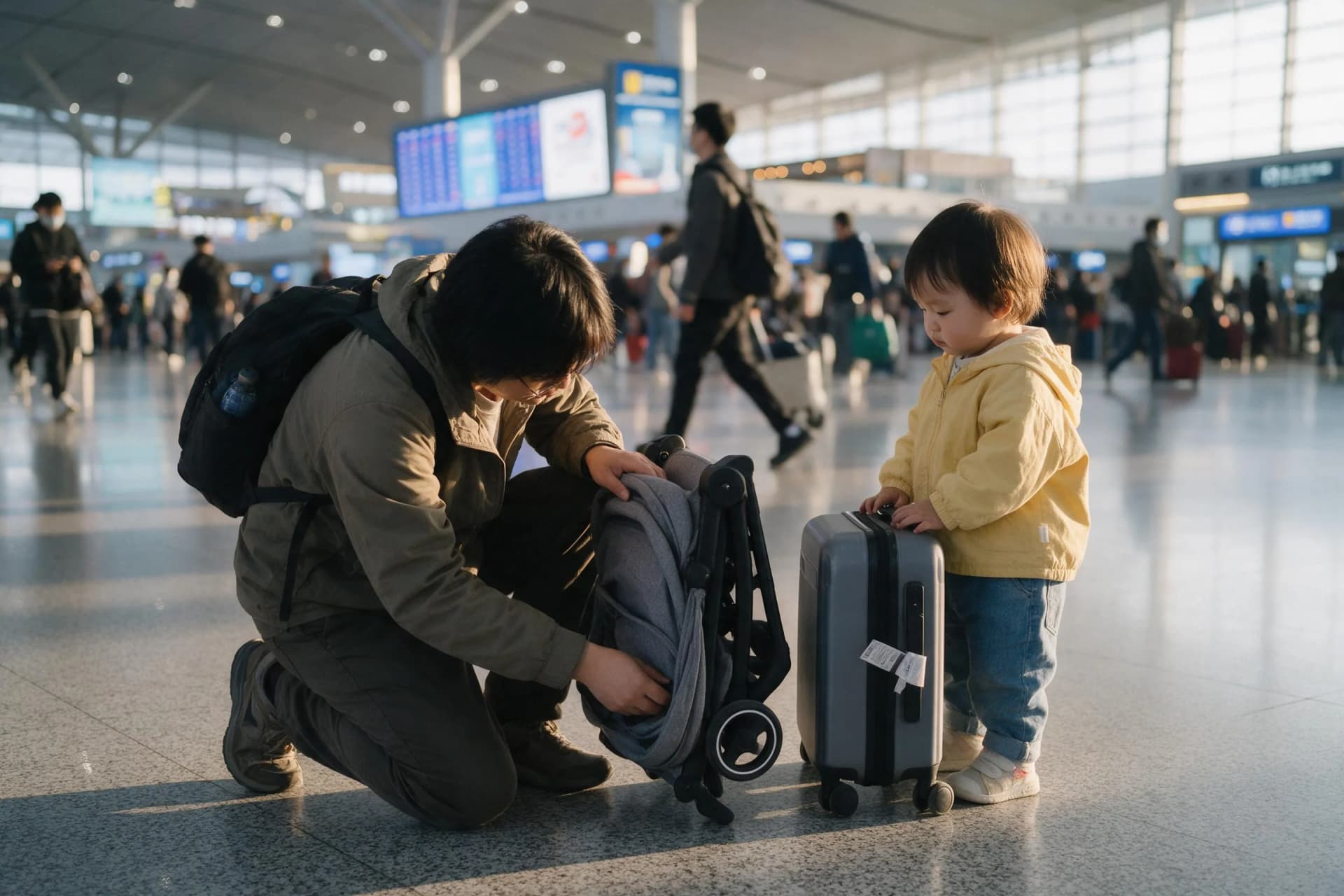
This stroller-first China guide ranks Shanghai, Hangzhou, Beijing and Guangzhou by pavement, lifts, station transfers and crowd pressure, then shows which high-speed legs make sense. You will get a practical city test, a train-day routine, carrier and taxi fallbacks, plus 2026 USD budget ranges for families who value one smooth move over a packed checklist.
In 2026, choose Shanghai and Hangzhou first, then Beijing or Guangzhou only if you can avoid weekday commuter peaks and metro changes without lifts. Give the trip four to seven days, reserve $25–$45 for a taxi fallback on train days, and fold the stroller before security at every major station.
At Shanghai Hongqiao station, the detail that changes a family trip is rarely the train's top speed. It is whether a sleeping toddler can travel from the taxi curb through security and into the waiting hall without being lifted out of a stroller three times. That sequence explains why the best China stroller vacation is not a map of famous places. It is a small chain of easy movements: hotel door to lift, lift to platform, platform to a compact room where the buggy fits.
Use a five-part city screen before booking. First, can you cross the neighborhood with wheels for 1 km without carrying the stroller? Second, does the metro route require more than one change, and are lifts shown at every entrance? Third, are the main sights within a 20-minute walk or taxi ride of the hotel? Fourth, is there a reliable indoor reset within 30 minutes for rain, heat or a nap? Fifth, can the family reach the station in under 45 minutes outside rush hour? Two weak answers are tolerable; three mean the city is a carrier-first stop, not a stroller base.
Shanghai is the strongest opener. Its flat riverside paths, broad mall concourses and many hotel choices make recovery easy, though older metro interchanges still demand a lift-by-lift check. Hangzhou is the natural second base because Shanghai Hongqiao to Hangzhou East takes about 45–75 minutes on high-speed trains, turning a major destination change into a morning errand. Beijing works with a central base and selective sightseeing, but subway lift coverage is uneven and landmark complexes involve long walks; use a carrier for a Great Wall day. Guangzhou is workable in cooler, drier weather if you stay near a major metro line and keep parks or malls as rain backups. For this particular trip, Chongqing and Zhangjiajie are better saved for a carrier-led adventure.
Train choice should follow the same logic. A slower direct service with a familiar station can be kinder than a faster connection that adds a metro ride and 400 m of walking. Compare the complete door-to-door estimate, not only the timetable: add 60–90 minutes at Shanghai Hongqiao, Beijing South or another major hub, 45–60 minutes at a smaller station, and 30–60 minutes from the arrival platform to a central hotel. The Beijing South–Shanghai Hongqiao corridor usually takes about 4.5–6 hours and can replace a flight, but it is better as a deliberate transition day than an add-on after a full sightseeing morning.
On booking sites, favor departures around mid-morning or early afternoon. They clear commuter rush, leave time for breakfast and usually line up with a nap after boarding. Choose seats together and inspect the coach number before buying: families with luggage and a child move more calmly when they are not walking half the platform twice. For a Shanghai–Hangzhou leg, a train leaving after 09:30 and reaching before lunch is the low-friction template. For Guangzhou South–Shenzhen North, the roughly 30–60 minute hop works well only if the hotel-to-station legs are also short.
A folding stroller is useful on this route, but it must behave like luggage. An editorial sweet spot is a model under 22 lb (10 kg) that folds to less than 41 in (105 cm), has a one-hand fold and a rain cover. At security, remove the child, collapse the stroller if staff request it and send it through the scanner; do not assume a lift or family lane at every entrance. On board, place the folded buggy in the luggage rack or the space at the end of the carriage only when staff confirm it will not block an aisle or emergency exit. Keep the child in a carrier during boarding and alighting if that is safer.
The simplest test itinerary is three nights in Shanghai, two in Hangzhou and one flexible night back in Shanghai before departure. That uses two bases, one high-speed leg each way and avoids transferring hotels on the final morning. In Shanghai, pair one compact landmark day with a flat riverside walk; in Hangzhou, protect a full morning around West Lake and keep the afternoon open. Add Beijing or Guangzhou as separate alternatives, not extra stops on the same short trip. A seven-day version can stretch each base by one night, but resist adding a third city merely because a train exists.
Expect local transport, basic tickets and simple family meals to land around $180–$280 per day for three people at 2026 mid-range planning rates, excluding international flights and premium hotels. The $25–$45 taxi fallback is not wasted money when rain floods a curb or a lift is out; it buys back a nap and removes one avoidable carry. Before you lock the route, compare station names in full, check the latest metro lift status and carry each child's original passport if a ticket is linked to them. Then choose the city pair that makes the ordinary transitions feel easy, because those transitions are the trip your child will actually remember.
Good to know
- Route shape
- Allow 4–7 days, keep the itinerary to 2 city bases and spend at least 2 nights in each; avoid more than 1 long rail transfer every 4 days.
- Rail planning times
- Shanghai Hongqiao–Hangzhou East 45–75 minutes; Beijing South–Shanghai Hongqiao 4.5–6 hours; Guangzhou South–Shenzhen North 30–60 minutes. These are 2026 timetable planning ranges, not door-to-door times.
- Stroller shortlist
- Use an editorial target of under 22 lb (10 kg) and under 41 in (105 cm) when folded, with a one-hand fold, rain cover and wheels that lock.
- Station buffer
- Plan 60–90 minutes at a major hub and 45–60 minutes at a smaller station; boarding gates commonly close about 5 minutes before departure, so verify the current deadline on the station display.
- Child fare check
- Under age 6: free without a separate seat, subject to the railway's accompanying-adult limit; ages 6–13: child ticket; age 14 and over: adult ticket. Carry the original booking passport.
- 2026 family budget
- $180–$280 per day for three people at mid-range planning rates, plus a $25–$45 taxi fallback on each rail day; excludes international airfare and luxury hotels.
Frequently asked questions
Which Chinese cities work best with a stroller?
For a first trip, Shanghai and Hangzhou are the easiest pairing because their central routes are comparatively flat and the rail link is short. Beijing and Guangzhou can work with a carefully chosen base, while hill-heavy or stair-heavy destinations are better with a child carrier.
Can you take a stroller on China high-speed trains?
Yes, a folded stroller can normally travel as hand luggage, but there is no guaranteed dedicated stroller bay. Staff may direct you to a luggage area at the end of the carriage; keep aisles clear, confirm placement with staff and use a carrier during crowded boarding.
Does a toddler need a train ticket in China?
A child under age 6 can travel free without a separate seat when accompanied by an adult, subject to the railway's current limits. Children aged 6 through 13 normally need a child ticket, and the passport used for booking should be carried for every ticketed traveler.
Is Beijing or Shanghai easier for families with a stroller?
Shanghai is generally easier for a wheeled first trip because its core is flatter and many hotel, mall and riverside routes allow frequent resets. Beijing remains rewarding, but a family should plan fewer sights, verify metro lifts and use a carrier for uneven historic sites.
How much should a family budget for taxis on train days?
Set aside $25–$45 per train day for one or two short taxi fallbacks. This planning range covers a missed lift, heavy rain or a hotel-to-station transfer, though distance, traffic and vehicle availability will change the actual fare.
Keep exploring
Plan with ChinaMira
Turn this into a trip
Use this guide as a starting point — we can handle the route, guides, trains and the visa invitation letter.