
City Guide
What Is the Best Time to Visit Zhangjiajie in 2026?
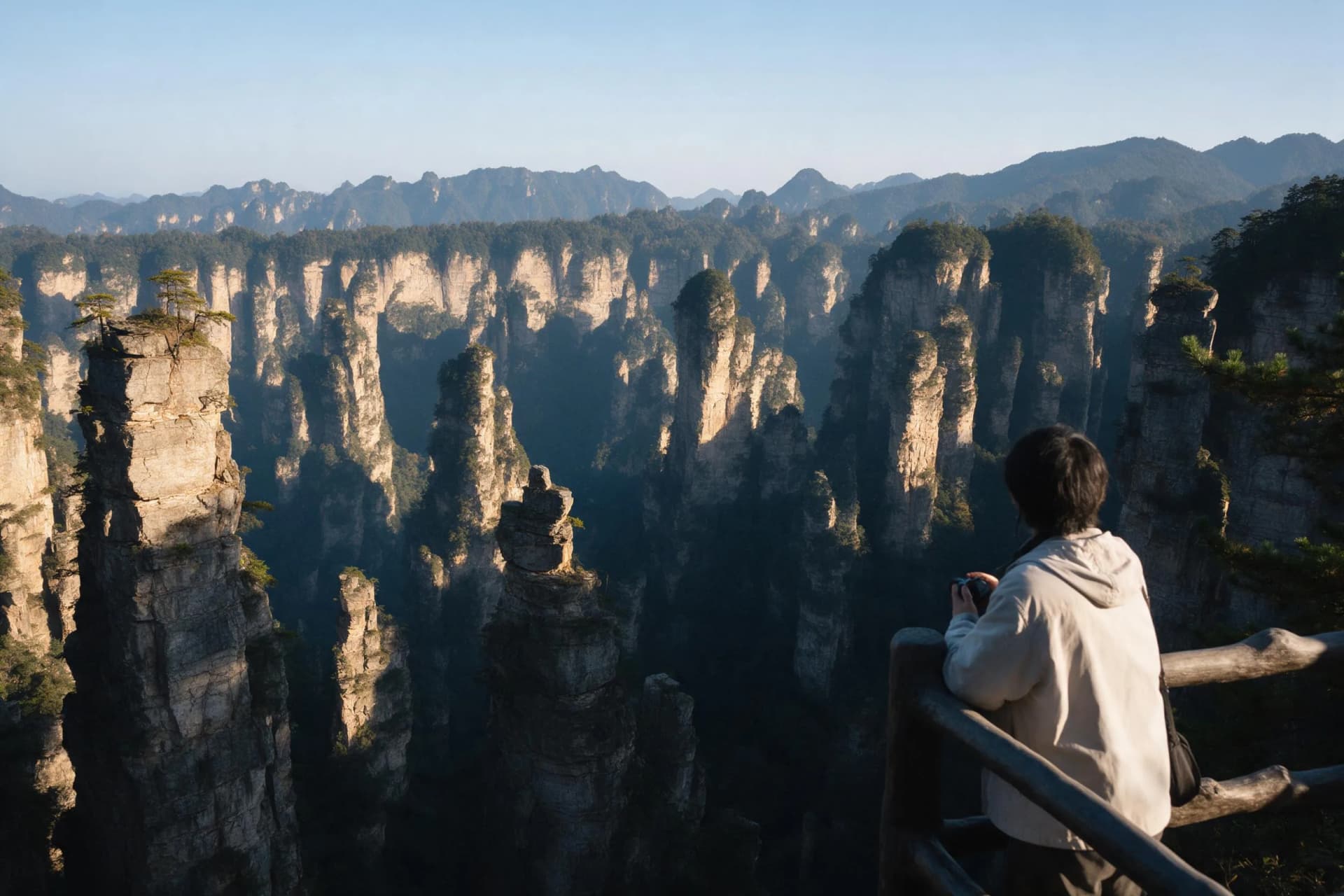
Zhangjiajie rewards travelers who read the calendar. This guide gives the month-by-month temperatures, rainfall, crowd levels and price bands, names late September to mid-November as the best window, explains why July is the one month to avoid, and lists the 2026 holiday dates that fill every train, hotel and elevator queue.
Late September to mid-November is the best time to visit Zhangjiajie, and the sweetest stretch is the two weeks right after the October 1–7 National Day holiday: daytime highs near 22°C, the clearest air of the year, thinning crowds, and a 4-day Wulingyuan ticket around CNY 224–239. Avoid July.
Zhangjiajie sits in a monsoon-influenced humid subtropical pocket of northwestern Hunan, and its best light obeys two simple rules. The park is a forest of more than 3,000 quartz sandstone pillars rising from a wet valley floor, so the mist that collects after rain is the view photographers cross the world for. And because the viewpoints sit high, the peaks run 5 to 8°C cooler than Zhangjiajie city, which is why one month can feel like two seasons depending on where you stand.
Here is the honest month-by-month picture, using approximate averages for Zhangjiajie city; subtract 5 to 8°C on the mountain tops. January: 0–10°C, about 60 mm rain, quiet, lowest prices. February: 2–12°C, about 65 mm, quiet until Spring Festival, then peak rates. March: 8–15°C, about 115 mm, light crowds, mid prices. April: 12–20°C, about 120 mm, moderate crowds, mid prices. May: 16–25°C, about 160 mm, rising crowds, higher prices. June: 20–28°C, about 210 mm, moderate crowds, mid-to-high prices. July: 23–34°C, about 150 mm and 10–13 rain days, peak crowds, highest prices. August: 22–33°C, about 130 mm, peak crowds, highest prices. September: 18–27°C, about 75 mm, moderate crowds, mid prices. October: 13–22°C, about 80 mm, heavy during Golden Week then quiet, mid prices. November: 8–17°C, about 65 mm, quiet, low-to-mid prices. December: 3–11°C, about 40 mm, quiet, lowest prices.
Spring, March to May, is the mist season. Blossoms open, the valleys turn green, and rainy days climb from about 7 in March to 12 by May, which means more mornings when cloud pours between the pillars — the sea-of-clouds shot that made this park famous. April is the connoisseur's month: 12–20°C, soft light, and far fewer people than summer. Watch the Labor Day window of May 1–5, 2026, when Chinese families travel en masse and every cable car line grows.
Summer, June to August, is where the calendar turns against you. June is a genuine compromise — warm, wet, and still quiet before the school holidays — but July is the trap. Daytime highs push toward 34°C, the humidity is thick, rain falls on 10 to 13 days, and the domestic summer vacation fills the park. The Bailong Elevator, which lifts you 326 meters in 88 seconds for CNY 65, is the bottleneck: waits of one to two hours are routine. If summer is your only window, take June, start at the 7:20 a.m. gate opening, and ride the elevator before 9 a.m. or after 3 p.m.
Winter, December to February, is Zhangjiajie's quiet, cheap secret. Average highs sit between 5 and 12°C, rain or snow falls on only 3 to 5 days a month, and the peaks trade mist for rime ice and the occasional heavy snowfall that turns the towers into a black-and-white ink painting. Hotel rates drop to their lowest of the year, and you may have a viewing platform almost to yourself. Two cautions: sunrise is not until about 7:30 a.m., and the Spring Festival holiday of February 15–23, 2026, flips the whole region into its busiest travel week.
So which month should you actually avoid? July. It combines the year's highest temperatures, 10 to 13 rain days, peak domestic crowds, and the steepest hotel and airfare prices; add a one-to-two-hour Bailong Elevator queue and you are paying the most for the least comfortable version of Zhangjiajie. If your dates are locked to summer, late June or late August is gentler. The other windows to dodge are the national holidays — Spring Festival February 15–23, Labor Day May 1–5, and National Day October 1–7, 2026 — when the whole country travels at once.
Practical timing matters as much as the month. Autumn travelers should book high-speed rail seats and park-area hotels two to three months ahead, because late October has become a global bucket-list window; trains from Changsha to Zhangjiajie West run about 2 to 3.3 hours for CNY 144–310 in second class, then a bus reaches Wulingyuan in 40 to 50 minutes for CNY 12–13. Pack a rain shell in every season, grippy shoes for wet stone, and layers for that 5 to 8°C mountain gap. Give Wulingyuan four days, since the ticket allows it, and keep one morning free for the post-rain cloud sea.
If your dates are flexible, aim for the clear second half of October or the misty weeks of April, and let the forecast choose your viewpoints. To turn a season into a route, start with our Zhangjiajie travel guide for the full destination, then borrow the sunrise and sunset platforms from the Zhangjiajie photography spots guide, check the national picture in our month-by-month China planner, and browse photography journeys in China for more light-chasing trips. The Avatar Mountains story explains the geology behind the view. Tell ChinaMira your travel dates and the light you are hoping for, and we will build the Zhangjiajie stretch around them — guesthouse booked inside the park for sunrise, timed elevator and cable-car slots reserved, and a wet-weather plan that still puts you in front of something unforgettable.
Good to know
- Best months
- Late September to mid-November for clear air and foliage; April to May for mist and cloud seas; December to early February for snow, the lowest prices and the thinnest crowds.
- Month-by-month climate
- Zhangjiajie city averages: January 0–10°C with about 60 mm rain; April 12–20°C with 120 mm; July 23–34°C with about 150 mm and 10–13 rain days; October 13–22°C with 80 mm; December 3–11°C with about 40 mm. Mountain tops run 5 to 8°C cooler.
- 2026 holiday dates to dodge
- Spring Festival February 15–23, Qingming April 4–6, Labor Day May 1–5, Dragon Boat June 19–21, Mid-Autumn September 25–27, and National Day October 1–7, per the State Council holiday notice for 2026.
- Tickets and transport inside the park
- Wulingyuan 4-day ticket about CNY 224–239; Bailong Elevator CNY 65 one way (326 meters in 88 seconds); Tianzi Mountain cable car CNY 72; Yangjiajie cable car CNY 76; four-ride combo CNY 238; Tianmen Mountain Route A ticket CNY 288.
- Getting there
- Changsha to Zhangjiajie West by high-speed rail takes about 2 to 3.3 hours and costs CNY 144–310 in second class; buses from Zhangjiajie West station to Wulingyuan take 40 to 50 minutes for CNY 12–13.
- Park hours and sunrise
- Wulingyuan gates open about 7:20 a.m.; eco-buses run 7:00 a.m. to 7:00 p.m. from March to November and 8:00 a.m. to 6:00 p.m. from December to February. Sunrise moves from about 7:30 a.m. in January to 5:45 a.m. in June.
Frequently asked questions
What is the best month to visit Zhangjiajie?
Late September to mid-November is the best window, with daytime highs near 22°C, the driest and clearest air of the year, and thinner crowds once the October 1–7 National Day holiday ends. April to May is the misty alternative for cloud-sea photography.
Which month should I avoid in Zhangjiajie?
Avoid July: highs near 34°C, 10 to 13 rain days, peak domestic summer crowds, the year's highest hotel rates, and Bailong Elevator waits of one to two hours for the 326-meter, 88-second ride. Late June or late August is a gentler summer choice.
When can I see the sea of clouds in Zhangjiajie?
April to May and September to early November give the best odds, especially the morning after rain, when mist fills the gaps between the sandstone pillars. Be at Yuanjiajie or Tianzi Mountain within two hours of sunrise — about 6:15 a.m. in April and 6:35 a.m. in October.
Does Zhangjiajie close in winter, and what does it cost?
No. Wulingyuan and Tianmen Mountain stay open from December to February, when average highs are 5–12°C, rain or snow falls on only 3 to 5 days a month, hotel rates hit their yearly low, and sunrise is not until about 7:30 a.m. The 4-day Wulingyuan ticket still costs about CNY 224–239.
How much does a Zhangjiajie trip cost in high season versus low season?
Park tickets hold steady at roughly CNY 224–239 for four days, plus CNY 65 for the Bailong Elevator one way, but hotels swing hard: expect about double the low-season room rate in July, August and the October 1–7 Golden Week, and the cheapest rates from December to early February.