
China Train Station Boarding Process Photography Spots: 2026 Guide
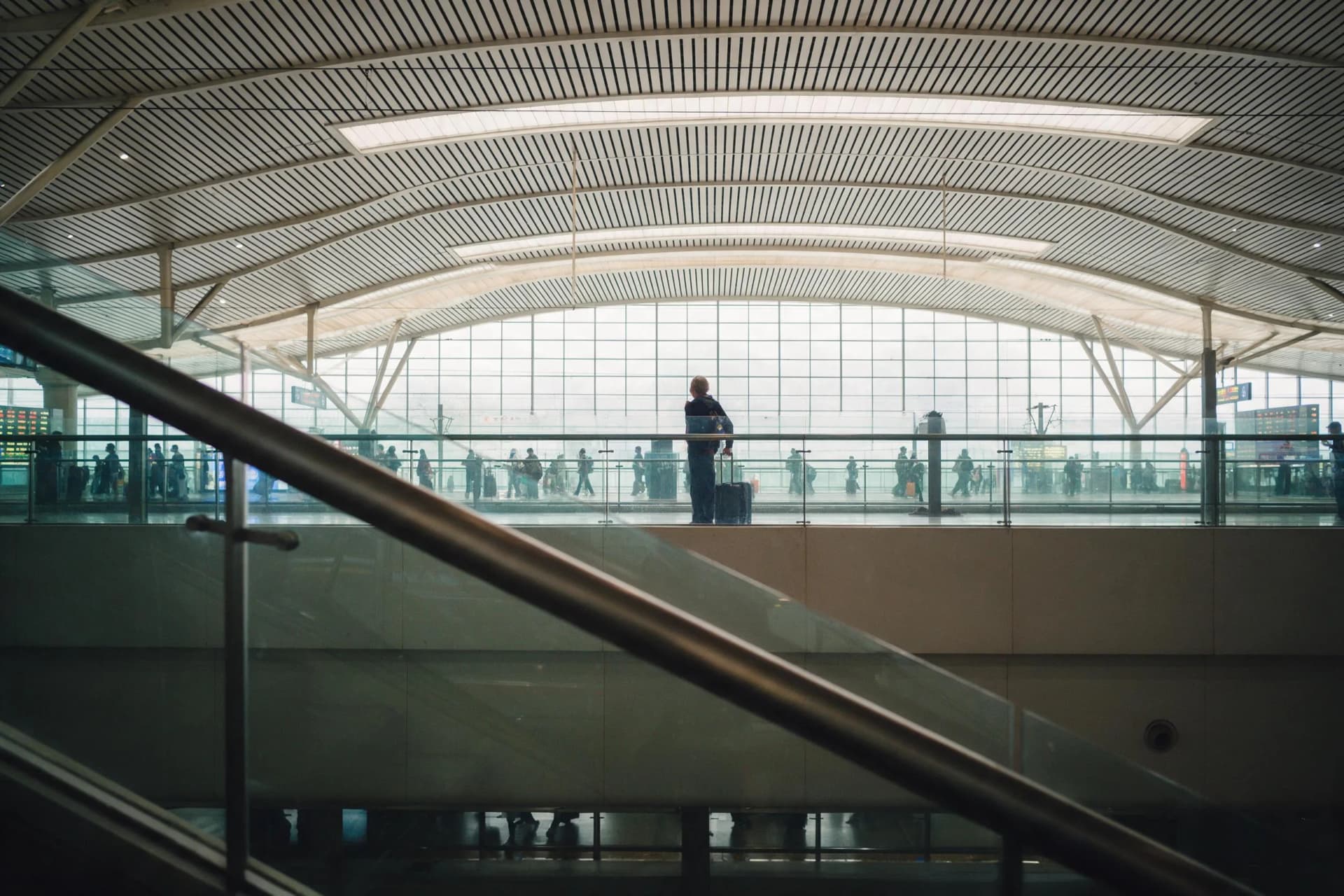
This photo-first 2026 guide turns a Chinese railway departure into a workable shot list. It names three major hubs, maps each photogenic viewpoint to the boarding timeline, and pairs passport, security and ticket-gate checks with exact light windows, crowd cuts and camera settings for foreign travelers. It is built for photographers who also need to catch a train.
For a 2026 photo-focused departure, choose Beijing South, Shanghai Hongqiao or Guangzhou South; arrive 90 minutes early, clear security with your passport and same-day e-ticket, then shoot the free daylight concourses before your gate opens. Station access is USD 0 beyond your train fare. Skip platforms without staff permission.
Start with the station, not the camera These hubs reward different pictures. Beijing South offers a broad elliptical roof and symmetrical concourse; Shanghai Hongqiao has a glass-and-steel sweep; Guangzhou South is best for long converging rooflines. A same-day booking and the original passport used for it belong in the photography kit because the useful interior viewpoints sit beyond security. There is no separate photography ticket, and access costs USD 0 beyond your train fare. The exterior is public space, but the departure hall becomes your studio only after security.
Fit photography around the boarding sequence Verify the full station name, train number and departure time before leaving your hotel. At the entrance, X-ray every bag and keep your passport accessible. Use the departure board to find the waiting zone rather than searching for an unassigned platform. Photograph while gate information settles, reach the ticket gate 30 minutes before departure, and use the staffed channel if a reader rejects your passport. Major stations often process passengers 20–30 minutes before departure and stop about five minutes before the scheduled time. Plan the sequence as exterior T-90 to T-70, security T-70 to T-55, interiors T-55 to T-35, and gate T-30. Stop if you block the queue.
Beijing South: the upper-railing view After security, follow the upper waiting mezzanine beside the central escalators until the railing gives a lengthwise view across the hall beneath the elliptical roof. Here ceiling lines separate from the crowd below. A same-day ticket and passport are required for this passenger area; no extra photography fee applies. In clear weather, shoot 09:00–10:30 from October through March or 08:30–10:00 from April through September. Overcast light works through midday. Weekday traffic eases between 09:30 and 11:30, while the 07:00–09:00 rush is less forgiving. Try 24mm, f/7.1, 1/160 sec and ISO 800; expose for the windows and let bright boards fall into shadow.
Shanghai Hongqiao: the glass-roof corridor Hongqiao’s strongest interior composition is from the upper-level railing above the main departure hall, near the western end of the central concourse, looking through the roof’s repeating ribs. This is a ticketed passenger area, not an observation deck, so bring the passport and booking used at the gate. The best light is usually 16:00–17:30 from October through March and 17:00–18:30 from April through September. Wet weather can be better because the glass turns silver and reflections replace hard shadows. Use the weekday 10:00–11:30 lull if possible; expect the hall to tighten after 16:30. Start with 28mm, f/5.6, 1/125 sec and ISO 1250. Brace against the railing instead of placing a tripod across the walkway.
Guangzhou South: the converging vault From the upper waiting gallery above the central hall, near the north escalators, point south so roof ribs converge toward the far end. This frame communicates the building’s length; the floor-level view loses that compression. The viewpoint requires a valid same-day ticket, while the exterior plaza does not. In warmer months, try 07:30–09:00; from November through February, use 15:30–17:00. Weekdays between 10:00 and 11:30 are most forgiving, whereas Friday evenings and public holidays fill the railings early. Start with 18mm at f/8, 1/100 sec and ISO 640. Keep verticals straight, leave the center aisle visible, and shoot wide before moving closer.
Settings that work in all three halls For architecture, use a 24–35mm full-frame lens, f/5.6–f/8, at least 1/125 sec, and Auto ISO capped around 6400. Meter for the bright roof, then lift the crowd later. A single exposure is usually cleaner than an HDR burst where passengers move. On a phone, choose the main 1x lens instead of the ultra-wide for straighter columns, tap the brightest window, and lower exposure by 0.3–0.7 EV. Turn off beauty filters, keep the grid on, and burst when someone crosses the foreground. For movement, use 35mm, f/2.8, 1/250 sec and ISO 800–3200. Move closer rather than digitally zooming.
Shoot the journey, respect the checkpoint Security lanes, ticket gates and staff-only doors are operational spaces, not scenic props. Do not photograph X-ray screens, staff at work, or identifiable passengers without consent. Keep flashes out of queues, avoid blocking escalators, and ask an employee before photographing a platform. Tripods and drones may be refused even where handheld photography is accepted; local instructions take priority. Keep your bag at your feet while changing lenses, keep the passport in one pocket, and stop when staff ask you to move. The best travel photograph leaves the station’s work undisturbed.
A lean shot list for departure day At T-90, photograph the façade from across the drop-off road. At T-70, clear security. At T-55, take an upper-level wide frame with the settings above. At T-40, switch to details: suitcase wheels, roof joints and a hand on the railing. At T-30, pack the camera and walk to the gate; by T-5, it may already be closing. Send ChinaMira your station, departure time and luggage count, and we will turn this into a photo stop that still gets you aboard.
Good to know
- Photo-access cost
- USD 0 beyond your train fare: same-day station-hall access uses your booking and original passport, with no separate photography ticket in 2026.
- 90-minute photo clock
- Arrive 90 minutes early; shoot the exterior from T-90 to T-70, interior views from T-55 to T-35, and reach the ticket gate by T-30. Processing often stops about 5 minutes before departure.
- Best light windows
- Beijing South: 09:00–10:30 from October–March and 08:30–10:00 from April–September. Shanghai Hongqiao: 16:00–18:30. Guangzhou South: 07:30–09:00 or 15:30–17:00, depending on season.
- Crowd timing
- Weekday 09:30–11:30 is generally calmer than 07:00–09:00. Avoid 16:30–19:30, Friday evening departures and the first day of public holidays if you need empty railings.
- Camera baseline
- Use a 24–35mm lens, f/5.6–f/8, 1/125 sec, and ISO 400–1600 for architecture. For passenger movement, use 35mm, f/2.8, 1/250 sec and ISO 800–3200.
- Ticket and platform rule
- Carry the original passport used for the 2026 booking. Never enter a platform without a valid ticket or staff permission, and stop photographing if railway staff ask you to move.
Frequently asked questions
Can foreigners take photos inside Chinese train stations?
Usually yes in public passenger areas with a valid same-day ticket, but photography is not guaranteed everywhere. Avoid security screens, staff-only zones and identifiable travelers without consent, follow posted rules, and ask staff before photographing a platform or any operational area.
Do I need a special ticket to photograph Beijing South or Shanghai Hongqiao?
No separate photography ticket exists. You need a valid same-day train ticket and the original passport used for the booking to pass security and reach the departure-hall viewpoints. Exterior photographs can be taken without a train ticket.
Which station has the best train-station photo spot for a first visit?
Beijing South is the simplest first choice because its upper waiting mezzanine provides a clean view across the hall and its huge roof. Shanghai Hongqiao suits cooler glass-and-steel images, while Guangzhou South is best for long converging rooflines.
How early should I arrive if I want photos before boarding?
Arrive 90 minutes before departure at these major hubs. Use the first 20 minutes outside, allow 15–20 minutes for security, and photograph the departure hall for about 20 minutes before moving toward the gate 30 minutes before departure.
What camera settings should I use inside a Chinese railway station?
Start with a 24–35mm lens, f/5.6–f/8, 1/125 sec or faster, and Auto ISO up to 6400. Expose for the brightest windows, keep vertical lines straight, and avoid long exposures unless you can brace the camera without blocking passenger flow.
Keep exploring
Sources & verification
Sources used for this guide
Time-sensitive travel details can change. Reconfirm opening hours, prices and entry rules before departure.
- 112306.cn12306.cn
- 2china-railway.com.cnchina-railway.com.cn
Local operating context
ChinaMira Beijing Guide Team contributes local route and operating knowledge from Beijing. This team byline identifies a real operating group rather than a fictional individual author.
Related journeys
Turn this guide into a real trip
These are currently bookable journeys selected from the place and theme of this guide. Availability is rechecked before display.
Beijing & the Wild Great Wall
Five unhurried days in the capital, pairing the Forbidden City and hutong life with a full day walking the unrestored ridges of Jinshanling.
5 days
Next departure: Mar 15, 2027
Shanghai & Jiangnan Water Towns
Five days moving between Shanghai’s riverfront skyline and the canals, gardens and stone bridges of the Jiangnan water towns.
5 days
Next departure: Apr 6, 2027
Plan this trip
Turn this guide into a practical itinerary
Send us the article as context. A ChinaMira specialist can check the route, dates, transport, tickets and the details that need local confirmation.