
Travel Guide
What to Pack for China: The Complete First-Timer's Packing Guide
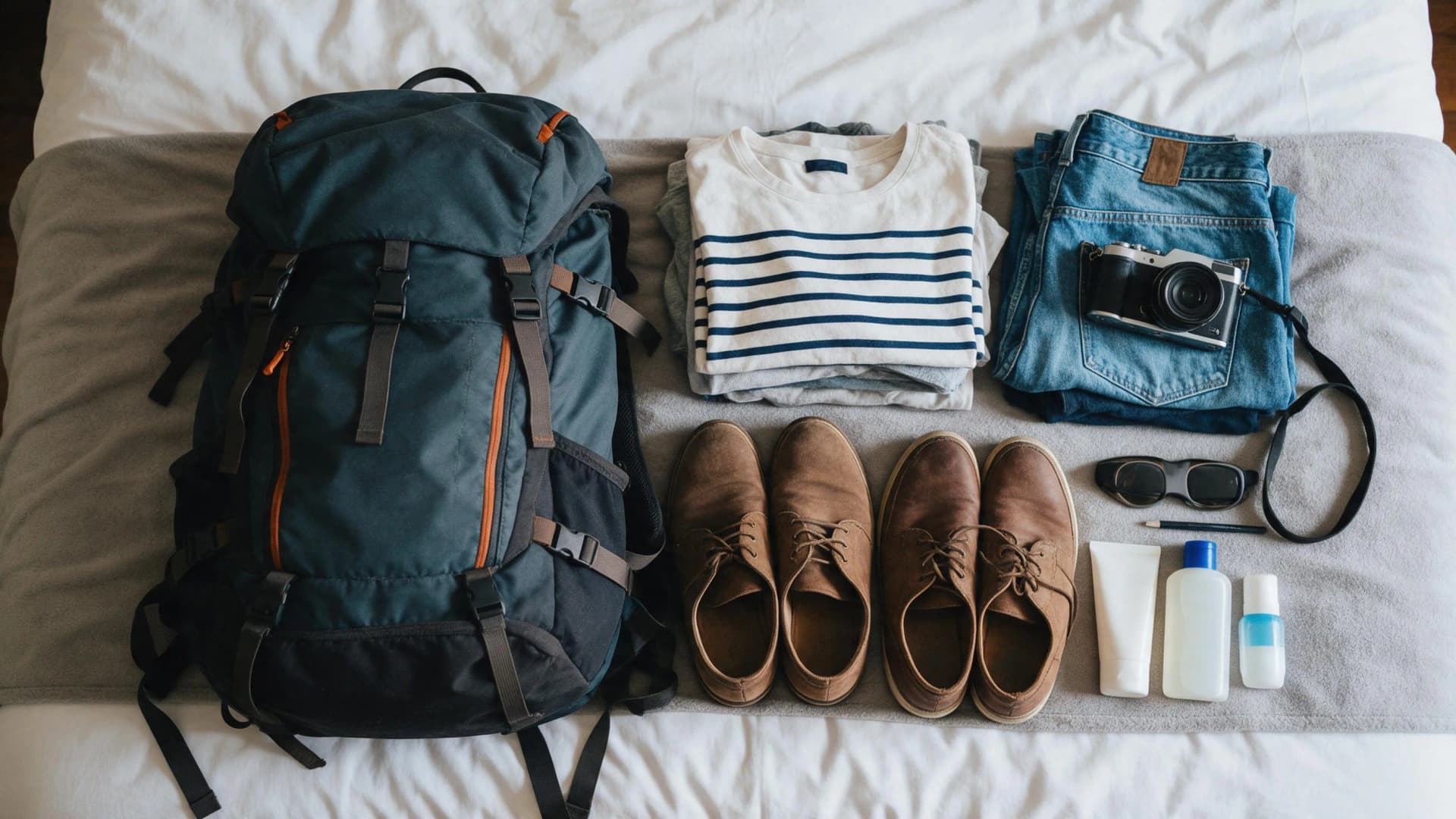
Packing for China is part preparation, part promise. This warm, story-driven guide walks you through the essentials — documents, mobile payments, adapters, season-smart clothing, and the small items that save a trip — so you can land ready for anything.
The suitcases always come out a week early for China. Mine did, anyway: laid open on the bedroom floor while I packed for a trip that stretched from Beijing's frosty January mornings to humid, subtropical Guilin. That is the first secret of packing for China — the country is enormous, and “China weather” is really half a dozen climates wearing one name. The second secret is that preparation changes everything. Get the right documents, payments, adapters, and layers in place, and you will glide through airports, train stations, and temple steps. Miss them, and every day starts with a small, fixable headache. This guide is your fix.
Start with the paperwork, because it is the one thing money cannot solve at the gate. Your passport should be valid well beyond your departure date — six months is the safe standard — and check China's current visa rules before booking. Travelers from many countries now enjoy visa-free entry or a 240-hour visa-free transit stopover, and policies shift often, so confirm the latest rules with an official source. Photograph your passport, visa, and itinerary, then store copies in the cloud and inside your luggage. Finally, buy travel insurance and keep the policy saved offline; it costs little and turns an unexpected hospital visit or missed connection into a story instead of a crisis.
China runs on phones. WeChat Pay and Alipay now accept foreign credit cards, which makes getting around feel almost miraculous — scan a code for a bowl of noodles, a metro ticket, or a museum entry. Set both up before you fly, linked to the same card, and carry roughly 200 to 400 RMB in small bills as backup for rural markets, tiny street stalls, and the occasional shop that only takes cash. For connectivity, buy an eSIM or an international roaming plan before departure, and download offline maps plus a translation app while you still have your home network. Then screenshot your hotel's address in Chinese characters — showing that to a taxi driver beats mispronouncing it every time.
China's wall sockets mostly accept the same two-prong plugs as the United States, but the voltage runs at 220V — double the American standard. Check that your chargers and hair tools are dual-voltage (most modern ones are), and pack a universal adapter with USB-C ports anyway, because three-prong American plugs will not fit. Bring a power bank for those long high-speed rail days, but keep it under 100 watt-hours and in your carry-on, where airlines enforce the rules strictly.
Think layers, and think walking. China's cities reward travelers who can cover ground — the Forbidden City alone can swallow ten thousand steps before lunch — so bring your most comfortable, broken-in shoes and a second pair to rotate. Season by season: spring and autumn call for a light jacket and a scarf; winter in Beijing or Harbin demands a serious coat (northern buildings heat up nicely, but the streets do not); summer in the south is hot, humid, and rainy, so pack breathable fabrics and a compact umbrella. Keep shoulders and knees covered for temples and rural villages — it is always the respectful choice — and remember that most hotels offer laundry service, so you can pack lighter than your instincts suggest.
A small pharmacy kit saves you from hunting for ibuprofen at 11 p.m. in a strange city. Bring daily prescriptions in their original bottles, ideally with a doctor's note: some common US medications are tightly controlled in China, so never carry more than a personal supply. Add basic pain relievers, allergy medicine, antacids, and motion-sickness tablets for winding mountain roads. Two more essentials travelers constantly forget: hand sanitizer, and a pocket pack of tissues, because many public restrooms — even at popular sights — do not provide toilet paper.
Then come the small items that quietly save a trip: a reusable shopping bag for market days, earplugs and an eye mask for overnight trains, a lightweight daypack for excursions, and a few familiar snacks for long rides. If you plan to bring a drone, research China's registration rules carefully first — or simply leave it at home. And pack half the clothes you think you need. Chinese cities brim with shops, and you will want empty suitcase space for the tea, silk, and small treasures you will not be able to resist.
Packing well is really about confidence — the quiet assurance that when the plane lands in a country of 1.4 billion people and five thousand years of history, you are ready for whatever comes next. Start your list today, and let China handle the rest. When you are ready to shape the trip itself — the routes, the high-speed rail tickets, the guides, the hotels — the ChinaMira team is here to help, and our destination guides will tell you exactly what awaits at the other end of the runway. Safe travels, and pack something wonderful.
Good to know
- Passport and entry
- Keep your passport valid at least 6 months beyond departure. China's 240-hour (10-day) visa-free transit covers 55 countries and 65 ports, and many nationalities also get 30-day unilateral visa-free entry; both require a confirmed onward ticket and shift often, so verify the current rules with the National Immigration Administration before booking.
- Mobile payments
- Alipay and WeChat Pay both link to foreign Visa, Mastercard, JCB, Diners Club and Discover cards. Transactions up to CNY 200 carry no extra fee; above that the fee is 3%, with a USD 5,000 per-transaction and USD 50,000 annual limit.
- Cash backup
- Carry 200-400 yuan (roughly USD 30-60) in small notes for rural markets, temple donation boxes and the occasional cash-only stall. Hotels, metros and big-city shops almost always accept a phone payment instead.
- Power and plugs
- China runs on 220V/50Hz with type A, C and I sockets. Flat two-prong US plugs usually fit, but three-prong US plugs need an adapter. Phones, tablets and laptops are dual-voltage; check hair dryers and curling irons before packing them.
- Power banks and flights
- Keep every power bank in your carry-on. Up to 100Wh is allowed without approval, 100-160Wh needs airline approval, and since 28 June 2025 domestic flights in China require a valid 3C mark - unmarked or recalled banks are banned outright.
- Train luggage and medicines
- China Railway allows 20 kg of carry-on per adult and 10 kg per child, with a single bag up to 160 cm (ordinary trains) or 130 cm (high-speed) length plus width plus height, and folding strollers travel free. Bring daily prescriptions in their original bottles with a doctor's note, plus tissues and hand sanitizer, because many public restrooms supply no paper.
Frequently asked questions
Do I need a visa to visit China, and how long must my passport be valid?
Many travellers do not need a visa. As of 2026, China's 240-hour (10-day) visa-free transit covers citizens of 55 countries entering through 65 designated ports, and a growing list of countries also has 30-day unilateral visa-free entry. Either way your passport should be valid for at least 6 months beyond departure, and you need a confirmed onward ticket for the transit route, so confirm your eligibility with China's National Immigration Administration before booking.
Can I use my foreign credit card in China, and how much cash should I carry?
Yes. Link an international Visa or Mastercard to both Alipay and WeChat Pay before you fly, then pay by QR code almost everywhere. Transactions of 200 yuan or less carry no extra service fee; above 200 yuan a 3 percent fee applies, with a USD 5,000 single-transaction limit. Carry 200-400 yuan in small notes as backup for rural markets, tiny stalls and the rare cash-only counter.
Will my phone charger and hair dryer work in China?
China runs on 220V/50Hz, double the US standard, and uses type A, C and I sockets. Flat two-prong US plugs usually fit, but three-prong US plugs need an adapter, so pack one universal adapter with USB-C ports for the whole family. Phones, tablets and laptops are dual-voltage and are fine; most hair dryers and curling irons are not, so check the label before packing them.
How much luggage can I take on a high-speed train, and can I bring a power bank on the plane?
China Railway allows 20 kg of carry-on per adult and 10 kg per child, with a single bag up to 160 cm length plus width plus height on ordinary trains and 130 cm on high-speed trains; folding strollers travel free. Power banks must go in the cabin: up to 100Wh is allowed, 100-160Wh needs airline approval, and since 28 June 2025 domestic flights require a valid 3C mark, so an unmarked bank will be confiscated.
What should I pack for China's weather across different seasons?
Pack three layers per person - a breathable base, a warm middle and a wind-and-rain shell - because one itinerary can span a Beijing January below freezing and a humid Guilin July above 30C. Add broken-in walking shoes plus a second lighter pair, since a single palace complex can eat 10,000 steps before lunch, and a compact umbrella for the southern rainy season.