
Traveling China With Older Parents: A 12-Day Pace and Altitude Plan
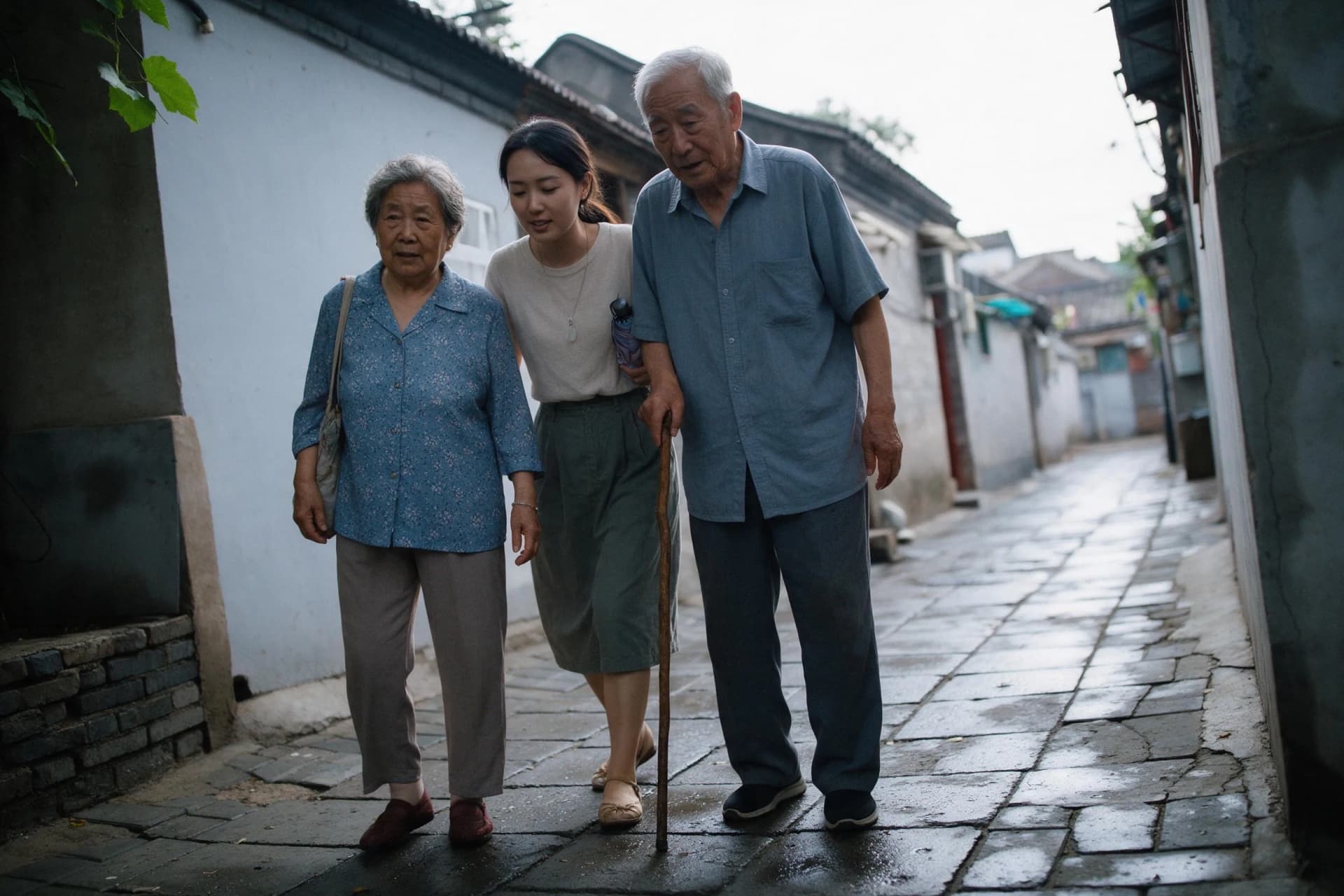
Older parents can enjoy China when the itinerary protects their energy rather than merely slowing a standard tour. This 12-day plan uses three lowland bases, one main sight a day and a clear cutoff for an optional plateau extension, covering medical questions, Xining and Lhasa acclimatization, realistic walking limits and a dated USD planning estimate.
Yes, older parents can visit China when they are medically stable, can walk for 60–90 minutes a day in short blocks, and accept a 12-day lowland itinerary built around three bases. Add a plateau only after clinician clearance, two nights in Xining and two in Lhasa; skip it if altitude symptoms appear.
The first family decision is not “how much can we see?” but “does the plateau belong in this trip?” Treat altitude as a separate route, not an extra stop. A 12-day lowland version can cover Beijing for 3 nights, Xi'an for 3, Chengdu for 4 and one buffer night. The optional 14-day plateau version uses Beijing for 3 nights, Xi'an for 3, Xining for 2, Lhasa for 4 and another buffer night. The second plan adds two staging points and 48 hours, and it is the only responsible way to combine deep history with thin air. If a parent tires on stairs, becomes breathless at rest or has an unstable heart or lung condition, keep the highland section off the calendar and spend the extra days in Chengdu.
Pacing begins before the first landmark. The arrival day contains no timed ticket: collect the bags together, take a private transfer if station walking may exceed 15 minutes, eat near the hotel and sleep. The next morning gets one anchor sight, followed by lunch and an unhurried afternoon. After two active days, give the next day a late start or a complete rest. This rhythm is especially useful at the Great Wall, where a short flight of steep, uneven steps can demand more from knees and balance than a three-hour museum visit on level floors. A parent who can handle the Forbidden City's broad courtyards may still decide not to climb a watchtower. Let that be a good plan, not a failure.
Describe walking in minutes and steps, not in labels such as “active” or “slow.” A useful daily ceiling is 60–90 minutes in 20–30 minute blocks, with a real chance to sit between them. At hotels, ask whether the route from the vehicle drop-off to the bed is step-free and whether the bathroom has a raised threshold. At stations, request adjacent seats and the shortest route to the correct waiting area; do not assume that an elevator shown on a station map is open. In Xi'an, a short section of the city wall and a courtyard meal can make a satisfying afternoon without a full circuit. In Chengdu, a teahouse break is part of the itinerary, not wasted time.
Altitude is a health question, not a toughness test. Above roughly 8,000 feet, or 2,500 meters, the body has less oxygen available, and acute mountain sickness can affect travelers of any age. Age alone is not a reliable predictor. A clinician should review heart disease, lung disease, sleep apnea, recent illness and every prescription before anyone travels into the highlands. Carry medicines in original labeled packaging with a copy of the prescription, and ask the clinician what symptoms should prompt a lower altitude or medical assessment. Alcohol and strenuous sightseeing do not belong in the first 48 hours at height.
For the plateau version, use the geography to slow the ascent. Xining sits at about 7,470 feet, or 2,275 meters; give each parent two quiet nights there before boarding the train to Lhasa at about 11,975 feet, or 3,650 meters. Book a soft sleeper rather than planning to sit upright for the long ride. The railway crosses passes higher than Lhasa, so the train itself does not prove that someone has acclimatized. Keep the first two Lhasa days close to the hotel: short walks, tea, simple meals and early nights. Do not schedule a high pass, a long drive or a stair-heavy monument during that window.
Know when to stop climbing. Worsening headache with nausea, dizziness, unusual fatigue or poor sleep deserves rest, hydration and a call to the trip’s medical contact. Breathlessness at rest, confusion, a cough that becomes severe or difficulty walking in a straight line are urgent warning signs; stop ascending and seek prompt medical assessment. A canister of oxygen can ease discomfort, but it is not evidence that the next climb is safe. Travel insurance should explicitly cover the planned maximum elevation, emergency medical care and evacuation, as well as pre-existing conditions. Check those terms before paying for flights.
Budget from the care required rather than from a headline tour price. For two parents sharing a room and vehicle, a useful 2026 midrange planning range is $250–$450 per parent per day, including hotels, domestic transport, private transfers, tickets, meals, guide costs and insurance. That equals about $3,000–$5,400 for 12 lowland days or $3,500–$6,300 for 14 plateau days; international airfare is separate. These are estimates dated October 28, 2026, not live quotes. Ask for every inclusion and cancellation term in writing, then tell ChinaMira each parent’s comfortable walking window, stair limit, medical considerations and preferred number of hotel changes. We can turn that brief into a route with one clear altitude cutoff.
Good to know
- Route decision
- 12 lowland days with 3 bases, or 14 plateau days with 4 bases; do not squeeze Lhasa into the 12-day plan.
- Daily walking
- 60–90 minutes in 20–30 minute blocks, with seated breaks and no more than 1 major sight per day.
- Altitude checkpoints
- Xining about 7,470 ft (2,275 m); Lhasa about 11,975 ft (3,650 m); clinician review recommended before travel above 8,000 ft.
- Acclimatization plan
- 2 nights in Xining before the train and 2 quiet nights in Lhasa before any pass above Lhasa’s elevation.
- 2026 planning cost
- $250–$450 per parent per day for two sharing a room and vehicle: about $3,000–$5,400 for 12 days or $3,500–$6,300 for 14 days, excluding international airfare.
- Medical stop rule
- Cancel further ascent for breathlessness at rest, confusion, severe cough or an unsteady walk; call emergency services and seek medical assessment.
Frequently asked questions
Is high-altitude travel safe for older parents in China?
No itinerary can promise safety at altitude. A clinician should assess heart, lung and other chronic conditions. Use a staged route, allow two quiet nights after arriving in Lhasa and turn back if symptoms worsen.
How many nights in Lhasa do older travelers need?
Allow at least two quiet nights after arrival before any higher pass or long excursion. Four nights in Lhasa gives more room for rest and weather changes, and it is the number used in this article’s 14-day plateau plan.
Can a 75-year-old parent travel to China?
There is no universal age cutoff in a sensible family itinerary. Readiness depends on walking tolerance, balance, chronic conditions, medicines and a clinician’s advice. Book a lowland route first if those factors have not been reviewed.
What altitude symptoms should end the day?
Stop and get medical advice if a headache, nausea or dizziness worsens despite rest. Breathlessness while sitting still, confusion, severe coughing or an unsteady walk are emergency signs and mean no further ascent.
Should older parents fly directly to Lhasa or stop in Xining?
A Xining stay and the onward train create a more gradual route than a rushed lowland-to-Lhasa flight, although the train crosses high passes. Ask a clinician which approach fits your parent’s health and keep the first 48 hours in Lhasa quiet.
Keep exploring
Plan with ChinaMira
Turn this into a trip
Use this guide as a starting point — we can handle the route, guides, trains and the visa invitation letter.