
Story
Is China Safe for American Tourists? Honest 2026 Answer + Photo Spots
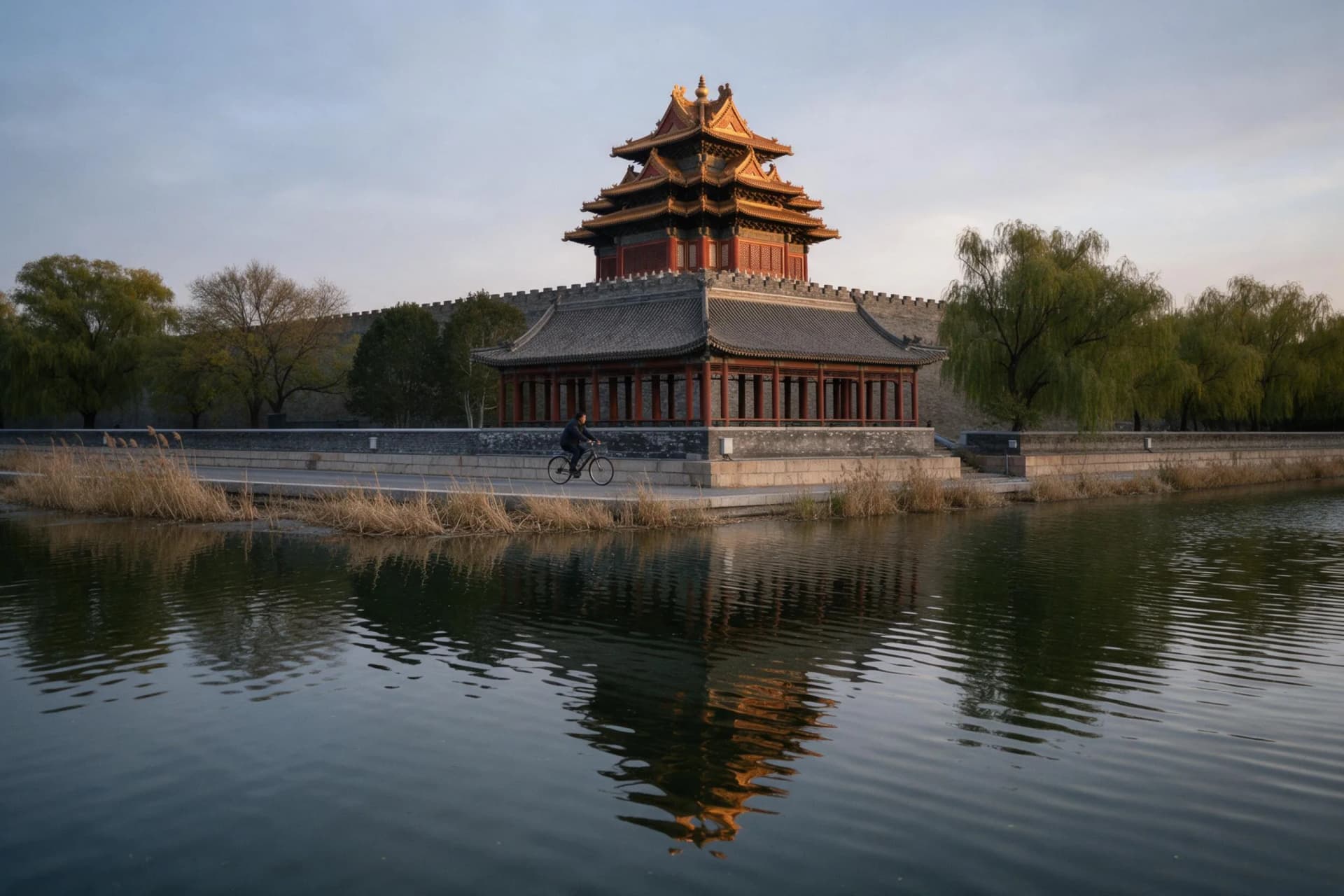
The safety question looks different for photographers. China's streets are lit and staffed and every metro gate screens bags, so the real risks are a rigged taxi meter and a strict legal line rather than a mugging. Below is the plain answer, then five spots - Mutianyu at opening, the Forbidden City corner tower at dawn, Jingshan at sunset, the Bund at blue hour and the Xi'an wall at golden hour - each with viewpoint and light window.
Yes — as of October 2026, China is a safe destination for American tourists. Violent crime against visitors is rare, public spaces are heavily staffed, and the ordinary trip rarely brings trouble. The conditions: book official taxis and tickets, carry your passport at all times, and treat China's drug and exit-ban laws as absolute rather than negotiable.
What “safe” looks like on the ground. Every metro entrance in Beijing and Shanghai runs a staffed bag screening, so platforms are watched spaces rather than quiet ones, and travelers routinely walk back from dinner at 23:00 without incident. The petty crime that does exist is the same as anywhere: crowded trains, packed night markets, a wallet in a back pocket.
Two risks are genuinely real, and neither is a stranger in an alley. The first is money: a flat-fare taxi, a tea-ceremony bill, a laminated “fast pass” no gate will scan — the commission pattern where a friendly stranger picks the venue and the price. The second is the law: drug offences are prosecuted hard and trafficking carries the death penalty, so never carry a parcel for anyone. Overstaying or signing a contract can trigger an exit ban, and photographing military sites or officers at work leads quickly to a police station. Carry your passport — the law requires it — and let your hotel register your stay.
Health and street safety. Do not drink the tap water; boil the kettle in your room or buy sealed bottles for CNY 2–5. Street food is fine when the stall is busy and the cooking happens in front of you, and the real daily hazard is traffic: cars drive on the right, but electric scooters arrive from both directions on pavements and crossings. If something goes wrong, 110 is police, 120 ambulance, 119 fire and 122 traffic, and the US Embassy in Beijing (+86-10-8531-3000) keeps a 24-hour line. Carry insurance that covers evacuation — a private clinic visit runs about CNY 500–1,500 before cover.
Spot 1 — the Mutianyu Great Wall at opening, Beijing. Entry is CNY 45, the internal shuttle from the car park is CNY 15, and the round-trip cable car is about CNY 100 on top. Gates open at 07:30 in the April-to-October season and the wall closes at 18:00, last tickets around 17:00, with no staying on the ramparts after closing. Tour coaches land between 10:00 and 14:00, so 07:30 to 09:00 is the quiet window and the best light. Shoot east along the ridge from the tower where the cable car arrives: 35mm, f/8, ISO 100, 1/250s; on a phone, 1x, tap to expose for the stone and let the sky keep its color.
Spot 2 — the Forbidden City corner tower at dawn, Beijing. The north-east corner tower and its moat reflection are free and need no ticket: you shoot from the public pavement outside the palace. Mid-October sunrise lands around 06:20 and the sweet window is the 30 minutes either side, when the water is still and the coaches are only starting to load. Take subway Line 8 to National Art Museum station, about ten minutes on foot south-east. There is no gate and no closing time, though the light is gone by about 07:15. Shoot 24–35mm at f/8, ISO 400, 1/60s; on a phone, tap the water and drop exposure a stop.
Spot 3 — Jingshan Park's Wanchun Pavilion at sunset, Beijing. Entry is CNY 2 and the hill gives the classic look down over the Forbidden City's golden roofs. From April to October the park runs 06:00 to 21:00, last tickets 30 minutes before closing, and visitors may stay inside until the 21:00 bell — so an autumn sunset is a leisurely shoot, not a sprint. The deck fills from 17:00, so claim a place 45 minutes early and shoot over the heads at 70–200mm, f/5.6, ISO 200, 1/125s.
Spot 4 — the Bund at blue hour, Shanghai. Free, open around the clock, no last entry at all, which matters because the best light arrives after the sun is down: in mid-October the sun sets near 17:20 and the sky holds deep blue for 30 to 40 minutes as the Lujiazui towers switch on. Stand on the raised promenade opposite the Customs House, roughly 200 m north of Nanjing East Road, and brace on the railing at f/8, ISO 100, two to eight seconds. Crowds run 18:00 to 21:30.
Spot 5 — the Xi'an City Wall at golden hour. Tickets are CNY 54 and the wall stays open to 22:00, with bike hire at the South Gate around CNY 45 for two hours; ride the southern stretch. The last hour before sunset lays long shadows across grey brick and side-lights the gate towers, and day-tour crowds thin after 17:00. Shoot above the moat at 24mm, f/8, ISO 100, 1/500s, and use a corner tower's shadow so the rampart leads the eye.
Build the day around all of this: the dawn shot first, a museum and a nap in the middle, Jingshan or the Bund at the end. Before you fly, save a passport scan, your hotel address in Chinese, a tested mobile payment app, official tickets booked on each site's own mini-program, and the embassy number. Then go shoot China — the safety question is settled, and the light will not wait.
Good to know
- Emergency numbers, 2026
- 110 police, 120 ambulance, 119 fire and 122 traffic, all reachable without a local SIM; US Embassy Beijing +86-10-8531-3000 runs a 24-hour American Citizen Services line.
- Visa status for US citizens
- An L tourist visa is still required for ordinary tourism; the 240-hour (10-day) visa-free transit is the exception and needs onward travel to a third country. Standard processing runs about 4 working days.
- Passport and registration rule
- Chinese law requires foreigners to carry a passport at all times, and hotels register your stay within 24 hours — keep the registration slip with the passport.
- Best light windows, mid-October
- Corner tower sunrise about 06:20, light gone by 07:15; Jingshan Park closes 21:00 with last tickets 20:30 and you may stay inside until the bell; Bund blue hour 30–40 minutes after a 17:20 sunset; Mutianyu gates open 07:30.
- Tickets to budget per person
- Mutianyu CNY 45 plus CNY 15 shuttle and about CNY 100 round-trip cable car; Jingshan Park CNY 2; Xi'an City Wall CNY 54 plus about CNY 45 for two hours of bike hire; the Forbidden City corner tower and the Bund are free.
- Health costs
- Tap water is not drinkable; a private international clinic visit in Beijing or Shanghai runs roughly CNY 500–1,500 before insurance, so travel cover with evacuation is worth the premium.
Frequently asked questions
Is it safe to walk around Beijing and Shanghai at night?
Yes. Central districts are brightly lit, metro stations and tourist streets are staffed well into the evening, and violent crime against visitors is rare. Watch for the ordinary things instead — a crowded train carriage, an unmetered taxi at the rank, a bar tab you did not read.
Is China safe for solo female travelers?
Generally yes. Women travel alone across China all the time, and day-to-day street harassment in Beijing and Shanghai is usually lighter than in many Western cities. Choose well-reviewed hotels, use ride-hailing rather than unmarked cars after dark, and store your booking address offline.
Can I photograph police, airports or military sites in China?
No, and it is the quickest way to spend an afternoon being questioned. Government buildings, officers at work, checkpoints, customs and immigration areas and anything military are off limits. Street scenes, metro platforms, markets and the five viewpoints above are fine to shoot.
Do American tourists need a visa for China in 2026?
Yes for ordinary sightseeing, because the United States is not on China's unilateral visa-free list. The one exception is the visa-free transit scheme, which applies only if you are flying onward to a third country — not if you are heading back home.
Is the tap water in China safe to drink?
No. Tap water is not treated to drinking standard, so use the kettle in your hotel room or buy sealed bottles, exactly as locals do. Be wary too of ice from small street stalls and of raw food rinsed in tap water.