
Travel Guide
What Is the Best Time to Visit Kashgar in 2026?
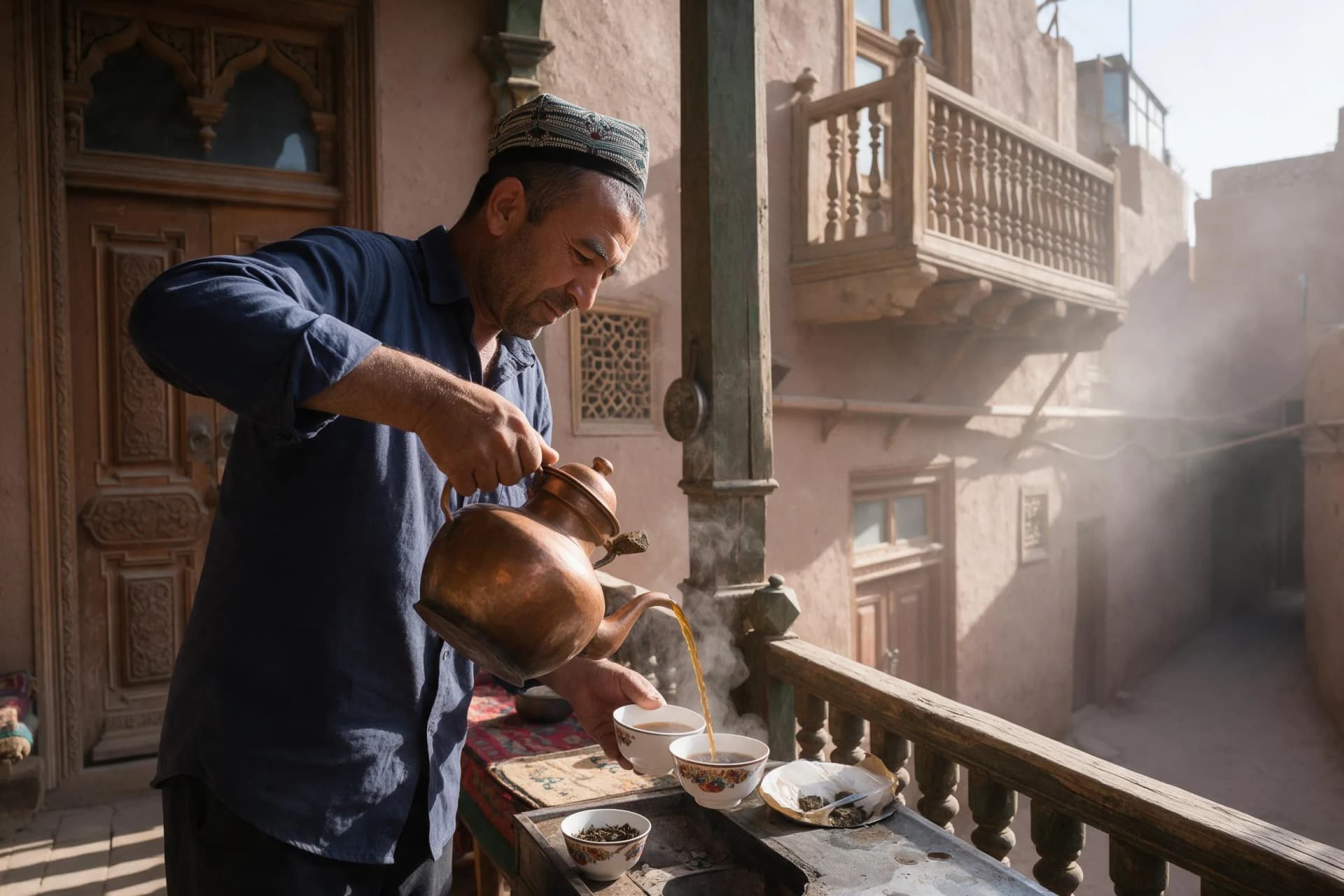
Kashgar runs on two clocks: official Beijing time and a solar day roughly two hours later, so the best trips are timed by light and by market days rather than a generic forecast. This guide weighs spring blossom, the fierce July heat, the golden September-October harvest and the quiet cold of winter, then shows how the overnight train from Urumqi and the Thursday-Sunday livestock bazaar should shape the dates you choose.
The best time to visit Kashgar is late April to May and September to mid-October, when daytime highs sit near 22°C and the oasis fruit harvest is at its peak. Book the Z6516 overnight train early: hard-sleeper berths start at CNY 317.50.
Two forces shape a Kashgar trip more than any forecast: geography and the clock. The city sits where the Pamir foothills meet the Taklamakan, sheltered from monsoon rain, so the air is dry, the sun is strong and the day-to-night temperature swing is wide — carry a layer in every season. Then there is Xinjiang's double clock. Beijing time is official, but daily life runs about two hours later, so dinner at 21:00 is normal and a July sunset can arrive after 22:00. That is why you should plan Kashgar by light and by market days, not by a generic forecast.
Here is the rough month-by-month picture for Kashgar city; the Pamir, a few hours south, runs much cooler. January: mean near −6°C, highs near 0°C, quiet and cheapest. February: highs near 5°C, quiet until the Spring Festival holiday of February 15–23. March: highs near 13°C, windy with dust and blowing sand. April: highs near 21°C, apricot blossom, the year's best value. May: highs near 26°C, green and warm, Labor Day crowds May 1–5. June: highs near 30°C, long days as school holidays begin. July: mean near 27°C with highs near 33°C, the hottest and busiest month. August: highs near 31°C, still hot, and the bazaar at its fullest. September: highs near 28°C, clear skies, the fruit harvest begins. October: highs near 20°C, golden poplars, National Day crowds October 1–7. November: highs near 10°C, quiet with cold nights. December: highs near 2°C, crisp and nearly empty.
Spring is the connoisseur's window. April and May bring apricot and almond blossom to the oasis and the Pamir valleys, mild 20s by day and hotel rates well below summer. It is also the dustiest stretch: the Kashgar Prefecture government's own climate profile notes frequent spring gales, sandstorms and floating dust, so keep a lens cloth and a face buff handy and shoot in the softer morning light. Id Kah Mosque, completed in 1442 and the largest in China, admits visitors in a single morning window, 08:50–10:00, for CNY 20, and stays closed to visitors on Fridays for prayer.
Summer is the season to think hardest about. June is a fair compromise — long, warm days and the first melons — but July and August bring fierce afternoon heat, intense ultraviolet light and the domestic school holidays, which fill trains, hotels and the road south to Karakul Lake. The compensation is the light. Because the solar day runs two hours behind Beijing time, golden hour can stretch past 21:00, and the night market opposite Id Kah does not really fill until 21:30. If summer is your only window, take June, start early, rest through midday and photograph in the evening.
Autumn is the answer most travelers are looking for. From mid-September the heat breaks, the air clears, and the oasis enters its fruit harvest: melons, figs, pomegranates, grapes and walnuts pile up in the bazaars, which is why the Grand Bazaar's own listing names August and September as its best months. September and the first days of October are close to perfect. Then the National Day holiday arrives, the whole country travels, and prices spike; book sleeper berths and rooms weeks ahead, or wait until October 8, when the crowds vanish and the poplars turn gold.
Winter is Kashgar's quiet bargain. December to February is genuinely cold, with January highs hovering around freezing, and daylight is short, so sightseeing compresses into a few bright hours. In exchange you get empty lanes, low hotel rates, snow on the Old Town roofs and the clearest views of the snow-capped Pamir. The livestock bazaar still opens twice a week, wrapped in steam and sheepskin coats, and the teahouse is at its most atmospheric. Pack real winter layers and check road conditions before any Pamir day trip.
Reaching Kashgar is part of the timing. The overnight Z-series sleeper from Urumqi is the classic approach: TravelChinaGuide's Urumqi–Kashgar timetable, last updated May 8, 2026 for the summer 2026 season, lists nine daily pairs across 1,475 kilometers, with Z6516 leaving Urumqi Railway Station at 20:40 and arriving at Kashgar Railway Station at 08:10, 11 hours 30 minutes later. Book on 12306 or its English app: enter your passport number exactly as printed, carry the passport you booked with, and note that online sales currently open about 15 days before departure. From Kashgar Laining Airport, the shuttle costs CNY 10 and drops passengers at their hotel. One honest note on light: the Old Town's residential lanes are public and stay walkable after dark, and if you enter the ticketed scenic zone you pay its CNY 30 entrance; the mosque and tomb keep to the visitor hours in the fact sheet, and no ticketed site keeps visitors inside after closing. Tell ChinaMira your dates and we will time the trip to a market day, reserve the berth and build the far-west stretch around your light. Our three-day Kashgar itinerary sets the pace, and if the rail journey hooks you, the Silk Road continues east to Dunhuang.
Good to know
- Best months
- Late April to May and September to mid-October: mild days near 22°C, dry air, low rainfall and the fruit harvest. April and May are best for Pamir blossom; September and early October for clear light and golden poplars.
- Month-by-month climate (Kashgar city)
- January mean near −6°C; April highs near 21°C; July mean near 27°C with highs near 33°C; October highs near 20°C. Annual precipitation in the oasis is only about 40–70 mm, and the day-night temperature swing is wide year-round. Sources: TopChinaTravel climate summary and the Kashgar Prefecture government climate profile (May 10, 2022).
- 2026 holidays to dodge
- Spring Festival February 15–23; Qingming April 4–6; Labor Day May 1–5; Dragon Boat June 19–21; Mid-Autumn September 25–27; National Day October 1–7, per the State Council 2026 public holiday notice.
- Overnight train from Urumqi
- 1,475 km between Urumqi Railway Station and Kashgar Railway Station, nine daily pairs. Z-series sleeper Z6516 departs Urumqi 20:40 and arrives Kashgar 08:10 (+1), 11 h 30 min; hard sleeper CNY 317.50–436, soft sleeper CNY 484.50–497.50. Source: TravelChinaGuide Urumqi–Kashgar timetable, last updated May 8, 2026.
- Tickets, hours and the bazaar
- Id Kah Mosque CNY 20 for visitors, 08:50–10:00, closed to visitors on Fridays. Old Town: CNY 30 at ticketed scenic-zone entrances, while the residential lanes are public streets and free to walk. Abakh Khoja Tomb CNY 30, listed 09:30–21:30. Century-old Teahouse: CNY 20–50 for a pot of tea. Livestock bazaar: free, Thursdays and Sundays 10:00–20:00 since May 14, 2026, about 10 km northwest of the Old Town on National Highway 314.
- Getting there and booking
- Kashgar Laining Airport is about 10 km north of the Old Town; the airport shuttle costs CNY 10 and drops passengers at their hotel. Book rail tickets on 12306 or its English app with your passport number, and note that online sales currently open about 15 days before departure. Peak berths sell out in July, August and the National Day week.
Frequently asked questions
What is the best month to visit Kashgar?
Late April through May and September through mid-October are the two sweet spots, with dry air, low rainfall and daytime temperatures mostly in the 20s Celsius. April brings apricot blossom to the oasis and the Pamir valleys, while late September and early October deliver the clearest light, the fruit harvest and golden poplars.
Is July a bad time to visit Kashgar?
It is the least comfortable month, not an impossible one. July is the hottest and busiest stretch, and the domestic school holidays fill trains, hotels and the highway toward Karakul Lake. If your dates are fixed, start sightseeing early, rest through the midday sun and save the bazaars and night market for the long, late evenings.
When is the Kashgar livestock bazaar open, and how do I get there?
It runs every Thursday and Sunday from 10:00 to 20:00, a two-day schedule that began on May 14, 2026, and entry is free. It sits about 10 kilometers northwest of the Old Town on National Highway 314; a taxi takes 30–40 minutes and costs roughly 30–50 yuan each way, so agree on a return wait before you get out.
Do US citizens need a visa to visit Kashgar in 2026?
Yes. US passport holders need a valid Chinese visa for Xinjiang, and the 240-hour visa-free transit does not cover the region: that policy applies to 54 eligible nationalities entering through 60 ports in 24 provinces, and Xinjiang is not one of them. Apply four to six weeks before departure and carry your passport for hotel registration.
What is the best way to get to Kashgar from Urumqi?
The overnight sleeper is the classic route, leaving Urumqi in the evening and reaching Kashgar the next morning. Book on 12306 or its English app with your passport number, and book well ahead for July, August and the National Day week, when berths sell out. Flying takes about two hours and is the faster, pricier option.