
Travel Guide
Kashgar Photography Spots 2026: Golden Hour After Dinner on Beijing Time
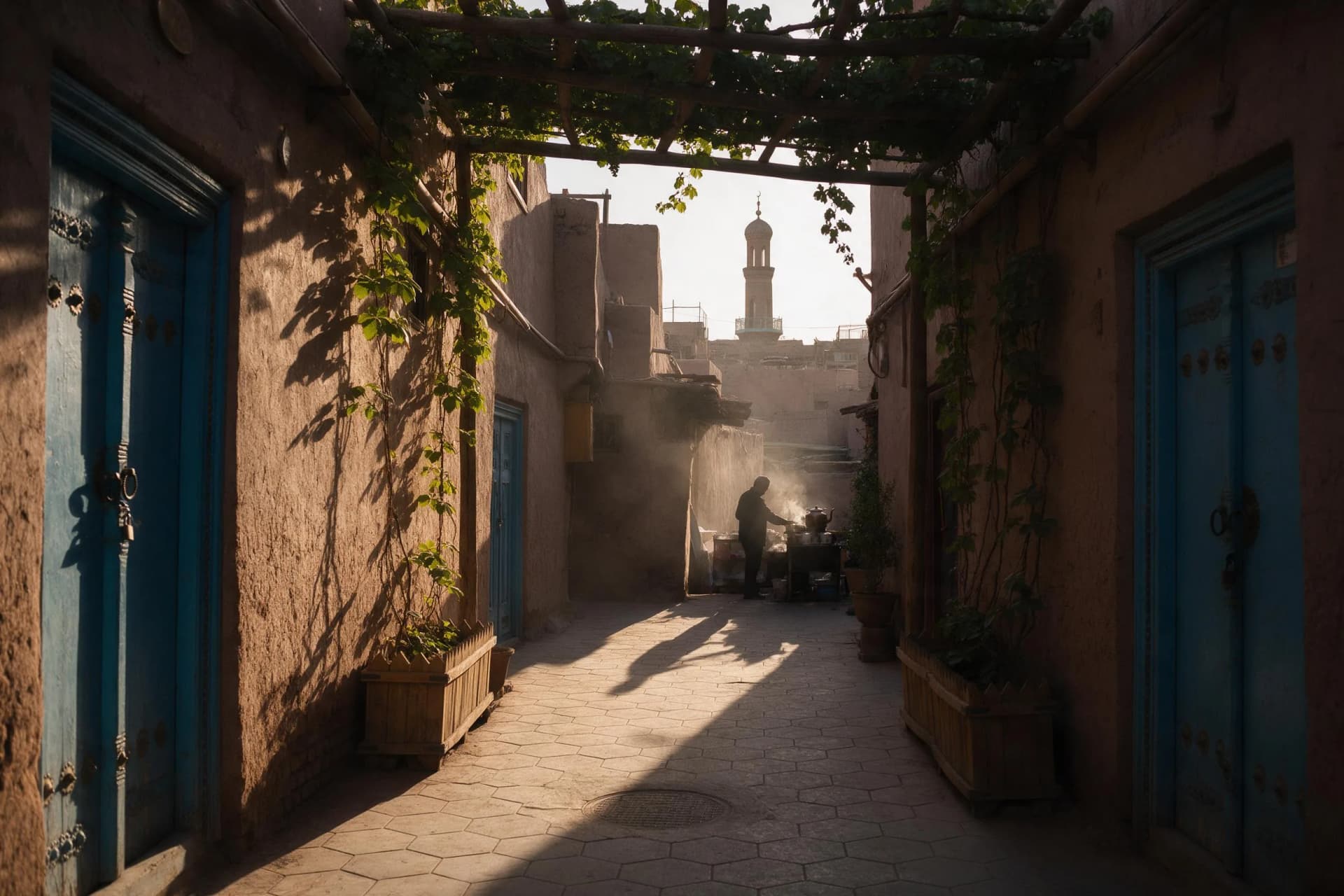
Kashgar keeps two clocks: official Beijing time and a solar day running almost three hours behind it, so golden hour lands after dinner and winter dawn arrives mid-morning. This guide maps the light windows for the Old Town's mud-brick lanes and rooftops, the Id Kah square, the livestock bazaar and the glazed Xiangfei Garden, plus the etiquette and dust-season gear that keep every frame honest.
Kashgar's best photography spots are the Id Kah Mosque square, the Old Town's mud-brick lanes and rooftops, the livestock bazaar and the Xiangfei Garden tomb — but only if you shoot by the sun, not the clock. Solar noon falls at 2:58 p.m. in June, so golden hour runs 9:00 to 10:20 p.m. and midwinter dawn waits until 10:11 a.m.
Xinjiang keeps Beijing time across a region wider than Western Europe, and Kashgar sits near 76°E, so the clock and the sun disagree by nearly three hours. On June 21, 2026 the sun rises at 07:27 and sets at 22:28; by September 21 it rises at 08:41 and sets at 20:57; on December 21 it does not clear the horizon until mid-morning and sets at 19:37, with solar noon at 14:54. Most visitors book a 6 p.m. golden hour and meet flat, overhead light instead. Shoot the two ends of the solar day, and use the middle for tea, editing and the bazaar's shaded stalls.
Begin at the Id Kah Mosque, completed in 1442 and, at about 16,800 square meters, the largest mosque in China. Non-Muslim visitors are admitted only from 08:50 to 10:00, for CNY 20, and that window closes on Fridays for the main prayer. In deep winter the slot opens before the sun does, so you get streetlight and blue hour on the tiled gate rather than warm light. The courtyard is off-limits outside those hours, but the square in front is public: return in the evening for the low sun on the minaret and the families, scooters and dance circles that fill the paving after dinner.
The Old Town itself is the real subject: mud-brick walls, blue and turquoise doors, grape trellises over lanes barely wide enough for a cart. Pay the CNY 30 ticket at the main gate on your first morning. Once inside, the ticketed lanes are listed as open all day, and the neighbourhood around them is a living quarter of public streets, so nobody will ask you to leave when the booths close — you can keep working the rooftops and upper lanes through the after-dinner golden hour, when the low sun lights the walls edge-on and the doorways go deep black. Mornings after the late dawn are quieter and cooler, and the light is softer than anything you will get at noon.
Ten kilometres northwest on National Highway 314, the livestock bazaar is Kashgar's best documentary shoot. Entry is free, it runs Thursdays and Sundays from 10:00 to 20:00, and since May 14, 2026 it has traded on both days. Come between 11:00 and 14:00, when sheep, cattle and donkeys are still being roped and weighed and the dust hangs in the backlight. A taxi from the Old Town takes 25 to 30 minutes and costs CNY 25 to 30; there is no direct bus, and taxis thin out at closing, so agree a pickup time with your driver. Ask before close portraits — a nod and a gesture at the camera usually works — and keep clear of the handlers' work.
The Apak Khoja mausoleum, which taxi drivers know as Xiangfei Garden, is a walled complex of glazed green and blue tiles, a domed tomb hall and a poplar avenue about twenty minutes east of the Old Town. The Kashgar Development and Reform Commission set the ticket at CNY 40 in its notice of October 28, 2024, up from CNY 30, and the site is listed as open 09:30 to 21:30. Glazed tile needs angled light: go in the morning for the quiet courtyards, or in the last hour before closing, when the day-trippers leave and the dome catches the warm end of the day with the poplars as a dark screen.
Getting there shapes the schedule. The overnight Z-series sleeper Z6516 leaves Urumqi Railway Station at 20:40 and reaches Kashgar Railway Station at 08:10, an 11 hour 30 minute run over 1,475 kilometres — tight, but just enough to reach the Id Kah window if you drop your bag and go. TravelChinaGuide's Urumqi–Kashgar timetable, updated May 8, 2026, lists nine pairs of trains a day and summer fares from CNY 317.50 in a hard sleeper; book on the official 12306 website or app with your passport number, where online sales open about 15 days before departure. If you fly instead, Kashgar Laining Airport is about 10 km north of the Old Town and the shuttle, CNY 10, drops passengers at their hotels.
Pack for dry air and glare. The city sits at about 1,270 metres with only 40 to 70 millimetres of rain a year, so a polarizer earns its place on the glazed tiles, while a rocket blower and microfibre cloths handle the dust. April and May can bring sandstorms that grey the sky; late April to May and September to October give the clearest light. Drones over 250 grams must be registered with the CAAC and flown below 120 metres, and Xinjiang enforces the rest strictly: airports, military land, checkpoints and the border belt are no-fly, and many scenic gates ban takeoff outright. Never photograph a checkpoint, a police officer or a military vehicle, and never shoot inside a mosque during prayer. Pay the Old Town entrance fee honestly rather than hunting for an unstaffed gate — that money is what keeps the lanes lit and repaired.
Good to know
- Light clock (2026)
- Solar noon in Kashgar is 14:58 Beijing time on June 21 and 14:54 on December 21. Sunrise and sunset: 07:27 and 22:28 on June 21; 08:41 and 20:57 on September 21; 10:11 and 19:37 on December 21. Figures from sunrise-sunset.org (NOAA algorithm, checked October 6, 2026) for 39.47°N, 75.99°E.
- Tickets and hours
- Id Kah Mosque CNY 20, visitor admission 08:50-10:00 daily except Fridays (TravelChinaGuide, updated August 15, 2025); Kashgar Old Town CNY 30, ticketed lanes listed as open all day; Apak Khoja Tomb, also called Xiangfei Garden, CNY 40, listed 09:30-21:30, priced by the Kashgar Development and Reform Commission notice of October 28, 2024.
- Livestock bazaar
- Free entry, Thursdays and Sundays 10:00-20:00 since May 14, 2026, about 10 km northwest of the Old Town on National Highway 314. Trading peaks 11:00-14:00; a taxi from the Old Town takes 25-30 minutes for CNY 25-30, and there is no direct bus.
- Overnight train and booking
- Urumqi Railway Station to Kashgar Railway Station is 1,475 km with nine pairs of trains daily. Z-series sleeper Z6516 departs 20:40 and arrives 08:10 the next day, 11 h 30 min; Z6518 returns 21:30-09:00. Soft sleeper CNY 484.50-497.50, hard sleeper CNY 317.50-436. Source: TravelChinaGuide Urumqi-Kashgar timetable, updated May 8, 2026 (summer schedule). Book on 12306 with your passport; online sales open about 15 days before departure.
- Airport transfer
- Kashgar Laining Airport (KHG) sits about 10 km north of the Old Town; the airport shuttle costs CNY 10 and drops passengers at their hotels.
- Camera rules and best months
- Drones over 250 g need CAAC registration and a 120 m ceiling; airports, military sites, checkpoints and border zones are no-fly, and many scenic gates ban takeoff. Ask before portraits and never photograph checkpoints. Clearest light: late April-May and September-October; April-May can bring sandstorms. The city sits at about 1,270 m with 40-70 mm of rain a year.
Frequently asked questions
Can I photograph people in Kashgar's Old Town?
Usually yes, with permission. A smile and a gesture toward your camera resolves most encounters, and a clear 'no' should end the attempt immediately. Never photograph women without asking, never shoot inside a mosque during prayer, and skip anyone who looks uncomfortable with the lens.
Are drones allowed in Kashgar and elsewhere in Xinjiang?
Assume they are heavily restricted. Civilian drones must be registered with the CAAC, and Xinjiang bans takeoff near airports, military land, checkpoints and the border belt. Many scenic gates post no-fly signs, and enforcement includes confiscation of the aircraft.
Can I keep shooting the Old Town after the ticket gates close?
Yes. The Old Town's ticket gates shut, but the surrounding neighbourhood is a living quarter of public streets, and photographers routinely keep working the rooftops and doorways well into the evening. Buy your ticket at the main gate on the first visit so the community sees the fee working.
What camera gear do I need for Kashgar's dust and glare?
A standard zoom covers most lanes and bazaar scenes, with a telephoto for bazaar portraits and mosque detail. Bring a polarizer for the glazed tiles, spare batteries for cold mornings, and a rocket blower with microfibre cloths for dust; change lenses indoors or inside a bag.
Do foreign photographers need a permit for Kashgar?
No permit is required for Kashgar city or the Old Town, but carry your passport, because hotels and some sites register it. A border-area permit is separate and only applies if you continue toward the Pamir, Karakul Lake or Tashkurgan; foreigners must apply for that in person at a county-level exit-entry office.