
Can Solo Women Eat Well Alone in China After 8 PM? 2026 Guide
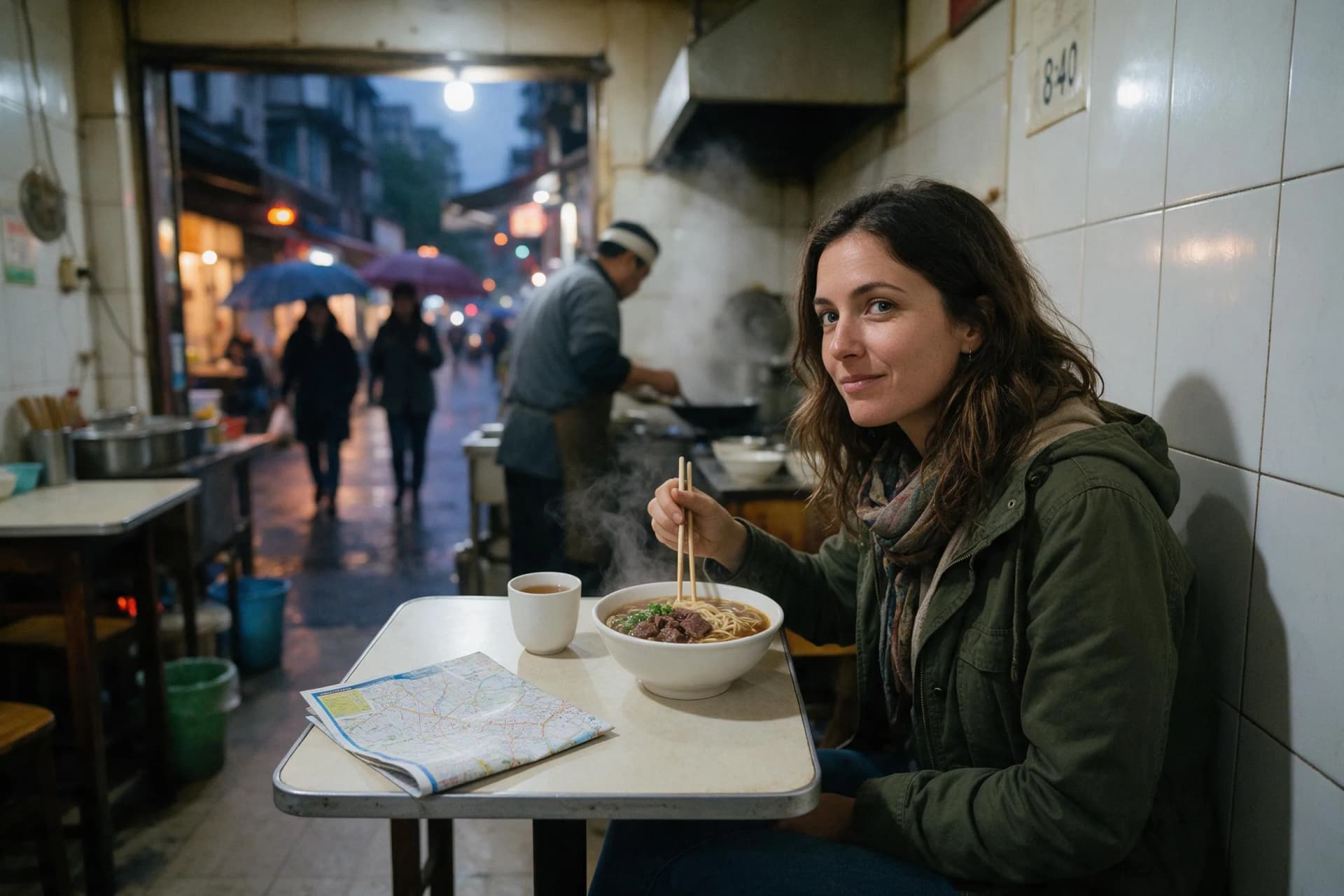
Yes, solo women can eat well alone in China after 8 p.m. when the restaurant is busy, the hotel desk stays staffed and the ride home is planned before dinner. This 2026 guide prices five signature dishes, maps a halal breakfast street, flags a dedicated vegetarian kitchen, and turns safety, transport and hotel choices into one workable evening.
Yes, generally, if your hotel is within a 15–20 minute walk or $4–$10 app ride of a busy, staffed restaurant area. In 2026, a solo dinner of noodles, dumplings or rice with tea usually costs $10–$20; choose a 24-hour-reception hotel and leave before the metro’s final train.
The useful question is not whether every Chinese city feels the same at night. It is whether one particular dinner-to-door chain is easy to control. I use a three-point hotel test: a staffed entrance, confirmed foreign-passport registration and at least six open food businesses within a short walk. As an October 2026 planning observation, a well-reviewed midrange room meeting those conditions tends to cost $45–$80 outside major holiday peaks; treat that as a budget starting point, not a live rate. Ask the property to confirm reception cover for your exact arrival hour and keep the reply in writing.
Getting there should be equally boring. Use the metro while service is running, but check the final train for that date in a local map app or at the station rather than relying on a blog’s timetable. When trains have stopped, request a licensed ride through DiDi or Amap from inside the restaurant, compare the plate before opening the door and share the trip with someone you trust. A short urban ride is commonly $4–$10 in the 2026 planning range; rain and peak demand can push the quote higher. If you arrive by rail, allow 60–90 minutes at a major station for security, passport checks and finding the correct gate.
Five signature dishes make a practical solo tasting route, with prices based on our October 2026 menu review and likely to vary by city and branch. Peking duck is the celebratory choice: a half bird costs about $23–$32, while some casual roast houses offer a mini set near $15–$24. Shanghai xiaolongbao run $4–$8 per steamer at neighborhood shops. A bowl of Lanzhou beef noodles is usually $2–$4; Cantonese roast goose over rice lands around $7–$12; and Xi’an’s chopped-meat roujiamo costs $3–$5. At a shared table, order one starch, one vegetable and one protein rather than three heavy mains.
For breakfast or a street-food crawl, head to Xi’an’s Muslim Quarter around Beiyuanmen Street between 07:30 and 09:00, before tour groups tighten the lanes. Begin with roujiamo, add a persimmon cake for $1–$2 and try a small bowl of lamb-and-bread soup for roughly $5–$8. The quarter’s Hui Muslim food is broadly halal, but cross-contact practices vary by stall: show a written request and ask directly if that matters to you. This is also my preferred low-stress introduction to eating alone, because counter service makes a party of one normal rather than conspicuous.
For a dedicated meatless kitchen, Gongdelin in Shanghai serves Buddhist vegetarian cooking with mains around $7–$15. “Wo chi su” means “I eat vegetarian,” while “bu yao rou” means “no meat.” Neither phrase rules out meat stock, lard or oyster sauce, so show the server a translated allergy or diet note and ask about each. Halal travelers can use the Muslim Quarter as a starting point, then search for restaurants displaying the two-character qingzhen sign. In either case, use a translation app to confirm ingredients; a menu’s green leaf symbol is not a universal certification.
Solo dining etiquette is simpler than it looks. Say yes to a small shared table if you are comfortable, use the restaurant’s QR menu or ask for a picture menu, and pay through Alipay or WeChat Pay with a backup physical card. Ordering at the counter is often easier than negotiating a multi-dish menu. Avoid leaving your phone on the table beside an open doorway. If unwanted attention persists, stop engaging, move toward staff and leave; you do not owe a stranger an explanation.
For context, the US State Department rated China Level 2, “Exercise Increased Caution,” as of October 2026. Its advisory highlights legal and detention risks alongside crime, so the rating is not a measure of how likely a restaurant is to feel unsafe. Ordinary precautions still matter: keep your passport secure, watch for silent scooters when crossing, and save 110 for police and 120 for an ambulance. Every foreign guest should carry the original passport used for the hotel booking because the property must register the stay with local police.
Build the evening backward. Choose the restaurant first, then the hotel, then the return ride. Aim to sit down by 19:30, finish by 21:45 and be inside your hotel before 22:30 unless you have confirmed late metro service or a car. That plan costs one app ride and a little preparation, but it removes the tired, last-minute choice that turns a good dinner into a stressful night. Save this guide, book the staffed hotel, and give yourself permission to eat alone without making the meal a test of courage.
Good to know
- Solo dinner budget
- October 2026 planning range: $10–$20 for a one-bowl meal, a side and tea; prices are observations, not live quotes.
- Five-dish price check
- Peking duck $15–$32; xiaolongbao $4–$8; Lanzhou beef noodles $2–$4; roast goose rice $7–$12; roujiamo $3–$5.
- Breakfast street
- Xi’an’s Muslim Quarter around Beiyuanmen: best from 07:30–09:00; a small breakfast costs about $3–$8.
- Late-return allowance
- Budget $4–$10 for a short urban app ride in 2026; check the live quote before confirming, especially in rain.
- Hotel booking test
- Confirm 3 points 24–48 hours before arrival: passport registration, reception coverage at your arrival hour, and a staffed entrance.
- Emergency numbers
- Call 110 for police, 120 for an ambulance and 119 for fire; save the nearest US embassy or consulate contact before departure.
Frequently asked questions
Is it safe for a woman to eat alone in a Chinese restaurant at night?
Usually, yes, especially in busy central neighborhoods with staffed restaurants and well-lit streets. Sit away from an unmonitored entrance, arrange your ride before leaving and avoid making a late-night journey to an unfamiliar district. If you feel uncomfortable, ask restaurant staff for help rather than waiting for the situation to improve.
What should a solo female traveler order in China?
Start with a one-bowl dish such as Lanzhou beef noodles or roast goose rice, then add one vegetable or small side. Xiaolongbao and roujiamo are easy counter-service choices. In 2026, a filling solo dinner commonly falls between $10 and $20, though Peking duck is more expensive and works better as a half-duck meal for two.
Can solo travelers find vegetarian or halal food in China?
Yes. Xi’an’s Muslim Quarter around Beiyuanmen Street has many halal stalls, and dedicated Buddhist vegetarian restaurants such as Gongdelin in Shanghai serve meatless menus. Ask about meat stock, lard and shared utensils rather than relying only on a symbol or the word “vegetarian,” since recipes and kitchen practices vary.
Where should a solo woman stay for late dinners in China?
Choose a hotel with a staffed entrance, 24-hour reception, confirmed foreign-passport registration and several open restaurants within a 15–20 minute walk. Verify the exact entrance and arrival-hour desk coverage before paying. A $45–$80 midrange room was our October 2026 planning range, but holiday and city-center rates can be much higher.
How do I get back to my hotel after dinner in China?
Check the final metro time for that date, or request a licensed car in DiDi or Amap from inside the restaurant. Match the plate before getting in, confirm the destination in Chinese and share the trip details. A short city ride commonly cost $4–$10 in our 2026 planning range, with rain and peak periods raising the app quote.
Keep exploring
Plan with ChinaMira
Turn this into a trip
Use this guide as a starting point — we can handle the route, guides, trains and the visa invitation letter.