
Temple Etiquette in China 2026: 5 Decisions on Dress, Photos and Offerings
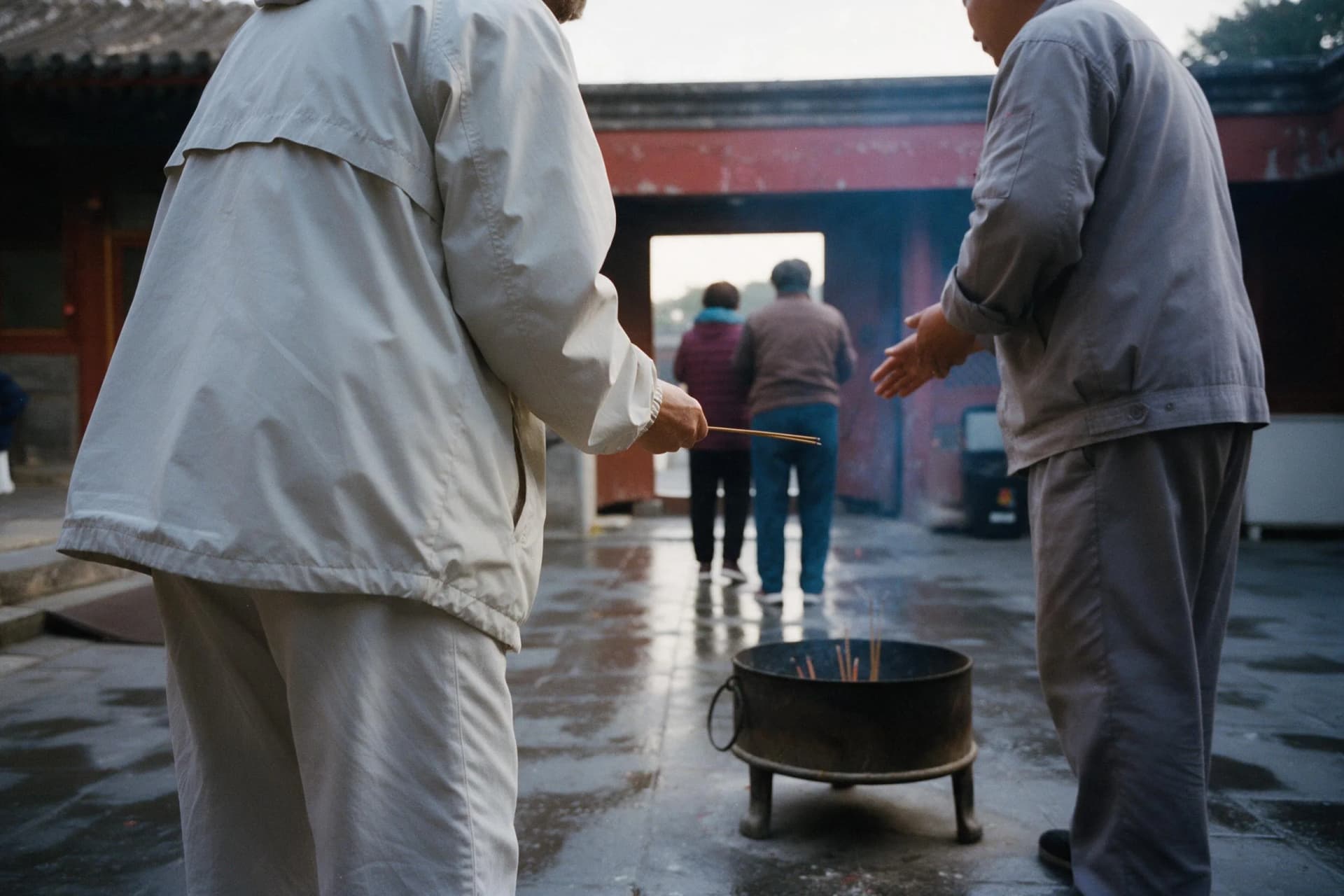
Temple etiquette in China is a series of small threshold decisions, not a single national checklist. This 2026 guide helps independent first-time visitors choose modest layers, recognize where cameras should stay down, and make offerings only through official channels. It also explains how to read an active Buddhist or Daoist hall differently from an imperial heritage complex.
Temple etiquette in China is not one countrywide dress or photo code: in 2026, treat each of the 3 thresholds—street gate, courtyard and shrine hall—as a separate decision. Cover shoulders and knees by default, photograph only where clearly allowed, and use official offering points. Stop at once if staff or worshippers signal otherwise.
At the outer gate, pause before copying the people around you. Some arrivals are local worshippers with a routine; others are tour groups following a guide. Watch where shoes, bags and tripods are left, which doorway people use, and whether visitors queue to present incense. If a volunteer offers guidance, follow it. If the courtyard is crowded, step to one side rather than using a shrine entrance as a shortcut. This first 2-minute observation prevents most accidental interruptions later.
Modest clothing is the safest default, but do not invent a uniform temple dress code. For an independent first-time visit, a shirt that covers the shoulders, trousers or a skirt that reaches the knee, and closed shoes are practical. Carry a light scarf for sun, cool stone halls or a site-specific request. Very short shorts, low necklines and see-through summer wear can draw attention without making a visit more comfortable. Hair covering is not a general Buddhist or Daoist requirement; follow it only when the particular site posts or explains it. Remove shoes only where a sign, attendant or worshipper indicates that you should.
Photography needs 3 separate judgments: the grounds, the halls and the people. Courtyards and architecture are often photographed, while a shrine interior may ban cameras, flash, video or tripods. Look for pictograms as well as written notices, then ask staff if the rule is unclear. Turn the phone silent, lower the screen and avoid calls across an altar. Never move through a worship line to frame a statue, and do not photograph monks, nuns or worshippers as if they were costumed characters. Ask before taking a portrait, especially of children. If someone raises a hand or turns away, put the camera down without arguing; no image is worth interrupting prayer.
Offerings are optional. A temple visit does not require you to buy incense, toss coins at a statue or pay for a blessing. If incense is part of your visit, use the official counter or free supply where one is offered, then light it only in the designated brazier. A small bundle is enough; walking through halls with a flaming bunch is awkward and can be unsafe. Follow any staff request about where to stand or how many sticks to use. Put donations in an official box or approved digital channel. Fruit and flowers should go only where the temple accepts them, and you should leave them behind. Decline pressure from an unmarked seller who promises luck, a private ritual or VIP access.
'Temple' covers more than one kind of place. An active Buddhist or Daoist hall may have clergy, chanters and regular worshippers, while an imperial ceremonial complex can be mainly a heritage site. UNESCO describes Beijing's Temple of Heaven as an imperial sacrificial complex, a useful reminder that its wide park and halls do not function like a neighborhood Buddhist temple. At an active site such as Yonghe Temple, served by Yonghegong Lama Temple Metro station on Beijing Lines 2 and 5, give prayer areas more room and expect stricter conduct around shrines. Allow 45 to 90 minutes for either kind of stop; rushing from gate to exit makes it harder to notice the rules that matter.
If a service begins, do not treat it as a performance. Wait at the side or leave quietly, keep your voice low and avoid crossing between worshippers and the altar. Do not sit on marked cushions, touch ritual objects or help yourself to books and offerings. Kneeling is not required for visitors. A calm stance, hands at your sides and a simple bow where others bow are enough. Children can be welcomed, but hold hands near candles and incense, and explain beforehand why this is a quiet space. Photo requests can wait until everyone has left the prayer area.
Practical comfort matters too. Old courtyards have uneven stone, raised thresholds, steps and slippery surfaces after rain. Incense smoke can be heavy on calm mornings, so anyone with asthma or another respiratory condition should keep distance from braziers and carry usual medication. Heat builds quickly in summer; bring water and a layer for air-conditioned exhibition rooms. The first 30 minutes after opening are usually calmer than late morning on weekends. Check the official city or temple channel on the day for closures, festival hours and photography rules, because those local instructions outrank any general guide.
The best visit is deliberate rather than photo-led. Choose an active temple if you want to observe living practice, or a heritage temple if you mainly want architecture and history. Pack one modest layer, plan for about 90 minutes including a short pause, and decide in advance that you will not buy a blessing from someone who approaches you. Then let each doorway reset the decision: pause, look, listen and only then enter. A quiet visitor sees more, and leaves a better impression.
Good to know
- Threshold check
- 3 decisions per visit: street gate, courtyard and shrine hall
- Typical visit time
- 45–90 minutes for one temple
- Dress baseline
- Cover shoulders and knees; carry 1 light layer
- Photo check
- 3 zones: grounds, halls and people; follow each separately
- Offering check
- 0 purchases required; use official incense and donation points
- Crowd buffer
- Arrive in first 30 minutes after opening; verify 2026 festival hours
Frequently asked questions
Can tourists take photos inside Chinese temples in 2026?
Often yes in courtyards, but rules change by hall and site. Follow posted pictograms, turn off flash and ask staff before photographing shrines. Never photograph worshippers without permission, and stop immediately if anyone objects.
Do I have to burn incense or leave a donation?
No. Incense and donations are voluntary expressions of devotion, not an entry requirement. If you participate, use the temple's official incense supply, brazier and donation box. Decline unmarked sellers who pressure you to pay for a blessing.
What should I wear to a Chinese temple in summer?
Choose a top that covers your shoulders, bottoms that reach at least the knee and comfortable closed shoes. Bring a light layer for cool halls. This modest baseline prevents most awkwardness, although individual active sites may post stricter rules.
Can I watch a Buddhist ceremony as a visitor?
You may quietly observe from the side when the space is open to visitors. Do not walk between worshippers and the altar, take flash photos or treat chanting as entertainment. If staff ask visitors to leave, do so immediately.
How long should a first temple visit take?
Allow 45 to 90 minutes for one temple, including the gate, courtyards and a respectful pause. Add extra time during festivals or if you want to observe a service. Checking the official site first saves time if a hall is closed.
Keep exploring
Sources & verification
Sources used for this guide
Time-sensitive travel details can change. Reconfirm opening hours, prices and entry rules before departure.
- 1yonghegong.cnyonghegong.cn
- 2whc.unesco.orgwhc.unesco.org
- 3nra.gov.cnnra.gov.cn
- 4english.beijing.gov.cnenglish.beijing.gov.cn
- 5bjsubway.combjsubway.com
Local operating context
ChinaMira Travel Team contributes local route and operating knowledge from China. This team byline identifies a real operating group rather than a fictional individual author.
Plan this trip
Turn this guide into a practical itinerary
Send us the article as context. A ChinaMira specialist can check the route, dates, transport, tickets and the details that need local confirmation.