
Travel Guide
When to Visit China: A Month-by-Month Guide to Weather, Crowds, and Golden Light
China spans tropical south to Siberian north, so the best month to visit depends on where you go and what you want to see. This warm, month-by-month guide maps the two golden windows of spring and autumn, the heat and plum rains of summer, the ice and lantern festivals of winter, and the holiday crowds worth planning around - plus how to pick the season that fits your trip.
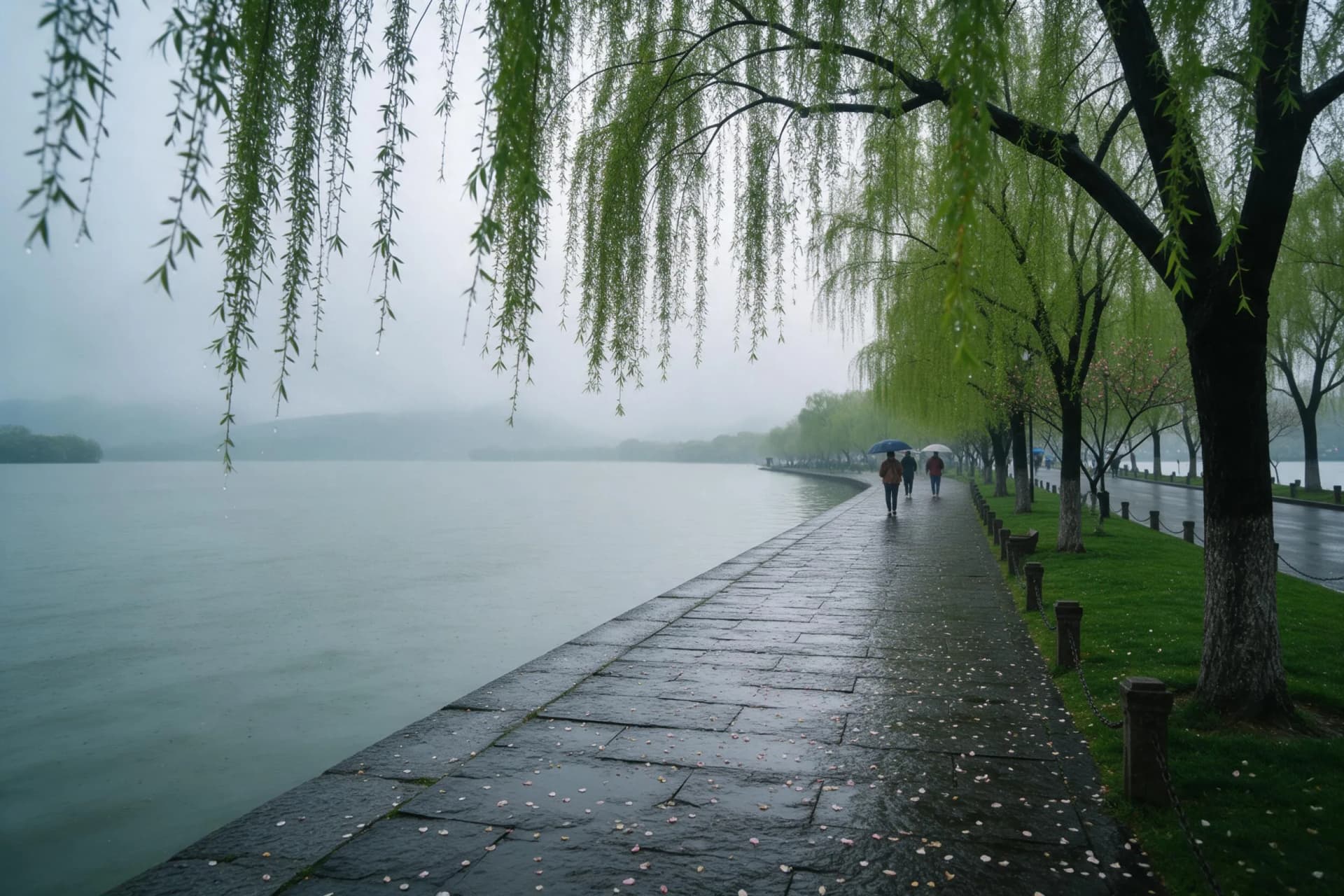
The first time I understood what timing means in China, I was standing on the Su Causeway in Hangzhou in late March, watching willow branches trail into a lake the color of new tea. A week later, in Beijing, the same trip met a cold wind that cut straight through my jacket. China is a continent wearing the name of a country. From the tropical south to the Siberian northeast it spans as much latitude as Scandinavia to Sicily, so "when should I go" really means "where am I going, and what do I want to see?" With a little planning, there is a perfect month for nearly every traveler.
Two windows stand above the rest. Spring, from late March through May, and autumn, from September through early November, bring mild temperatures, low humidity, and the soft, clear light photographers chase. These are also the months when China's classic routes - Beijing's Great Wall and Forbidden City, Xi'an's Terracotta Army, Guilin's karst rivers, the classical gardens of Suzhou - are at their most comfortable for long days on your feet. Book early for both; the best hotels and rail seats go first.
Spring arrives in the south first. March paints the Yangtze Delta and the hills of Yunnan with rapeseed and plum blossom, while Guilin and the Li River wear their famous mist and farmers begin flooding the rice terraces into silver mirrors. Cherry blossoms open around late March and early April in Beijing's Yuyuantan Park and along Wuhan's university avenues, and by April the whole country feels awake. Pack layers: a warm afternoon can turn into a chilly evening.
May is arguably the finest month of the year: gardens in full leaf, terraces flooded and gleaming, temperatures still gentle before summer's weight settles in. Then June brings the meiyu, the plum rains - a stretch of humid, drizzly days across central and eastern China. The south turns lush and green, if sticky. It is a wonderful time for tea country and cave country, or any city where you plan to spend afternoons in museums and noodle shops.
July and August are China's hot, crowded, and wet months. Heat and humidity press down on the eastern plains, typhoons brush the southeast coast, and domestic families take their summer holidays, filling trains, airports, and scenic areas. This is the season to go up or go north: the Tibetan plateau around Lhasa, the grasslands of Inner Mongolia, the cool highlands of Qinghai and Gansu, and the forests of Guizhou and Heilongjiang all offer real relief. If altitude is part of your plan, build in a slow first day to acclimatize.
Autumn is the reward. September and October bring crisp blue skies, dry air, and gold light; Beijing's red walls and yellow ginkgo, the painted pools of Jiuzhaigou, and the terraced rice fields of Longji all peak now. One caveat matters enormously: the National Day Golden Week, when the first week of October empties offices and schools across the country and major sites fill to capacity. If you go then, book trains and hotels months ahead - or choose late October, when crowds thin and the weather stays superb.
November and December slip into the shoulder season and quietly become some of the best months for independent travelers. The crowds are gone, hotel prices soften, and the air turns cold and clean. Huangshan's sea of clouds is at its most dramatic, the Li River lies glassy and still, and southern cities such as Guangzhou, Kunming, and Xiamen stay mild and easy. Far to the northeast, Harbin begins building its ice city in late December, once the Songhua River freezes hard enough to cut into blocks.
January and February are for winter at its most spectacular - and for China's biggest party. The Harbin Ice and Snow Festival officially opens in early January, and the scale of its illuminated castles has to be seen to be believed; bring serious cold-weather gear, because minus 20C is normal. Then comes Chinese New Year, which lands in late January or February depending on the lunar calendar (February 17 in 2026). It is a magical time for lanterns, temple fairs, and family reunions, but it also triggers chunyun, the great travel rush when hundreds of millions of people cross the country. Book everything early, or head south to Hainan, Yunnan, or Hong Kong for warm sunshine.
So how do you choose? If you want comfortable weather and the classic sights, aim for April, May, September, or October. If you want blossoms, come in March or April. If you want ice and lanterns, come in January. If you want fewer crowds and lower prices, pick the shoulder weeks of late November, early December, or late February. Whichever you choose, check the lunar holiday calendar first, build in a buffer day for weather, and let the season shape your route rather than fighting it.
That is the real secret of timing a trip to China: match the month to the place, not the other way around. The ChinaMira team plans journeys this way every week - cherry blossoms in the Yangtze Delta, golden ginkgo in Beijing, ice castles in Harbin, mirror-flooded terraces in Longji - with high-speed rail seats, handpicked hotels, and local guides arranged around the season you choose. Tell us your dates and what you hope to see, and we will find the window that fits.
Good to know
- Golden windows
- Two windows stand out. Spring (late March to May) brings blossoms and mild teens-to-low-twenties temperatures; autumn (late September to November) delivers clear, dry air and mountain colour. Late October to early November is the best balance of weather and elbow room before winter closes in.
- 2026 holiday dates
- Qingming April 4-6; Labor Day May 1-5; Mid-Autumn September 25-27; National Day October 1-7; Spring Festival February 15-23. National Day and Spring Festival are the two biggest travel peaks of the year, so book rail seats the day the 15-day 12306 window opens.
- Rain and typhoons
- Plum rains drench Shanghai, Hangzhou and Suzhou from mid-June to early July. July to September is typhoon season along the southeast coast, and Guangzhou and Chongqing often exceed 35C in summer, while the north and the Tibetan plateau stay dry and comfortable.
- Best months by region
- Tibet and Lhasa: April to October. Yunnan: November to April for the driest, brightest skies. Guilin and the Li River: April, May, September and October, avoiding the June flood window. Xinjiang and the Silk Road oases: June to early October, with Ili lavender from late May.
- Winter ice and warmth
- Harbin's Ice and Snow Festival runs from early January to late February with nights below minus 20C - pack down and thermals. If you want mild winter sun instead, Sanya and southern Yunnan stay warm enough for a light jacket from December through February.
- Booking and prices
- China Railway opens tickets 15 days ahead on the 12306 app, and holiday seats disappear fast; the Beijing-Shanghai second-class fare is about 553 yuan. Autumn weekends and public holidays can push hotel rates up 20-50 percent, so lock big-name hotels 4-6 weeks ahead.
Frequently asked questions
What is the single best month to visit China?
For most first trips, late October to early November is the sweet spot. Daytime temperatures in Beijing, Xi'an and Shanghai sit in the comfortable 10-20C range, the air is clear and dry, and the National Day crowds that peak from October 1 to 7 in 2026 have gone home. You still catch golden larch and maple colour, while hotel rates can fall 20-30 percent compared with the first week of October.
When do cherry blossoms bloom in China?
Beijing's cherry blossoms peak from late March to mid-April, with the Yuyuantan Cherry Blossom Festival (entry about 10 yuan) running through the first half of April; Wuhan's East Lake and Nanjing's Jiming Temple open a week or two earlier, from mid to late March. Book Beijing hotels 4-6 weeks ahead, because the first weekend of April is both blossom peak and the Qingming holiday, April 4 to 6, 2026.
How bad are the crowds during Chinese New Year, and when is it in 2026?
Spring Festival 2026 falls on February 17, with the official holiday running February 15 to 23, and it is the hardest time of year to move around China. The 40-day travel rush known as chunyun began February 2, 2026 and saw roughly 188 million cross-regional trips on its first day alone. High-speed rail seats open 15 days before departure on the 12306 app and sell out fast - a Beijing-Shanghai second-class ticket costs about 553 yuan.
What is the rainy season in China, and should I avoid it?
The plum rains soak the Yangtze delta - Shanghai, Hangzhou, Suzhou - from mid-June to early July, bringing days of soft gray drizzle, while Guangzhou and Chongqing push past 35C with heavy humidity. Typhoon season runs July through September along the southeast coast, so check forecasts before committing to Fujian or Hainan beaches. The flip side is that June is glorious in Qinghai, Gansu and Inner Mongolia.
Is Harbin worth visiting in winter, and how cold does it get?
Yes, if you pack for real cold. The 42nd Harbin International Ice and Snow Festival lit up in early January 2026 and runs into late February, with daytime highs near minus 12C and nights around minus 25C. Bring down, thermal layers, gloves and hand warmers; the reward is a frozen city of light and the Songhua River snow sculptures. Harbin hotels and flights sell out fastest during Spring Festival, February 15 to 23.