
Why Do Chinese Restaurants Serve Hot Water in 2026?
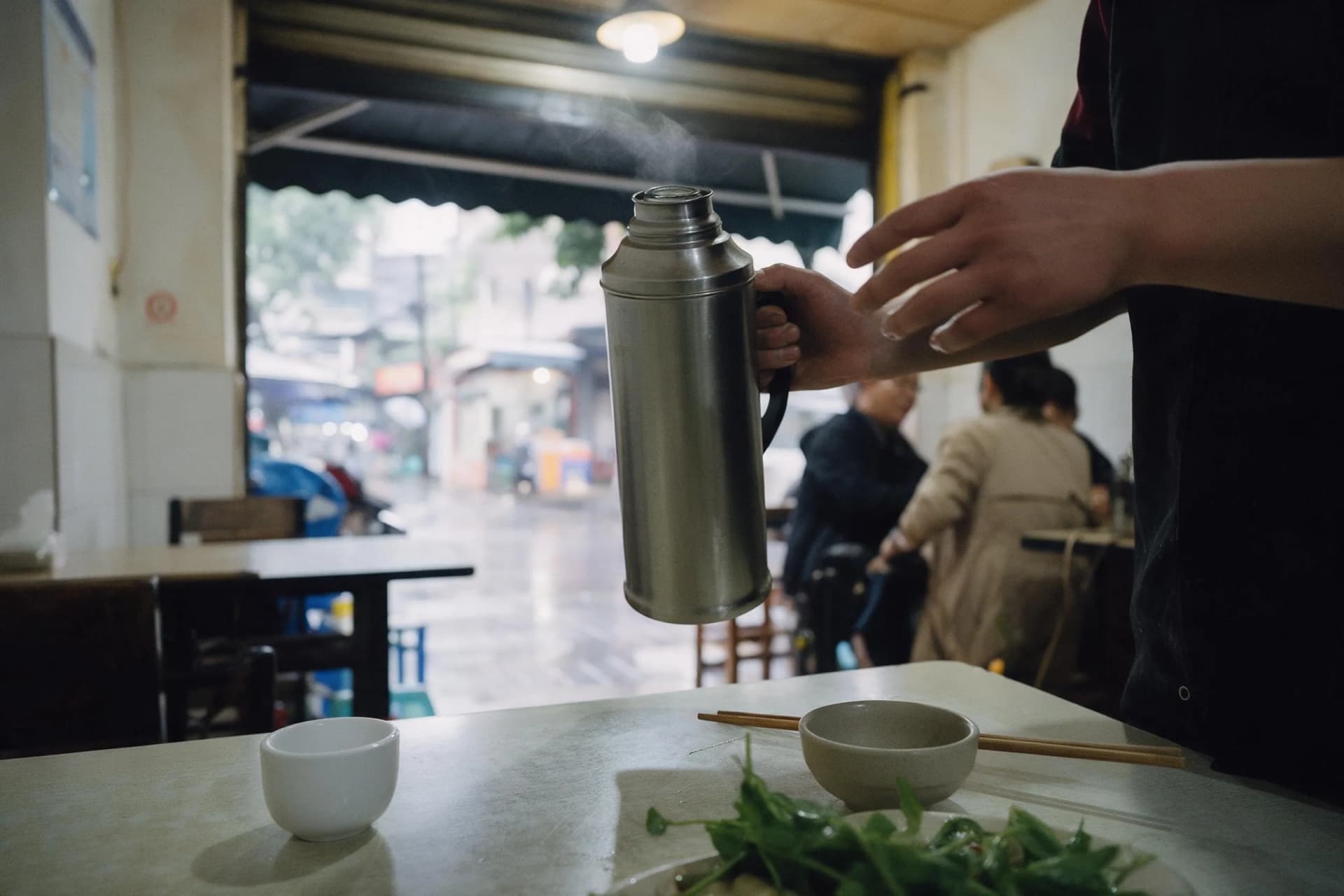
In 2026, plain hot water is a normal, usually free part of a Chinese restaurant meal, though a tea service may add a small charge. This guide explains the cultural and practical reasons, shows how to handle the rinse bowl, gives three useful phrases, and helps you choose a sealed bottle when the source is uncertain.
At an established sit-down restaurant in China in 2026, accept the hot water if you want it: it is customary, usually costs $0, and a $0–$2 tea-service charge is the exception. If the source is unclear, choose a sealed bottle instead, and treat the small bowl as an optional tableware rinse.
Why does this happen? There is no single origin story that explains every restaurant. Hot water sits where Chinese tea culture, everyday thermos habits and household water-boiling routines meet. Tea may be the main event at a teahouse, while a neighborhood restaurant keeps a kettle or vacuum flask nearby for anyone who simply wants something warm with lunch. In winter, a hot cup is comfort; after oily food, it resets the palate. The custom has also outlived the conditions that first made boiling practical because it now feels normal, generous and inexpensive.
Your first decision is not whether to perform a ritual. It is what you want in the cup. Plain hot water, a pot of tea and a sealed bottle are three different purchases. At many full-service restaurants, plain hot water is complimentary, but a tea service or room charge may appear on the bill. Before tea is poured, ask whether it carries a per-person fee. If you prefer water, say so before the server lifts the pot. A bottle is the better choice when you are unsure about the water source or need water for an infant, an older traveler or someone with a sensitive stomach.
Use this four-step sequence when the cup and small bowl arrive: • Set the bowl under your cup, teacup or chopsticks if others at the table are rinsing their tableware. • Pour a little hot water over the items, then tip the water into the bowl rather than onto the table. • Do not drink the rinse water. Return the bowl to the server or leave it where staff indicate. • Pour yourself a cup, or let whoever has the kettle serve the table. Leave the cup about 70%–80% full so it is easier to carry and less likely to spill.
The rinse is a social and practical gesture, not a guarantee of sterilization. Quick contact with hot water does not reliably disinfect chopsticks or a cup, and skipping the bowl is not rude if no bowl is offered. Keep your fingers away from the stream, do not flick droplets across the table, and never use a shared serving spoon after it has touched your mouth. If the cup is too hot to hold, place it on a saucer and wait. A freshly poured cup can be uncomfortably hot; give it a little time rather than taking a hurried sip.
Language helps more than a complicated explanation. Three useful requests are “rè shuǐ” for hot water, “wēn shuǐ” for warm water and “yì píng shuǐ” for one bottle of water. Add “xièxie” for thank you. You can also point to a translation screen or show the characters for plain hot water. If a server brings tea when you asked for water, a calm “bú yào chá, xièxie” — no tea, thank you — is enough. Keep the exchange light; restaurant teams are used to visitors making different choices, and no one expects you to pronounce everything perfectly.
At a shared table, receive a poured cup with one hand while steadying it with the other, and acknowledge the person pouring. If you are handling a thermos or teapot, offer to fill your neighbors’ cups before your own. Do not fill cups to the rim. Refill an empty cup promptly rather than waiting for a server, but ask before taking a bottle or thermos from another table. In a busy casual restaurant, service may be quick and informal; in a banquet room, the person nearest the pot may become the default pourer. Follow that small local rhythm instead of inventing a formal ceremony.
Water safety deserves a clear line. Boiling is effective against many microorganisms, but heat does not remove every chemical contaminant, and “hot” does not automatically mean it reached a rolling boil. Established restaurants commonly serve water that has been boiled or filtered, yet standards and equipment vary. Travelers who are pregnant, immunocompromised or traveling with an infant should be especially cautious and choose sealed bottled water when the source is uncertain. For ordinary meals, observe the venue, ask when something is unclear, and do not let anxiety turn a simple cup into the center of the trip.
Plain hot water is usually one of the cheapest parts of a meal: budget $0, with a $0–$2 per-person planning range for an unexpected tea or service charge. Check the bill before paying by QR code or card, especially if the table received tea without a menu discussion. No routine tip is expected at an ordinary restaurant, so the water decision should not change your tipping math. Save the three phrases, keep one sealed bottle in your day bag, and let the first cup arrive as part of the meal rather than a test of local knowledge.
Good to know
- Plain-water cost, October 2026
- Plan on $0 for plain hot water at a typical sit-down restaurant; allow a $0–$2 per-person planning range for a tea or service charge. This is an editorial estimate, not live menu data.
- Before the pot is poured
- Ask 1 question: is this plain hot water or tea, and does the tea have a per-person charge? Plain water and tea are separate purchases at many full-service restaurants.
- Cooling interval estimate
- Give a freshly poured 100–150 ml cup about 2–3 minutes before sipping. This is a comfort estimate; cup size, room temperature and how long the kettle has stood all change the timing.
- Three useful requests
- Use “rè shuǐ” for hot water, “wēn shuǐ” for warm water and “yì píng shuǐ” for 1 bottle of water. A translation screen or written request can bridge pronunciation differences.
- When to choose bottled water
- Keep 1 sealed bottle as a backup when the source is unclear, especially for an infant, a pregnant traveler or someone who is immunocompromised. Boiling kills many microorganisms but does not remove every chemical contaminant.
- Bill check
- Check 1 bill line before paying: the tea or service charge. No routine tip is expected at ordinary restaurants, so the water or tea charge should be the relevant cost to verify.
Frequently asked questions
Is hot water at Chinese restaurants free?
Plain hot water is commonly complimentary at an ordinary sit-down restaurant. Budget $0, but allow a $0–$2 per-person planning range for a posted tea or service charge. Ask before accepting a pot of tea, because tea may be priced differently from plain water.
Why do Chinese restaurants serve hot water instead of cold water?
The habit combines tea culture, easy access to kettles and thermoses, and a long-standing preference for warm drinks with meals. Cold or iced water is less automatic, so visitors who want it should ask specifically rather than assume it will be brought.
Should I rinse my cup and chopsticks in the bowl?
It is an optional local gesture, not a required test of etiquette. If a small bowl is supplied and others are rinsing their tableware, pour a little hot water over your cup and chopsticks and tip the water into the bowl. Do not drink it, and do not expect the rinse to sterilize anything.
How do I ask for cold water in a Chinese restaurant?
Say “bīng shuǐ” for ice water or “lěng shuǐ” for cold water, and add “xièxie” to say please or thank you in context. Staff may bring room-temperature water rather than ice, so show a translation screen if the distinction matters.
Is the hot water served in Chinese restaurants safe to drink?
At an established restaurant, water is commonly boiled or filtered, but there is no universal guarantee across every venue or water system. Boiling kills many germs, not every chemical contaminant. Choose sealed bottled water if you are unsure, are pregnant, are immunocompromised or are preparing water for an infant.
Keep exploring
Plan with ChinaMira
Turn this into a trip
Use this guide as a starting point — we can handle the route, guides, trains and the visa invitation letter.