
Wonder Story
Zhangjiajie Food & Restaurant Guide 2026: 5 Dishes and What They Cost
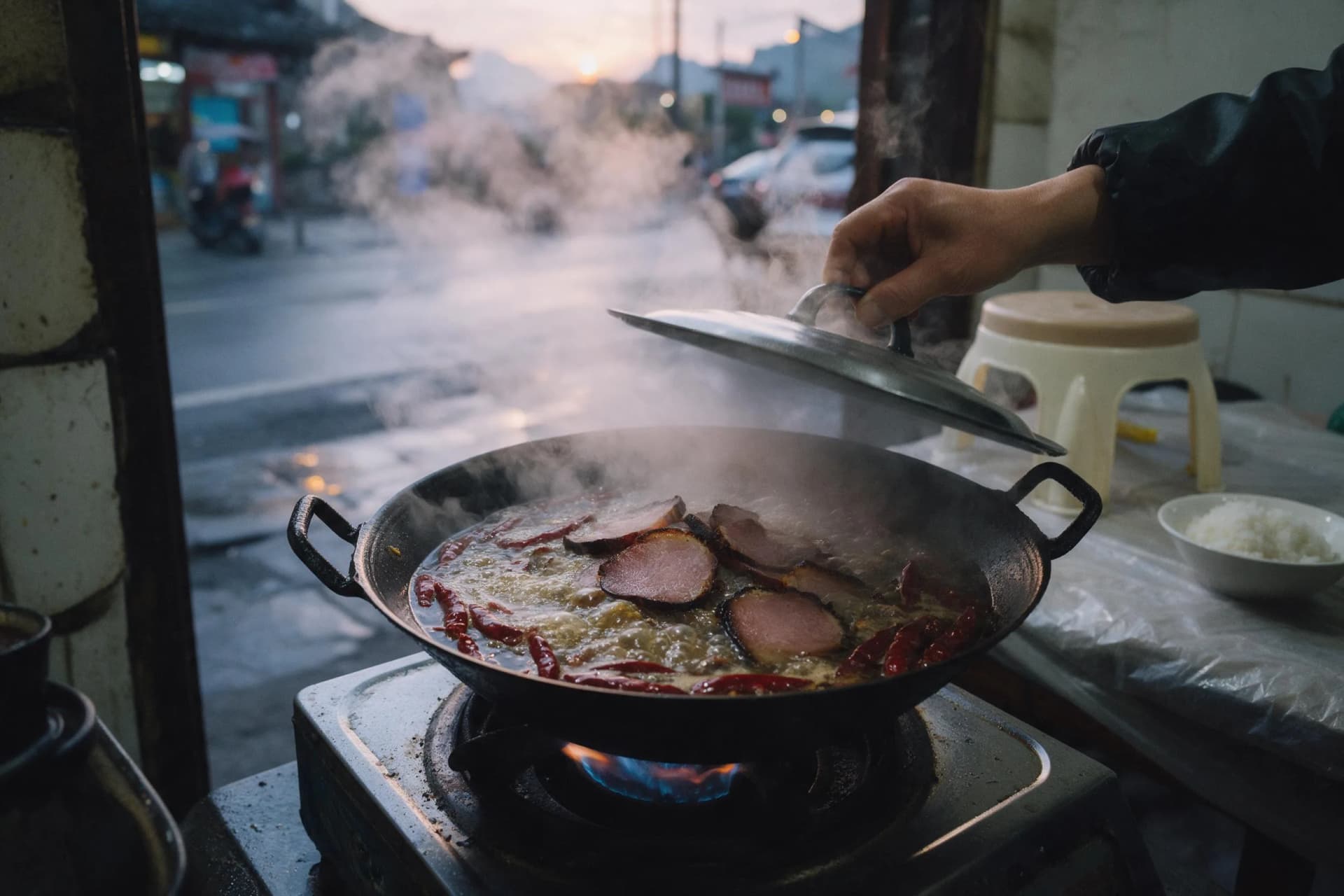
Zhangjiajie eats like a mountain town: smoke, chili and fermentation, served in portions built for sharing. This guide prices the five dishes the city is known for, walks you down the breakfast lane in Wulingyuan where locals start the day, and maps the vegetarian and halal kitchens that make the trip work for every table.
Short answer: Zhangjiajie's five signature dishes - sanxiaguo, Tujia smoked pork, sour fish, blood-cake duck and a bowl of rice noodles - cost 8 to 98 CNY each in October 2026, so two people can eat beautifully for under 200 CNY a day, with breakfast on Xibu Street and halal or vegetarian kitchens near the park gates.
Zhangjiajie's kitchen belongs to the Tujia and Miao, whose cooking grew out of a mountain pantry: smoke, salt, chili and fermentation. Cured pork hangs above the stove all winter, vegetables sour in clay jars, and wild ferns, pine mushrooms and rock-ear fungus come down from the forests around Wulingyuan. Order family-style, one pot plus two vegetable dishes, and share everything with rice.
1. Sanxiaguo (三下锅), the dish the city claims as its own. The name means three ingredients into one pot - usually pork tripe, intestine and smoked pork, though tofu and potato versions exist - and it arrives either dry-fried or in broth, thick with dried chili and Sichuan pepper. Hu Shifu Sanxiaguo in Zhangjiajie city has set the local benchmark since the 1990s, and a small pot for two costs 60-90 CNY. Say wei la, slightly spicy, if you would rather taste the smoke than the fire.
2. Tujia smoked pork (土家腊肉). Pigs raised in the hills are rubbed with salt, hung in pine smoke and left through a winter, then sliced thin and fried with garlic scapes, dried radish or fresh green chili until the fat turns translucent. A plate runs 48-68 CNY, and it is the best thing on the table with plain rice. Village kitchens in Suoxi Valley do it best; Wulingyuan town comes a close second.
3. Xiangxi sour fish (酸鱼). Tujia cooks layer river fish with rice powder, chili and salt in a sealed clay jar and leave it to ferment for weeks, sometimes months. The result is sour, saline and faintly funky, closer to a pickle than a fish dish, and it is served steamed or pan-fried. Expect 58-78 CNY a plate. Start with the pickled radish and bean dishes if fermented flavors are new to you.
4. Blood-cake duck (血粑鸭). Western Hunan's celebration dish: glutinous rice mixed with duck blood, pressed into cakes, fried until crisp, then braised with duck pieces, ginger and green chili. It is dark, rich and unmistakably local, and a shared portion costs 68-98 CNY. Order a plate of greens alongside it; the sauce is the point.
5. Zhangjiajie rice noodles (张家界米粉). Breakfast here is a bowl of rice noodles for 8-15 CNY, blanched, then drowned in pork-bone broth and topped with braised beef, shredded pork, pickled beans, crushed peanuts and as much chili oil as you dare. Add a mugwort rice cake for 5-8 CNY or a cup of kudzu-root powder, and you have eaten the way the city does before 8 a.m.
One street to eat on: Xibu Street (溪布街) in Wulingyuan. The pedestrian lane follows the Suoxi River for about a kilometer and it works twice a day. Breakfast stalls cluster at the north end from 06:30 to 09:00 with noodles, soy milk and fried dough; the night market takes over from 17:30 to 23:30 with grilled fish, skewers, stinky tofu and jars of pickled vegetables. It is a short walk from the park's main gate, so you can eat before the first shuttle leaves and again after the last one returns.
Vegetarian and halal eating, without a detour. Tujia cooking leans hard on cured meat, but the mountain pantry carries the rest: hezha, a soupy mash of ground soybean and greens, costs 15-25 CNY, and fern-root noodles, wild ferns, pine mushrooms and garlic tofu all make a full meal. Ask for su, vegetarian, and confirm no lard or chicken stock went into the wok. Halal travelers should look for the green qingzhen sign, most dependably around Yongding district's mosque and the streets near Zhangjiajie West railway station, where Lanzhou-style beef noodles land at 15-22 CNY a bowl.
How to get there and what else it costs. G-class high-speed trains from Changsha to Zhangjiajie West take about two and a half hours and start near 150 CNY in second class, per the 12306 timetable checked in October 2026 for the autumn schedule. Book on the official 12306 app or site with your passport: seats open 15 days before departure and go first on holiday weekends. Inside the park, the free shuttle network runs roughly 07:00 to 18:00 with earlier last departures in winter, and the 227 CNY multi-day park pass covers both entry and those buses.
Two days of eating in Zhangjiajie tells you most of what you need to know about the place: one breakfast on Xibu Street, one long sanxiaguo dinner beside strangers, and a vacuum-sealed pack of smoked pork in your suitcase. Build your park days around the meal you refuse to miss and let the weather sort out the rest. Tell us which dish you are chasing first and we will shape the itinerary around it; if you are still costing the whole trip, start with our budget guide before you book.
Good to know
- Daily food budget
- 100-180 CNY (about 14-25 USD) per person per day at October 2026 prices
- Five signature dishes
- 8-98 CNY each: sanxiaguo 60-90, smoked pork 48-68, sour fish 58-78, blood-cake duck 68-98, rice noodles 8-15
- Breakfast and street food
- Xibu Street, Wulingyuan: about 1 km, breakfast stalls 06:30-09:00, night market 17:30-23:30
- Vegetarian and halal picks
- Hezha 15-25 CNY; halal beef noodles 15-22 CNY; look for qingzhen signs near Yongding's mosque and Zhangjiajie West station
- Rail access
- Changsha to Zhangjiajie West by G train: about 2.5 hours, from 150 CNY second class; 12306 booking opens 15 days ahead with passport
- Park pass and shuttles
- 227 CNY multi-day park pass (2026) covers entry and free shuttles, roughly 07:00-18:00, earlier last departures in winter
Frequently asked questions
What is Zhangjiajie's signature dish?
Sanxiaguo, a one-pot braise of three main ingredients such as pork tripe, intestine and smoked pork. Order it dry-fried for a stronger, smokier flavor or in broth if you want something gentler, and ask for it mildly spicy if you are not used to Hunan chili.
What do locals eat for breakfast in Zhangjiajie?
A bowl of rice noodles in pork-bone broth, loaded with braised meat, pickled beans, peanuts and chili oil. The stalls along Xibu Street in Wulingyuan open early and stay busy until about 9 a.m., so go before your park shuttle leaves.
Is Zhangjiajie good for vegetarians and halal travelers?
Yes, with a little planning. Tujia kitchens cook soybean dishes such as hezha, plus ferns, mushrooms and tofu, so ask for su and confirm no lard or chicken stock is used. Halal diners should look for the qingzhen sign around Yongding district's mosque and near Zhangjiajie West station, where beef noodle shops are dependable.
How much should I budget for food in Zhangjiajie?
Not much by international standards. Street noodles and buns cost very little, a shared pot or a plate of smoked pork is a modest restaurant splurge for two, and even a big dinner rarely breaks a mid-range daily budget, so food is the cheapest part of most Zhangjiajie trips.
Can I pay by phone or card in Zhangjiajie restaurants?
Alipay and WeChat Pay work almost everywhere, including family restaurants and street stalls, and foreign bank cards can be linked to both before you travel. Carry a few hundred yuan in cash for village kitchens, market stalls and the occasional older shop with a broken scanner.