
Wonder Story
Great Wall at Jinshanling Photography Spots: 5 Light Windows for 2026
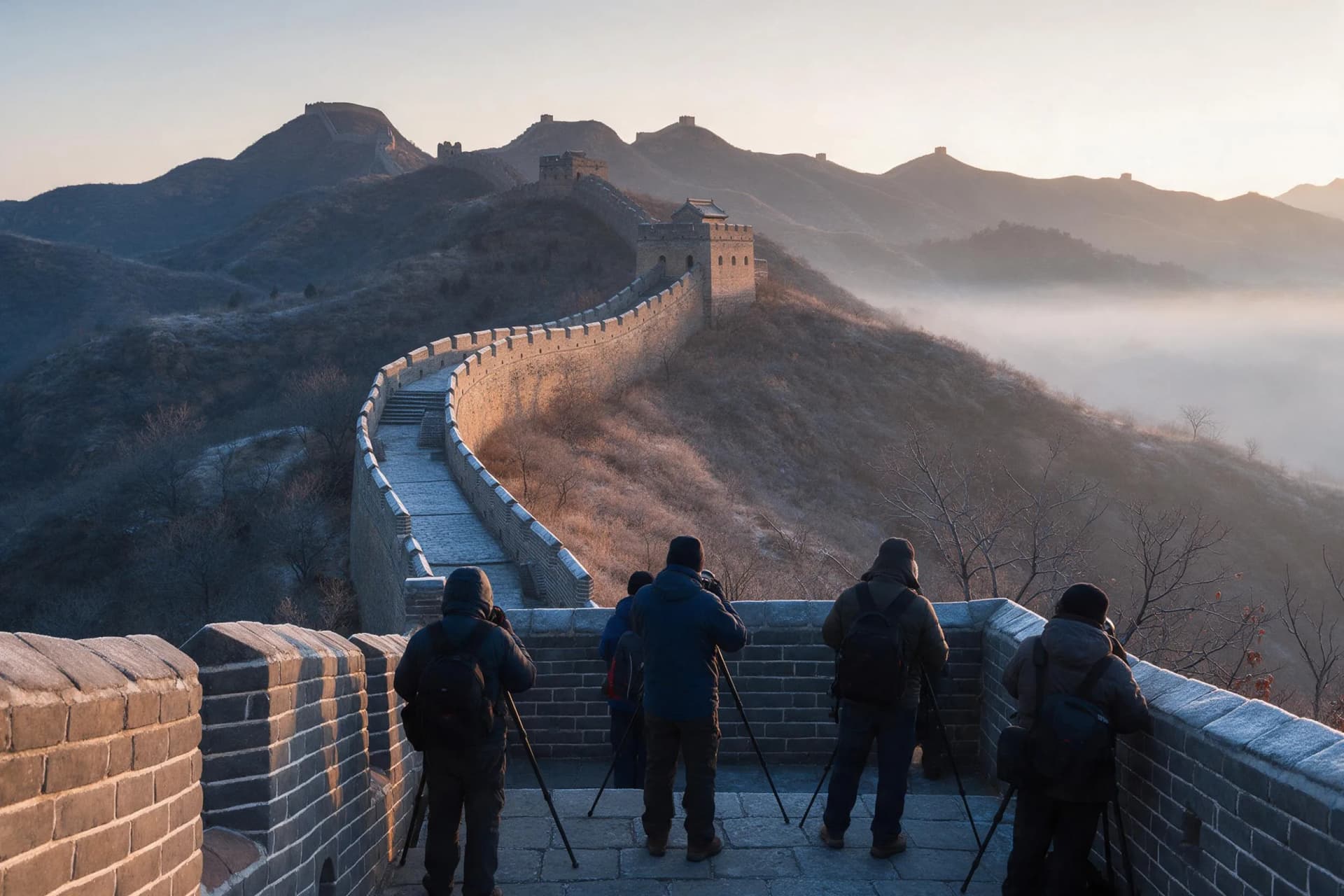
Jinshanling rewards anyone who sleeps beside it: the ridge runs east to west, so first light rakes along 10.5 km of Ming brick while the tour buses are still three hours out. Here is where to stand, when the light lands, what the CNY 65 ticket and cable car cost, and the settings, camera or phone, for each window.
Shoot the Great Wall at Jinshanling from the platform below the Big Jinshan Tower (Dajinshanlou) in the 45 minutes around sunrise, roughly 06:25 in mid-October, on a CNY 65 peak-season ticket bought the day before. Stay wall-side for one night: the first shuttle from Beijing reaches the gate near 11:00, three hours after the light.
Jinshanling is one of the Ming wall's most photogenic runs: 10.5 km of brick across the Hebei hills with 67 watchtowers, rebuilt 1567-1570 under General Qi Jiguang and spaced roughly every 100 meters. It sits 130 km northeast of Beijing in Luanping County, a 2.5-hour drive. The ridge runs roughly east to west, so at dawn the sun rises behind the eastern towers, backlighting the battlements while the valleys hold mist, the look behind every Great Wall at Jinshanling photography spots frame you have scrolled past.
Spot 1: the platform below the Big Jinshan Tower (Dajinshanlou). Ride the cable car from the visitor-center ticket gate (CNY 40 one way, CNY 80 return) and you step out a few minutes below the ridge platform, the one to pick if you get a single sunrise. In mid-October first light lands near 06:25, with usable color from about 05:45 to 07:00 as the wall snakes west into haze. Guests at hotels beside the wall can usually climb before the general gate opens, so confirm entry time when you book. Settings: 16-35mm, f/8, ISO 100 on a tripod, shutter falling to 1/8-1/60s as the light builds.
Spot 2: the East Five-Window Tower (Dongwuyanlou), about 1.5 km east of the cable-car top. This is the silhouette frame: here the wall drops, climbs and vanishes west toward the main tower cluster, and at sunrise the light comes from behind your shoulder. It is the quietest reliable spot, since most day visitors never walk that far, and the unrestored brick gives you the ragged texture the rebuilt sections lack. Budget 40 minutes each way over steep steps. Settings: 70-200mm at f/5.6 for the compressed tower line, or 24mm at f/11 with the foreground battlement sharp.
Spot 3: Zhuanduokou, the brick gate just above the main entrance, and the best window for phone photographers. It is the closest tower to the cable-car station and the easiest full frame to reach on foot. Arrive before 07:30 and stand on the wall's south side so the first light rakes the parapet at a low angle; the bend in the wall reads as an S-curve from here. On a phone, use Pro mode, lock ISO at 50-100, dial exposure down about -0.7 EV, and reach for the 2x or 3x lens rather than digital zoom.
Spot 4: Shalingkou and the middle ridge, from about 08:30 to 10:30. Once the sun is up the light turns hard and frontal, so work the side light along the mid-section between Shalingkou and the Jinshan towers. Shoot across the ridge rather than along it: raking light shows the mortar and the drop on the far side, and the rollercoaster profile emerges in a long lens. A polarizer earns its keep here, cutting haze over the Luanping valley. Settings: 35mm, f/8, 1/500s, ISO 100.
Spot 5: the western towers toward Gubeikou, from about 16:00 through blue hour. The best afternoon light falls on the wild westward section, where restored brick gives way to crumbling ramparts and the low sun turns stone warm against a bruised sky. In mid-October sunset is near 17:35, so walk back before the gate closes; the last cable car down leaves well before that, and descending in the dark is not a plan. Settings: 24-35mm, f/8, ISO 200-400, 1/125s, plus a graduated filter or a bracket.
One frame to skip: midday. The light is flat and vertical, the stone goes chalky and haze turns every tower into a pale smear. Eat in the village at noon and scout compositions for the afternoon instead.
Crowds, tickets and timing. Day tours from Beijing reach the gate between 10:30 and 13:30 and the cable car queue peaks with them between 10:00 and 14:00, so the wall is nearly empty before 08:30 and after 15:30. Weekdays in October are the sweet spot: clear skies, 8-18C, and the year's best chance of valley mist. Skip October 1-7, the busiest week of the Chinese year. Entry is CNY 65 April to October and CNY 55 November to March, the car-park shuttle is CNY 10, your passport is your ticket ID, and drones are banned.
Gear and comfort. The ridge sits near 1,000 m and runs colder and windier than Beijing, so pack a shell and gloves and carry a spare battery in a pocket; a microfiber cloth handles the lens condensation that comes with climbing out of a warm car.
One next step: book a night at a wall-side hotel or a guesthouse in Gubeikou village, then set the sunrise alarm and buy the CNY 65 ticket and cable car for the following morning. For the driving, meal stops and rainy-day swap, open our Great Wall at Jinshanling 3-day itinerary.
Good to know
- Entry and cable car, 2026
- Wall entry CNY 65 April-October and CNY 55 November-March; cable car CNY 40 one way or CNY 80 return; car-park shuttle CNY 10. Passport required as ticket ID at the gate.
- Sunrise and sunset, mid-October
- Sunrise near 06:25 and sunset near 17:35 China Standard Time (China has no daylight saving); usable dawn color 05:45-07:00, blue hour to about 18:05.
- Distance and drive time from Beijing
- About 130 km northeast of Beijing in Luanping County, Hebei, roughly 2.5 hours by car. The seasonal shuttle leaves Dongzhimen around 08:00 for CNY 50 and arrives too late for sunrise.
- Crowd window
- Tour buses arrive 10:30-13:30 and the cable car queue peaks 10:00-14:00; the wall is quietest before 08:30 and after 15:30. Weekdays in October beat the October 1-7 National Day holiday.
- Wall statistics
- 10.5 km of Ming wall with 67 watchtowers, rebuilt 1567-1570 under General Qi Jiguang and spaced about every 100 m; listed with the Great Wall as UNESCO World Heritage in 1987.
- Key towers
- Big Jinshan Tower (Dajinshanlou) for the cable-car sunrise platform a few minutes beyond the upper station; East Five-Window Tower (Dongwuyanlou) about 1.5 km east; Zhuanduokou closest to the main gate.
Frequently asked questions
What is the best time of day to photograph the Great Wall at Jinshanling?
The 45 minutes around sunrise is the payoff, roughly 05:45 to 07:00 in mid-October, shooting west from the platform below the Big Jinshan Tower (Dajinshanlou). Late afternoon is the second window: sunset falls near 17:35 in mid-October and the low light rakes the wild western towers.
How much does it cost to photograph the Great Wall at Jinshanling in 2026?
Entry is CNY 65 per adult from April to October and CNY 55 from November to March. Add CNY 40 for a one-way cable car or CNY 80 return, plus CNY 10 for the car-park shuttle, so a full dawn session runs about CNY 155 per person, excluding transport from Beijing.
Can I get to Jinshanling from Beijing for sunrise without staying overnight?
No. The seasonal shuttle leaves Dongzhimen around 08:00 and reaches the wall near 11:00, roughly four hours after first light. For a dawn frame you need to sleep at a wall-side hotel or in Gubeikou village and drive or take a private transfer in the dark.
Which tower at Jinshanling has the best sunrise view?
The platform below the Big Jinshan Tower (Dajinshanlou), reached by cable car from the visitor-center ticket gate, gives the classic sunrise panorama. For silhouettes and far fewer people, walk about 1.5 km east to the East Five-Window Tower (Dongwuyanlou).
What camera settings should I use on the Great Wall at Jinshanling?
Start at f/8, ISO 100 and a tripod for dawn, letting the shutter fall to 1/8-1/60s as the light builds, then switch to 1/500s at ISO 100 once the sun is up. A polarizer cuts the valley haze; on a phone use manual mode, ISO 50-100 and -0.7 EV exposure.