
Wonder Story
When Is the Best Time to See Huangshan’s Sea of Clouds?
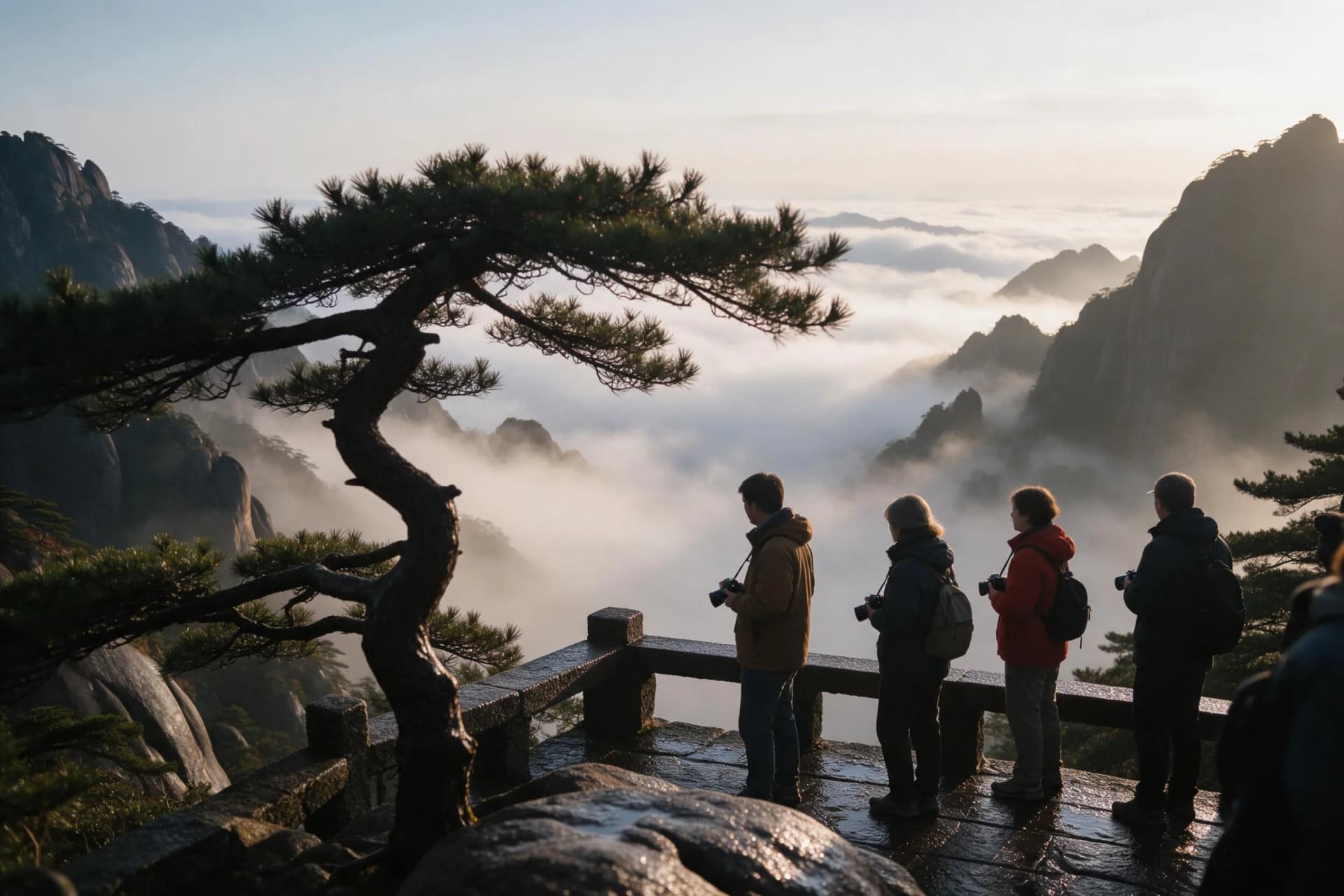
Huangshan’s cloud sea is not a season you book blindly; it is a two-day weather opportunity. November 5–25 offers the best mix of post-rain clarity, lower summit rates and pre-07:00 sunrises, while March 10–31 is the stronger spring backup. This month table gives temperatures, rainfall, crowds and prices, plus the July trap and the booking order that protects a dawn.
The best time to see Huangshan’s sea of clouds is November 5–25, with March 10–31 as the second window, provided a rain front clears and you stay two nights on the summit. Two summit doubles typically cost CNY 1,400–2,400 in November; be at a lookout before sunrise, around 06:30.
Treat the forecast, not the calendar, as the booking device. A cloud sea needs moist valley air trapped beneath clearer upper air, which is why the useful signal is “rain, then clearing,” not rain alone. On those mornings, the cloud deck can fill the valleys before sunrise and break apart by mid-morning; plan to be on the ridge from about 05:30 to 09:00. Check the scenic area’s cloud forecast and summit webcam at 18:00 the evening before, then commit your second dawn to the better morning rather than trying to photograph every stage of the weather.
Use this 12-month table to shortlist a week; adjust the exact dates when the forecast comes into view. Temperatures are typical summit daytime highs and overnight lows, rainfall is a rounded monthly planning range, and hotel figures are bands for a standard summit double rather than fixed quotations. | Month | Summit high / low | Rain | Crowds | Summit double | |---|---:|---:|---|---:| | January | 0 / –8°C | 60–90 mm | Low, except Lunar New Year week | CNY 650–1,100 | | February | 2 / –6°C | 80–120 mm | Low-mid; Lunar New Year can fall here | CNY 700–1,100 | | March | 6 / –3°C | 130–180 mm | Moderate, busiest on weekends | CNY 800–1,300 | | April | 11 / 2°C | 160–220 mm | High around Qingming holiday | CNY 1,000–1,600 | | May | 15 / 7°C | 200–260 mm | Peak May 1–5, then moderate | CNY 1,000–1,800 | | June | 18 / 11°C | 260–340 mm | Moderate to high | CNY 850–1,400 | | July | 20 / 14°C | 240–340 mm | High school-holiday traffic | CNY 1,000–1,600 | | August | 20 / 13°C | 180–260 mm | High | CNY 1,000–1,600 | | September | 17 / 10°C | 110–170 mm | Moderate; Mid-Autumn adds a spike | CNY 850–1,400 | | October | 12 / 5°C | 70–120 mm | Very high October 1–7, then moderate | CNY 900–1,800 | | November | 7 / 0°C | 55–95 mm | Low-moderate | CNY 700–1,200 | | December | 2 / –5°C | 45–80 mm | Low | CNY 650–1,100 |
November wins because three variables line up: cloud frequency remains high, rain totals fall, and summit demand drops after October. Aim for a Monday-to-Thursday stay after a front has passed, then use the first summit night as a reconnaissance and the second as insurance for a better dawn. March 10–31 adds warmer walking conditions and frequent fresh cloud, but a higher chance of wet stairs and weekend congestion. April can be excellent after Qingming, yet it is not the quiet spring date many travelers assume.
Skip July if cloud photography is the purpose. It combines 240–340 mm of rain, thunderstorm risk, school-holiday crowds and summit doubles at CNY 1,000–1,600; a dramatic downpour can also close exposed paths or delay lifts, leaving less usable ridge time. June is similarly wet. The same rule applies to holiday weeks: October 1–7 and Lunar New Year are not low-crowd alternatives, even when the weather forecast looks promising. A discounted room outside those dates is the better date-fixing decision.
Once the dates look right, book in this order: summit bed, scenic-area entry, cableway, then rail or road transport. Summit doubles usually need booking four to six weeks ahead for November and eight weeks or more around major holidays; dorm beds offer the leaner backup. Entry is CNY 190 from March 1 through November 30 and CNY 150 from December 1 through February, while one-way cableways cost CNY 80–90 and the Tangkou shuttle costs CNY 19 per leg. Pull the current figures from our Huangshan budget guide before paying, because hotel taxes, ticket channels and cableway schedules can change.
Build the trip around two dawns, not one heroic morning. Refreshing Terrace and Bright Summit are practical sunrise bases, but arrive 30–45 minutes early for a place at the railing and keep both hands free on wet stone stairs. If the 18:00 forecast calls for low cloud rather than valley cloud, use the clearer morning for ridge views and save the cloud hunt for the next day. In strong wind, lightning or dense fog, stay below the exposed viewpoints and move the summit night only if your booking permits it; no photograph is worth a closed ridge or a missed last lift.
Choose November 5–25 first, March 10–31 second, and reserve two summit nights before booking anything else. Set a reminder to check the forecast and webcam at 18:00 on the night before each dawn, then let the clearing decide which terrace gets your alarm. For route logic, use our Huangshan Sea of Clouds overview; for family pacing, open the Huangshan family guide before booking a summit room. The best sea-of-clouds trip is not the one with the most days on the mountain; it is the one with the most flexible dawn.
Good to know
- Best cloud-viewing windows
- November 5–25 first; March 10–31 second. Favor a rain front followed by clearing and keep two summit nights.
- Two-night summit budget
- CNY 1,400–2,400 for two standard doubles in November; CNY 700–1,200 per night, with dorm beds as the lower-cost backup.
- Tickets and lifts
- Entry CNY 190 March 1–November 30, CNY 150 December 1–February; one-way cableways CNY 80–90; Tangkou shuttle CNY 19 per leg.
- Daily cloud-viewing slot
- Be at Refreshing Terrace or Bright Summit by 05:30–06:00 in November; cloud is usually strongest before 09:00.
- Month to avoid
- July: 240–340 mm rain, thunderstorm risk, school-holiday crowds and CNY 1,000–1,600 summit doubles.
- Access
- Shanghai Hongqiao to Huangshan North takes about 3 hours and starts near CNY 230; the station bus to Tangkou takes 50–60 minutes for about CNY 30.
Frequently asked questions
What month is best for Huangshan’s sea of clouds?
November is the best overall month, especially November 5–25, because cloud frequency stays high while rain and crowds fall. March 10–31 is the strongest spring alternative, but choose dates after a front clears rather than booking on month alone.
How many days should I stay to see the sea of clouds?
Plan two summit nights if cloud viewing is the priority. That gives you two sunrise attempts and a flexible response to the previous evening’s forecast; one night leaves the entire result to a single morning.
What time of day is best for cloud photos on Huangshan?
Target the period from about 30–45 minutes before sunrise until 09:00. Valley cloud is often most defined in the first light, then begins to lift or thin as the morning warms.
Is July a good month to visit Huangshan?
July is the month to avoid if sea-of-cloud photography matters. It brings 240–340 mm of rain, thunderstorm delays, school-holiday crowds and high summit room rates, so the weather risk and cost are both poor.
How much does a summit hotel cost in November?
A standard summit double in November commonly falls around CNY 700–1,200 per night, while dorm beds can be cheaper. Book four to six weeks ahead and confirm cancellation terms before relying on two dawns.