
Where Are the Best Mount Emei Golden Summit Photo Spots?
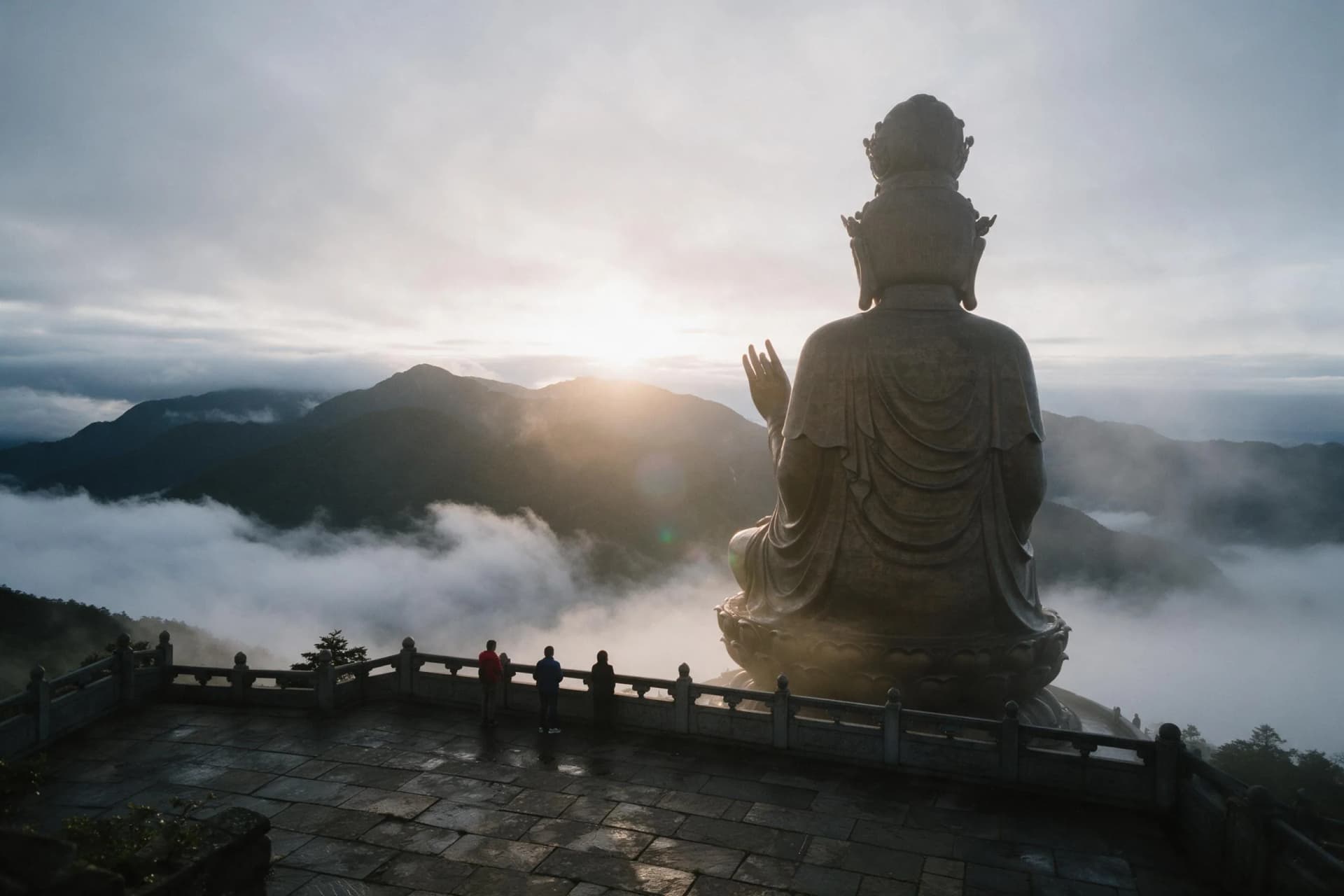
A practical light-first guide to Mount Emei's Golden Summit photo spots, covering the sunrise plaza, Sheshen Cliff at sunset and Wanfoding's high panorama. It explains when to stand at each viewpoint, which ticket or transport charge applies, when tour groups arrive, and the camera and phone settings that keep bright clouds and dark bronze under control.
Shoot the Golden Summit in three light windows: sunrise from the upper plaza west of the Ten Directions statue, sunset at Sheshen Cliff, and late-morning layers from Wanfoding. Sleep near the summit; in late October 2026 the scenic-area ticket costs about $23 before shuttle and cableway. A rushed day trip usually misses the cleanest light.
The strongest Mount Emei Golden Summit photo spots serve different light. The 3,077 m plaza is a backlit silhouette set, Sheshen Cliff is a west-facing cloud frame, and Wanfoding is the high panorama. Shoot sunset first, sunrise next and Wanfoding in late-morning side light, so you are not rushing exposed platforms as color fades. Park admission covers the summit; shuttle and cableway charges are separate, and the last descent matters most.
Spot 1: sunrise at the Golden Summit plaza, centered on roughly 07:10 in late October 2026. Stand on the raised west side of the central plaza and use the Ten Directions statue as a dark foreground against the eastern valley. Keep the low sun outside the frame, then include it after peak flare. Your park admission is enough; there is no photography fee. Coach groups are a planning estimate of 09:30–15:00, but the first cable-car wave can arrive soon after sunrise, so claim your place by 06:30. Camera: 24–70 mm, f/8–11, ISO 100–400, 1/125–1/500 sec; expose for clouds and bracket if the statue goes black. Phone: use 1x or 2x, lock exposure and focus on the sky, then lower brightness until cloud texture returns. Avoid digital zoom.
Spot 2: Sheshen Cliff for sunset and the sea of clouds, roughly 17:00–18:40 in late October 2026. Choose the west-facing outer railing, not the paved area behind it, and let the cliff lead toward the brightest cloud break. At blue hour, turn around for warm lights on summit buildings while the valley turns lavender-gray. Park entry covers the viewpoint. Sunset is quieter than midday, though tripod users gather early on clear weekends; arrive by 16:30. Use 70–200 mm to compress cloud ridges or 24–70 mm to include a person for scale. Meter for the clouds and bracket ±1 EV. On a phone, use the main lens, tap a midtone cloud, lower exposure and clean the lens before shooting into wind.
Spot 3: Wanfoding, the 3,099 m high point beyond the main Golden Summit complex. Follow the signed path; park admission covers it and no separate photo ticket is needed, but access can close in ice or high wind, so ask staff first. The reward is a cleaner top-of-the-world horizon and compressed layers. Work the side light from roughly 08:00–10:00, after sunrise crowds clear but before haze flattens the ridges. Use 35–50 mm for a person on the trail and 70–200 mm for peaks. On a phone, switch to 2x or 3x and lock focus on the farthest ridge rather than pinch-zooming.
Cloud forecasts need translating, because cloudy Emeishan town is not a cloudy summit. You want cloud tops below the viewing deck, clear air above and enough wind to move the layer, not a white wall at eye level. An overnight rain followed by morning clearing is a better sign than a bland “cloudy” icon. Check the official mountain notice and webcam around 16:00 for sunset, then again before first light. If the summit is inside cloud, shoot close details: wet railings, passing pilgrims and bronze emerging between gusts.
Tickets and crowd control are part of the photo plan. In late October 2026, budget about $23 for park admission and $50–$55 per adult for a typical round trip including admission, through-shuttle and summit cableway. Fares change and are sold separately, so confirm on the official Emeishan channel before travel. Carry your passport if booking requires an identity number. Transport queues are a planning estimate of 09:00–12:00, longer on holidays. Reach the gate before 13:00 for a relaxed sunset, and do not squeeze sunrise and a same-morning train back to Chengdu into one day.
Cold, wind and condensation affect pictures more than an extra lens. Keep spare batteries inside a pocket, let a chilled camera warm in its bag before entering a heated room, and carry a microfiber cloth for spray. Shoot RAW or the highest-quality JPEG your phone allows, use the histogram in bright cloud, and bracket when sky and statue differ by several stops. A small tripod helps at blue hour, but decks are crowded and gusty; brace a compact support against a rail rather than setting up a full-height tripod. Never cross a barrier for a cleaner angle.
Give the shoot 24 hours: reach the summit in the afternoon, scout the railings, stay through sunset, sleep high, rise before 06:30 and walk to Wanfoding after breakfast. Allow at least three hours from gate to summit on a busy afternoon, and confirm the final downhill cableway on arrival. Book the high-altitude night first; that decision turns the Golden Summit from a hurried stop into a workable photo shoot.
Good to know
- Golden Summit elevation
- The main plaza sits at 3,077 m (10,095 ft); the Wanfoding high point rises to 3,099 m (10,167 ft).
- Late-October 2026 light
- Clear-weather planning estimates: sunrise near 07:10 and sunset near 18:20; arrive 40 minutes early, and check date-specific times because weather and seasonal schedules vary.
- Ticket and transport budget
- About $23 for scenic-area admission in late October 2026; a typical round trip with the through-shuttle and summit cableway costs roughly $50–$55 per adult.
- Crowd timing estimate
- Plan around tour traffic from roughly 09:30–15:00; aim for the summit before 08:30 or after 16:30. Variability is high on weekends and Chinese public holidays.
- Summit access sequence
- Scenic shuttle to Leidongping, then cableway to Jinding; allow at least 3 hours from the gate on a busy afternoon and verify the day's first and last departures.
- Starting photo settings
- Camera: ISO 100–400, f/8–11, 1/125–1/500 sec and ±1 EV bracketing; phone: 1x–3x optical view, AE/AF lock and lowered exposure for bright clouds.
Frequently asked questions
Do I need a separate ticket to photograph the Golden Summit?
No. The scenic-area admission covers access to the Golden Summit plaza and Sheshen Cliff; shuttle buses and cableways are separate charges. In late October 2026, admission is about $23 per adult, while a typical round trip with transport is roughly $50–$55. Confirm current fares and the day's transport schedule on the official Emeishan channel before booking.
Can I catch sunrise on Mount Emei without staying overnight?
It is unreliable. The first cable-car wave may arrive after useful color, and queues can erase the margin even in summer. If sunrise is your priority, sleep near the summit or at a high mountain lodge and confirm the first transport time on arrival. A day trip from Chengdu is better planned around sunset and the sea of clouds than a guaranteed dawn shot.
When is the sea of clouds most likely at Golden Summit?
Look for a low cloud layer below the summit with clear air above, especially after rain clears overnight. A forecast that simply says “cloudy” is not enough, because the summit can sit inside the same cloud. Check the mountain's live conditions and webcam before committing to a sunrise, and keep a close-up plan ready when the cloud never breaks.
What camera settings work for sunrise at Golden Summit?
Start near ISO 100, f/8–11 and 1/250 sec, then adjust for the changing light. Expose for the brightest clouds, shoot RAW if you can and bracket by one stop when the bronze statue turns black against the sky. With a phone, use 1x or 2x, lock focus and exposure on a midtone cloud, then reduce brightness until the highlights retain texture.
Which Golden Summit viewpoint is best at sunset?
Sheshen Cliff is the most dependable sunset viewpoint because it faces the western cloud and mountain layers. Arrive around 16:30 in late October, choose the outer railing rather than the paved area behind it, and stay through blue hour for warmer lights against a cooler valley. The viewpoint is included with scenic-area admission.
Keep exploring
Plan with ChinaMira
Turn this into a trip
Use this guide as a starting point — we can handle the route, guides, trains and the visa invitation letter.