Can You Make Baby Formula With Hot Water in China in 2026?
A travel-day guide for parents preparing baby formula with hot water in China in 2026. It covers the 70°C safety step, hotel-kettle checks, airport and high-speed-rail routines, bottle cleaning, sealed-water costs and the equipment that prevents a hungry detour. Use it to choose a controlled preparation kit before you rely on a station flask.
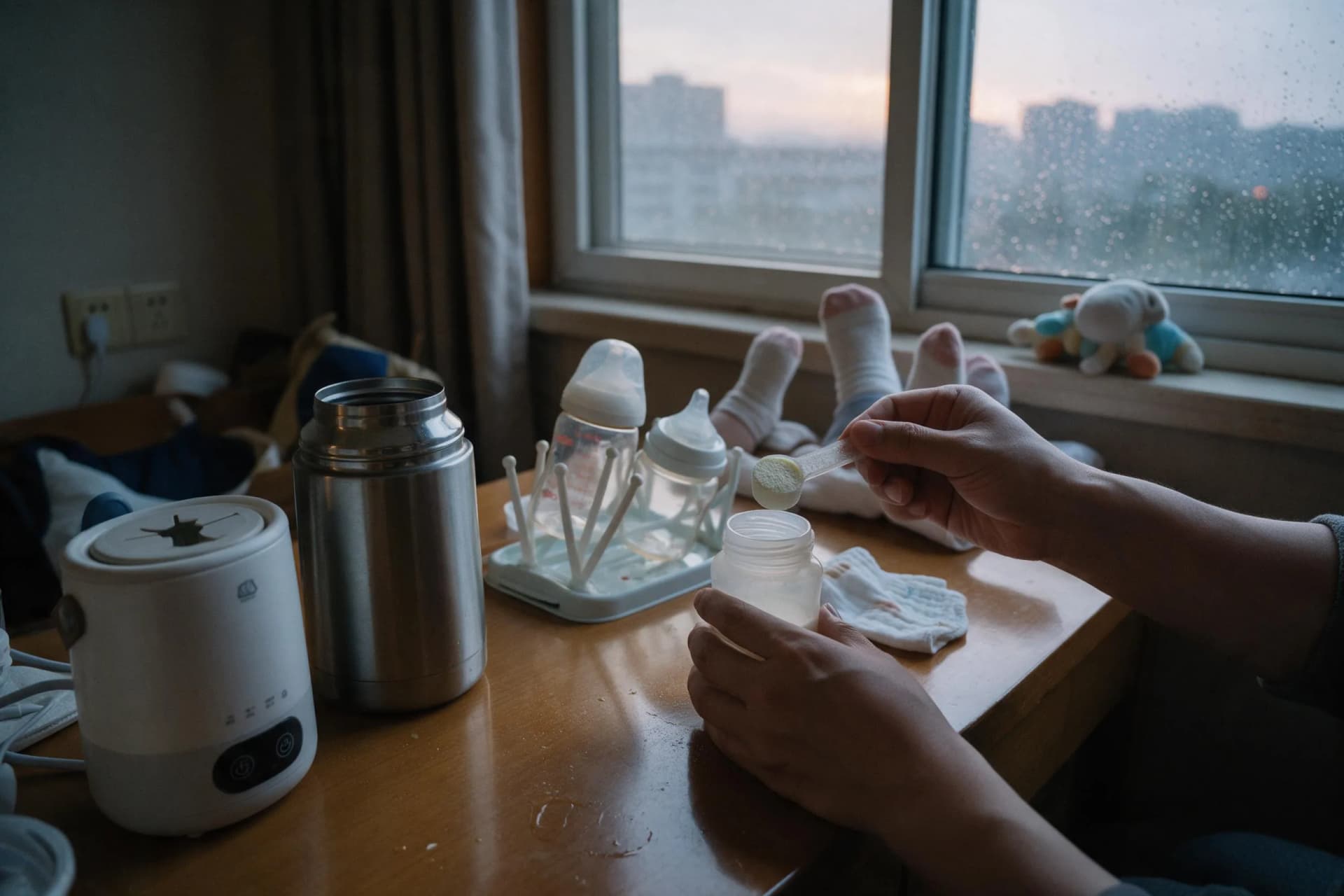
Yes, with planning: in 2026, pack a temperature-controlled kettle, a wide-mouth vacuum flask and sealed water suitable for infants, then mix powdered formula at 70°C (158°F). Budget $0 for hotel kettles and $1–$3 per 1.5-liter sealed bottle; never assume an unattended station tap is safe or reliably hot.
The organizing decision is control: can you control the water source, the cleaning surface and the water temperature at the moment your baby needs a feed? A hotel kettle solves one part, but only if the room also has a clean worktop, enough bottles and a reliable cooling method. A train dispenser solves none of those by itself. Build each travel day around that three-part test, and choose the equipment or ready-to-feed fallback that keeps a missed feed from becoming a transfer crisis.
For powdered formula, wash your hands and clear a clean surface. Bring water to a rolling boil, then let it cool to no less than 70°C (158°F) before adding the powder; this follows public-health guidance for killing possible harmful bacteria in formula. Measure the exact amount on your product label rather than guessing. After mixing, cool the bottle quickly in a bowl or sink of cold water, shake carefully and test the temperature on your wrist before feeding. Do not store a warm bottle casually in a day bag, and do not top up a half-finished feed later. If your baby's medical team has given different instructions, those take priority.
Midrange and upscale Chinese hotels usually provide a kettle and a couple of sealed waters, but a budget room, homestay or rented apartment may provide neither. Confirm before booking, not after a late arrival. Inspect the kettle for scale or residue, and use sealed water rather than straight tap water for a feed. China's sockets are commonly 220–240 volts, so a US appliance needs a compatible dual-voltage rating and the correct plug; a converter only helps when its rating covers the kettle. If you bring a temperature-controlled travel kettle, test it at home and pack it in checked baggage when airline battery and appliance rules require that.
On airport days, carry premeasured powder separately from the water bottle and allow 15–20 extra minutes for possible checks of liquids and baby supplies. Keep one ready-to-feed carton or sealed backup feed in the nappy bag, and verify the current rule with your airline and departure airport. Many Chinese high-speed trains have a hot-water dispenser at the end of a carriage, but a dispenser is not a bottle warmer: the water can be near boiling and the carriage is moving. Use the flask to transport water safely, let it cool away from the aisle, or choose the ready-to-feed option instead of mixing at a crowded luggage rack.
Pack enough clean bottles for one full day's feeds and wash each one after use rather than leaving them in a hotel sink overnight. A small bottle brush, travel drying rack and sterilizing method suited to your child's age reduce dependence on whatever the room happens to supply. Boiling feeding equipment is awkward on the road, so a microwave steam bag, electric sterilizer or sterilizing tablets can be easier if their instructions allow it. Never mix cleaning chemicals, and never assume a hotel's rinse water is drinkable. Keep the formula scoop dry, close the original tub and follow its storage instructions after opening.
Bring your usual formula for the entire trip plus two days of spare feeds. Large Chinese cities sell infant formula in major supermarkets, pharmacies and official brand stores, but finding the exact stage, edition or preparation type at 22:00 is not a plan. Keep the original packaging and check your airline and customs guidance before departure. Ready-to-feed cartons are heavier and usually cost more, yet they remove boiling, measuring and cooling from transport days; powdered formula is lighter and cheaper if your hotel routine is under control. Do not switch brands casually just because a shelf is convenient.
The strongest setup for a city-and-train trip is a 220-volt temperature-controlled kettle, one wide-mouth flask, enough bottles for a day and a sealed-water backup. If the itinerary includes several early departures or long transfers, add ready-to-feed feeds for those days instead of promising to improvise at a station. Before booking, confirm that each hotel has a kettle, ask whether a clean fridge is available when you need one, and put the feeding equipment in your carry-on rather than the checked suitcase. Send ChinaMira your travel dates, your baby's age and every rail leg, then build the hotels and transport around the first reliable feed of each morning.
Good to know
- Water temperature, checked November 20, 2026
- Mix powdered formula with boiled water cooled to at least 70°C (158°F), then cool the prepared bottle to feeding temperature. Use ready-to-feed formula exactly as its label directs.
- Core preparation kit
- Pack 1 dual-voltage temperature-controlled kettle, 1 wide-mouth vacuum flask, enough clean bottles for 1 day of feeds and the formula scoop supplied with your product.
- 2026 water budget
- Plan $0 for hotel kettle use and $1–$3 per 1.5-liter sealed still-water bottle. Keep at least 1 sealed backup; these are editorial planning ranges, not live shop prices.
- Transport buffer
- Add 15–20 minutes at airport security and carry 1 sealed backup feed. Many high-speed trains have carriage hot-water dispensers, but they do not provide controlled 70°C formula preparation.
- Formula supply
- Pack enough formula for every trip day plus 2 days of spare feeds. Keep the original packaging and check current airline and customs guidance before departure.
- Cleaning rhythm
- Clean bottles after each feed and use a child-appropriate sterilizing method once daily or per your pediatric team's advice. Keep the scoop dry and close the formula tub after every use.
Frequently asked questions
Can I use Chinese tap water to make baby formula?
Do not assume hotel or restaurant tap water is ready to use straight from the faucet. Bring water to a rolling boil, follow your formula label, and cool it to at least 70°C before mixing. If the source or kettle condition is doubtful, use sealed water as the safer backup.
Do Chinese hotels provide kettles for baby formula?
Many midrange and upscale hotels provide an electric kettle, but budget hotels, apartments and homestays may not. Confirm before booking, inspect the kettle, use sealed water and bring a dual-voltage travel kettle if feeding cannot depend on the room's equipment.
Can you bring baby formula through Chinese airport security and onto high-speed trains?
Baby supplies for personal use are normally carried in hand luggage, but security staff may inspect liquids, powders and mixed feeds. Keep formula in its original packaging, allow 15–20 extra minutes and check the latest rules with your airline and departure airport.
How much does bottled water cost for formula in China?
Budget $1–$3 for a 1.5-liter sealed bottle in 2026; hotel kettle use is usually $0. Carry at least one sealed backup and choose still water suitable for infants, then boil it according to your formula preparation instructions rather than pouring it directly into powder.
Is ready-to-feed formula easier for a China trip?
Yes on travel days, because it removes boiling, cooling and measuring at a station or on a moving train. It is heavier and usually more expensive than powder, so a practical compromise is powdered formula at a controlled hotel base plus one or two ready-to-feed cartons for every transfer day.
Keep exploring
Sources & verification
Sources used for this guide
Time-sensitive travel details can change. Reconfirm opening hours, prices and entry rules before departure.
- 1who.intwho.int
- 2nhs.uknhs.uk
- 3wwwnc.cdc.govwwwnc.cdc.gov
- 412306.cn12306.cn
Local operating context
ChinaMira Travel Team contributes local route and operating knowledge from China. This team byline identifies a real operating group rather than a fictional individual author.
Related journeys
Turn this guide into a real trip
These are currently bookable journeys selected from the place and theme of this guide. Availability is rechecked before display.
Beijing & the Wild Great Wall
Five unhurried days in the capital, pairing the Forbidden City and hutong life with a full day walking the unrestored ridges of Jinshanling.
5 days
Next departure: Mar 15, 2027
Xi'an: Terracotta Warriors & the Silk Road
Four days in the eastern gateway of the Silk Road — the Terracotta Army, the city wall and the food lanes of the Muslim Quarter.
4 days
Next departure: Apr 8, 2027
Plan this trip
Turn this guide into a practical itinerary
Send us the article as context. A ChinaMira specialist can check the route, dates, transport, tickets and the details that need local confirmation.