
Can You Bring Snacks into China? 2026 Customs Guide
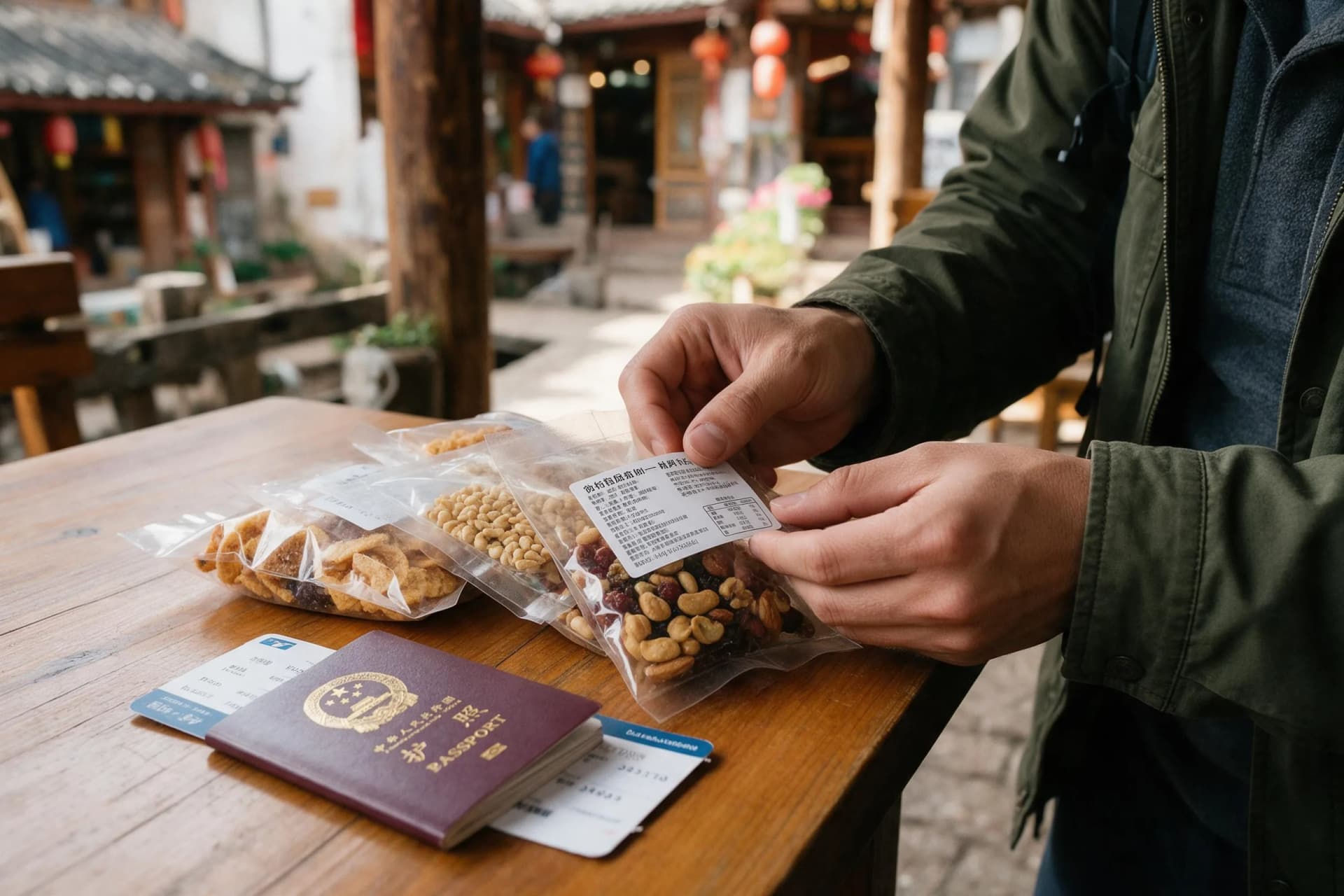
Packaged, shelf-stable snacks for personal use are usually the simplest choice, while fresh fruit, vegetables, meat, dairy, eggs, seeds and many homemade foods can be restricted or prohibited. Rules depend on the ingredients and origin, so read the customs list and declare food when required rather than assuming a snack is allowed because it is sealed.
The safest travel snacks are commercially packaged, clearly labeled and stable at room temperature. Plain biscuits, cereal bars, crackers, hard candy and sealed nuts may be practical, but the final answer depends on ingredients and current rules. Products containing meat, dairy, egg, fresh fruit or soil are higher risk. A chocolate bar and a meat-filled pastry are not treated the same way even if both are sold as snacks.
Check the ingredient label for animal products, seeds and fresh plant material. Translation can hide ingredients, so keep the original package rather than transferring food into unmarked bags. If a child or traveler has allergies, bring a small supply of a known safe brand and a translated allergy card. Customs officers may still restrict an item even when it is medically or personally important.
Declare food when the arrival form or an officer asks. Do not discard the packaging before arrival because the label is the evidence of what the product contains. If an item is not allowed, cooperate with disposal instructions and do not argue that it is only a small amount. The goal is to avoid a delay at the start of the trip and to comply with agricultural and public-health controls.
For long flights, pack snacks separately from medicine and documents. Liquids, gels, yogurt and soft cheese may face both aviation security and customs restrictions. Protein bars can be useful, but check the label for dairy, nuts and meat-derived ingredients. Fresh fruit bought in the departure lounge should be finished or declared before arrival rather than placed loose in a cabin bag.
Travelers visiting family often want to bring familiar foods as gifts. Gift quantity does not remove import controls. Check whether the item is commercially manufactured, contains meat or dairy, or requires a phytosanitary certificate. For special dietary needs, plan a backup supply that can be bought locally and ask the hotel or advisor for reliable allergy-aware shops before arrival.
Once in China, food is easy to buy, but imported brands may cost more and familiar ingredients may differ. Save the Chinese name of an allergy or product constraint on your phone. Do not ask a restaurant to guarantee an item is safe based on a photo alone. For severe allergies, speak with a clinician before travel and carry appropriate emergency medicine as advised.
Build a snack plan for the actual journey legs instead of packing every possible item from home. Airports, long rail transfers and late arrivals are the moments where a familiar snack helps. A sealed cereal bar and a refillable bottle can be more useful than a heavy assortment of food. Check the departure-country security rules too, because a product that passes customs may still be restricted at an earlier airport.
If traveling with children, keep snacks separate from toys, passports and medicine and explain that food cannot be passed through anonymous airport purchases. Formula, expressed milk and medically necessary food can have different screening rules; check with each airline and airport before travel. Carry a small trash bag so that unfinished fresh food does not end up loose in a vehicle or hotel room.
Consider destination availability before relying on imported brands. Cities and tourist areas usually have convenience stores, supermarkets and delivery platforms, but the exact product may differ. Save product photos and Chinese ingredient constraints if a child or adult has a restricted diet. For halal, vegetarian or severe allergy needs, pre-check a real supplier rather than trusting a generic label translation.
Rules can change and may be applied differently by airport, railway station, embassy or consulate. Check the official source again close to departure, carry the relevant documents and ask the operating company when the answer affects health, immigration or a non-refundable booking. Customs decisions are item-specific. This article explains planning principles and does not guarantee entry for a particular product.
Good to know
- Lower-risk format
- Commercial sealed package with a readable ingredient label
- Higher-risk items
- Fresh food, meat, dairy, eggs, seeds and homemade products
- Declare
- Food when the arrival process or customs officer requires it
- Keep
- Original packaging and a translated allergy card when needed
- Backup
- Identify local safe-food options before arrival
Frequently asked questions
Are sealed snacks always allowed?
No. A sealed package can still contain restricted meat, dairy, fresh plant material or another controlled ingredient. Read the label and check current customs rules.
Can I bring baby food or allergy-safe food?
A reasonable travel supply may be considered, but ingredients and quantity matter. Keep original packaging, carry documentation if relevant and declare items when required.
Can I bring fruit for the flight?
Fresh fruit can be restricted on entry. Finish it before landing or declare it rather than placing it loose in your luggage.
Keep exploring
Sources & verification
Sources used for this guide
Time-sensitive travel details can change. Reconfirm opening hours, prices and entry rules before departure.
- 1english.customs.gov.cnenglish.customs.gov.cn
- 2english.www.gov.cnenglish.www.gov.cn
Local operating context
ChinaMira Travel Team contributes local route and operating knowledge from China. This team byline identifies a real operating group rather than a fictional individual author.
Related journeys
Turn this guide into a real trip
These are currently bookable journeys selected from the place and theme of this guide. Availability is rechecked before display.
Chengdu: Pandas, Teahouses & Sichuan Flavours
Four relaxed days in Sichuan: pandas at first light, teahouses in the old lanes and a hands-on introduction to Sichuan cooking.
4 days
Next departure: Mar 18, 2027
Shanghai & Jiangnan Water Towns
Five days moving between Shanghai’s riverfront skyline and the canals, gardens and stone bridges of the Jiangnan water towns.
5 days
Next departure: Apr 6, 2027
Plan this trip
Turn this guide into a practical itinerary
Send us the article as context. A ChinaMira specialist can check the route, dates, transport, tickets and the details that need local confirmation.