
Hotel Registration in China 2026: What Must Foreigners Show?
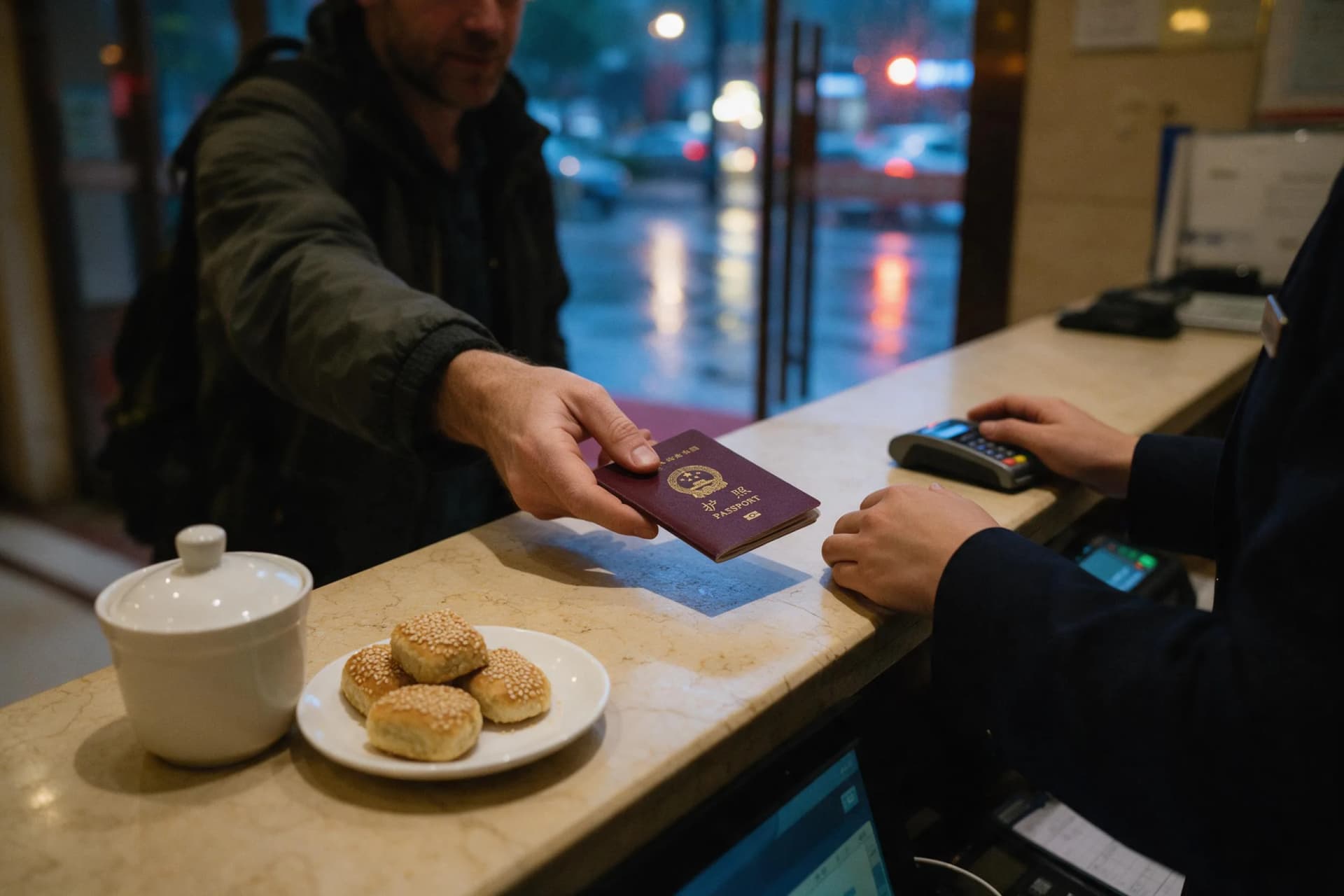
In Xi'an, 2026 hotel registration is mostly a passport check: present every guest's original travel document and valid entry permission, then let the front desk file the police record. This food-first check-in guide covers the documents, private-stay deadline, five signature dish prices, a Beiyuanmen breakfast walk, and practical halal choices.
In Xi'an in 2026, foreign guests must show the original passport used to enter China plus a valid visa, residence permit, or visa-free entry record at hotel check-in. Every guest must appear; the front desk completes accommodation registration free, usually in 5–10 minutes. Afterward, plan $15–$25 for a shared first dinner.
Hotel registration in China is not passport control, so do not turn the desk into an immigration interview. Bring the four things the receptionist needs: - The physical passport of every foreign guest, including children; a photocopy or phone photo will not do. - The entry permission inside or associated with that passport: a valid visa, residence permit, or the record of visa-free admission. - The booking reference if the reservation is under a different name or spelling. - The hotel's Chinese name and address saved offline for your driver and your own arrival check. An arrival card and health declaration belong to the immigration process, not routine hotel registration.
Expect the front desk to inspect the identity page, entry permission and stay dates, scan the passport, and enter your details into the accommodation-registration system. The legal filing is part of checking you in; you should not need a separate trip to a police station. Registration itself costs $0, while a refundable room deposit is a separate transaction. Keep the passport in sight, take it back after the scan, and never leave it overnight as security for the room bill. If the property cannot complete the record, ask the manager to contact the local public security office while you wait rather than accepting an informal workaround.
A private stay uses a different clock. If you stay with a friend or in a private home rather than at a hotel, the accommodation must be registered within 24 hours in an urban area or 72 hours in a rural area. The host brings identity and address evidence; you bring your passport and entry permission. This Xi'an guide assumes a hotel stay, because a confirmed front desk is the cleaner choice for a first night—especially when your real priority is breakfast.
Make one food decision before handing over the passport: how far will you go after check-in? Choose by arrival time. - Before 18:00: drop bags, ask the front desk to mark a nearby noodle shop on a paper map, and save Beiyuanmen for the next morning. - From 18:00 to 21:00: order noodles or paomo nearby, then sleep early enough for breakfast. - After 21:00: choose the nearest open restaurant, confirm its closing time, and protect tomorrow's appetite. Ask two concrete questions: “Which nearby kitchen is open now?” and “Which entrance should I use for Beiyuanmen at 07:00?” Ask for shop names in Chinese.
Beiyuanmen Street, beside the Hui Muslim quarter and roughly a 12-minute walk from Bell Tower metro station, is the practical breakfast-and-street-food walk here. Target 07:00–09:00, then use the side lanes rather than stopping at every main-street display. Expect a breakfast of bread, pastries, tea and noodles to cost about $3–$7 per person. Confirm that morning's opening times in a map listing or by asking your hotel, since individual stalls change hours. The area is the strongest halal option for a first visit: look for清真 signs, then ask separately about meat, broth, cooking wine, oil and shared fryers. A crescent symbol is a useful clue, not proof of every ingredient; a vegetarian dish can still contain meat stock.
Use these 2026 planning prices for the five signature dishes, then check the menu before ordering. Portions and style vary, and famous shops charge more: - Yangrou paomo, lamb soup with torn flatbread: $6–$12. - Biangbiang noodles, wide hand-pulled noodles: $3–$7. - Roujiamo, a chopped-meat sandwich on a flatbread bun: $2–$5. - Liangpi, cold wheat or rice noodles: $2–$4. - Jinggao, a sweet steamed rice cake: $1.50–$3. For a comfortable one-day food budget, allow $18–$30 per person before drinks. A shared paomo bowl and two snacks can sit near the lower end; a larger restaurant meal moves toward the upper end.
Ordering is where dietary travelers need to slow down. “No pork” is not the same as “no meat stock,” and “vegetarian” is not guaranteed when a wok, fryer or broth is shared. Show a translated note before ordering, ask the server to confirm with the kitchen, and choose a dedicated vegetarian restaurant if cross-contact matters. For halal meals, ask all five ingredient questions rather than relying on an English menu alone. Link an international payment card to Alipay before departure, keep a small cash backup, and save your hotel's Chinese address for the return trip. A concise note with allergies is especially important; do not reduce a serious allergy to pointing at a menu photo.
Your first-evening checklist is now simple: every guest has an original passport and entry permission, the hotel has answered in writing that it can register foreign passports, and you know whether dinner stays within walking distance. At the desk, check the passport spelling, room number and stay dates before you walk away. Afterward, use the hotel's Chinese name to navigate back, then take the Beiyuanmen breakfast walk only when you have enough energy to enjoy it. For the booking checks before you reserve, read the ChinaMira hotel-registration and Xi'an arrival guides below; for a halal or vegetarian backup, save one named restaurant offline before leaving your room.
Good to know
- Documents to show
- Original passport for every guest plus valid visa, residence permit or visa-free entry record; a booking reference under a different name also helps.
- Registration fee and time
- $0 at the hotel desk in 2026; commonly 5–10 minutes for passport inspection, scanning and entry; no separate urban hotel paperwork.
- Private-stay deadline
- Within 24 hours in an urban area or 72 hours in a rural area; host identity and address evidence plus guest passport are required.
- Five-dish price range
- 2026 planning prices: yangrou paomo $6–$12, biangbiang noodles $3–$7, roujiamo $2–$5, liangpi $2–$4 and jinggao $1.50–$3.
- Breakfast walk
- Beiyuanmen Street; aim for 07:00–09:00 and check that day's stall hours. Breakfast costs about $3–$7; Bell Tower metro station is roughly 12 minutes away on foot.
- Halal check
- Confirm 5 points with the kitchen: meat source, broth, cooking wine, oil and shared equipment; also name any allergy in writing.
Frequently asked questions
What documents must foreigners show at hotel check-in in China?
Show the original passport used for entry and every foreign guest's own passport, together with any visa, residence permit or visa-free admission record. The hotel may also ask for the booking reference. Registration is completed by the front desk and should not require a separate police-station visit.
Is a passport photocopy enough for hotel registration in China?
No. The hotel needs the physical passport to verify identity and enter the accommodation record. Keep a paper copy and a secure phone image as emergency backups, but carry the original passport when checking in and when traveling between cities.
Can I go straight to dinner after hotel check-in in Xi'an?
Yes, once the front desk has completed registration and returned your passport. For a late arrival, choose a nearby open restaurant rather than crossing town. For an earlier arrival, eat close to the hotel and save Beiyuanmen Street for a 07:00–09:00 breakfast walk.
Can the hotel keep my passport during the stay?
Do not leave your passport with the hotel overnight as a deposit. Watch the check-in scan and take the document back before leaving the desk. You may ask for a receipt or registration slip if one is available, but keep the original passport with you.
Where can I find halal food near Xi'an's Muslim Quarter?
Beiyuanmen Street and its side lanes have a high concentration of halal-signposted food. Still confirm meat, broth, cooking wine, oil and shared utensils with the kitchen. Arrive around breakfast time, use a Chinese dietary card, and keep a second listed restaurant as backup.
Keep exploring
Sources & verification
Sources used for this guide
Time-sensitive travel details can change. Reconfirm opening hours, prices and entry rules before departure.
- 1english.www.gov.cnenglish.www.gov.cn
- 2en.nia.gov.cnen.nia.gov.cn
Local operating context
ChinaMira Xi'an Guide Team contributes local route and operating knowledge from Xi'an. This team byline identifies a real operating group rather than a fictional individual author.
Related journeys
Turn this guide into a real trip
These are currently bookable journeys selected from the place and theme of this guide. Availability is rechecked before display.
Plan this trip
Turn this guide into a practical itinerary
Send us the article as context. A ChinaMira specialist can check the route, dates, transport, tickets and the details that need local confirmation.