
China Arrival Card: Five Mistakes to Avoid in 2026
China's free arrival card is simple, but five avoidable errors can slow a tired first-time traveler and complicate an onward connection. This focused 2026 guide explains when transit changes the rule, why hotel addresses and stay details matter, how customs differs from immigration, and what families must prepare before joining the airport queue.
Most foreign visitors should avoid five China arrival-card mistakes: filling it only at passport control, using a vague hotel address, confusing customs with immigration, guessing stay details, and assuming one form covers a family. The card costs $0 and usually takes 3–5 minutes; complete the current official version before joining the queue in 2026, unless you remain airside.
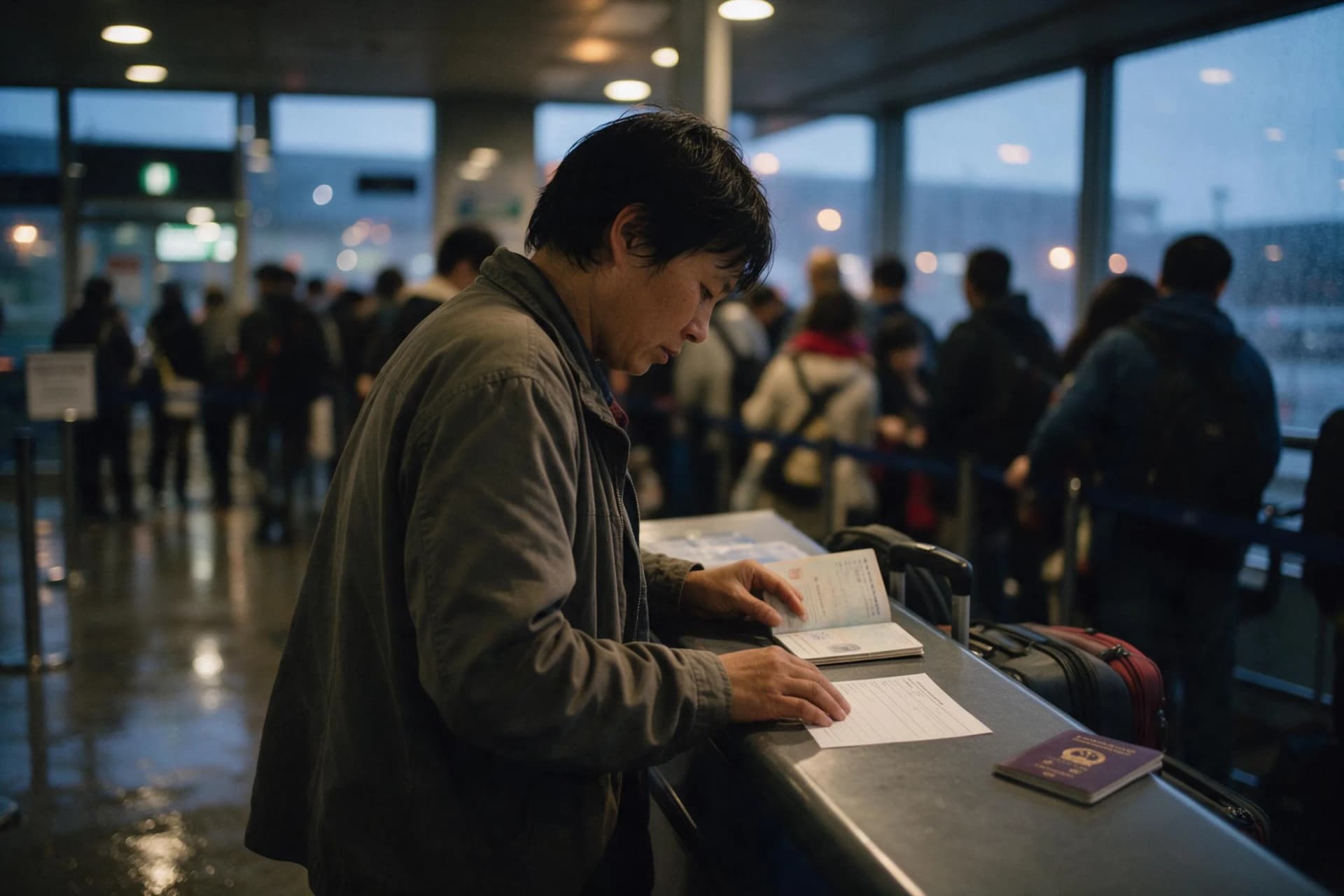
Picture a rainy 06:20 landing in Shanghai. The plane doors open, passengers drift toward immigration, and the writing counter fills with people balancing passports on suitcase handles. One traveler has the hotel confirmation open and begins immediately; another searches through email while the queue advances. The difference is small, but arrival day magnifies small gaps. An arrival card is not a visa, an itinerary or a test of travel knowledge. It is an immigration record that should agree with the documents already in your hand.
Mistake 1: Treating the immigration desk as a writing desk. Have the current card finished before you reach the officer. Paper forms are often distributed on the flight or placed near the arrivals queue, and China's National Immigration Administration also provides an official online arrival-card service. Save any online confirmation offline, then keep a blank paper fallback because port procedures and access can differ. The distinction matters most for transit. If you stay airside on an international connection, you normally do not pass Chinese immigration and do not need an arrival card. If you connect to a domestic flight, collect luggage or otherwise clear entry, expect to need one. Confirm the connection type before you fly.
Mistake 2: Giving a booking nickname or a city as your address. The form asks where you will stay, so write the accommodation's actual name, street number, district and city. A hotel brand such as “Riverside Inn” without an address is not enough, and “Shanghai” leaves an officer to guess. Open the booking confirmation before landing and copy the details carefully. Save a Chinese-script version of the address on your phone for the taxi or app driver, while keeping the form entry readable to you. If the property has changed or your first night is in an airport hotel, use that first-night address—not a later destination.
Mistake 3: Treating customs and health screening as another arrival card. Immigration checks who may enter; customs checks what you bring. The usual inbound health declaration has not been required since November 1, 2023, although temporary health measures can be introduced and a traveler who feels unwell should speak to staff. A customs declaration is a separate decision, normally relevant when goods, cash or other controlled items must be declared. Do not ask the immigration officer to solve a customs question, and do not assume a routine health form is part of the arrival card. Read the official notice for your travel date, especially if you carry medicine or high-value equipment.
Mistake 4: Guessing your purpose, flight and length of stay. Use the exact flight or train number and arrival date shown on your ticket. Match the purpose to the permission you hold: tourism, family visit, business or transit are not interchangeable words. Count the intended stay honestly, and check whether the dates on your visa or entry permission support it. A quick social visit should not become “business” because the traveler wants a shorter word. Keep the hotel dates, onward ticket and passport handy while completing the card, then reread every numeric field once. A tiny digit in a passport or flight number can turn a five-minute task into a manual correction.
Mistake 5: Assuming one form covers the whole family. Ask at check-in or follow the current National Immigration Administration instruction for each traveler; age, passport type and arrival status can affect exemptions. Do not decide that one adult's form represents a spouse or child unless an officer confirms it. Keep each traveler's passport and any confirmation together, and give older children enough space to answer or sign accurately. If an exemption appears to apply, verify it with the airline or immigration staff rather than inventing a family rule. The safe plan costs $0: arrive with every needed document, allow roughly 5 minutes per form and keep the group's paperwork in one folder.
A clean preflight routine takes about 10 minutes. Photograph the passport information page, store the first hotel's full address in both English and Chinese, download the flight confirmation, and identify whether the journey requires immigration or stays airside. Open the official arrival-card service only through the National Immigration Administration link. At the airport, fill the card in a quiet spot, compare the name spelling with the passport and place it inside the passport rather than in a loose pocket. If you have a two-hour self-transfer through immigration, do not spend the first 20 minutes hunting for Wi-Fi.
Before boarding, make the final check concrete: one passport per person, one compliant arrival card per required traveler, a full first-night address, the correct flight or train number and the true length of stay. Then use our field-by-field guide for the remaining boxes and the transfer guide for the airport handoff after passport control. Settle this paperwork before departure, and the first memory of China can be the taxi window and wet streets—not a scramble at the counter.
Good to know
- Arrival-card cost and time
- $0; about 3–5 minutes to complete when passport and hotel details are ready.
- Typical fields
- About 10 fields: passport name and number, nationality, birth date, arrival date, flight or train number, purpose, stay length, first address and signature.
- Routine health declaration
- No routine inbound declaration has been required since November 1, 2023; temporary health measures may still apply.
- Family paperwork
- 1 current official form per traveler unless an eligibility exemption applies; allow about 5 minutes per person.
- Self-transfer planning
- Allow at least 2 hours for an international-to-domestic connection that clears immigration, collects baggage and changes terminal.
- Address check
- Keep 4 details for the first stay—property name, street number, district and city—plus 1 Chinese-script copy offline.
Frequently asked questions
Do I need a China arrival card if I am only transiting?
You usually do not need one if you remain airside on an international-to-international connection and do not clear Chinese immigration. If you connect to a domestic flight, collect baggage or otherwise enter China, expect to clear immigration and complete the required arrival card. Confirm the exact airport procedure with your airline before departure.
Can I complete the China arrival card online before I land?
The National Immigration Administration provides an official online arrival-card service for eligible arrivals, and many travelers find it reduces handwriting at the airport. Availability can differ by port and travel date, so check the official page before flying and keep a paper fallback. Never pay a commercial site for a free arrival card or share your passport through an unofficial form.
Does the arrival card replace a China health or customs declaration?
No. The arrival card is an immigration record. China has not required a routine inbound health declaration since November 1, 2023, but temporary health measures may apply. Customs is also separate; complete a declaration only when your goods, cash or other items require one, and follow official guidance for your arrival date.
Is one arrival card enough for a couple or family?
Do not assume so. Each traveler should have the documentation required for their own age, nationality, passport type and entry status. Check the current National Immigration Administration instructions or ask airline staff before travel, and keep each passport with its own confirmation. If you are told an exemption applies, verify it with an official rather than relying on a family shortcut.
Keep exploring
Sources & verification
Sources used for this guide
Time-sensitive travel details can change. Reconfirm opening hours, prices and entry rules before departure.
- 1s.nia.gov.cns.nia.gov.cn
- 2en.nia.gov.cnen.nia.gov.cn
- 3customs.gov.cncustoms.gov.cn
Local operating context
ChinaMira Travel Team contributes local route and operating knowledge from China. This team byline identifies a real operating group rather than a fictional individual author.
Related journeys
Turn this guide into a real trip
These are currently bookable journeys selected from the place and theme of this guide. Availability is rechecked before display.
Beijing & the Wild Great Wall
Five unhurried days in the capital, pairing the Forbidden City and hutong life with a full day walking the unrestored ridges of Jinshanling.
5 days
Next departure: Mar 15, 2027
Xi'an: Terracotta Warriors & the Silk Road
Four days in the eastern gateway of the Silk Road — the Terracotta Army, the city wall and the food lanes of the Muslim Quarter.
4 days
Next departure: Apr 8, 2027
Plan this trip
Turn this guide into a practical itinerary
Send us the article as context. A ChinaMira specialist can check the route, dates, transport, tickets and the details that need local confirmation.