
Why Do Chinese Restaurants Serve Hot Water? A 2026 Family Meal Guide
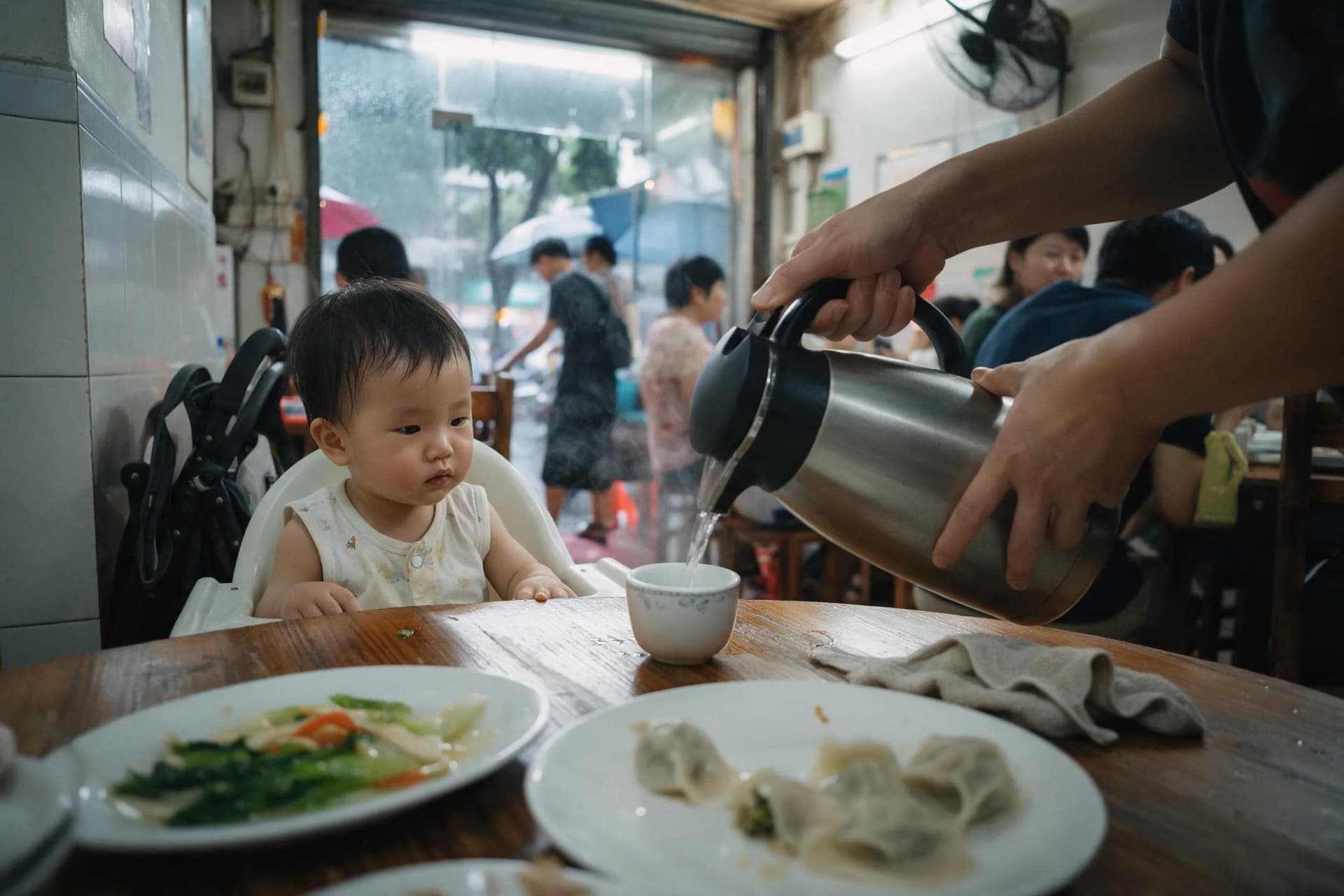
This family-first China guide explains the hot-water welcome, then turns it into a practical meal-and-nap routine for parents traveling with young children. You get a safe sipping sequence, a parent's ordering script, 2026 USD price bands for casual meals, stroller checks for restaurant entrances, and realistic child-paced times for four city sights.
In 2026, Chinese restaurants commonly serve plain hot water because boiled drinks are a familiar, inexpensive part of a meal; accept it if you want it, usually at $0, with a $0–$3 tea-service charge possible. Families should ask for warm or sealed water, never let a child pour, and use the cup break to check the nap clock.
Why does the kettle arrive before the food? No single rule explains every restaurant, and no ceremony is required. The habit sits where tea culture, household water-boiling routines and the everyday thermos meet. UNESCO describes tea processing and related social practices as a living tradition; restaurants simplify that warm-drink habit into a kettle or flask of plain water. It is inexpensive hospitality, it feels comfortable with oily or spicy food, and generations of families treat a hot drink as normal. The restaurant is following a social rhythm, not making a medical promise.
Your first decision is what is being poured. Plain hot water, a pot of tea and a sealed bottle are different products with different costs. At many full-service restaurants, plain water is complimentary, but tea or a seated service charge can appear on the bill. Ask before the first pour, point to the menu item or use a translation screen to confirm the charge. For a family, the safest default is plain water for adults, a sealed drink for a child who cannot manage a hot cup, and no tea unless everyone accepts the cost.
Treat an open kettle as adult equipment, not table entertainment. A young child should never pour, reach across the flask or play with the rinse bowl. Pour away from little hands, place cups away from the table edge and fill a child's cup no more than half full. If staff can supply warm rather than very hot water, ask for wēn shuǐ; otherwise keep the cup within your reach while you order. For infant formula, use your own sealed water and preparation equipment. The optional tableware rinse is not sterilization: pour a little water over a cup or chopsticks, tip it into the bowl and do not drink it.
Order for appetite and speed, not for a photo of every specialty. One shared protein, one vegetable, one rice or noodle dish and one mild backup usually feed two adults and two young children. Ask for a split hot-pot broth, sauce and chili on the side, and confirm whether the sauce bar is included. A useful parent script is: mild, no chili for the children, rice on the side, and plain water first. Restaurants in Beijing, Shanghai, Chengdu and Guangzhou understand these requests, though dishes and service change by city.
For October 2026 budget planning, these editorial USD ranges are not live menu prices. Expect noodle or dumpling lunches at $4–$8 per person, mall restaurants at $10–$18 and hot pot at $14–$23 before drinks. Peking duck for four commonly lands around $65–$90, while dim sum costs $9–$18 per person. Add $0.50–$1.50 for each sealed bottle. Mall restaurants are often easier for children because they tend to have lifts, wider aisles, high chairs and a clean indoor route to a taxi.
The restaurant should become the hinge of the day. Start lunch at 11:15, finish by 12:30 and aim for a 12:45–14:15 nap. If lunch slips past 12:30, cut one sight rather than shorten the nap. These child-paced windows show each site's real cost in hours: • Palace Museum, Beijing: 3–4 hours from security to exit; thresholds and crowds make a compact stroller hard work, so carry the toddler through the central halls. • Shanghai Museum: 2–3 hours for two galleries and a breather; confirm the passport-linked reservation before leaving the hotel. • Chengdu Panda Base: 2.5–3.5 hours at opening, including walking and crowds; bring a carrier for busy panda houses. • Guangzhou Zoo: 2.5–3 hours at a child's pace, with flat paths and frequent stops; check animal-house hours at the gate. Add 20–30 minutes for security, ticket checks or a stroller fold.
Do a three-part restaurant check before sitting: a step-free entrance or lift, a clear 32-inch aisle and a place to park a folded stroller. Ask for a high chair on entry, and keep wheels out of the kitchen-to-table path. A 22-pound compact stroller folds more easily at a taxi curb than an all-terrain model, but it can still be awkward in a tight noodle shop. If the ground floor is cramped, try a mall branch near a metro lift; in older neighborhoods, a carrier is the more useful backup.
Keep one table phrase on your phone: rè shuǐ means hot water, wēn shuǐ means warm water and yì píng shuǐ means one bottle of water. If tea arrives without being ordered, bú yào chá, xièxiè says no tea, thank you. Check the bill for tea, sauces or service before paying by QR code; ordinary restaurants do not require a tip. Then follow the nap rule: one 09:00 sight, an 11:15 meal, return by 12:30, quiet room until 14:15 and one short walk before an early dinner. Use the linked stroller plan for lift-friendly routes and the city guides for transport details.
Good to know
- Plain-water cost, October 2026
- Plan $0 for plain hot water at an ordinary sit-down restaurant; allow $0–$3 per person if tea or a seated service charge appears on the bill.
- Family meal prices, October 2026
- Editorial planning ranges: noodles or dumplings $4–$8 per person; mall restaurant $10–$18; hot pot $14–$23; Peking duck for four $65–$90; sealed bottled water $0.50–$1.50.
- Child serving check
- Never let a child pour from an open kettle. Ask for wēn shuǐ (warm water), fill a child's cup no more than 50% and keep a sealed bottle for infant formula or a toddler.
- Restaurant stroller test
- Check 3 things before sitting: a lift or step-free entrance, a clear 32-inch (81 cm) aisle, and a place to park the folded stroller without blocking service.
- Nap-day clock
- Use an 11:15–12:30 lunch and 12:45–14:15 nap. If lunch runs past 12:30, cancel one sight rather than shortening the nap; take the second outing around 15:30.
- Child-paced site windows
- Palace Museum 3–4 hours; Shanghai Museum 2–3 hours; Chengdu Panda Base 2.5–3.5 hours; Guangzhou Zoo 2.5–3 hours. Add 20–30 minutes for security, tickets or stroller folding.
Frequently asked questions
Why do Chinese restaurants serve hot water instead of cold water?
It is a familiar dining habit shaped by tea culture, household water boiling and the convenience of a kettle or thermos. It is not a universal health rule, and cold drinks are available in many places when you ask specifically. For children, request a sealed bottle if the cup or water source is unclear.
Is the hot water at Chinese restaurants safe for kids?
At established restaurants, drinking water is commonly boiled or filtered, but there is no universal guarantee across every venue. WHO notes that boiling kills many pathogens but does not remove every chemical contaminant. Use sealed water for an infant, keep hot kettles away from children and ask staff whenever the source is uncertain.
How do families order a kid-friendly meal without spending too much?
Share one protein, one vegetable and one rice or noodle dish, then add a mild backup only if needed. In October 2026, plan about $4–$8 per person at casual lunches and $10–$18 at mall restaurants. Ask for no chili, sauce on the side, plain water first and a high chair when you enter.
Can we bring a stroller into Chinese restaurants?
Mall branches are much more likely to offer a lift, a wide entrance and a place to park a folded stroller, while tiny street shops may have a step and no aisle space. Before sitting, check for a clear path, ask for a high chair and confirm the stroller will not block service. Carry a compact folding model or soft carrier as backup.
What do we do if hot water arrives with a small rinse bowl?
If others at the table are rinsing cups or chopsticks, pour a little hot water over your tableware, tip it into the bowl and do not drink it. The bowl is optional and the rinse is not a guarantee of sterilization. Move it away from a toddler and keep the kettle under adult control.
Keep exploring
Sources & verification
Sources used for this guide
Time-sensitive travel details can change. Reconfirm opening hours, prices and entry rules before departure.
- 1who.intwho.int
- 2wwwnc.cdc.govwwwnc.cdc.gov
- 3ich.unesco.orgich.unesco.org
- 4en.dpm.org.cnen.dpm.org.cn
- 5shanghaimuseum.netshanghaimuseum.net
- 6panda.org.cnpanda.org.cn
Local operating context
ChinaMira Beijing Guide Team contributes local route and operating knowledge from Beijing. This team byline identifies a real operating group rather than a fictional individual author.
Related journeys
Turn this guide into a real trip
These are currently bookable journeys selected from the place and theme of this guide. Availability is rechecked before display.
Beijing & the Wild Great Wall
Five unhurried days in the capital, pairing the Forbidden City and hutong life with a full day walking the unrestored ridges of Jinshanling.
5 days
Next departure: Mar 15, 2027
Shanghai & Jiangnan Water Towns
Five days moving between Shanghai’s riverfront skyline and the canals, gardens and stone bridges of the Jiangnan water towns.
5 days
Next departure: Apr 6, 2027
Chengdu: Pandas, Teahouses & Sichuan Flavours
Four relaxed days in Sichuan: pandas at first light, teahouses in the old lanes and a hands-on introduction to Sichuan cooking.
4 days
Next departure: Mar 18, 2027
Plan this trip
Turn this guide into a practical itinerary
Send us the article as context. A ChinaMira specialist can check the route, dates, transport, tickets and the details that need local confirmation.