Travel Guide
What Should a Family of 4 Pack for China in 2026?
The practical family packing list starts with site times, nap windows and stroller terrain, not a suitcase full of maybes. Pack one 35–40 L bag per adult, keep lunches near CNY 180–300 for four, and use a carrier when stone steps or crowds beat wheels. This guide gives ticket prices, realistic visit lengths and a simple day-bag build.
For spring or fall 2026, pack one 35–40 L bag per adult and bring a compact stroller only if your child is under 3 and most sights are paved. Include three outfits, layers, a rain shell, bottles, fever medicine, a universal adapter and CNY 300 cash for 2–3-hour visits and lunches under CNY 75 per person.
The useful thesis is simple: pack for the day you will actually have. China uses 220V at 50Hz with type A, C and I outlets, so most dual-voltage chargers need only a plug adapter. Keep chargers, passports, a 10,000mAh power bank and a printed hotel address in one nightly pouch. A 12–15 L day bag holds two water bottles, wipes, tissues, sunscreen, hats and one spare child outfit. Laundry every two or three days beats packing ten days of clothing.
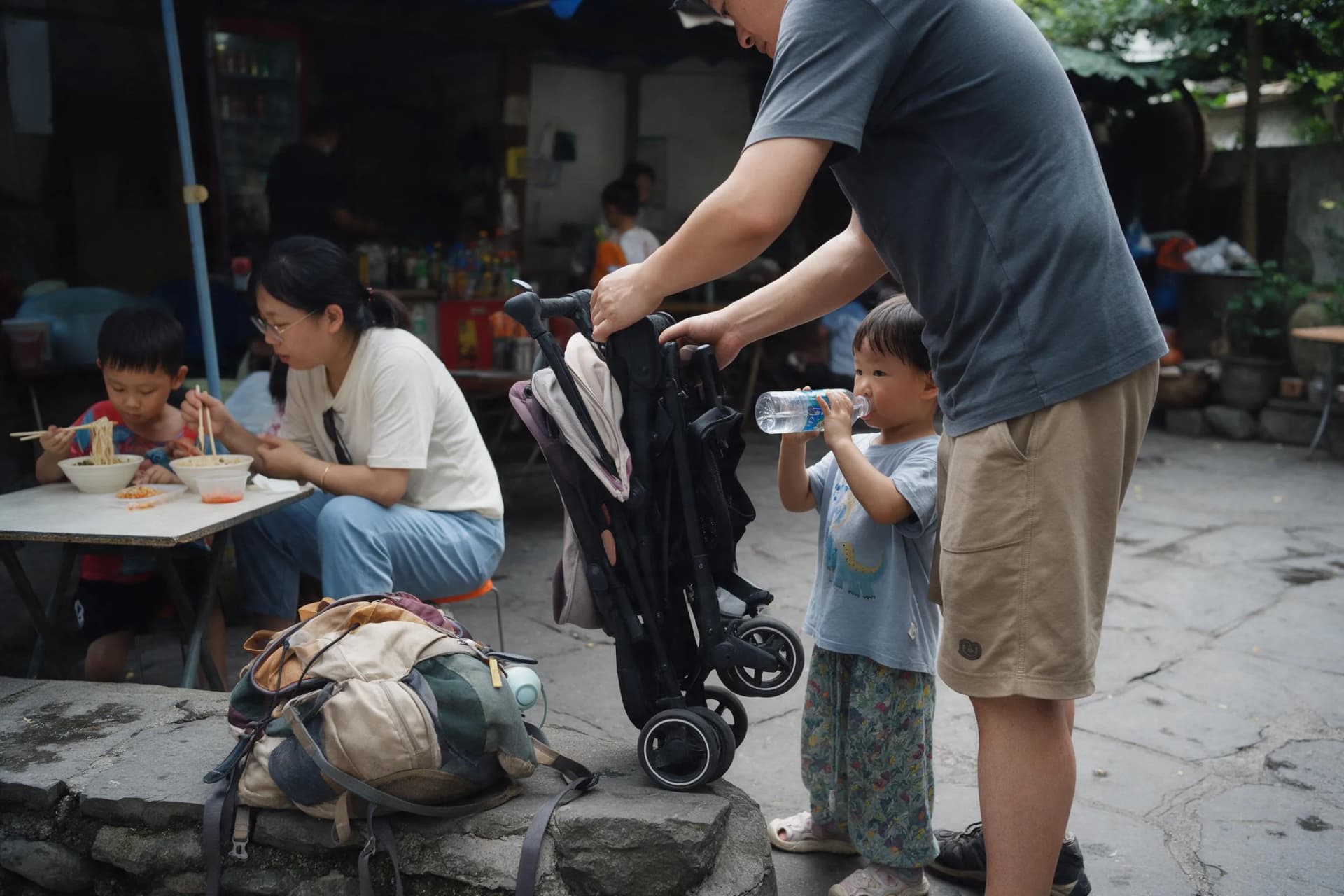
Choose the stroller by terrain, not by age alone. A one-hand-folding stroller under about 7 kg suits the Palace Museum’s central axis, the Bund promenade and the Panda Base main route. It is not a good match for the Mutianyu Great Wall, narrow hutongs or crowded historic lanes, where a soft carrier is more realistic. On the metro, ask staff to open the accessible gate rather than balancing a stroller on an escalator. Our [Beijing family guide](/beijing-family-travel) maps those surfaces into a five-day plan.
Plan each major sight around its real duration: - Palace Museum, Beijing: about 3 hours with children; entry is CNY 60 April–October or CNY 40 November–March, it normally closes Mondays, and timed tickets usually release seven days ahead at 20:00 Beijing time. The central route is partly stroller-friendly, but thresholds remain. See the [Beijing family guide](/beijing-family-travel) for the metro and stroller plan. - Mutianyu Great Wall, Beijing: 4–6 hours door to door; CNY 45 admission plus about CNY 120–140 for a cable-car return. Use a carrier and ride both ways at the same station with young children. - The Bund and public Huangpu ferry, Shanghai: 1.5–2 hours at family pace; the ferry costs CNY 2 and the flat riverside path works with a stroller. See the [Shanghai family guide](/shanghai-family-travel) for the route. - Chengdu Panda Base: 2.5–3 hours including the walk between enclosures; adult admission is CNY 55. Arrive at opening, and check [Panda Base timing and booking](/giant-panda-base-best-time-to-visit) before you fix the nap stop. Add 30–45 minutes for security, tickets and toilets. A four-hour “quick visit” is often a three-sight outing in disguise.
Protect the nap before booking anything else. A workable rhythm is breakfast at 07:30, the first major sight at 09:00, lunch at 11:15 and a hotel return by 12:15. Keep 12:30–14:30 for sleep, then choose one low-key outing after 15:30. Book a room within 15–20 minutes of the morning sight and keep the afternoon stop nearby. A stroller nap during transfers is useful, but it should not replace the full rest. One protected nap beats a second museum.
Food is where a little packing prevents a lot of friction. Carry plain crackers, fruit pouches, a small spoon and a spill-proof cup; buy yogurt, bananas and bottled water after arrival. Neighborhood breakfast usually costs CNY 15–30 per person, while noodles, dumplings or rice with two dishes run CNY 40–75. A comfortable sit-down meal is about CNY 180–300 for four. Mall restaurants are easiest for high chairs and illustrated menus; in smaller shops, show a Chinese allergy card and ask for “bù là” (not spicy). Bring backup food for a serious allergy.
Build clothing as a three-layer system: a quick-dry base, a light fleece and a rain shell. Three complete outfits per child plus sleepwear cover a week when you rinse small items at night. Add walking shoes, five pairs of socks and a foldable sun hat. Check the forecast 48 hours before departure and pack for the low temperature, not the sunny midday number. Above 30°C or a 60% rain probability, move the afternoon indoors. Leave the bulky blanket and extra shoes home; hotels usually provide towels and kettles, but confirm cribs and high chairs.
For a 10-day trip, aim for 7–9 kg per adult. A sample adult bag contains four tops, two bottoms, a warm layer, rain shell, sleepwear, toiletries, medicine, adapter and a foldable tote. Each child gets a 20 L pack with a bottle, snack, spare top, wipes and comfort item. Keep medicine in original labeled packaging, carry a prescription list and thermometer, and pack child-appropriate fever medicine, rehydration sachets and plasters. Check children’s medicine with your pediatrician before departure.
Pack the trip, then pack the bag. Tonight, write the four site times you will protect, choose a hotel within 20 minutes of the nap stop and test the stroller fold one-handed. Download the rail and payment apps, save passport copies offline and put CNY 300 in small notes inside the day bag. Use our [3-day China packing list](/china-packing-guide-itinerary-3-days) for a Beijing route, and browse the [family travel collection](/themes/family) for more nap-friendly pacing. Make two columns—“every day” and “one backup”—then leave everything else home.
Good to know
- Carry-on plan for four
- One 35–40 L bag per adult, one 20 L pack per child and one 12–15 L day bag; keep each adult’s total at 7–9 kg for trains, stairs and taxis.
- Realistic site times
- Palace Museum 3 hours; Mutianyu Great Wall 4–6 hours door to door; Bund and Huangpu ferry 1.5–2 hours; Chengdu Panda Base 2.5–3 hours; add 30–45 minutes for security and toilets.
- 2026 ticket benchmarks
- Palace Museum CNY 60 April–October or CNY 40 November–March, normally closed Mondays; Mutianyu CNY 45 plus CNY 120–140 cable-car return; Huangpu ferry CNY 2; Panda Base CNY 55.
- Family meal prices
- Breakfast CNY 15–30 per person; casual noodle or dumpling lunch CNY 40–75 per person; comfortable sit-down meal CNY 180–300 for four; keep CNY 100–150 per day as a snack reserve.
- Nap-friendly day rhythm
- First sight 09:00, lunch 11:15, hotel by 12:15, sleep 12:30–14:30 and one easy outing after 15:30; choose a hotel within 15–20 minutes of the morning site.
- Power and stroller limits
- China uses 220V at 50Hz with type A, C and I sockets; bring a universal adapter. Choose a stroller under about 7 kg with a one-hand fold, and pack a carrier for the Great Wall or stair-heavy lanes.
Frequently asked questions
Can you use a stroller in China?
Yes, but choose a compact stroller for paved sights such as the Palace Museum’s central axis, the Bund and the Panda Base main route. Use a carrier for the Great Wall, narrow lanes and stair-heavy temple areas, and ask metro staff to open the accessible gate.
How much should a family of four budget for food in China?
Casual breakfasts often cost CNY 15–30 per person, noodle or dumpling lunches about CNY 40–75 per person, and a comfortable sit-down family meal roughly CNY 180–300 for four. Keep a CNY 100–150 snack and backup-food buffer per day.
What should we pack for a 10-day family trip to China?
Pack about 7–9 kg per adult, three complete outfits per child, one warm layer and rain shell each, a 12–15 L day bag, refillable bottles, child medicine and a universal adapter. Plan laundry every two or three days instead of packing ten days of clothes.
How do families handle naps while sightseeing in China?
Schedule one major sight at 09:00, eat lunch around 11:15 and return to a hotel within 20 minutes by 12:15. Protect 12:30–14:30 for sleep, then take one short outing after 15:30; a stroller nap during transfers is useful but should not replace the full rest.
Should we bring a car seat to China?
Bring a travel car seat or booster only if it meets your airline and vehicle requirements and you can install it confidently. Standard taxis and DiDi rides often do not supply child seats, so families with young children should plan airport transfers and longer drives in advance.