
Travel Guide
Kashgar Family Travel Guide 2026: Overnight Train, Bazaar and Old Town
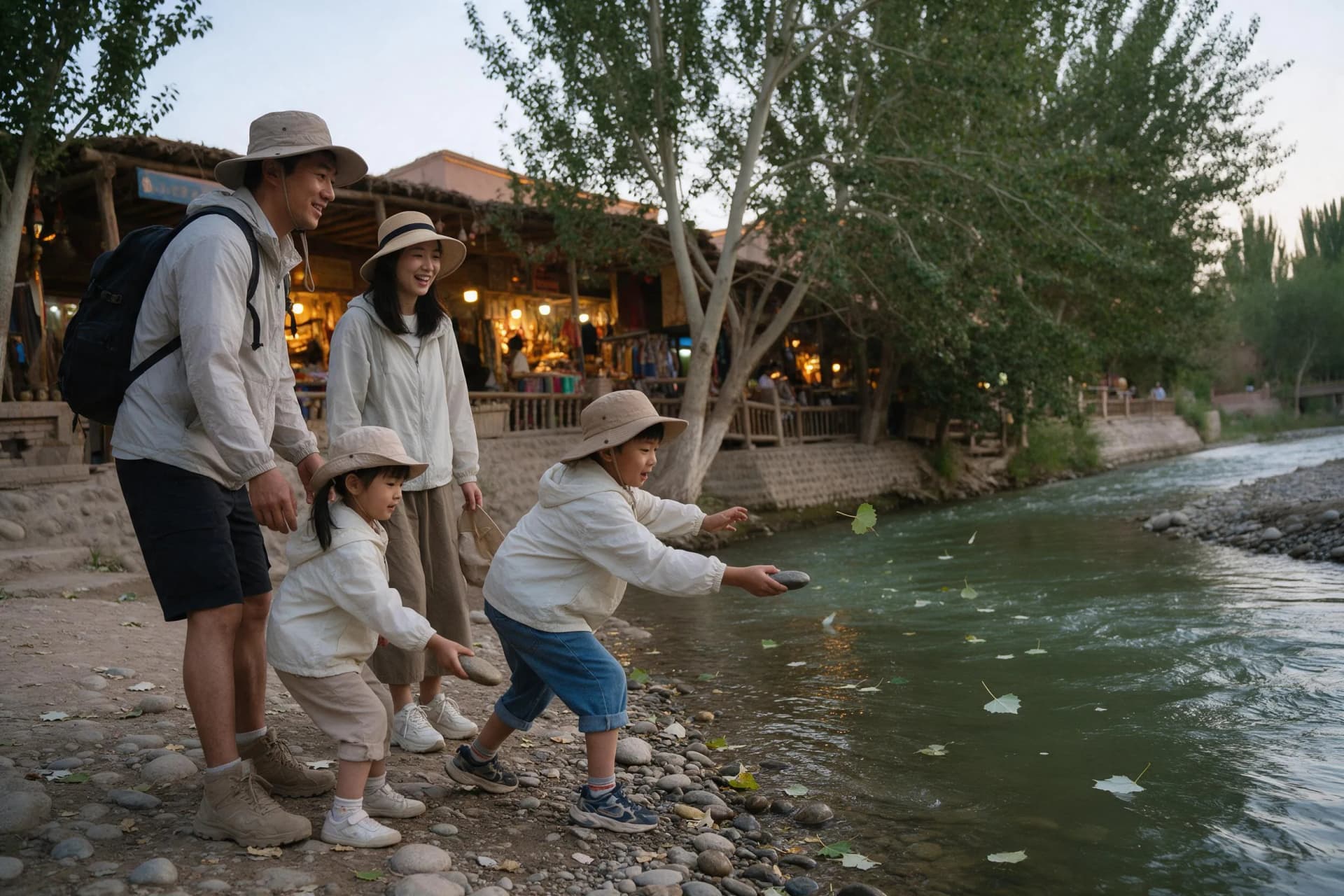
Kashgar rewards families who treat the journey as the attraction. Ride the desert sleeper, wake in an oasis of mud-brick lanes, then spend a market morning among sheep, horses and charcoal smoke. This guide covers where to base, what to feed picky eaters, how to pace the dry, bright days, and the ticket rules worth knowing before you book.
Yes, Kashgar works well for families in 2026 — on one condition: make the overnight train from Urumqi part of the fun, not a chore. Base three nights in the Old Town, keep one full day for the livestock bazaar, and budget CNY 80–150 a day for food and local transport.
The rail leg is where a family trip becomes an adventure. TravelChinaGuide's Urumqi–Kashgar timetable, updated May 8, 2026 for the summer season, lists nine daily pairs across 1,475 kilometers, and the fastest is the Z-series sleeper Z6516: it leaves Urumqi Railway Station at 20:40 and reaches Kashgar Railway Station at 08:10, 11 hours 30 minutes later, so children sleep through the desert. A hard sleeper runs CNY 317.50–436 and a soft-sleeper berth CNY 484.50–497.50. Book on 12306 or its English app using each traveler's passport number, and finish passport verification before departure — online where your document type allows it, otherwise at a station counter. A child aged 6 to 13 needs a child ticket; one child under 6 travels free when they share your berth. Schedules shift with the season, so confirm the current times on 12306 before you pay.
Kashgar's Old Town is the easiest big sight in Xinjiang to do with children because it is not one attraction at all: it is 4.25 square kilometers of living lanes, free to walk, threaded with bakeries, ice-cream carts and workshops where copper is hammered and instruments are strung. Bring a carrier rather than a stroller for the smaller alleys, wear shoes that grip worn paving, and start early, when shopkeepers hose the dust off their doorsteps. Id Kah Mosque, completed in 1442 and the largest in China, charges visitors CNY 20 and normally admits them only in a short window around 08:50–10:00; it closes to visitors on Fridays for prayer. Return to the square after dark, when the night market fires up around 19:00 and dinner becomes a walk.
The livestock bazaar is the morning children talk about for years, and 2026 made it easier to catch. Since May 14, 2026 it opens every Thursday and Sunday, 10:00–20:00, instead of Sundays only, and entry is free. It sits about 10 kilometers northwest of the Old Town beside National Highway 314, a 30–40 minute taxi ride costing CNY 30–50 each way. The return is the hard part, so agree with your driver on a 90-minute wait. Go early, while the pens are full of sheep, cattle and horses and the smoke from the kebab and samsa stalls is thickest. Keep small children close to the railings, bring a dust mask or buff for the wind, and ask before photographing herders or their animals.
The reason Kashgar exists at all is water. The Kaxgar River and its Tuman tributary drop out of the Pamir and make a green island in the desert, and narrow canals still run cold along the Old Town lanes. A late-afternoon walk on the riverbank is the family version of a scenic drive: poplars, laundry lines, boys swimming in summer, and light turning gold while the clock says nine at night. In town, Xiangfei Garden — the Apak Khoja mausoleum complex known as the Fragrant Concubine's tomb — is a shady, story-rich stop whose ticket rose to CNY 40 on January 17, 2025 from CNY 30 under the Kashgar municipal price notice. It is a gentle half-day, not a scramble.
Practical life in Kashgar is kinder to families than its distance suggests. The city sits at 1,270 meters, high enough to dry the air but low enough that most children feel nothing; the real adjustments are sun, dust and the late clock, so pack hats, lip balm and refillable bottles, and treat dinner at 21:00 as normal rather than a treat. Uyghur food is halal, mild and built on naan, lamb, rice and orchard fruit, and "bu la" is the phrase that keeps a dish unspicy for small mouths. Alipay and WeChat Pay work at almost every counter, but carry CNY 100–200 in small notes for the bazaar, where signal is patchy. Hotels register foreign guests with the passport you entered on, so keep it with you.
Choose the season before you choose the hotel. Late April through May and September into early October are the family sweet spots, with mild days and the fruit harvest; July and August are hot, busy and expensive, and the national holiday weeks fill every train and hotel in the region. Whichever month you pick, protect the mornings and leave one day completely unscheduled. For the city's classic sights, keep our main Kashgar travel guide open; for fares, transfers and the station routine, read the getting-there guide; for what to order, the food guide; and to choose your month, the best-time guide. The trains-and-rivers thread runs through all of it: the desert sleeper and the oasis water are the two things your children will still describe a year later. Send ChinaMira your dates and your children's ages, and we will book the berths, find a courtyard room with space to run, and time your market morning to the right day.
Good to know
- Overnight train from Urumqi
- Nine daily pairs cover 1,475 km. The Z-series sleeper Z6516 leaves Urumqi Railway Station at 20:40 and reaches Kashgar Railway Station at 08:10 (+1), 11 h 30 min; hard sleeper CNY 317.50–436, soft sleeper CNY 484.50–497.50. Source: TravelChinaGuide Urumqi–Kashgar timetable, updated 8 May 2026 for the summer 2026 season; verify on 12306.
- Booking rail tickets
- Book on 12306 or its English app with each traveler's passport number; online sales open about 15 days before departure, and passports are needed at the gate and on board. Under China Railway rules effective 6 September 2025, children aged 6–13 need a child ticket, one child under 6 rides free sharing an adult berth, and high-speed child fares are 50% of the executed fare in second class and 70% in a sleeper.
- Old Town and Id Kah Mosque
- The Old Town's 4.25 sq km of residential lanes are free to walk. Id Kah Mosque, completed in 1442 and the largest in China, charges visitors CNY 20, normally admits them only around 08:50–10:00, and closes to visitors on Fridays; the night market opposite starts about 19:00.
- Livestock bazaar
- About 10 km northwest of the Old Town beside National Highway 314. Since 14 May 2026 it opens every Thursday and Sunday, 10:00–20:00, with free entry; a taxi takes 30–40 minutes and costs CNY 30–50 each way, so agree on a 90-minute wait for the return.
- Tickets and the oasis river
- Xiangfei Garden, the Apak Khoja mausoleum complex known as the Fragrant Concubine's tomb, costs CNY 40 (raised from CNY 30) under the Kashgar municipal price notice effective 17 January 2025. The Kaxgar and Tuman riverbanks and the Old Town canals are free.
- Best months and family budget
- Late April–May and September–early October are mildest, with days near 22°C; July–August is hot and the national holiday weeks are crowded. Budget CNY 80–150 a person a day for food and local transport. Kashgar sits at 1,270 m, and daily life runs about two hours behind Beijing time, so July sunsets come after 22:00; carry CNY 100–200 in small notes.
Frequently asked questions
Do US citizens need a visa for a Kashgar family trip?
Yes. US passport holders need a Chinese tourist visa for Xinjiang, so apply four to six weeks before departure and carry the passport, because hotels register foreign guests at check-in. Visa-free transit is designed for onward international flights and rarely fits a round-trip family holiday.
Is the overnight train from Urumqi suitable for young children?
Yes, if you book a sleeper. Reserve a soft-sleeper compartment, which holds four berths, so the family stays together, and book the moment the 15-day online sales window opens, because summer berths sell out first. Bring water and snacks; the ride is a night's sleep, not a day of sitting.
When is the best time to visit Kashgar with kids?
Late April and May, then September into early October, bring the mildest days and the fruit harvest. July and August are hot and crowded, winter is crisp but short on daylight, and the National Day week of October 1–7 fills trains and hotels, so book around it.
Do we need a permit for a family day trip to Karakul Lake?
Yes. Karakul Lake and Tashkurgan sit in a border management area, and foreign visitors need a permit arranged in person through a licensed local agency about 5–10 days ahead, with passport checks on the road. The lake lies near 3,600 meters, so it suits older children far better than toddlers.
Is Kashgar's food okay for picky children?
Yes. Uyghur cooking is halal, mild and built on naan, lamb, rice, yogurt and fruit rather than chili heat, so polo, laghman, samsa and thick yogurt are reliable. Say "bu la" for not spicy when ordering, and carry small notes because stall signal is patchy.