
Can You Visit Lhasa in 3 Days With Less Altitude Risk in 2027?
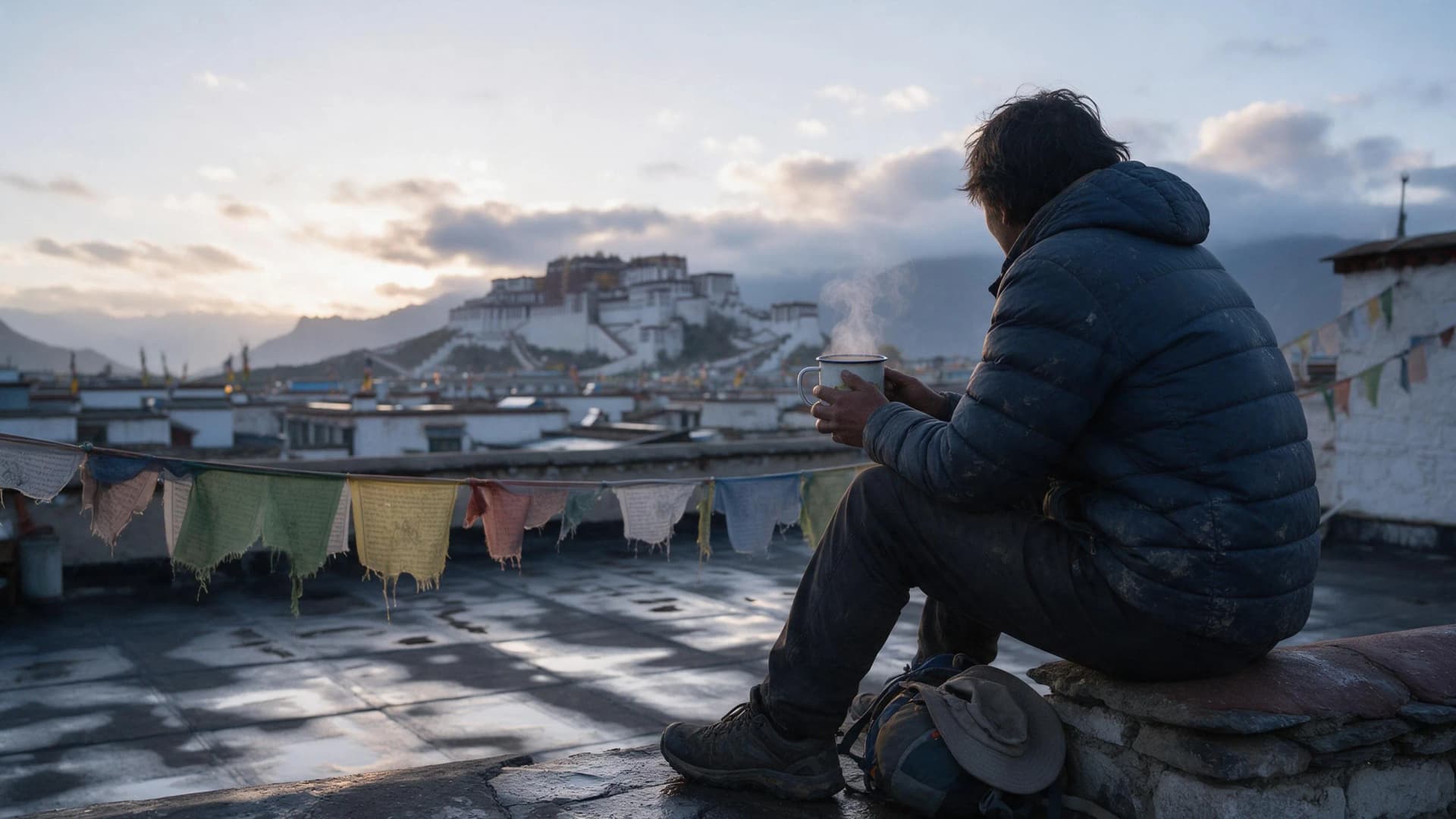
Three days cannot fully acclimatize you to 3,650 meters, but they can prevent avoidable mistakes. This plan uses a protected first 24 hours, one date-specific Potala slot on Day 3, April light times and a four-night budget of $810–$1,525 per person. It also sets clear symptom stop rules and tells you when to abandon the climb.
Yes—if you make the first 24 hours a no-stair buffer, sleep four nights in Lhasa and reserve the Potala climb for Day 3 only when symptoms are absent. A conservative 2027 plan starts at $810 per person, including four nights, permit help, guide, meals and transfers.
No three-day itinerary makes 3,650-meter Lhasa risk-free. It can reduce avoidable strain by slowing the first day, protecting sleep, limiting stairs and treating early symptoms as information rather than inconvenience. CDC guidance for high-elevation travel emphasizes gradual ascent, rest and prompt attention to worsening illness; arriving by air removes the chance to stage the climb day by day. A train lets you approach the plateau more slowly, but it still ends at the same city altitude. Neither arrival mode replaces a gentle first night.
Use a 24-hour no-stair rule as the trip's first booking condition: - Hours 0–4: reach the hotel, unpack, eat something familiar and stay on flat ground. - Hours 4–12: take a 10-minute walk near the entrance. Stop if you are breathless while resting. - Before hour 24: no Potala stairs, no long monastery climb and no day trip to a higher pass. - First 48 hours: no alcohol; go to bed early even if sleep is broken. You can still enjoy the Barkhor at pavement level. The point is to avoid stacking cold, exertion and poor sleep before your body has had a night at altitude.
For a worked 2027 example, arrive late afternoon on April 16 and give the city April 17–19. The table uses Lhasa sunrise and sunset times for those dates, so light decisions and activity limits refer to the same clock:
April 17
- Sunrise / sunset
- 07:27 / 20:22
- Golden hour
- 19:45–20:22
- Blue hour
- 20:22–20:47
- Altitude-conscious plan
- Flat Barkhor walk at 10:00; teahouse lunch; hotel by 17:30. Skip a dawn start after arrival night.
April 18
- Sunrise / sunset
- 07:26 / 20:23
- Golden hour
- 19:46–20:23
- Blue hour
- 20:23–20:48
- Altitude-conscious plan
- One gentle temple visit after 10:00; afternoon rest; Potala Square viewpoint from 19:35, taxi back by 20:55.
April 19
- Sunrise / sunset
- 07:25 / 20:23
- Golden hour
- 19:46–20:23
- Blue hour
- 20:23–20:48
- Altitude-conscious plan
- Symptom check at 07:30. Choose either the low-effort dawn exterior or the 09:30 Potala ascent after two nights, never both.
A dawn start on April 17 would require the April 16 arrival night, and the optional April 19 dawn requires the April 18 night; both nights are inside the four-night budget. Do not book a pre-dawn photo session for your first morning.
The Potala decision should be made at breakfast on April 19, not at the ticket gate. Cancel the climb and arrange a doctor or hospital assessment if you have breathlessness at rest, vomiting, confusion, an unsteady walk or a headache that worsens despite rest and fluids. A pulse oximeter can provide one reading, not a complete go/no-go test. Do not take borrowed altitude medicine, and do not treat an oxygen canister as a substitute for stopping or descending when someone is seriously unwell.
Price the entire four-night plan once. This 2027 total assumes double occupancy and one Potala ticket inside the guided package: - Lodging: $240–$440 for four nights at $60–$110 a night. - Permit handling: $75–$150 per person. - Three-day licensed guide, vehicle and listed tickets: $350–$650 per person. - Meals: $80–$160 for four days at $20–$40 a day. - Airport round trips: $50–$90 for two $25–$45 car transfers. - Oxygen canister and basic pulse oximeter: $15–$35. Those lines total $810–$1,525 per person, excluding travel to Lhasa, insurance and tips. From Gonggar Airport, meet your driver at the terminal arrivals exit for the 60-kilometer, 60–90-minute transfer to your hotel door. From Lhasa Railway Station, use the arranged guide pickup or official taxi rank for the 15–25-minute onward ride.
Foreign passport holders need a Tibet Travel Permit arranged through a licensed agency, normally starting 20–30 days ahead, and must follow an approved guided itinerary. Confirm the hotel list and every transport leg before paying for flights. Carry the original passport and permit at airport, rail, road and hotel checks. Buy the Jokhang ticket for the April 18 visit and keep the Potala ticket for its named April 19 entry; neither is a reusable three-day pass, while the Barkhor circuit is free. If snow, high wind or rain makes outdoor steps slippery, keep the low Potala Square viewpoint and postpone the ascent rather than forcing the schedule.
Book a Lhasa-only guide who can show where each transfer ends, hold the date-specific Potala slot and replace the climb at short notice without penalty. Ask for the four-night hotel total, permit fee, ticket inclusion and symptom-day cancellation terms in one written quote. If those details are still vague 10 days before travel, choose another operator. Send ChinaMira your arrival mode, dates and health considerations; we can build this buffer around one realistic high-effort day rather than fill three days with stairways.
Good to know
- Altitude and first-day rule
- Lhasa is about 3,650 meters. Keep the first 24 hours stair-free and avoid alcohol for 48 hours after arrival.
- Four-night USD total
- $810–$1,525 per person for lodging, permit handling, guide, vehicle, listed tickets, meals, airport transfers and basic oxygen gear.
- April 2027 light window
- April 17–19: sunrise 07:25–07:27, sunset 20:22–20:23, golden hour 19:45–20:23 and blue hour 20:22–20:48.
- Permit lead time
- Start the licensed-agency process 20–30 days before arrival and carry the original passport and permit through all checks.
- Potala ticket rule
- Book one passport-linked entry for Day 3 after two nights; the named date and time are non-transferable, so it cannot be swapped to Day 2.
- Arrival transfers
- Gonggar Airport is 60 km and 60–90 minutes from central Lhasa; Lhasa Railway Station takes another 15–25 minutes by road.
Frequently asked questions
Can you adjust to Lhasa's 3,650-meter altitude in three days?
You can begin adapting, but three days is not full acclimatization. Protect the first 24 hours, sleep well, avoid alcohol and stairs, and wait until Day 3 before considering the Potala climb.
Is it safe to visit the Potala Palace on Day 2 in Lhasa?
It is safer to keep the stair-heavy visit for Day 3, after two nights, and only if you feel well at rest. Skip it if a headache persists, breathing is difficult while resting, or you feel confused or unsteady.
Does arriving by train instead of flying reduce altitude sickness risk?
The train approaches the plateau more gradually, which may help you notice symptoms, but it still delivers you to 3,650 meters. Keep the same quiet first night and avoid treating the rail journey as acclimatization.
Should I take altitude medicine before flying to Lhasa?
Ask a clinician who knows your health history before using prescription altitude medicine. Do not borrow another traveler's medication, and never rely on a drug to continue climbing after serious symptoms appear.
What should I do if I feel ill during the three-day Lhasa plan?
Stop sightseeing, rest somewhere warm and seek medical advice for persistent symptoms. Breathlessness at rest, confusion, vomiting or an unsteady walk need urgent assessment; do not continue to a higher viewpoint.
Keep exploring
Sources & verification
Sources used for this guide
Time-sensitive travel details can change. Reconfirm opening hours, prices and entry rules before departure.
- 1wwwnc.cdc.govwwwnc.cdc.gov
- 2nhs.uknhs.uk
- 3gov.ukgov.uk
- 4en.xizang.gov.cnen.xizang.gov.cn
Local operating context
ChinaMira Travel Team contributes local route and operating knowledge from China. This team byline identifies a real operating group rather than a fictional individual author.
Plan this trip
Turn this guide into a practical itinerary
Send us the article as context. A ChinaMira specialist can check the route, dates, transport, tickets and the details that need local confirmation.