
Train Travel in China With Older Parents: What Should You Book in 2026?
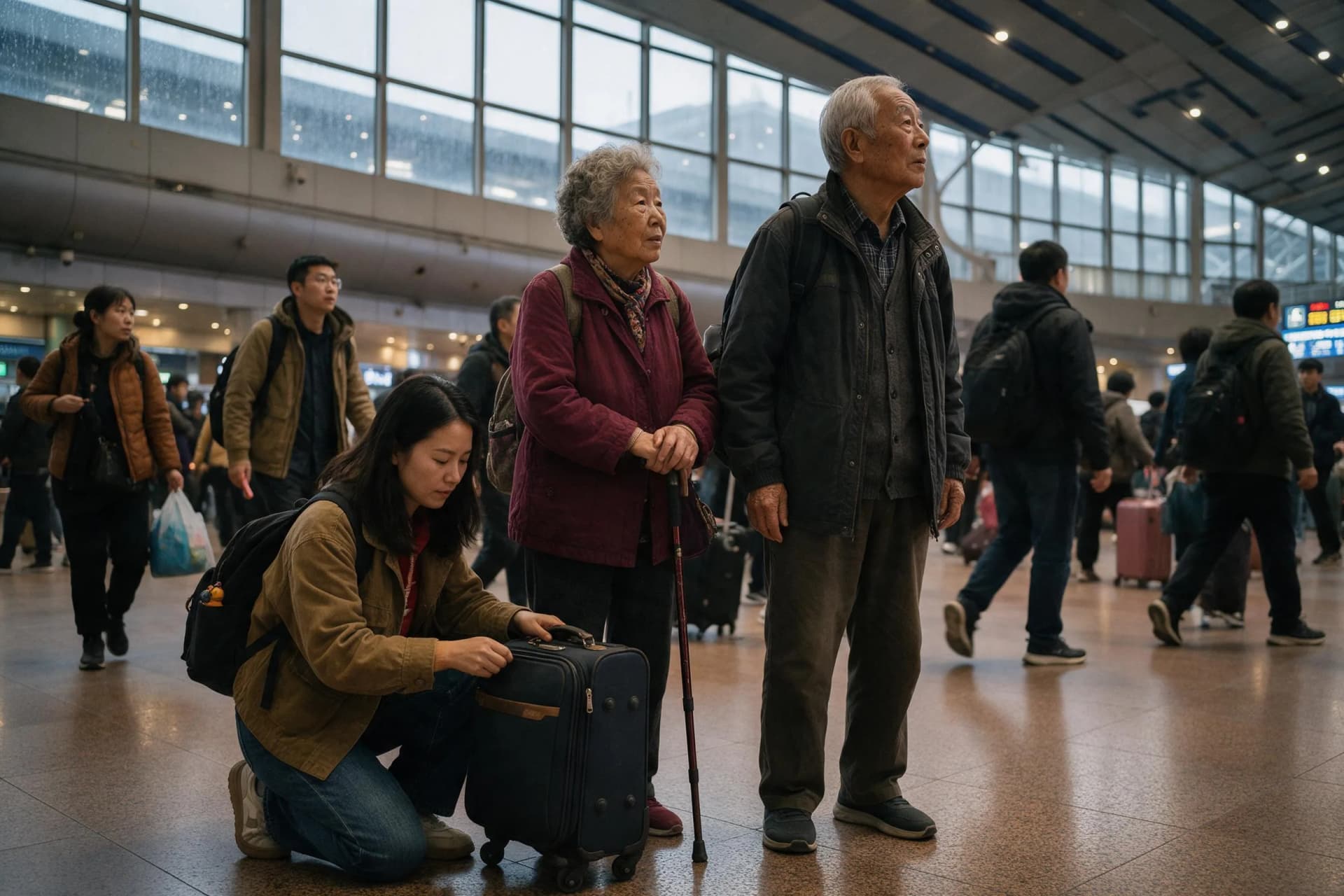
The right train booking for older parents is the one that matches their transfer tolerance, not their age. This 2026 guide chooses second or first class by station time and ride length, then covers adjacent seating, 12–72-hour assistance requests, the 15-day ticket window, luggage and station-phase timing. Beijing West–Xi’an North is the working example, with checked USD fares and a clear booking action.
For a 2026 trip, book second class only when your parent can manage the full 60–90 minute station walk-and-wait routine and a 4–6 hour ride; otherwise choose first class and reserve early. A Beijing West–Xi’an North second-class ticket starts around $73 one-way.
Build the booking around transfer tolerance, not age. Before choosing a train, time the parent’s normal walk from a car door through a station, with rests, and ask whether they can stand for 15–20 minutes, climb a coach entrance step and manage a toilet without urgency. A short daytime second-class trip is sensible when the answer is yes; a long ride, heavy bag or anxious transfer favors first class, a private handoff and a later departure. Record four constraints—continuous walking, stairs, bathroom timing and the weight each person can pull—and use those to reject unsuitable trains before comparing sightseeing.
Seat class solves very little at the station. First class gives a roomier 2+2 layout on many trains and more breathing room for a companion, while second class usually uses 3+2 seating. Reserve first class when onboard movement, elbow room or a quieter place to rest will change the next day; choose second when a four-hour or shorter daytime trip is easy and the saving pays for a private transfer. Avoid a premium seat that forces a 6 a.m. station arrival or a tight connection. Seat plans differ by train model, so confirm the arrangement rather than assuming every first-class carriage seats two people together.
The booking sequence matters more than app speed. China Railway normally opens tickets about 15 days before departure, so register every passport on 12306 first and set a reminder for 16 days ahead. Search the exact station name, not merely “Beijing,” and aim for a direct departure between roughly 9 a.m. and 4 p.m. After ticketing, request key-passenger assistance 12–72 hours before travel and reconfirm the meeting point 24 hours before. The help is tied to a booked journey; ask for both departure and arrival support. If a passport gate rejects the document, use the staffed lane immediately.
At a major hub such as Beijing West or Shanghai Hongqiao, give an older traveler 60–90 minutes before departure; 45–60 minutes is a safer minimum at a smaller staffed station, though assistance queues can erase that margin. Security begins before the waiting hall, and many ticket gates stop processing passengers about five minutes before the train leaves. The 20 kg adult carry allowance is not generous once medical equipment and warm layers are included, and high-speed items are commonly limited by combined dimensions. Pack one wheeled case each plus a small day bag, because nobody meets the train to carry bags onward.
Calculate the full journey before comparing timetables. A Beijing West–Xi’an North train shown at 4 hours 30 minutes to 6 hours becomes roughly 6 to 8 hours 15 minutes from station arrival to hotel arrival after 60–90 minutes of preparation and 30–45 minutes to leave and reach the hotel. Add the rides to and from the stations for a true door-to-door figure. That arithmetic explains why an apparently shorter flight is not automatically easier: airport check-in, baggage claim and a longer city transfer can erase the airborne advantage. Choose the rail station closest to the hotel, but do not trade a direct train for a cross-city station change unless the private transfer is confirmed.
Overnight services can suit older parents who sleep well and want to avoid a hotel night, but book the arrangement deliberately. Ask for a lower berth or a private compartment, confirm the toilet type and whether the platform and coach entrance involve stairs, and travel with a companion who can handle bags. A top berth is not a bargain for someone who wakes at night or has balance problems. If the ride is longer than about eight hours, compare a daytime first-class trip and one extra hotel night with the sleeper’s saved time and cost; recovery after arrival matters as much as the ticket price.
The strongest booking rule is therefore simple: second class for a short, direct daytime ride when your parent is steady on their feet; first class for a long ride or a stressful handoff; and a flight or private car when station walking, connections or an overnight train remain the real obstacles. Send ChinaMira each parent’s continuous walking limit, stair and bathroom needs, bag count and maximum transfer time before paying. We can shortlist two suitable departures, verify adjacent seats and assistance at both stations, and reserve only after the exact station, pickup point and full station-phase schedule are clear.
Good to know
- 2026 sample fare comparison
- Beijing West–Xi’an North, fastest 4h30m and most useful departures 4h30m–6h; second class from $73 and first class from $116 per adult one-way, checked November 18, 2026. Dynamic fares vary by train and date.
- Booking and assistance timing
- 12306 tickets normally open 15 days ahead. Register every passport before sale, request station assistance 12–72 hours before departure and reconfirm the meeting point 24 hours ahead.
- Station buffer
- Allow 60–90 minutes at major hubs and 45–60 minutes at smaller staffed stations; ticket gates commonly stop processing passengers about 5 minutes before departure.
- Station-phase arithmetic
- 4h30m–6h train + 60–90m before departure + 30–45m after arrival = 6h–8h15m from station arrival to hotel arrival. Add rides to and from the station for full door-to-door time.
- Seats and luggage
- Expect 2+2 first-class seating and 3+2 second class on many trains; adults generally receive 20 kg of carry-on luggage, with high-speed items commonly limited by combined dimensions and no routine checked-bag handoff.
- Access decision rule
- If a parent cannot stand for 15–20 minutes or walk the station in stages without distress, do not let a first-class upgrade substitute for assistance, a shorter route and a confirmed private transfer.
Frequently asked questions
What train seat should older parents book in China?
Choose second class for a direct daytime trip of about four hours or less if the parent can walk and settle independently. For a five-hour-plus ride, an early start or a transfer that already causes anxiety, first class is the better use of money. It adds onboard room, not station assistance.
Can foreign older travelers request assistance at Chinese train stations?
Yes. Once the passport-linked ticket is issued, ask 12306 or the booking provider for key-passenger help, normally 12–72 hours before departure, then reconfirm the meeting point 24 hours ahead. Request support at both stations and travel with a companion if hands-on help is needed.
How early should we arrive at a China train station with older parents?
Allow 60–90 minutes at a major hub and 45–60 minutes at a smaller station. That is station time before the train, not the ride itself. A 4h30m–6h train becomes 6h–8h15m from station arrival to hotel arrival; add both city transfers for full door-to-door time.
Are overnight trains a good choice for older parents?
They can work when the parent sleeps well, a lower berth or private compartment is available, and a companion manages luggage. Avoid a top berth, do not assume an accessible toilet, and compare the sleeper with a daytime first-class ticket plus a hotel night if the trip exceeds about eight hours.
Should older parents take a train or fly within China?
Use the door-to-door time, not the scheduled ride or flight time. Rail often wins on a direct 4–6 hour route when the station is convenient and mobility is manageable; flying can win when rail exceeds eight hours or involves a difficult station change. Count check-in, baggage and transfer time first.
Keep exploring
Sources & verification
Sources used for this guide
Time-sensitive travel details can change. Reconfirm opening hours, prices and entry rules before departure.
- 112306.cn12306.cn
- 212306.cn12306.cn
- 3china-railway.com.cnchina-railway.com.cn
- 4bjsubway.combjsubway.com
Local operating context
ChinaMira Beijing Guide Team contributes local route and operating knowledge from Beijing. This team byline identifies a real operating group rather than a fictional individual author.
Related journeys
Turn this guide into a real trip
These are currently bookable journeys selected from the place and theme of this guide. Availability is rechecked before display.
Xi'an: Terracotta Warriors & the Silk Road
Four days in the eastern gateway of the Silk Road — the Terracotta Army, the city wall and the food lanes of the Muslim Quarter.
4 days
Next departure: Apr 8, 2027
Beijing & the Wild Great Wall
Five unhurried days in the capital, pairing the Forbidden City and hutong life with a full day walking the unrestored ridges of Jinshanling.
5 days
Next departure: Mar 15, 2027
Plan this trip
Turn this guide into a practical itinerary
Send us the article as context. A ChinaMira specialist can check the route, dates, transport, tickets and the details that need local confirmation.