
Travel Guide
Taiwan Food Guide 2026: What to Eat, Where to Go, and What It Costs
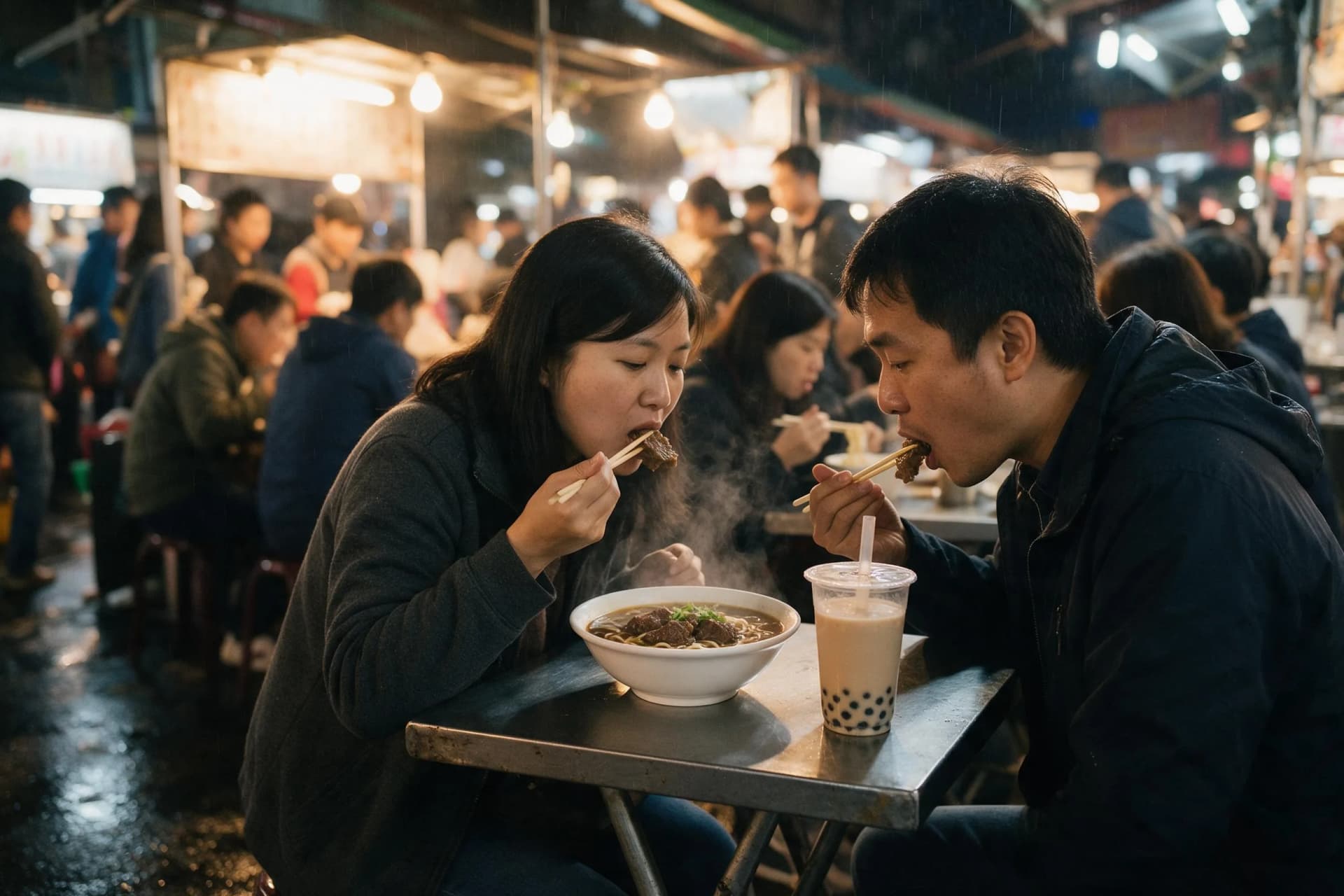
Taiwan's food culture is a walking culture: you graze through night markets, queue at the stall with the longest local line, and measure a city by its breakfast soup. This guide follows the island's classic eating route from Taipei down to Kaohsiung, adding rail logistics, seasonal timing and stall etiquette so a first trip feels unhurried rather than rushed.
Eat your way across Taiwan on NT$1,000–1,500 (about US$31–47) per person per day, and plan for 7–10 nights: the island rewards slow grazing over checking off restaurants. The winning condition is simple — book your rail legs before you fly, stay within walking distance of a night market, and eat where the queue is local.
Start in Taipei, where night markets are the fastest education. Shilin Night Market, a short walk from Jiantan MRT Station, packs oyster omelets, giant fried chicken cutlets and pepper buns into a few dense blocks. Raohe Street Night Market near Songshan Station is smaller but stronger on its single food lane, where the black-pepper pork buns have drawn queues for decades. Go on a weekday, arrive before the dinner rush, and carry small bills, because plenty of stalls still run cash-first. At lunch, duck into an old-school shop for braised beef noodle soup, which lands around NT$180–250 a bowl. Save one evening for a Taipei original such as Din Tai Fung, where the xiaolongbao queue is the price of admission.
Taichung, about an hour south by high-speed rail, claims two modern Taiwanese staples. A local teahouse that opened in 1983 is widely credited with popularizing pearl milk tea in the mid-1980s, and a glass still costs about NT$45–75. At night, Fengjia Night Market is the island's largest, spreading more than 1,000 stalls across a student district, and it serves the college-town version of street food: sweet potato balls, grilled squid and takoyaki-style snacks. It is also one of the few night markets where mobile payment is common, so a phone wallet works here more often than elsewhere.
Tainan, the old capital, is the connoisseur's stop and the reason to add an extra day. Milkfish raised in nearby lagoons shows up at breakfast as soup, danzai noodles still sell for roughly NT$55 a small bowl, and the beef-soup shops that open at dawn frequently sell out by mid-morning. Eat slowly across several sittings, and leave room for coffin bread — a thick fried toast box filled with seafood chowder — which is best shared between two people.
Kaohsiung closes the southern loop. Liuhe Night Market is compact and seafood-heavy, while the harbor restaurants around Cijin Island serve a seafood dinner for two near NT$800. If you head east instead of south, Hualien's day market is the reward: chewy mochi, herbal teas and dumplings in a small city where the mountains drop straight to the Pacific. Both are easy add-ons when you build the route around the rail spine rather than hiring a car.
Getting between these cities is the easy part — and Taiwan's rail network is not part of China Railway's 12306 system, so you book directly with the operators. Taiwan High Speed Rail links Taipei and Zuoying in Kaohsiung in 1 hr 35 min–1 hr 45 min for NT$1,490 standard fare, with roughly six departures an hour at peak. Reserve on the THSR English website using your passport number, then collect at the station counter or scan the QR code at the gate; early-bird discounts are released 28 days before departure. For the east coast, TRA's Tze-Chiang Limited Express covers Taipei to Hualien in about 2 hr 10 min–2 hr 40 min for NT$440, and the TRA online booking window opens 14 days before travel day. Both figures follow the 2025–2026 published THSR and TRA timetables and should be re-checked before you book, especially around Lunar New Year and typhoon season.
Timing shapes the whole trip. October through April is dry and comfortable; July through September overlaps typhoon season, when stalls shut fast and rail services pause. Night markets run roughly 17:00–00:00, with the crowd building after 18:30, so eat early or late rather than at peak. Nearly every market sits within walking distance of an MRT or TRA station, and Taipei's MRT costs NT$20–65 depending on distance, which makes a loaded transit card the single most useful thing in your pocket. Seating is communal, turnover is fast, and tipping is not customary.
Build the trip around your appetite rather than a checklist. Choose two or three cities, anchor each day beside a night market or an old market street, and leave one meal unplanned for the stall that stops you. Book the rail legs and a station-adjacent hotel first, then fill in the eating list. The short version: fly into Taipei, work south through Taichung and Tainan, finish in Kaohsiung, and give the island about a week. You will come home arguing about which bowl was the best.
Good to know
- Daily food budget
- NT$1,000–1,500 (about US$31–47) per person per day across 4–5 night-market, market-street or small-restaurant meals plus drinks (2026 prices).
- Best months to eat your way around
- October to April: dry, mild and comfortable for walking. July to September is typhoon season, when 3–4 typhoons a year typically affect the island and stalls close at short notice.
- Night market hours
- Most Taipei night markets run about 17:00–00:00, with the heaviest crowds after 18:30. Shilin and Raohe are easiest to reach by MRT: Jiantan Station and Songshan Station respectively.
- High-speed rail, Taipei to Kaohsiung
- Taipei Main to Zuoying: 1 hr 35 min–1 hr 45 min, NT$1,490 standard fare, about six trains an hour at peak. Book on the THSR English site with your passport number; early-bird seats release 28 days ahead (2025–2026 THSR timetable).
- Taiwan Railways, Taipei to Hualien
- Tze-Chiang Limited Express: about 2 hr 10 min–2 hr 40 min, NT$440, with the online booking window opening 14 days before the travel date. Passport details are required; re-check the current TRA timetable before booking.
- Drinking water
- Tap water is not recommended for drinking without boiling. Hotels supply kettles, and convenience stores sell bottled water for about NT$20–30 a liter.
Frequently asked questions
Do I need cash at Taiwan night markets?
Most night-market stalls still prefer cash in New Taiwan dollars, and many small vendors do not take foreign credit cards or mobile wallets. Carry small bills and coins, and top up at 7-Eleven ATMs, which are reliable and everywhere.
What is the best time of year for a Taiwan food trip?
October through April brings the driest, coolest weather and the most comfortable walking between food stops. Summer is still delicious but hot and humid, and July to September overlaps typhoon season, when individual stalls and markets can close without notice.
Is English enough to order food in Taiwan?
Yes, for most ordering in Taipei and the other big cities. Popular night markets often have English or photo menus, and pointing plus a translation app covers the rest. Smaller stalls in Tainan and Hualien may be Chinese-only, so learn a few dish names in advance.
Can I drink the tap water in Taiwan?
Tap water is generally not recommended for drinking without boiling first. Hotels provide kettles, convenience stores sell bottled water cheaply, and most travelers drink bottled or boiled water while using tap water only for brushing teeth and washing food.
How do I reach Hualien or Kaohsiung without flying?
Take Taiwan High Speed Rail to Zuoying for Kaohsiung, or Taiwan Railways' Tze-Chiang Limited Express from Taipei Main Station to Hualien. Book online with your passport number well ahead, especially for holiday weekends and the east-coast line, which sells out first.