
Hong Kong Best Time to Visit: A Season-by-Season Family Travel Guide
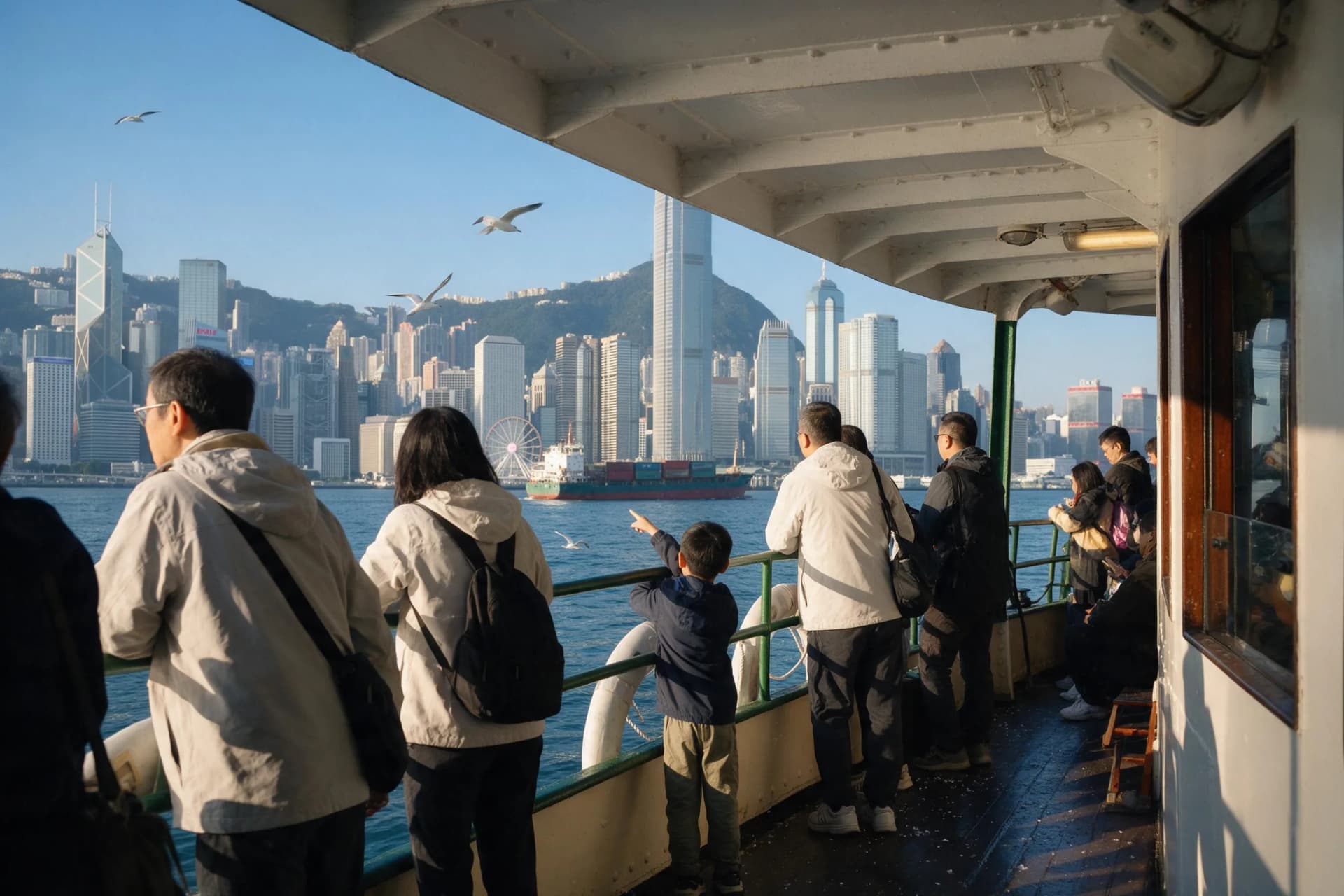
Hong Kong has two faces: a golden October-to-December window of sunshine and harbor views, and a hot, wet summer of typhoons and indoor days. This season-by-season guide covers monthly temperatures, rain, festivals and ferry schedules, with family-friendly timing for Victoria Peak, the Star Ferry, and the car-free outlying islands of Cheung Chau, Peng Chau and Lamma.
Hong Kong is a treaty-port island city ringed by car-free islands, and the season you choose decides what kind of trip you get. Come in late October and the harbor turns glassy, the Peak Tram runs under a blue sky, and the ferry to Cheung Chau leaves Central every half hour with bicycles stacked at the stern. Come in July and the same crossing can be scrubbed by a typhoon signal. I learned that on a June afternoon when the humidity hit like a wet towel and a thunderstorm shut the Ngong Ping cable car for three hours. The fix is simple: plan around the weather instead of fighting it, and let the ferries set the rhythm of your days.
Hong Kong's golden window runs from October to December. The Hong Kong Observatory calls November and December months of pleasant breezes, plenty of sunshine and comfortable temperatures, and locals treat them as the best of the year; daytime highs settle near 24°C (75°F) and the air finally dries out. This is peak season for a reason, so book hotels early and save Victoria Peak, the Star Ferry and the Dragon's Back trail for weekdays. An adult upper-deck Star Ferry ticket between Central and Tsim Sha Tsui costs HK$5.0 on weekdays and HK$6.5 on weekends and public holidays, with a sailing every 6 to 12 minutes, which makes harbor-hopping with kids cheap and easy. December adds holiday lights along the waterfront, and the car-free islands, Cheung Chau, Peng Chau and Lamma, stay quiet enough for a stroller and a rented bike.
January and February are Hong Kong's coolest, cloudiest months, with cold fronts that can push urban temperatures below 10°C (50°F) and frost on high ground in the New Territories. This is also the driest stretch of the year, which makes it excellent for dim sum mornings, museum afternoons and long walks through Sheung Wan and Sham Shui Po. Chinese New Year falls in late January or February, bringing parades, harbor fireworks and the year's biggest domestic travel wave; families should reserve rooms three to four months ahead and expect many small shops to close for a few days. Travel after the holiday if you can, when the city exhales and hotel prices fall.
Spring, from March to May, is mild and green, but it arrives with humidity, drizzle and fog. The Observatory notes that reduced visibility can occasionally disrupt air traffic and ferry services, so build slack into any island day and keep a backup plan on Hong Kong Island. The reward is a soft, misty city and uncrowded trails: the Peak loop, the Morning Trail and the ridge paths above Sai Kung all feel best before the summer heat. The Cheung Chau Bun Festival usually lands in late April or May, when the island's Jiao Festival fills the lanes with buns, lion dances and the famous bun-scrambling tower. It is joyful and crowded.
Summer, June through August, is hot, humid and wet. Afternoon temperatures often climb above 31°C (88°F), nights hover near 26°C (79°F), and about 80 percent of Hong Kong's rain falls between May and September, with June and August the wettest months. Typhoon season runs from May to November and peaks from July to September. Families can still have a wonderful trip: start early, spend the middle of the day at Ocean Park, Hong Kong Disneyland, the Science Museum or a hotel pool, and keep ferry days flexible. Hotel rates are lowest, and July often brings a fine, dry spell lasting one to two weeks.
September is a shoulder month that still carries typhoon risk and heavy showers, though the crowds thin once school starts. October is the pivot: the first week brings National Day Golden Week, when mainland crowds surge and prices spike, then the second half of the month slides into the dry, luminous weather that makes autumn the photographer's season. Mid-Autumn Festival, in September or early October, fills the parks with lanterns and mooncakes, and the Tai Hang Fire Dragon Dance weaves through the streets, an easy, memorable evening for children.
Wherever your dates land, plan your days around the water. Mornings are calmest and clearest, ferries are least crowded before 9 a.m., and the harbor light is best in the two hours after sunrise. Cheung Chau is the easiest car-free escape: ferries leave Central roughly every 30 minutes, the fast ferry takes 35 to 40 minutes and the ordinary ferry up to an hour, and the island runs on bicycles, handcarts and a few tiny service vehicles. Peng Chau is smaller and flatter still, while Lamma trades traffic for seafood and a slow promenade. Keep an Octopus card loaded for ferries, trams and the MTR, and check the Observatory forecast each morning before you commit to an island.
Hong Kong rewards travelers who match their plans to the season rather than fighting the weather. Aim for October to December if you can, accept the green, misty romance of spring if you cannot, and treat summer as an indoor-and-pool season with island days saved for the calm between storms. Tell ChinaMira your travel dates, your kids' ages and how many ferry rides you can fit into a day, and we will build a Hong Kong itinerary around the best weather window, the car-free islands and the tables you will remember. Start with the harbor, and let the timetable do the rest.
Good to know
- Best months
- October to December, when the Observatory reports pleasant breezes, plenty of sunshine and comfortable temperatures, with the year's clearest harbor and Peak views.
- Temperature
- Summer afternoons often top 31°C (88°F) and nights stay near 26°C (79°F); January and February can drop below 10°C (50°F) in urban areas.
- Rain
- About 80 percent of annual rainfall falls from May to September; June and August are the wettest months, while January and December are the driest.
- Typhoon season
- May to November, most likely July to September; Signal No. 8 stops ferries and closes attractions, so keep one flexible indoor day in reserve.
- Star Ferry fares
- Central to Tsim Sha Tsui: adult upper deck HK$5.0 on weekdays, HK$6.5 on weekends and public holidays; a sailing every 6 to 12 minutes, roughly 6:30 a.m. to 11:30 p.m.
- Car-free islands
- Cheung Chau ferries leave Central about every 30 minutes; the fast ferry takes 35 to 40 minutes, the ordinary ferry up to an hour, and the island has almost no cars.
Frequently asked questions
What is the best time to visit Hong Kong?
October to December is the best window: the Hong Kong Observatory calls November and December months of pleasant breezes and plenty of sunshine, with comfortable temperatures and the year's clearest views from Victoria Peak and the Star Ferry.
When is typhoon season in Hong Kong, and how does it affect ferries?
Typhoon season runs from May to November and is most likely from July to September. When the Observatory raises Signal No. 8, ferries to Cheung Chau, Lamma and Peng Chau stop and many attractions close, so keep one indoor day in reserve if you travel between June and September.
How much does the Star Ferry cost, and how often does it run?
An adult upper-deck Star Ferry ticket between Central and Tsim Sha Tsui costs HK$5.0 on weekdays and HK$6.5 on weekends and public holidays, and boats leave every 6 to 12 minutes from about 6:30 a.m. until 11:30 p.m.
Is Hong Kong good for families in summer?
June to August is hot and humid, with afternoon temperatures often above 31°C (88°F) and about 80 percent of the year's rain falling from May to September, so plan indoor mornings, pool afternoons and flexible ferry days, or aim for October to December instead.
Keep exploring
Plan with ChinaMira
Turn this into a trip
Use this guide as a starting point — we can handle the route, guides, trains and the visa invitation letter.