
Can I Bring Medicine to China? 2026 Traveler Guide
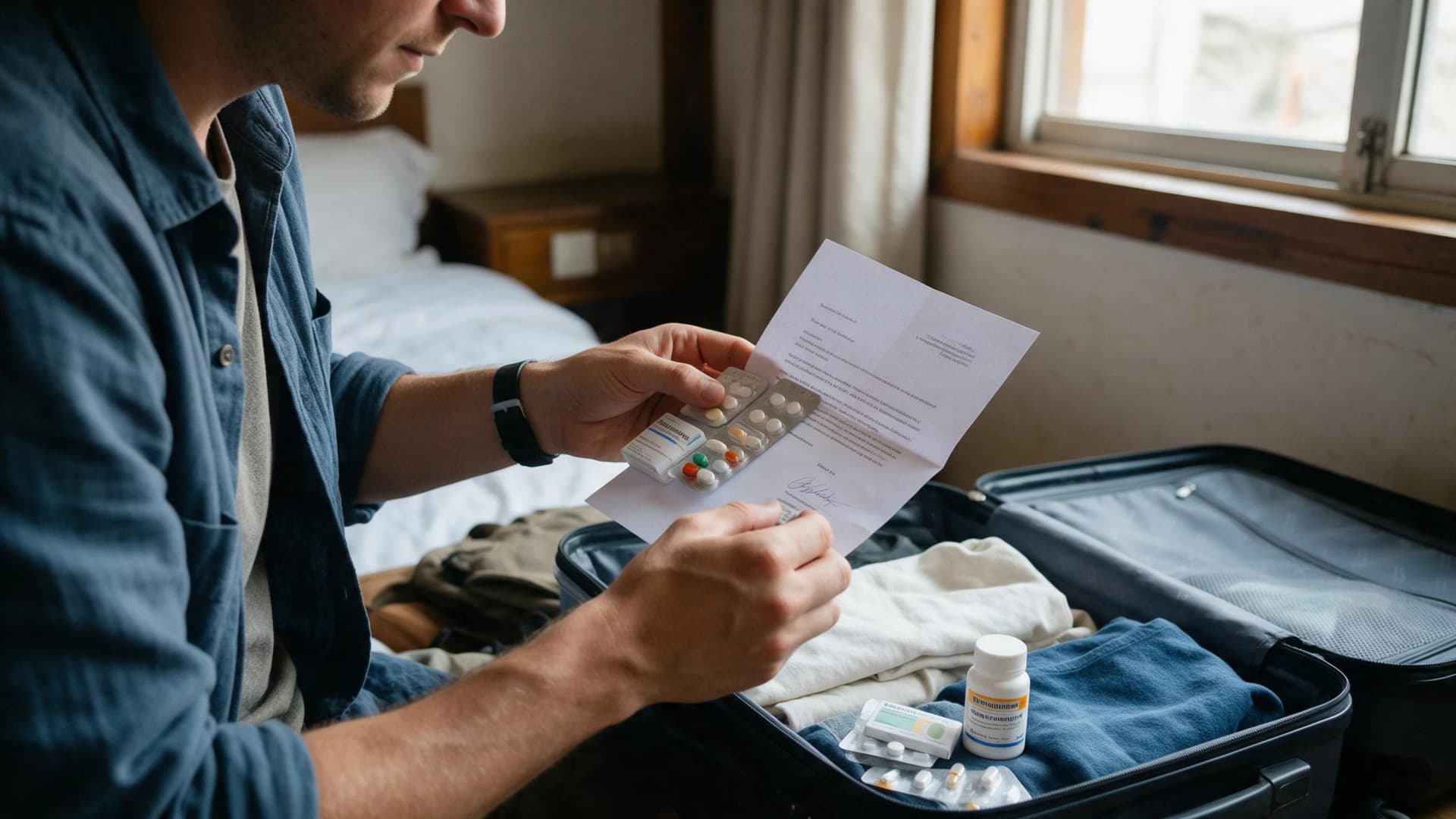
Most visitors can bring a reasonable quantity of medicine for their own personal use, but prescription medicine should be kept in its original packaging with a prescription or doctor's letter available. Controlled, psychotropic, narcotic or injectable medicines can require extra approval, so check the exact medicine and quantity with Chinese customs or the nearest Chinese embassy before travel.
Start by separating ordinary over-the-counter products from prescription, controlled or injectable medicine. A small supply of pain relief, cold medicine or motion-sickness tablets for personal use is different from opioids, strong sedatives, stimulants, growth hormones or medicines that need refrigeration. The ingredient matters more than the brand name. Keep the pharmacy label that shows the generic name, strength and prescribed person.
Keep medicine in original pharmacy packaging and carry a recent prescription or clinician's letter in English and, where practical, Chinese. The letter should identify the traveler, diagnosis where appropriate, medicine name, dose, duration and reason for carrying it. Carry only the quantity needed for the trip plus a sensible delay allowance. Do not mix several people's medicine into one unlabeled bag, and keep essentials in cabin baggage rather than checked luggage.
Declare when required and answer customs or security questions consistently. Airport rules and Chinese customs rules are separate: security may restrict liquids or needles, while customs controls which substances may enter the country. For injectable medicine, ask the airline about syringes, sharps disposal and cold-chain handling. Bring copies rather than surrendering your only prescription, and keep medicine away from heat and moisture during long transfers.
Some products sold internationally combine ingredients that are controlled in China. Cold remedies may contain pseudoephedrine, sleep products may contain sedatives, and pain medicine may contain codeine or stronger opioids. Check the active ingredient rather than relying on the front of the box. If a medicine is essential and controlled, begin the approval process well before buying flights because requirements and processing time can vary by nationality and entry point.
Do not rely on a friend mailing medicine after arrival. International parcels can be delayed, inspected or refused, and the recipient may need documentation. Instead, make a contingency plan with a clinician: what happens if a dose is delayed, whether a local equivalent is acceptable and which hospital or clinic to contact. Travel insurance should be checked for existing conditions and medicine-related claims rather than assumed to cover them.
At the airport, keep documentation together with the medicine and not buried in checked baggage. A concise one-page medicine summary is usually more useful than a large folder. If a customs officer questions the product, remain factual and ask what verification is required. Do not remove labels to save space and do not carry medicine for another person unless the prescription, quantity and reason are clearly documented and legally permitted.
Create a packing list before leaving home and compare it with the medicine in the bag. Note the active ingredient, strength, daily dose, total quantity, storage temperature and whether the product contains controlled substances. Photograph the prescription, letter and original packaging and keep one copy in the cloud and one offline. Preserve the prescription in a language that a traveler, airline or clinician can understand quickly in an emergency.
A hotel safe is useful for backup supplies but not for medicine needed during an evacuation or sudden transfer. Split the supply only when the labels remain attached and the split is clearly documented. Do not place all medicine in checked luggage, and never leave it in a hot vehicle. If the trip includes multiple cities, confirm that the same quantity will remain legal and appropriate throughout the route.
Travelers who require refrigerated medicine should ask the manufacturer, airline and hotel about stable temperature ranges, security screening and power backup. Ice packs may be treated as liquids or gels at security. A cooler is not a guarantee of correct temperature, so use a logger or thermometer when the medicine is critical. Discuss the entire travel plan with the prescribing clinician well before departure.
Rules can change and may be applied differently by airport, railway station, embassy or consulate. Check the official source again close to departure, carry the relevant documents and ask the operating company when the answer affects health, immigration or a non-refundable booking. This guide is general travel information, not medical advice. A prescribing clinician decides whether travel and the proposed medicine supply are suitable.
Good to know
- Best practice
- Original packaging plus prescription or doctor's letter
- Quantity
- Personal use for the trip with a reasonable delay allowance
- High-risk items
- Narcotic, psychotropic, stimulant and injectable medicine
- Declaration
- Follow customs and airport instructions and answer questions accurately
- Fallback
- Carry copies and save a clinician and insurer contact offline
Frequently asked questions
Do I need a doctor's letter for prescription medicine?
Yes, carry a recent prescription or clinician's letter showing your name, medicine, dose and reason for use. It can help customs, security and a local clinician understand the treatment.
Can I carry medicine in hand luggage?
Keep essential medicine in cabin baggage when airline security rules allow. Liquids, needles and refrigerated products may need advance checks with the airline and airport security.
What if my medicine is controlled in China?
Do not assume a foreign prescription is sufficient. Check the active ingredient, strength and quantity with Chinese authorities before travel and allow time for any required approval.
Keep exploring
Sources & verification
Sources used for this guide
Time-sensitive travel details can change. Reconfirm opening hours, prices and entry rules before departure.
- 1english.customs.gov.cnenglish.customs.gov.cn
- 2nia.gov.cnnia.gov.cn
Local operating context
ChinaMira Travel Team contributes local route and operating knowledge from China. This team byline identifies a real operating group rather than a fictional individual author.
Plan this trip
Turn this guide into a practical itinerary
Send us the article as context. A ChinaMira specialist can check the route, dates, transport, tickets and the details that need local confirmation.