
China Arrival Card and Health Declaration 2026: What Do You Fill In?
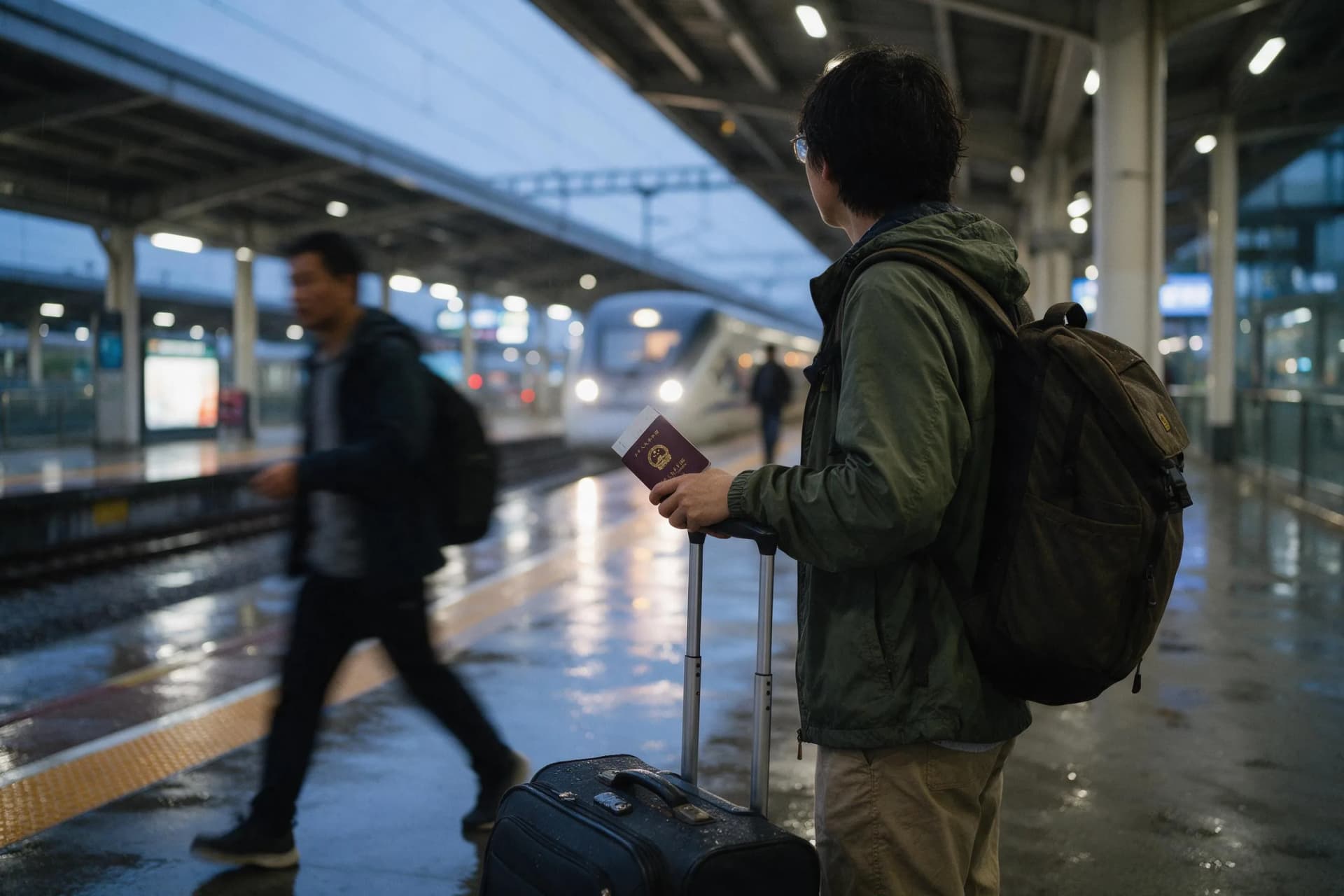
In 2026, a standard foreign-passport arrival usually means one free arrival card and no routine inbound health declaration; the practical challenge is what comes next. This day-one guide connects passport-control fields to airport rail, metro, taxi and cross-border train choices, with transfer times, dollar fares, payment setup and checks for your first journey.
In 2026, foreign passport holders generally complete one free China arrival card—not a routine health declaration—before immigration, then make a transfer decision that starts at the airport or rail gateway. The card takes about three to five minutes; China stopped requiring the routine inbound health declaration on November 1, 2023. Keep your first hotel address and onward transport ready.
Treat the card as your first transfer document. A standard foreigner arrival card asks for your identity, passport details, arrival date, flight or train number, purpose and length of stay, and an address in China. Copy the spelling from your passport rather than memory. For the address field, use the hotel's full Chinese name, street number, district and city. A booking screenshot without a readable Chinese address is a weak handoff to a driver, especially late at night.
Complete one card per foreign-passport traveler, including children, unless an officer directs you otherwise. Chinese passport holders re-entering the mainland do not normally use the foreigner card. Paper forms are usually offered by cabin crew or placed near the immigration queue. If none reaches you, use the National Immigration Administration's online arrival-card page, but keep a paper fallback because availability can vary by port. Do not pay anyone for the form: the arrival card itself costs $0.
China ended the routine inbound health-declaration requirement on November 1, 2023. Do not expect a second form or a compulsory app before passport control, although normal health screening can still take place. If you have a fever, cough, vomiting or diarrhea when you arrive, tell the customs or quarantine officer instead of joining the ordinary line. A vaccination certificate required for a specific route, a customs goods declaration and private travel insurance are separate documents, not replacements for the arrival card.
Your arrival route changes the first handoff. At an airport, passport control, baggage collection and customs stand between the aircraft door and your ride, and an onward rail ticket can turn a simple city transfer into two moves. At a cross-border rail gateway, complete the arrival card before immigration, then leave the port directly into a metro or taxi network. If you are already inside mainland China, a later domestic train does not require a new China arrival card, though you still need your physical passport for security and ticket-gate checks.
Keep the first-mile choice simple. For a central hotel with compact luggage, airport rail plus metro is usually the best balance of speed and price. For two or more people, a late arrival or several cases, an official taxi or app ride can beat the stress of stairs and station security. If you plan to take a train the same day, compare the airport's location with the departure station before buying the rail ticket; Shanghai Hongqiao combines the airport and rail hub, while Beijing's Daxing and Capital airports require different urban connections.
These 2026 planning ranges show how the trade-offs differ: - Shanghai Pudong to Longyang Road by Maglev: 7–8 minutes, about $7. Metro onward to People's Square: 65–80 minutes, $1–$2. Shanghai Airport Link to Hongqiao: about 40 minutes, roughly $4. - Beijing Daxing to Caoqiao by Airport Express: about 19 minutes, $5. Taxi to central Beijing: 45–70 minutes, about $25–$40 depending on traffic. - Guangzhou Baiyun to Guangzhou South by metro: 65–80 minutes, about $1.50. Taxi to Tianhe: 40–60 minutes, about $20–$30. Check the date-specific timetable and confirm the station or terminal before departure. Fares and journey times vary with the route, baggage and traffic.
Once you reach the city, use the metro as the default when your bags are manageable. Tap the gate with Alipay or WeChat Pay after linking an international card; typical urban rides cost $0.40–$1.50. Every bag goes through an X-ray scanner at station entrances, so leave extra time at rush hour. For door-to-door trips, use DiDi inside Alipay or its English app: pin the exact pickup point, match the plate number and expect a 20–30 minute cross-town ride to cost about $7–$15. At airport or station ranks, board only a metered taxi; flag-fall is commonly $2–$3 and a major airport run about $20–$35.
Before boarding, make four checks: the passport spelling and hotel address on the card, the arrival terminal or station, the transfer route with a late-night backup, and mobile payment working offline. Save the hotel name in Chinese, keep the arrival card confirmation if you completed it online, and photograph the luggage before it disappears onto a belt. If the last airport train may have gone, head for the official taxi rank or request DiDi before leaving the terminal. Your next step is to settle the form, compare the linked airport-transfer and rail-ticket guides, then book the simplest route your arrival time can support.
Good to know
- Arrival card
- $0; one page; about 3–5 minutes; one per foreign-passport traveler unless an officer directs otherwise.
- Health declaration
- No routine inbound form since November 1, 2023; report fever, cough, vomiting or diarrhea at the customs or quarantine desk.
- Airport rail examples
- Shanghai Maglev: 7–8 minutes, about $7. Beijing Daxing Airport Express: about 19 minutes, $5. Shanghai Airport Link to Hongqiao: about 40 minutes, roughly $4.
- Metro examples
- Shanghai Pudong to People's Square: 65–80 minutes, $1–$2. Guangzhou Baiyun to Guangzhou South: 65–80 minutes, about $1.50.
- Taxi examples
- Beijing Daxing to central Beijing: 45–70 minutes, about $25–$40. Guangzhou Baiyun to Tianhe: 40–60 minutes, about $20–$30.
- Local transit
- Metro rides commonly cost $0.40–$1.50; a 20–30 minute cross-town DiDi ride is about $7–$15; bags are X-rayed at station entrances.
Frequently asked questions
Do I need both a China arrival card and a health declaration in 2026?
For a standard foreign-passport arrival, plan on one free China arrival card and no routine inbound health declaration. China stopped requiring the routine health form on November 1, 2023. If you arrive unwell, report your symptoms to customs or quarantine staff; special vaccination certificates or customs declarations may still apply to particular journeys.
Can I fill out the China arrival card before I land?
You may be able to use the National Immigration Administration's online arrival-card service before landing, but paper cards are still useful because access varies. Complete the address, flight or train number and passport details exactly, and keep the confirmation accessible offline. The form is free, and every traveler should have an individual submission.
Should I take the airport train or a taxi with luggage?
Choose airport rail when the line connects conveniently to your hotel, your bags are easy to handle and you are not arriving too late. Choose a metered taxi or DiDi for multiple suitcases, two or more travelers, a large group or a poorly connected address. Check the date-specific last train before deciding.
How do I move around a Chinese city after the airport transfer?
Use the metro for short, predictable trips and tap in with Alipay or WeChat Pay linked to an international card. Use DiDi for a direct door-to-door journey and confirm the driver's plate number. Official taxi ranks are best at airports and major stations, while shared bikes suit short daylight trips without luggage.
Do I need an arrival card if I enter China by train?
If your first entry into mainland China is by a cross-border train, plan to complete the foreigner arrival card at that rail port before immigration. A domestic train taken after you have already cleared mainland entry does not require another arrival card, but you still need the physical passport used for the booking.
Keep exploring
Sources & verification
Sources used for this guide
Time-sensitive travel details can change. Reconfirm opening hours, prices and entry rules before departure.
- 1s.nia.gov.cns.nia.gov.cn
- 2nia.gov.cnnia.gov.cn
- 3customs.gov.cncustoms.gov.cn
- 412306.cn12306.cn
- 5smtdc.comsmtdc.com
Local operating context
ChinaMira Travel Team contributes local route and operating knowledge from China. This team byline identifies a real operating group rather than a fictional individual author.
Related journeys
Turn this guide into a real trip
These are currently bookable journeys selected from the place and theme of this guide. Availability is rechecked before display.
Beijing & the Wild Great Wall
Five unhurried days in the capital, pairing the Forbidden City and hutong life with a full day walking the unrestored ridges of Jinshanling.
5 days
Next departure: Mar 15, 2027
Xi'an: Terracotta Warriors & the Silk Road
Four days in the eastern gateway of the Silk Road — the Terracotta Army, the city wall and the food lanes of the Muslim Quarter.
4 days
Next departure: Apr 8, 2027
Plan this trip
Turn this guide into a practical itinerary
Send us the article as context. A ChinaMira specialist can check the route, dates, transport, tickets and the details that need local confirmation.