
Story
Do You Need a China Arrival Card and Health Declaration in 2026?
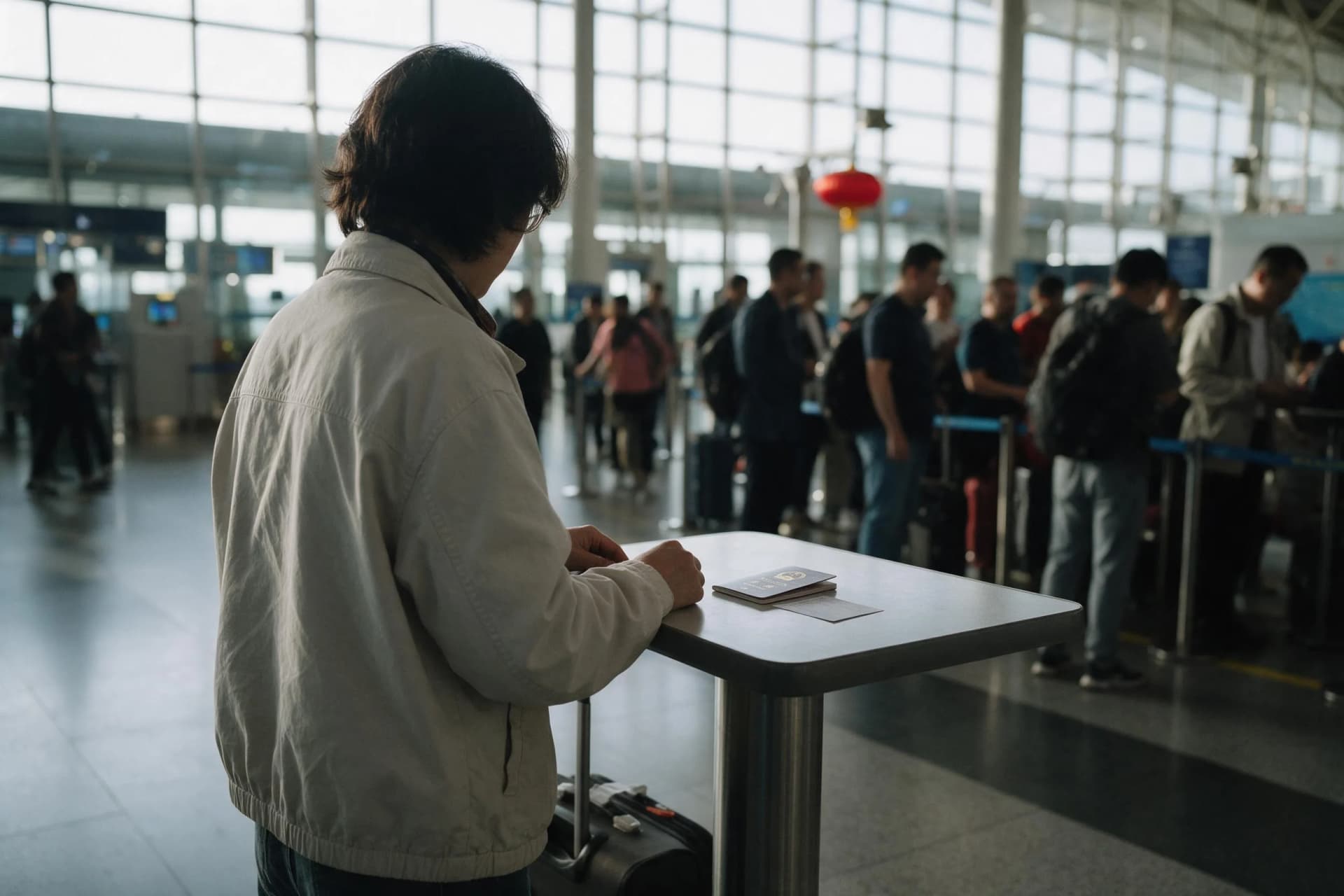
Two documents once shadowed every China landing; in 2026 only one is obligatory. Here is the paperwork in plain terms, then the calendar half of the question: how Beijing, Shanghai and Xi'an behave month by month, the two shoulder windows worth planning around, the one month that costs the most for the least comfort, and when to book flights, trains and rooms.
Short answer: you fill one mandatory form, not two. Every foreign passport holder still writes out a China Arrival Card at immigration, a free single page that takes about five minutes, while the inbound health declaration card was retired in late 2023 and stays retired for the 2026 season. The China Customs mini-program survives only for self-reporting.
What the arrival card asks. It is one page, handed out by cabin crew roughly an hour before landing and stacked again on a table at the head of the arrival hall. Expect about ten fields: full name exactly as printed in your passport, passport number and expiry, nationality, date of birth, the flight you landed on, purpose of visit (tourism, business or transit), intended length of stay, and the address of your first hotel in China. Sign and date it, then hand it to the officer with your passport and boarding pass. Chinese passport holders going home skip it entirely, and the National Immigration Administration has offered a fillable online version since 2024 for travelers whose airline passes out no paper.
Where the health declaration now stands. Customs dropped the inbound health declaration card in late 2023, so nobody hands you a second form and there is no app you must install before boarding; temperature screening at the gate is what remains. Two things still matter. First, if you land with a fever, cough or vomiting, say so at the quarantine desk instead of walking through. Second, if you carry more cash or more goods than the limits allow, the red channel and a written declaration are your only honest route: declare cash above CNY 20,000 or USD 5,000 equivalent, and goods above CNY 5,000.
Now the timing half of the title question. China is at its most forgiving in two windows: mid-April to mid-May, and mid-September to mid-October. In both, Beijing sits near 20°C, the summer rains have either not arrived or just finished, child-free travel keeps queues short, and hotels are still priced for shoulder season rather than for the holiday rush. Every other month is a bargain in one column and a penalty in another.
Month by month, using Beijing's 1991-2020 climate normals from the China Meteorological Administration, plus crowd and price bands (¥ cheapest, ¥¥¥¥ most expensive): January - high 1.8°C, low -8.4°C - 3 mm rain - quiet - ¥ February - 5.0°C, -5.6°C - 5 mm - very busy around Spring Festival - ¥¥ March - 12.0°C, -0.1°C - 8 mm - quiet - ¥¥ April - 20.0°C, 7.7°C - 21 mm - moderate - ¥¥ May - 26.1°C, 13.6°C - 34 mm - busy - ¥¥¥ June - 29.9°C, 18.6°C - 78 mm - busy - ¥¥¥ July - 30.8°C, 22.1°C - 185 mm - very busy - ¥¥¥¥ August - 29.7°C, 21.0°C - 167 mm - very busy - ¥¥¥¥ September - 25.8°C, 15.2°C - 48 mm - moderate - ¥¥¥ October - 19.0°C, 8.0°C - 24 mm - extreme in the first week - ¥¥¥¥ November - 10.1°C, 0.1°C - 12 mm - quiet - ¥¥ December - 3.3°C, -5.9°C - 2 mm - quiet - ¥¥ Shanghai runs several degrees warmer than Beijing with heavier rain in the same months, and Guangzhou on the southern coast adds a typhoon belt that peaks between June and September.
The month to avoid is August. Beijing's own numbers look bearable, but August is where China's weather, its holiday calendar and its airfares all point the wrong way at once: Chongqing and Wuhan push past 40°C, southern cities are in typhoon season, and the school-holiday peak sends round-trip fares from the United States to roughly $1,600-$2,100 against $900-$1,200 in the shoulder windows. Two shorter stretches are nearly as punishing and easier to dodge. The first week of October is the National Day holiday, when the country's entire domestic travel market moves in the same seven days, and the Spring Festival week in February 2026 does it again with family reunions on top.
How to book around all this. Fix your dates by the two shoulder windows, then work backwards: international flights eight to twelve weeks out, hotels as soon as the dates are firm, and high-speed rail through the 12306 app, where seats open 15 days before departure with release times staggered by station from 8 a.m. Beijing time and your passport is the ticket. For the cheapest quiet weeks, aim at the first half of November or the first three weeks of March, when room rates fall well below the May and October peaks and the sights belong to locals again. Check that your passport has six months of validity left, scan a copy to your phone, and you are ready.
Do the one form, then choose your month. Land in late April or late September and you get the country at its most generous, with dry air, open terraces and manageable queues; land in August and you pay the most for the least comfortable version of the same trip. Start with our arrival card walkthrough to see the fields before you fly, then compare the two shoulder windows above and lock the dates while fares are still on the low side.
Good to know
- Arrival card
- 1 page, free, about 5 minutes; required at immigration for every foreign passport holder, not for Chinese passport holders.
- Health declaration
- Retired for inbound arrivals in late 2023 and not reinstated for the 2026 season; fill the China Customs mini-program only if you need to self-report symptoms or goods.
- Customs limits
- Declare cash above CNY 20,000 or USD 5,000 equivalent, and goods above CNY 5,000; use the red channel.
- Best months
- Mid-April to mid-May and mid-September to mid-October: 2 shoulder windows with dry air, moderate crowds and lower room rates.
- Month to avoid
- August (peak school-holiday travel, southern typhoon season, top airfares); also Oct 1-7 Golden Week and mid-to-late February 2026 Spring Festival.
- Booking windows
- 12306 rail tickets go on sale 15 days ahead, staggered from 08:00 Beijing time; international flights are cheapest 8-12 weeks out.
Frequently asked questions
Is the China arrival card still required in 2026?
Yes, for every foreign passport holder, whether you arrive by air, sea or land. It is one free page you complete before the immigration desk, and you hand it over with your passport. Chinese citizens and residents returning home do not fill one in.
Do I still need a China health declaration to enter in 2026?
The inbound health declaration card was retired in late 2023 and has not been reinstated, so there is no form to hand over at the gate. Temperature screening continues, and if you land with a fever, cough or vomiting you should report it at the quarantine desk.
Can I fill in the arrival card online before I fly?
The National Immigration Administration has published a fillable online version that you can complete on a phone before you reach the desk, and paper cards remain available on the plane and in the hall. Either way, take the address of your first night's accommodation with you.
Which month is the worst time to visit China?
August, for three reasons at once: relentless heat in the interior cities, typhoon rain on the southern coast and the highest airfares of the year. If August is the only option, stay north, book early and keep the southern coast for a future trip.
Do US citizens need a visa to visit China in 2026?
Most US passport holders still need a visa, while the 240-hour visa-free transit rule covers onward travellers through a long list of ports and many European and Asian nationalities now enter without one. Rules change often, so confirm the current position for your passport before booking flights.