
Story
China Arrival Card and Health Declaration 2026: What You Fill In + Photo Spots
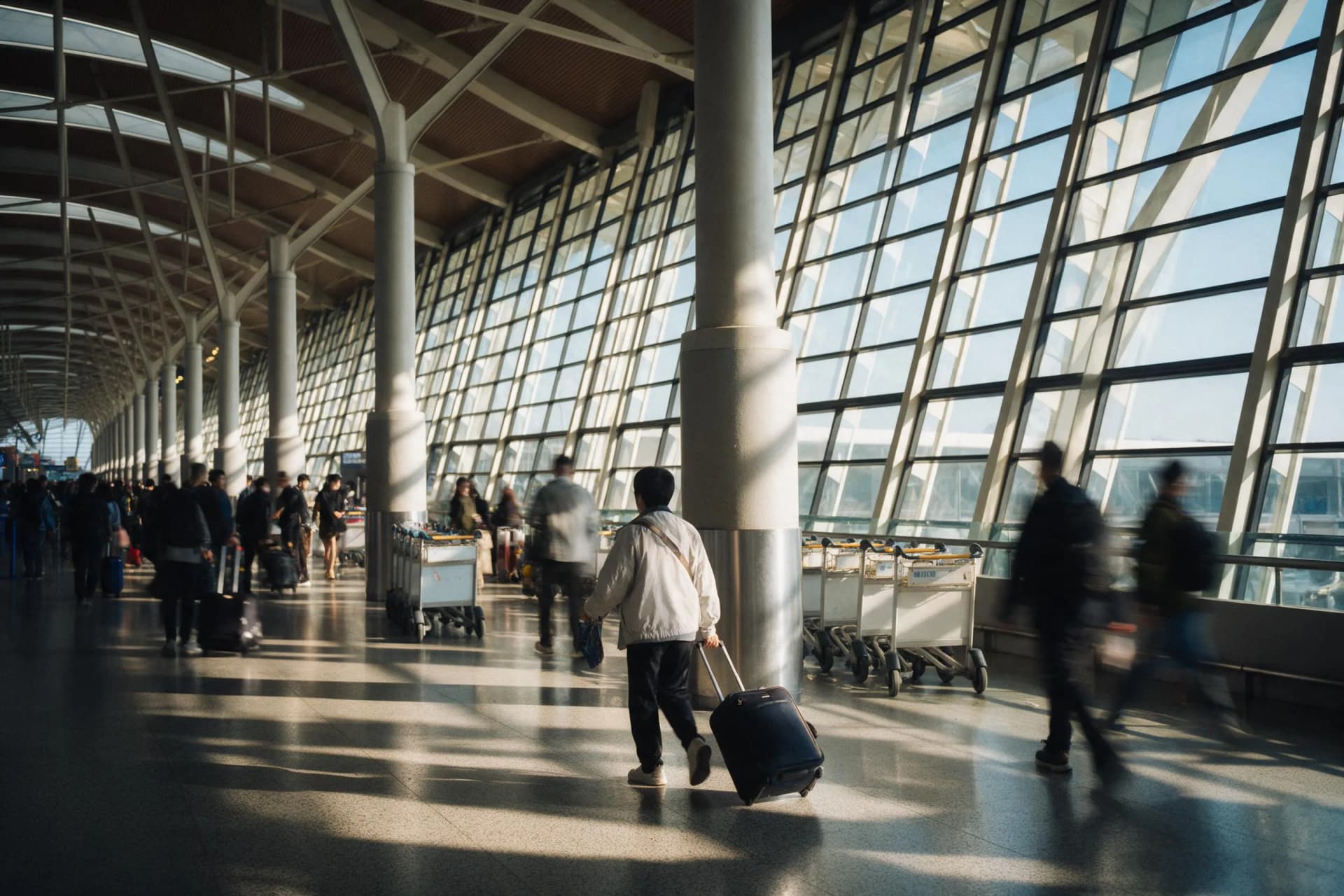
Two forms once defined every China arrival; today only one survives, and it takes about three minutes at the immigration queue. This guide walks the surviving card field by field, then turns the waiting time around it into photographs: the terminal colonnade in afternoon light, the maglev at full speed, and the Bund at blue hour, with viewpoints, crowd timing and settings for each.
Short answer: the China arrival card is still free to complete on arrival, and as of November 1, 2023 the inbound health declaration card is no longer required for ordinary travelers, a rule that has held through the 2026 travel season. Fill it in with your passport and onward ticket in hand, before you join the immigration queue.
What the arrival card actually asks. Foreign nationals still complete an arrival card before the immigration desk; Chinese passport holders going home do not. Paper cards are handed out on board and stacked at the head of the arrivals hall, and the form runs to about ten short fields: name as printed in your passport, passport number, flight, purpose of visit, address in China, and your signature. Write that address in block Latin letters and save your hotel name in Chinese, because officers and taxi drivers both ask for it. Since 2024 the National Immigration Administration has offered the same card online through its own service page, which you can finish on the plane if the cabin has Wi-Fi; paper remains the fallback.
The health declaration is gone, but not the screening. Customs retired the inbound health declaration card in late 2023 and nothing in the 2026 process has brought it back; no one hands you a form and there is no app to download. What remains is temperature screening and a voluntary reporting rule: if you land with a fever, cough or vomiting, tell a customs officer at the quarantine desk instead of walking through. The same hall still asks a customs question, so declare cash above CNY 20,000 or the equivalent of USD 5,000, goods worth more than CNY 5,000, and any food or plant material; use the red channel, not green.
Spot 1: the arrivals hall itself, Shanghai Pudong Terminal 2. Pudong is where most long-haul arrivals finish the card, and its terminal earns a first photo stop: a long colonnade of columns under a curving glass roof. Best window is mid-afternoon, roughly 15:30 to 17:00, when sun rakes in from the west and the floor picks up long shadows; early arrivals get flat blue light and a fuller hall. Stand on the arrivals-level mezzanine at the eastern end and shoot back down the corridor, never toward the immigration desks. International arrivals bunch between 12:00 and 17:00 as European and American flights land in a block, so a 07:00 to 09:00 landing leaves the terminal almost empty. Handheld at 35mm, f/2.8, ISO 800, 1/60s; on a phone use the 1x lens, tap the brightest window to hold highlights, and keep the columns vertical. One hard rule: never photograph the inspection areas or the officers working in them.
Spot 2: the maglev, 30.5 km in seven or eight minutes. The Shanghai Maglev from Pudong to Longyang Road is the fastest way into the city; it cruises at up to 300 km/h and costs CNY 50 single, or CNY 40 with the same-day boarding pass, the only discount worth asking for. Trains leave every 15 to 20 minutes, first departure 06:45 and last around 21:40, so a late landing means a taxi. Ride in the first car and shoot forward through the driverless cab glass at 1/1000s to freeze the blur, or drop to 1/30s and pan on the platform as the train slides in; on a phone use burst mode and lock exposure on the far platform. Travelling onward by high-speed rail? Book on 12306 with your passport, seats open 15 days ahead, and you scan that passport at the gate.
Spot 3: the Bund at blue hour. The promenade is free, open around the clock and has no last entry, which matters because the good light arrives after sunset rather than before it. From mid-October to mid-November the sun sets around 17:00 to 17:30 and the sky holds a deep blue for the next half hour, just as the Lujiazui towers switch on. The precise viewpoint is the raised promenade opposite the Customs House, about 200 m north of Nanjing East Road. Crowds run from 18:00 to 21:30 and weekends are a crush; 05:30 to 07:00 is nearly empty but the towers are dark. Tripod, f/8, ISO 100, two to eight seconds; on a phone, brace it on the railing and slide exposure down until the sky stays blue.
Spot 4: Wukang Road in morning side-light. For the other Shanghai, walk the 1.7 km of Wukang Road in the former French Concession, open all day and free. The exact viewpoint is the corner of Wukang Road and Huaihai Middle Road, where the flatiron Wukang Mansion fills a vertical frame; it is a private residence, so shoot politely from the street. Side-light is best between 07:00 and 08:30, when the street belongs to locals and delivery bikes, before tour groups arrive from about 10:30. Shoot 35mm at f/4, ISO 400, 1/125s, and step back so shopfronts anchor the frame.
How to sequence arrival day. Land, clear the card and customs, shoot the terminal in afternoon light, ride the maglev into town, drop your bags, and be on the Bund railing for blue hour. Before you queue, run the checklist: passport in hand, China address written out, hotel name saved in Chinese, boarding pass kept for the maglev discount, and the camera down and away anywhere near the inspection hall. Then go shoot your first hour in China.
Good to know
- Arrival card cost
- Free, CNY 0 - no fee and no payment step online; paper cards are stocked in the arrivals hall and handed out on flights.
- Health declaration status
- Not required for ordinary inbound travelers since November 1, 2023; temperature screening and voluntary reporting remain in force in 2026.
- Time to fill it in
- About 3 minutes for roughly 10 fields: passport details, flight number, China address, hotel name in Chinese, signature.
- Shanghai Maglev
- Pudong to Longyang Road, 30.5 km in 7-8 minutes; CNY 50 single or CNY 40 with a same-day boarding pass; every 15-20 minutes, 06:45-21:40.
- Best photo window, Shanghai
- Mid-October to mid-November: sunset 17:00-17:30 and the best blue hour in the following 30-40 minutes; the promenade has no closing time.
- Customs cash threshold
- Declare cash above CNY 20,000 or the equivalent of USD 5,000, plus goods over CNY 5,000; use the red channel at Shanghai Pudong.
Frequently asked questions
Do US citizens still need a health declaration to enter China in 2026?
No. Customs dropped the inbound health declaration for ordinary travelers in late 2023 and has not reinstated it, so you simply walk through temperature screening. If you land with a fever, cough or vomiting, report it to the quarantine desk before you leave the hall.
Where do I get the China arrival card, and who has to fill one in?
Foreign nationals complete it before the immigration desk. Cabin crew hand out paper cards on the flight, spare stacks sit at the head of the arrivals hall, and an online version is available through the National Immigration Administration's own service page.
Can I take photos inside Shanghai Pudong airport?
In the public arrivals and departures halls, yes, and travelers photograph the glass roof constantly. Immigration and customs inspection areas are off limits, and photographing officers or security screens can get you questioned, so pack the camera away until you are through the exit doors.
What time of day gives the best photos of the Shanghai skyline?
Blue hour, the thirty minutes right after sunset, when the Lujiazui towers are lit and the sky still holds color. The waterfront promenade never closes and has no last entry, so you can stay on the railing as long as the color lasts.
Is the maglev or a taxi better after a late landing at Pudong?
The maglev is faster and cheaper while it runs, and the discount comes from showing your same-day boarding pass at the counter rather than booking ahead. After the last train, plan on a metered taxi or a ride-hailing pickup from the designated stand on the arrivals level.