
What Do Chinese Pharmacy Medicine Labels Mean in 2026?
Chinese pharmacy medicine labels are easier to use when you treat the package as a set of decisions, not a brand puzzle. This 2026 guide explains generic ingredients, strength, dosing language, warnings, OTC and prescription marks, expiry and storage, with a Shanghai counter example and questions to ask a pharmacist before you buy.
Chinese pharmacy medicine labels become manageable when you match the generic ingredient, strength, directions, warnings and expiry before buying; if any of those fields is unclear, do not guess. In 2026, a basic over-the-counter pack typically costs $4–$10, but price is not proof of suitability.
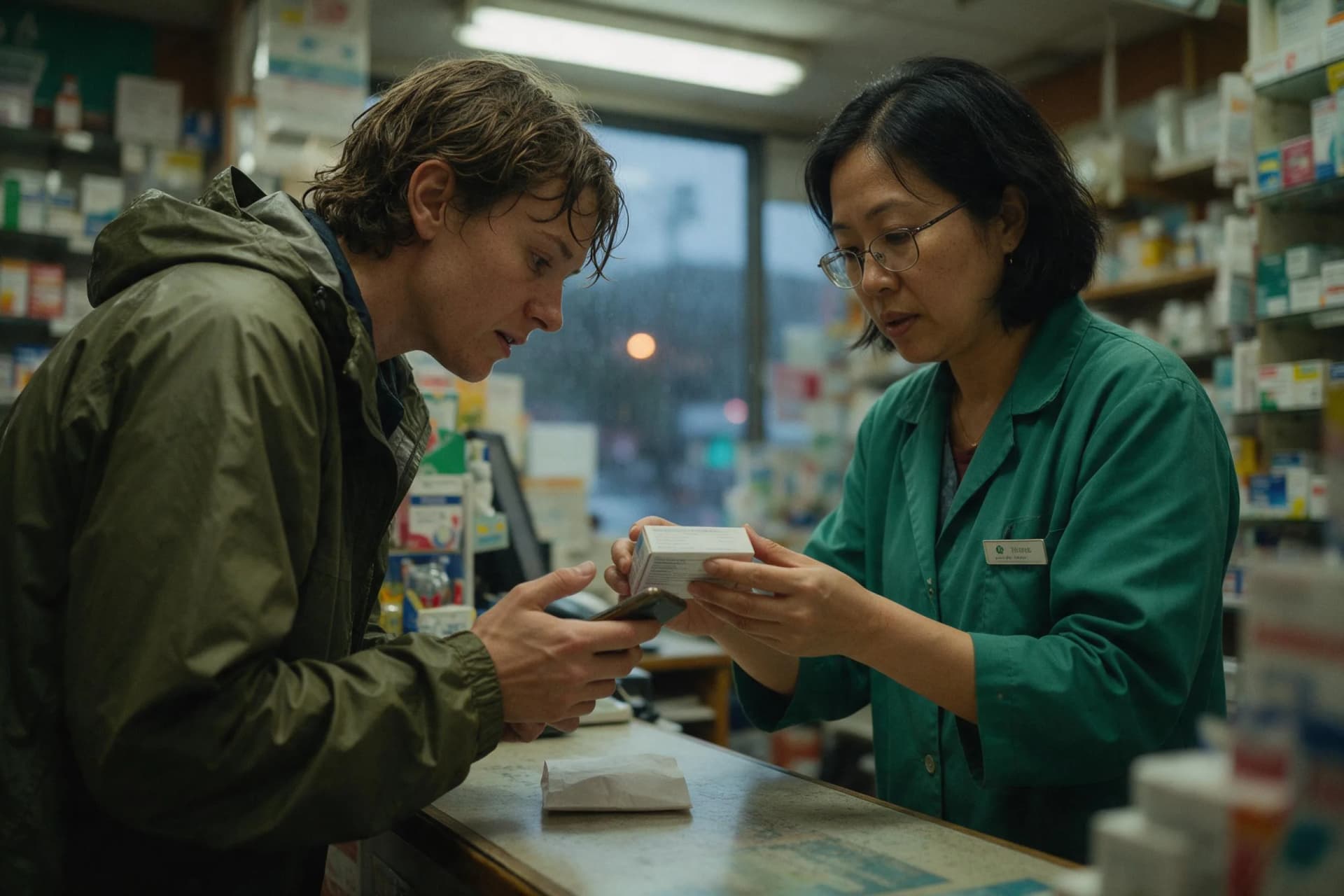
Picture an 8:40 p.m. stop at a staffed pharmacy after a long museum day in Shanghai. The shelves are dense, the pharmacist works behind a counter, and two boxes seem to promise the same thing. The mistake is to compare only the brand, box color or a half-recognized English word. Shanghai No. 1 Pharmacy on East Nanjing Road is a useful city reference, but verify that day's hours and English support first.
The carton is a summary; the folded package insert—the 说明书—holds fuller instructions. China's National Medical Products Administration regulates labels and inserts; identify these fields before paying: - Generic name (通用名): the approved substance name, not the marketing name (商品名). - Ingredients (成分 or 主要成分): what the medicine contains; 复方 means a combination formula. - Strength and count (规格): how much active ingredient is in each tablet, capsule or dose. - Directions (用法用量): route, dose, frequency and any maximum daily dose. - Warnings (禁忌, 注意事项, 不良反应): who should not use it, cautions and possible side effects. - Expiry and batch (有效期至, 批号): when to stop using it and which production lot it belongs to. - Status and approval (处方药 or 非处方药, 批准文号): prescription, over-the-counter and product-registration markers.
Strength comes before tablet count. “规格: 每片0.5克” means each tablet contains 0.5 grams of the stated ingredient; it does not mean that you take 0.5 grams as a dose. A 20-tablet box is not stronger than a 10-tablet box. Compare the ingredient and amount per unit with your usual product, then follow the package or clinician's dose. If you take two products with the same ingredient, you may accidentally double the dose. This is especially easy with cough, cold and pain products that use different brand names.
The dosing line has its own shorthand. “一次1片,一日3次” means one tablet per dose, three doses across the day; it does not automatically mean every eight hours. “饭前” means before food, “饭后” after food, “睡前” at bedtime, “外用” for external use only and “含服” to let it dissolve in the mouth. “遵医嘱” means follow a clinician's instructions. If the label says “儿童酌减” without a clear age- or weight-based dose, do not reduce an adult tablet by eye. Ask the pharmacist or a clinician for a pediatric dose.
Warnings deserve the same attention as the dose. “禁用” means do not use; “慎用” means use cautiously and only after appropriate advice; “不良反应” lists possible side effects. A warning about drowsiness can affect driving, while “服药期间不得饮酒” means no alcohol while taking it. Pregnancy, breastfeeding, liver or kidney disease, allergies, blood thinners and other regular medicines all change the conversation. Ask about duplication before adding a cold, sleep or pain product, because “复方” formulas can contain several active ingredients.
OTC does not mean risk-free. “非处方药” marks an over-the-counter medicine; “处方药” or Rx marks one that requires a prescription. A red OTC symbol generally indicates Class A OTC, while green indicates Class B OTC, which has broader permitted retail availability. The color is not a strength ranking. “批准文号” is an approval identifier, not a dose or quality grade. If you want an antibiotic, do not shop by brand: these are prescription medicines, and WHO advises using antibiotics only when a qualified clinician prescribes them.
Put the pharmacist in the decision loop. Show your usual package, a clear photo of its ingredient panel, or both. Then ask: - Is the ingredient and strength identical? - What dose should I take, and what is the daily maximum? - Could it duplicate or interact with anything I already take? - Should I avoid it because of my allergy, pregnancy, kidney or liver problem? For a child, add age and weight. For a rash or eye problem, ask whether the preparation is internal or external. A translation app can help you frame the question, but it should not decide the dose.
Check the seal, expiry and storage before leaving. “有效期至” gives an end date, while “生产日期” is when it was made. “批号” identifies a lot; it is not a second expiry date. “冷藏” means refrigerate, “避光” protect from light and “密封” keep tightly closed. Keep the outer carton and leaflet rather than decanting tablets into an unlabeled container. If the seal is broken, the insert is missing or the printed date is illegible, choose another package.
Some symptoms bypass pharmacy care. Call 120 or go to the nearest emergency department for trouble breathing, facial or throat swelling, fainting, chest pain, sudden weakness on one side or another rapidly worsening symptom. For a fever or illness that is not settling, call the hotel or an English-capable clinic and use your insurance assistance line. Keep the pharmacy receipt if you may claim it later. Staffing, stock and English support vary by branch.
Before your next trip, photograph the generic-name panel and dose instructions of your regular medicines, write down allergies and current prescriptions, and save one pharmacy question script offline. At the counter, buy only after the ingredient, strength, directions, warnings and expiry all make sense together. That five-field check turns an unfamiliar box into a manageable decision—and leaves the pharmacist to do the job that a translation app cannot.
Good to know
- Five-field check
- Confirm generic ingredient, strength, directions, warnings and expiry; if any of the 5 is unclear, stop and ask a pharmacist.
- OTC and prescription marks
- 非处方药 or OTC means non-prescription; 处方药 or Rx means prescription required. Red and green OTC marks indicate 2 sales classes, not 2 strength levels.
- Dose shorthand
- Read 4 elements: one dose amount, number of daily doses, maximum daily dose and timing such as 饭前, 饭后 or 睡前.
- Common pack price, 2026
- Plan about $4–$10 for a basic over-the-counter pack; this is an editorial range, not a pharmacy quote.
- Shanghai city example
- Shanghai No. 1 Pharmacy on East Nanjing Road is a large staffed branch to check for late-day service; verify same-day hours and English support before traveling there.
- Emergency number
- Call 120 for an ambulance 24 hours a day when breathing, swallowing, consciousness or another serious symptom makes pharmacy advice unsafe.
Frequently asked questions
Can I buy antibiotics at a Chinese pharmacy without a prescription?
No. Prescription-only medicines, including antibiotics, should not be sold for self-treatment without a valid prescription. See a clinician for diagnosis, then ask the pharmacist to explain the prescribed ingredient, dose and warnings.
What does 一日三次 mean on a Chinese medicine label?
It means three doses during the day, not automatically one dose every eight hours. Check the full 用法用量 line for the amount per dose, food timing and maximum daily dose, and ask the pharmacist if the schedule is unclear.
How do I tell OTC medicine from prescription medicine in China?
Look for 非处方药 or an OTC mark for non-prescription medicine, and 处方药 or Rx for a prescription product. Red and green OTC marks distinguish two sales classes; neither color means that the product is automatically stronger.
What should I ask if I cannot read the Chinese package?
Ask the pharmacist to compare the generic ingredient, strength, dose, warnings and expiry with your usual medicine. Show the original package or its ingredient panel and ask whether the new product could duplicate anything you already take.
Can I take Chinese cold medicine with my usual pain reliever?
Only after checking every active ingredient with a pharmacist or clinician. Many combination cold products already contain a pain reliever such as acetaminophen, so adding your usual medicine can duplicate an ingredient and increase the risk of harm.
Keep exploring
Sources & verification
Sources used for this guide
Time-sensitive travel details can change. Reconfirm opening hours, prices and entry rules before departure.
- 1english.nmpa.gov.cnenglish.nmpa.gov.cn
- 2english.www.gov.cnenglish.www.gov.cn
- 3english.shanghai.gov.cnenglish.shanghai.gov.cn
- 4wwwnc.cdc.govwwwnc.cdc.gov
- 5who.intwho.int
- 6china.usembassy-china.org.cnchina.usembassy-china.org.cn
Local operating context
ChinaMira Travel Team contributes local route and operating knowledge from China. This team byline identifies a real operating group rather than a fictional individual author.
Related journeys
Turn this guide into a real trip
These are currently bookable journeys selected from the place and theme of this guide. Availability is rechecked before display.
Beijing & the Wild Great Wall
Five unhurried days in the capital, pairing the Forbidden City and hutong life with a full day walking the unrestored ridges of Jinshanling.
5 days
Next departure: Mar 15, 2027
Xi'an: Terracotta Warriors & the Silk Road
Four days in the eastern gateway of the Silk Road — the Terracotta Army, the city wall and the food lanes of the Muslim Quarter.
4 days
Next departure: Apr 8, 2027
Plan this trip
Turn this guide into a practical itinerary
Send us the article as context. A ChinaMira specialist can check the route, dates, transport, tickets and the details that need local confirmation.