
China High-Speed Rail Seat Map and Class Guide
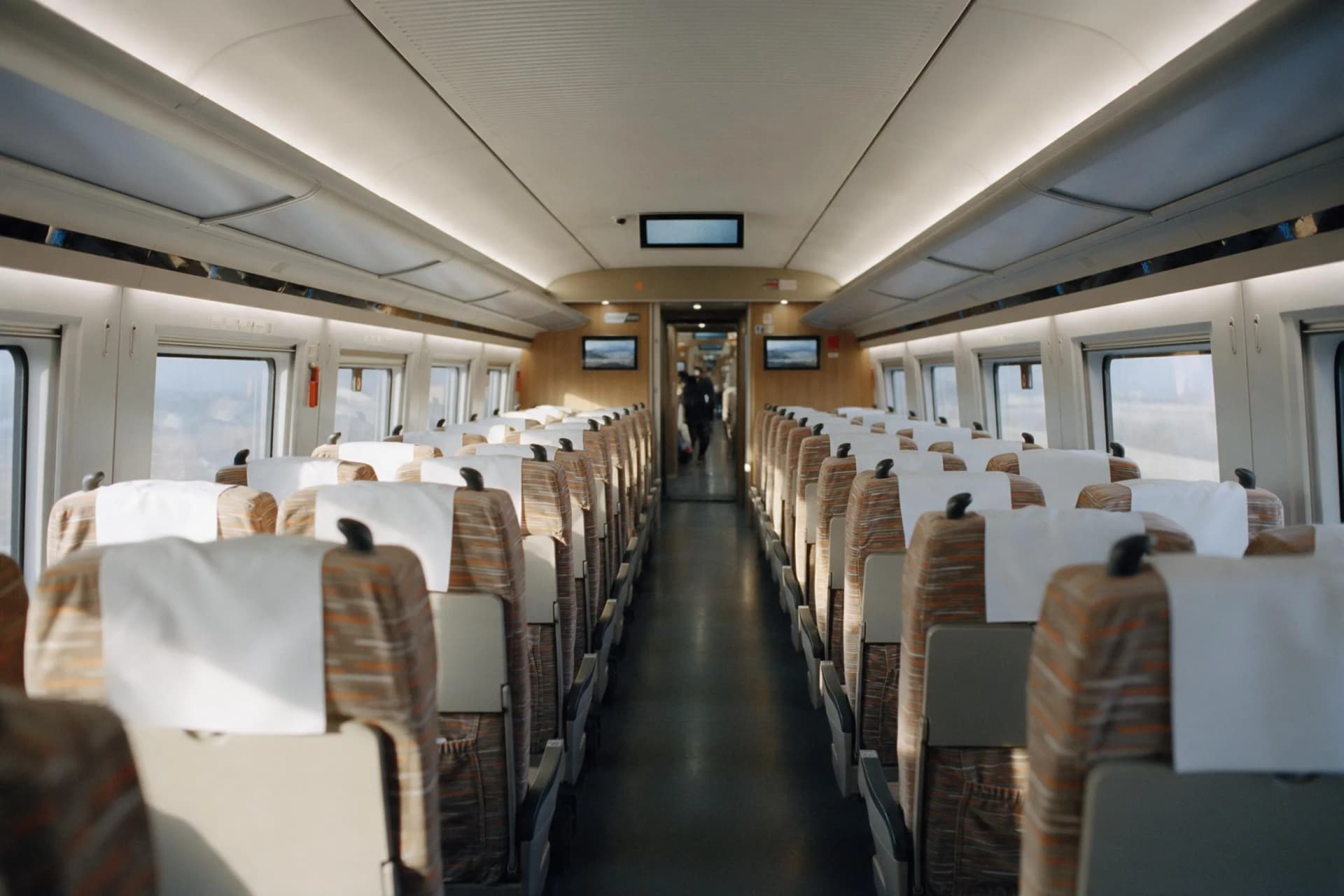
Second class is the practical default for most routes, first class offers a wider seat in a 2+2 layout, and business class provides the most space and service at a substantial premium. Exact seat maps vary by train model, so use the carriage and seat number shown on your ticket rather than assuming one layout for every train.
China's high-speed trains use several families of rolling stock. A second-class coach is commonly arranged 3+2, first class 2+2 and business class 1+2 or another premium configuration depending on the model. Seats usually face forward, but some trains can rotate seats at the terminus. A seat letter identifies position, not the direction of travel, and the seat layout on one train may differ from another.
Choose second class for short daytime journeys and good value. It has overhead luggage space, a fold-down table and charging points on most modern trains, but the aisle can feel busy and large suitcases may not fit overhead. First class provides more width, elbow room and a quieter cabin, which helps on longer daytime routes or when working. Business class is best understood as a premium service rather than a necessity for ordinary sightseeing.
Families and couples should compare adjacent seats and luggage needs. Some online systems allocate seats automatically, while station counters may have more flexibility. A toddler does not necessarily receive a separate seat unless a ticket is issued, so confirm the rule for the child's age and the specific booking channel. Do not assume that a stroller will fit in the aisle or overhead rack.
Use the official 12306 system or a service with transparent ticketing terms. Names and passport numbers must match the passport used at the station. Seat selection is not guaranteed on every train or channel. If an accessible space, extra luggage area or specific seat is essential, contact a human operator rather than relying only on an automated booking screen.
Luggage should be compact enough for the overhead rack or the space at the end of the carriage. Keep passports, medicine, valuables and the next hotel address with you. Arrive with enough time for security and station navigation; major stations can feel like airports. Boarding usually closes a few minutes before departure, and platform information may appear only shortly before the train is ready.
Onboard announcements use the Chinese train number, not only the final destination. Check the carriage number before entering and keep the ticket accessible. Food can be bought on some trains, but choices and timing are limited. Bring water and a simple snack with a backup meal for dietary needs. Quiet hours and seat-class etiquette are not always posted, so use headphones and keep calls brief.
Seat numbers may not reveal whether a seat is beside a window, at a table or next to a luggage rack. If the exact position matters for accessibility, photography or motion sickness, ask a human booking service rather than relying on a generic seat map. A forward-facing seat may be reversed when the train changes direction at a terminus.
Large stations often have several levels, security queues and separate waiting areas. Use the full Chinese station name and train number when asking for directions. Allow more time at Shanghai Hongqiao, Beijing South, Guangzhou South and other major hubs than at a small city station. If connecting from a flight, leave a substantial buffer and avoid the last train of the day.
For a family or group, keep passports and tickets in one responsible person's secure bag but make sure every adult knows the carriage and seat numbers. Do not block the aisle with luggage while arranging seats. Ask staff before moving bags that are too large for the rack, and never leave valuables in an unattended bag at the end of the carriage.
Rules can change and may be applied differently by airport, railway station, embassy or consulate. Check the official source again close to departure, carry the relevant documents and ask the operating company when the answer affects health, immigration or a non-refundable booking. Train models, ticket rules and station procedures can change. Confirm the exact carriage, seat and luggage rule when booking, especially for groups or accessible travel.
Good to know
- Second class
- Common 3+2 layout and the practical value choice
- First class
- Usually 2+2 with wider seats and a quieter cabin
- Business class
- Premium space and service at a significant premium
- Seat map
- Varies by train manufacturer and carriage
- Boarding
- Arrive early for security and platform changes
Frequently asked questions
Which seat class is best for a first China trip?
Second class is the usual value choice. First class is worth considering on longer daytime journeys when extra width and quieter surroundings matter.
Can I choose a specific seat?
Seat selection depends on the train, sales channel and availability. Names and passport details matter more than a chosen letter, and the allocated seat must be verified on the ticket.
Is there space for large luggage?
Overhead shelves suit smaller cases and bags. Larger suitcases may use the end-of-carriage area, subject to space on the day, so light packing is more reliable.
Keep exploring
Sources & verification
Sources used for this guide
Time-sensitive travel details can change. Reconfirm opening hours, prices and entry rules before departure.
- 112306.cn12306.cn
- 2china-railway.com.cnchina-railway.com.cn
Local operating context
ChinaMira Travel Team contributes local route and operating knowledge from China. This team byline identifies a real operating group rather than a fictional individual author.
Plan this trip
Turn this guide into a practical itinerary
Send us the article as context. A ChinaMira specialist can check the route, dates, transport, tickets and the details that need local confirmation.