
Travel Guide
China High-Speed Rail: A Practical Guide for First-Time Riders
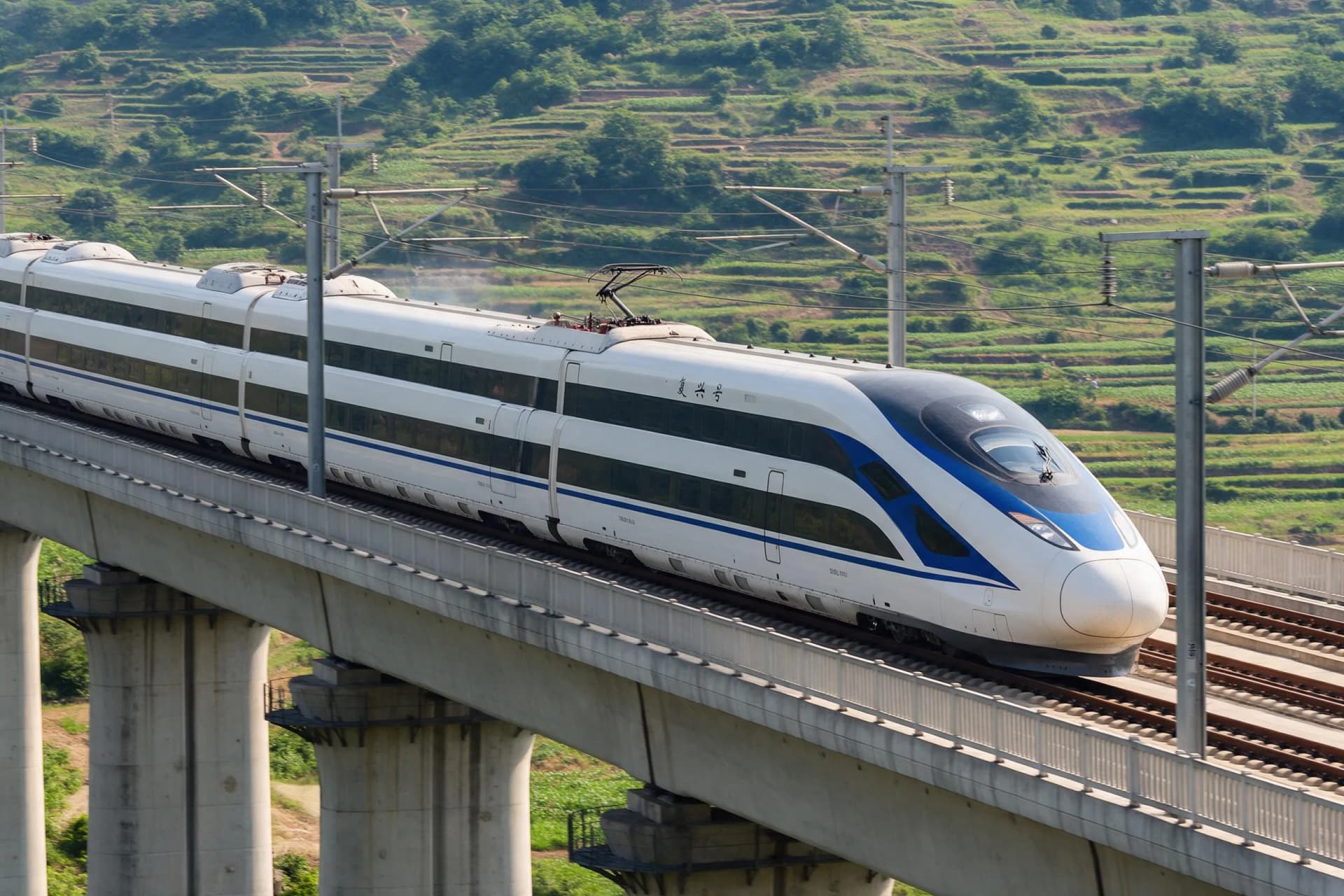
China's high-speed rail network is the easiest, fastest, and most enjoyable way to cross the country - but the first ride comes with its own small rituals. This practical, story-driven guide covers booking on 12306 with a foreign passport, seat classes, luggage rules, station timing, the best starter routes, and the mistakes that catch first-time riders.
At 6:50 on a cold November morning, Beijing South Railway Station felt less like a train station than a small city waking up. Vendors steamed baozi behind glass counters, a cleaner swept the platform in slow arcs, and a white-and-blue train sat waiting under the huge arched roof, doors open, looking almost too sleek for the gray winter light. I was bound for Xi'an, roughly 1,200 kilometers away, and my ticket said I would be there before lunch. That single fact explains why, after fifteen years of traveling in China, the high-speed rail is still the part I look forward to most.
The scale is hard to picture until you ride it. China's high-speed network now stretches well over 45,000 kilometers - more than the rest of the world combined - and the newest Fuxing trains cruise at 350 kilometers per hour. Beijing to Shanghai takes under five hours. Shanghai to Hangzhou is 45 minutes. Guangzhou to Shenzhen, half an hour. Routes that once demanded a night train or a flight now fit into a morning, which changes how you plan a trip: sleep in Xi'an, see the Terracotta Army, and still reach Chengdu for dinner.
Booking is simpler than its reputation suggests. The official channel is the 12306 website and app, which has an English interface and now accepts international credit cards; Trip.com also sells the same seats with a small service fee if you prefer a familiar checkout. Tickets typically go on sale about 15 days before departure, and popular morning trains on holiday weekends sell out within hours, so set a reminder. You will need the exact name and passport number from your travel document - match it letter for letter, because a single mismatch can stop you at the gate. Your passport is your ticket; there is nothing to print.
There are three classes. Second class is the workhorse: five seats across, generous legroom, and fares that often undercut flying. First class adds four-across seating and more quiet. Business class is a lie-flat splurge that costs roughly three times second class. Seat letters work like an airline's - A and F by the window, C and D on the aisle - and rows are numbered with the carriage on your ticket. A dining car sells noodles, boxed meals, and coffee, and apps like Meituan can deliver hot food to your seat at some stations. Bring a refillable bottle; every carriage has a hot-water dispenser.
Station day has its own rhythm, and it rewards punctuality. Arrive 45 to 60 minutes early: you will pass through airport-style security, then find your waiting hall, then line up at the gate for your carriage. Gates usually close about five minutes before departure, and the train will not wait for you. Luggage rules are generous - an adult may carry 20 kilograms, with dimensions adding up to about 160 centimeters - so a normal suitcase and daypack are never a problem. Boarding is orderly and quick, and within a few minutes of the doors closing you are gliding out of the city at a speed that makes the suburbs blur into green.
The ride itself is the quiet pleasure of traveling in China. Seats are wide, every row has power outlets and USB ports, and the overhead screens show speed and the next station in English. Families share fruit and sunflower seeds, and the countryside unrolls like a long, unhurried film: terraced hills outside Guilin, the yellow earth of the Loess Plateau, canals and whitewashed villages in the Yangtze Delta. Punctuality is close to a religion here, so you can build a tight itinerary without much risk.
A few routes make an ideal first ride. Beijing to Xi'an delivers the Great Wall one day and the Terracotta Army the next. Shanghai to Suzhou or Hangzhou is a perfect day trip, less than an hour each way. Guangzhou to Guilin unlocks the Li River scenery in about three hours, and Chengdu to Chongqing is a 90-minute hop between two of China's great food cities. In the far northeast, the winter line up to Harbin turns a frozen journey into part of the attraction.
Two practical cautions. Avoid traveling during Chunyun, the 40-day Spring Festival rush, and the first days of the May Day and October National Day holidays, when hundreds of millions of people move at once and every seat vanishes weeks ahead; if your dates are fixed, book the moment sales open. And if you miss a train, do not panic - you can usually rebook once on the same day, though refunds shrink as departure approaches. Keep your passport in your pocket, not your suitcase, since you will scan it at the gate both ways.
By the time my train eased into Xi'an North, the morning fog had burned off and the city wall was catching the light. I had crossed half of China in four and a half hours and watched the countryside change three times through the window. If you are planning your first trip and want the rail legs, seat classes, and station timing handled for you - matched to the sights you actually want to see - the ChinaMira team does this every week. Send us your dates and your wish list, and we will build the route. All you have to do is watch the window.
Good to know
- Network and speed
- China's high-speed rail network passed roughly 48,000 km by the end of 2024, about 70 percent of the world's total, and the newest Fuxing trains cruise at 350 km/h. Beijing to Shanghai takes under five hours, Beijing to Xi'an about four and a half, Shanghai to Hangzhou 45 minutes and Guangzhou to Shenzhen half an hour. Punctuality is close to a religion, so tight same-day connections are realistic.
- Booking window and channels
- The official channel is the 12306 website and app, which has an English interface, real-name registration with a foreign passport and support for international Visa and Mastercard payments. Tickets go on sale 15 days before departure. Trip.com and similar OTAs sell the same seats with a small service fee if you prefer a familiar checkout. Your passport is your ticket, so no printing or collection is needed.
- Seat classes and sample fares
- Second class is laid out 3+2 with generous legroom, first class 2+2, and business class 2+1 with lie-flat seats on some trains. Seat letters follow airline logic: A and F by the window, C and D on the aisle. Sample second-class fares are about CNY 553 Beijing-Shanghai, CNY 515.5 Beijing-Xi'an, CNY 73 Shanghai-Hangzhou and CNY 74.5 Guangzhou-Shenzhen; business class is roughly triple second class.
- Luggage rules
- Each adult may carry up to 20 kg free of charge, with the length, width and depth of any single item adding up to no more than 160 cm; children get 10 kg. Bags travel with you in the overhead rack or at the carriage end, and there is no standard check-in. Left-luggage counters and parcel services exist at major stations for oversized or extra bags. Every carriage has a hot-water dispenser, so a refillable bottle saves money.
- Station timing
- Arrive 45 to 60 minutes before departure. Expect airport-style security, a large waiting hall and a gate that closes about 5 minutes before the train leaves. Scan your passport at both the entry gate and the platform gate. During Chunyun, the 40-day Spring Festival travel rush, and the 1-7 October National Day holiday, add another 30 minutes and expect far larger crowds.
- Best first routes
- Beijing-Xi'an pairs the Great Wall with the Terracotta Army in about 4.5 hours; Shanghai-Suzhou or Shanghai-Hangzhou works as a sub-hour day trip; Guangzhou-Guilin unlocks Li River scenery in about 3 hours; and Chengdu-Chongqing is a 90-minute hop between two great food cities. In winter, the line up to Harbin turns a frozen journey into part of the attraction.
Frequently asked questions
Can I book China high-speed train tickets with a foreign passport on 12306?
Yes. Register on the official 12306 app or website using the exact name and passport number printed on your travel document, then verify the account at a station counter or via the app before your first purchase. Tickets normally go on sale 15 days before departure, and 12306 now accepts international Visa and Mastercard payments. Your passport is your ticket: scan it at the gate both ways, and there is nothing to print or collect. A single letter or digit mismatch between the booking and the passport can stop you at the gate, so copy the details carefully.
How much does a high-speed train ticket cost in China?
Fares depend on distance and class. On the flagship Beijing South to Shanghai Hongqiao route, second class is about CNY 553, first class CNY 933 and business class CNY 1,748. Beijing West to Xi'an North is roughly CNY 515.5 in second class, Shanghai Hongqiao to Hangzhou East about CNY 73, and Guangzhou South to Shenzhen North roughly CNY 74.5. High-speed fares often undercut same-route flights, and business class usually costs around three times second class.
How early should I arrive at a Chinese railway station?
Plan to arrive 45 to 60 minutes before departure at a big hub such as Beijing South or Shanghai Hongqiao. You pass airport-style security, find the correct waiting hall and queue at the gate for your carriage; gates normally close about 5 minutes before departure and the train will not wait. Stations are large and signage is in English, but the walk from the metro or taxi drop-off to your gate can take 15 minutes, so build in a buffer on your first ride.
What is the luggage allowance on China's high-speed trains?
An adult ticket includes up to 20 kilograms of carry-on luggage, and the length, width and depth of each piece must add up to no more than 160 centimetres. A normal suitcase plus a daypack is never a problem, and there is no check-in for standard bags: you carry them on and store them in the overhead rack or at the end of the carriage. Children get a 10-kilogram allowance, and oversized items can be sent through the station's left-luggage or parcel service.
When do China train tickets go on sale, and when do they sell out?
Tickets are released 15 days before departure, with exact release times varying by station, so set a reminder for the morning your date opens. Popular morning trains on the 40-day Chunyun Spring Festival rush and during the 1-7 October National Day holiday can sell out within hours, and sometimes minutes. If your dates are fixed, book the moment sales open; if you miss a train, you can usually rebook once on the same day, though refunds shrink as departure approaches.