
Wonder Story
Are the Mogao Caves in Dunhuang Worth Visiting in 2026?
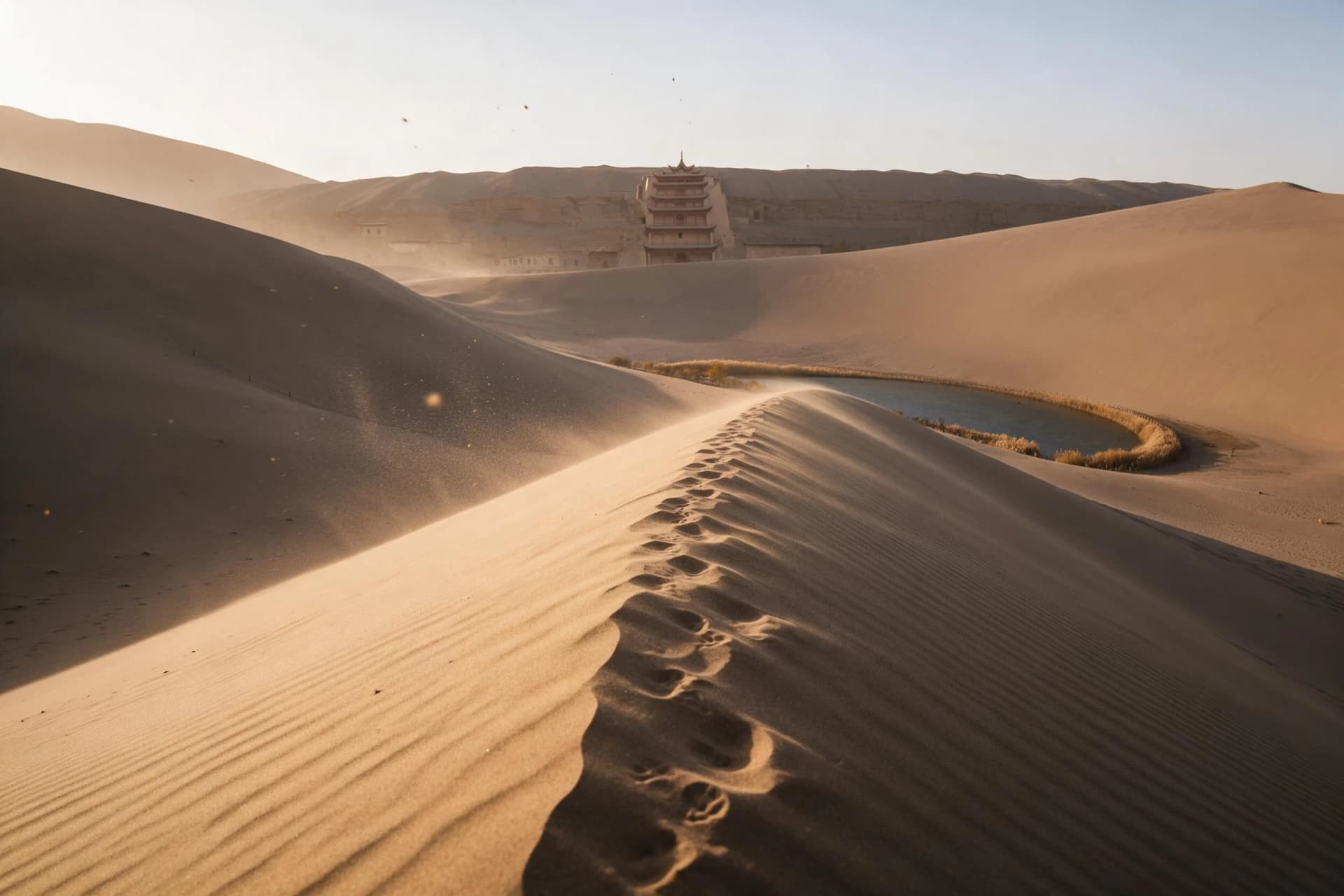
Dunhuang keeps two clocks. One is the timed ticket that decides which painted caves you may enter; the other is the desert light that decides when the dunes are worth climbing. This story walks both, showing how a fourth-century cliff of murals, a singing sand ridge and a long railway ride fit into two unhurried days on the Silk Road.
Yes, the Mogao Caves are worth a 2026 trip, but only under one condition: reserve the standard A ticket, CNY 238, on the day the booking window opens, 30 days ahead. Only 6,000 of those tickets are released each day from April 1 to November 30, and the morning slots go first.
The caves are a 1,700-meter cliff of painted memory on the eastern edge of Mingsha Shan, 25 kilometers southeast of Dunhuang. China's National Cultural Heritage Administration counts 735 caves cut into the sandstone, 492 of them still holding murals or statues: about 45,000 square meters of painting and 2,415 sculptures, layered from the first cave dug in 366 CE by the monk Yuezun through the Tang, the Five Dynasties and the Western Xia, until carving stopped in the Yuan. UNESCO listed the site in 1987.
One sealed room explains why the site matters so much. Cave 17, the Library Cave, was walled up around 1000 CE and forgotten until 1900, when it was opened and found to hold tens of thousands of manuscripts in Chinese, Tibetan, Sanskrit and Sogdian. Most were carried out of China in the following decades; today the cave itself, barely three meters square, is the quietest monument to what the Silk Road actually exchanged.
Your ticket buys a sequence, not a wander. You check in at the Digital Exhibition Center in town, watch two short films that explain the Buddhist art, then ride the 15-minute shuttle to the cliff, where a guide leads a group of 10 to 30 people through eight caves in about 90 minutes; allow 3.5 to 4 hours in total and arrive 30 minutes before your slot. Winter (December 1 to March 31) costs CNY 140 and opens ten caves instead. If the day's A tickets are gone, the standby B ticket, CNY 100, covers four caves without the films and takes about two hours. Photography and video are banned inside every cave, so leave the camera in the bag and look up.
Getting there is a Silk Road ride in itself. The D train from Lanzhou West to Dunhuang Station covers 1,110 kilometers in 7.5 to 9 hours — D2749 leaves at 10:55 and arrives at 19:26, D2737 at 13:47 and 21:20, per TravelChinaGuide's timetable updated May 7, 2026 — and second class costs CNY 324. Book through 12306 or the Railway 12306 app, where sales open 15 days ahead; register with your passport number, add yourself as the passenger and carry that same passport to the gate. Dunhuang Station sits 15 kilometers from the city center, and Dunhuang Mogao International Airport (DNH) is 13 kilometers east, with a CNY 10 shuttle into town.
Then there is the desert hike. Mingsha Shan rises about five kilometers south of the city, a ridge of dunes roughly 250 meters above the oasis. The climb to the crest takes 30 to 45 minutes on the wooden rope ladder, and the reward is Crescent Lake, a spring-fed pool about 200 meters long, cupped in the sand; a camel ride, about CNY 100, is the easier way up. Published gate and ticket-check hours are 06:00 to 19:30 (from August 20, 2026; the summer window was 05:00 to 20:30), and the scenic area publishes no separate access after closing, so plan to be back at the gate by then. That matters for sunset: in late September the sun sets at 19:42, just after the gates shut, and in late June it sets around 21:10, nearly two hours later. Treat the last 40 minutes before closing as your golden hour, and come for sunrise instead if you want the sun on the horizon — in late September it rises near 07:00.
Timing decides how hard the walking feels. Mid-May to June and September to October bring mild days, cool nights and calmer air; July averages a high of 34–35°C, January a low near -16°C, and spring sandstorms can close both the dunes and the caves. Dunhuang sits at 1,140 meters, the air is drier than anywhere you have hiked, and soft sand doubles the effort of every step: start at first light, carry two liters of water per person, and wear shoes you can empty.
Two full days is the honest minimum: caves on day one, dunes at dawn and the night market after 21:00 on day two, with a third day for Yumen Pass, Yangguan and the Yardang landforms. Start with our Dunhuang city guide for the oasis logistics, follow the hiking hub if desert ridges are your kind of trail, check the China high-speed rail booking guide before you buy seats, and read the Zhangye Rainbow Mountains transport guide if you are linking the two Silk Road stops. Book the cave ticket first — everything else in Dunhuang can wait.
Good to know
- Mogao Caves tickets (2026)
- Peak season April 1–November 30: A ticket CNY 238 covers two films, the shuttle and eight caves in 3.5–4 hours, capped at 6,000 a day and reservable 30 days ahead on the official WeChat mini-program or mgk.org.cn. Winter December 1–March 31: CNY 140 and ten caves. Standby B ticket: CNY 100, four caves, no films, about two hours. Special caves: CNY 150–200 each, sold on site 11:00–14:00 with your same-day ticket and passport.
- Mogao Caves hours and rules
- Peak 08:00–18:00 with last ticket check at 16:10; winter 09:00–17:00 with last check at 15:10. Arrive at the Digital Exhibition Center 30 minutes before your slot; the included shuttle to the cliff takes 15 minutes and runs every 10–15 minutes, first with the morning slot and last back at the center as the site closes. No cameras, phones or tripods inside the caves.
- Mingsha Shan and Crescent Lake
- Five kilometers south of Dunhuang; dunes about 250 m high and the lake about 200 m long. Admission CNY 110 from May to October and CNY 55 from November to April, sold online only 1–15 days ahead and valid for 72 hours of face-scan re-entry. Camel ride about CNY 100, sand sliding CNY 40.
- Sunrise, sunset and gate hours
- Published gate and ticket-check times are 06:00–19:30 from August 20, 2026; the summer window (June 1–August 19, 2026) was 05:00–20:30. Late June: sunrise 06:11, sunset 21:10. Late September: sunrise near 07:00, sunset 19:42. No access after closing is published, so plan to leave by the gate time.
- Getting there and booking
- Lanzhou West to Dunhuang Station: 1,110 km by D train, 7.5–9 hours (D2749 10:55–19:26; D2737 13:47–21:20), CNY 324 second class or CNY 518 first class, per TravelChinaGuide's timetable updated May 7, 2026. Railway 12306 sells 15 days ahead and requires passport registration. Dunhuang Station is 15 km from town; DNH airport is 13 km east with a CNY 10 shuttle.
- Weather and walking conditions
- Best months mid-May–June and September–October. July averages a high of 34–35°C and January a low near -16°C, with only about 35 mm of rain a year at roughly 1,140 m elevation. Carry two liters of water per person for a dune climb, and check for sandstorm closures in spring.
Frequently asked questions
Can I take photos inside the Mogao Caves?
No. Photography, video and tripods are banned inside every cave to protect the pigments, and guides will ask you to put your phone away. You can shoot freely outside — the nine-story timber facade of Cave 96, the cliff and the dunes — and the two films at the Digital Exhibition Center are the closest record of the interiors you will get.
What if the A tickets for the Mogao Caves are sold out?
The standby B ticket is the official fallback: four caves, no films, released on the same official booking channels closer to your travel date. If both are gone, do not buy from touts. Cancelled bookings return to the pool, so keep refreshing the mini-program and try the first slot the next morning if your schedule allows.
What time should I climb the Mingsha Shan dunes for sunrise or sunset?
Sunrise is the cooler, quieter window: the gate opens well before first light, so you can be on the rope ladder as the sky pinks up and at the crest when the sun clears the dunes. For sunset, the published closing time comes before the sun actually touches the horizon in both late September and midsummer, and no access after closing is published, so plan the bright golden hour rather than the final minute.
How do I book Dunhuang train tickets as a foreigner?
Use the official Railway 12306 website or app. Register with your passport number, add yourself as the passenger, and be ready the moment the short rolling sales window opens, because seats on the Lanzhou West line disappear fast in July and October. Board with the same passport you booked with, and take a short taxi from Dunhuang Station into town.
How many days do you need in Dunhuang?
Two full days cover the essentials: caves on day one, dunes at dawn and the night market on day two. Three days is better, adding the western desert gates at Yumen and Yangguan plus the Yardang landforms. Add a spare afternoon for the free Dunhuang Museum, which explains the Silk Road context the caves assume.