
Harbin Photography Spots: 5 Winter Viewpoints for 2026-27
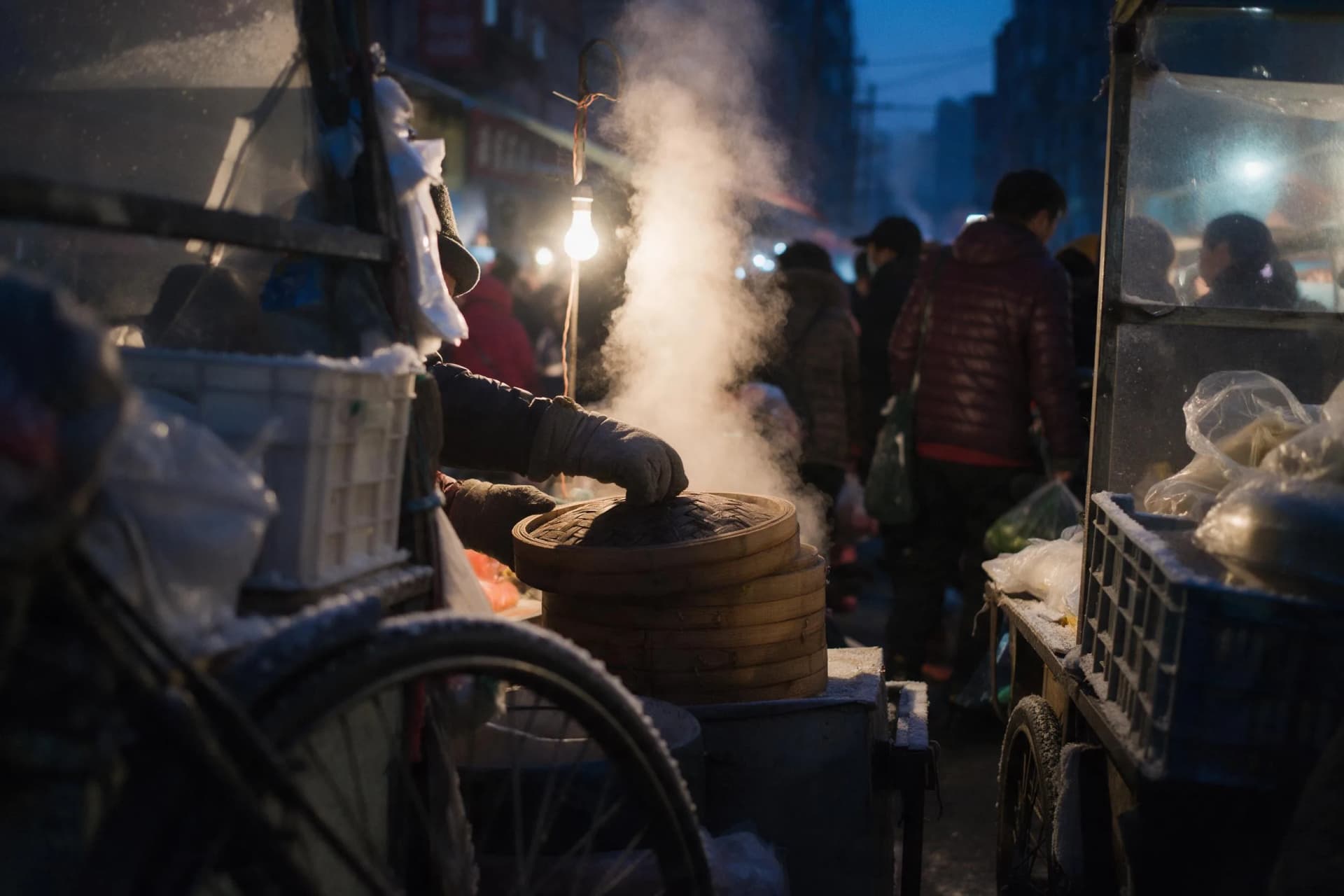
Harbin photography spots reward a light-first itinerary, not a landmark checklist. This winter shooting plan sequences five viewpoints from a pre-dawn breakfast lane to illuminated ice, with an exact standing spot, ticket requirement, crowd cutoff and starting camera or phone settings for each. It also explains how to adapt when snow, haze or a delayed festival opening changes the picture.
Plan five Harbin photography spots around one clear mid-January 2027 day: Hongzhuan Street before 07:15, Central Street by 08:15, St. Sophia's square before 09:30, Sun Island in low afternoon light and Ice and Snow World at blue hour. Check the official opening first; the ice park is seasonal, while the street and plaza viewpoints are free.
Build the shoot around a weather check. Around January 15, sunrise is near 07:11 and sunset near 16:14, leaving little room for a late start. Check a verified forecast the night before: favor a clear morning for architecture and broken cloud for snow sculpture. Blowing snow can erase the river and skyline, so shorten the outdoor loop and move indoors if visibility collapses.
1. Hongzhuan Street market: freeze the first steam of the day. Stand midway along Hongzhuan Street near its junction with Tongjiang Street, facing the food stalls rather than traffic. The street is free. The useful ambient-light window is roughly 06:40-07:15, before sunrise and the breakfast rush; vendors begin packing up around 08:30. Carry cash for breakfast, ask before photographing faces and keep your bag zipped.
Camera start: 35mm, f/2, 1/125 sec, ISO 1600, exposure compensation -0.7 to hold lamp highlights. Phone start: 2x, flash off, tap the brightest basket or steam, lock focus and pull exposure down one notch. Make a vertical frame with a gloved hand or thermos in the foreground, then a horizontal frame across the lane. Do not block the serving line.
2. Central Street: use the empty paving as a leading line. Stand at the northern end beside the Flood Control Monument and look south down the pedestrian street. There is no admission ticket. Aim for 08:00-09:15, when low sun grazes the facades and traffic is lighter than midday; tour groups generally thicken after 10:00. Include a full facade and a few distant figures rather than an isolated doorway.
Camera start: 35mm at eye level, f/8, 1/250 sec, ISO 200; meter for the bright stone. Phone start: main 1x lens, grid on, keep the phone level, tap a lit facade and lower exposure by 0.3. Resist the 0.5x lens: it bends straight building edges. If an ice sculpture blocks the centerline, shift one storefront sideways.
3. St. Sophia Cathedral: give the domes air. Stand at the far edge of the entrance plaza, far enough back to include the central dome and both side towers; the plaza is free. Interior visits require paid admission and may follow separate hours, so check the day's official notice. Exterior light is best from about 08:00-09:30 on a clear morning, before the square fills, with a quieter chance after 19:00. Avoid the 10:00-12:00 tour-bus peak.
Camera start: 24-35mm, f/8, ISO 200, vertical framing and a small exposure reduction to preserve sky detail. Phone start: 1x, level the verticals, tap the pale brickwork, then reduce exposure by 0.3-0.7. Step left or right to clear the dome rather than tilting upward. For a portrait, place your subject at a third of the frame while keeping the facade recognizable.
4. Sun Island Snow Sculpture Art Expo: photograph texture before blue hour. Enter the paid sculpture area through the main gate and work toward the broad central clearing, where large works retain separation from fences and crowds. This separately ticketed seasonal site has its own rules; confirm current sales, last admission and passport requirements before leaving the hotel. Arrive by 13:30 for 90 minutes of low afternoon light or even overcast. Weekday afternoons are less congested than weekend mornings.
Camera start: 35mm, f/8, 1/500 sec, ISO 100-200, highlight warnings on; add about +0.7 exposure for white snow, then check that detail remains. Phone start: 1x or 2x, tap the snow rather than the sky and raise exposure by 0.5. Include one person for scale, with their face visible only by agreement. At 16:00, turn from the sun and use pale sky as a clean backdrop.
5. Ice and Snow World: arrive for the sky, stay for the lights. This paid attraction uses timed admission, so reserve through the official channel and confirm your date falls inside the announced operating season. Enter around 15:30-15:45 and head to the central plaza between the largest ice structures. Blue hour, roughly 16:00-16:45 in mid-January, balances a readable sky with newly switched-on color. Weekdays are calmer than Saturdays; after 18:00, tour traffic increases.
Camera start: 16-24mm, f/5.6, 1/60 sec, ISO 800-1600, raw capture and a three-frame bracket for glowing structures against the sky. Phone start: Night mode, tap the blue sky, lock exposure, pull it down by 1.0, and brace against a railing. Make one wide establishing frame, then a 2x detail without crossing barriers. Check drone and tripod rules on site.
Carry two spare batteries inside a coat pocket and rotate them before charge falls below 20 percent. Seal cold gear in a bag indoors and let condensation clear for 30-45 minutes. Snow sculpture often photographs better under cloud, while St. Sophia and Central Street need broken sun, so keep the paid afternoon site flexible and book only what the forecast supports.
Use this as a shooting route, not a race. Protect first light, break indoors after St. Sophia, then reach Sun Island 90 minutes before sunset. If the ice park has not opened, use Central Street's blue-hour storefronts instead. Check our Harbin weather guide, ice-festival planner and packing advice before booking; reserve paid sites after official opening is confirmed.
Good to know
- Light windows, Jan. 15, 2027
- Sunrise about 07:11; sunset about 16:14. Start exterior architecture at 08:00-09:30 and protect 16:00-16:45 for the ice park's blue hour.
- Five-stop timing
- Allow 06:40-19:00 in total: 30-45 minutes at Hongzhuan Street, 60-75 minutes on Central Street, 60-75 minutes at St. Sophia, 90 minutes at Sun Island and 2.5-3.5 hours at Ice and Snow World.
- Tickets
- Free: Hongzhuan Street, Central Street and St. Sophia plaza. Paid: St. Sophia interior, Sun Island Snow Sculpture Art Expo and Ice and Snow World; book 2+ days ahead and verify the 2026-27 season.
- Crowd windows
- Best: 06:40-07:15, 08:00-09:30 and after 19:00 at St. Sophia. Avoid 10:00-12:00 and Saturday evenings after 18:00.
- Camera starting points
- Daylight: 35mm at f/8, 1/250 sec and ISO 200. Blue hour: 16-24mm at f/5.6, 1/60 sec and ISO 800-1600. Phone exposure: -1.0 for lights and +0.5 for snow.
- Transit and cold
- Allow 20-35 minutes by taxi between Central Street, Sun Island and Ice and Snow World; carry 2 spare batteries and allow 30-45 minutes for indoor condensation.
Frequently asked questions
What are the five best Harbin photography spots for one winter day?
The route above uses Hongzhuan Street, Central Street, St. Sophia Cathedral, Sun Island Snow Sculpture Art Expo and Ice and Snow World. It begins before sunrise and ends at blue hour; check the seasonal ice-park opening before fixing the final stop.
What time is best for photos at St. Sophia Cathedral?
Aim for 08:00-09:30 on a clear morning, when low light reaches the facade before the 10:00 tour-bus peak. After 19:00 is a quieter second option, but confirm interior hours separately because the paid museum may close earlier than the plaza.
Which Harbin photography spots need tickets?
Hongzhuan Street, Central Street and St. Sophia's exterior plaza are free. Pay for St. Sophia's interior museum, Sun Island Snow Sculpture Art Expo and Ice and Snow World. Use official booking channels and verify seasonal hours and passport rules before paying.
How should I set a phone for the Ice and Snow World at night?
Turn on Night mode, tap the blue sky rather than the brightest ice, lock exposure and lower it about 1.0. Brace the phone against a railing, make one wide frame, then switch to 2x for detail. Keep the scene natural instead of chasing extra saturation.
How do I keep camera batteries working in Harbin?
Carry two spares inside a warm coat pocket, rotate them before charge drops below 20 percent and avoid breathing on the lens. When moving indoors, seal the cold camera in a bag and let it warm for 30-45 minutes before removing it.
Keep exploring
Sources & verification
Sources used for this guide
Time-sensitive travel details can change. Reconfirm opening hours, prices and entry rules before departure.
- 1harbin.gov.cnharbin.gov.cn
- 2wlt.hlj.gov.cnwlt.hlj.gov.cn
- 3travelchina.org.cntravelchina.org.cn
- 4cma.gov.cncma.gov.cn
- 5gml.noaa.govgml.noaa.gov
Local operating context
ChinaMira Travel Team contributes local route and operating knowledge from China. This team byline identifies a real operating group rather than a fictional individual author.
Plan this trip
Turn this guide into a practical itinerary
Send us the article as context. A ChinaMira specialist can check the route, dates, transport, tickets and the details that need local confirmation.