
Harbin Travel Guide: Ice Palaces, Russian Streets and the Songhua River
Harbin began in 1898 as a Russian railway town on the Songhua River, and its onion domes, 1924 cobbles and 1907 sweet-and-sour pork still carry that story. This guide covers the ice palaces, Central Street, Saint Sophia Cathedral, where to eat, and the airport, metro and Yabuli train details a winter trip needs.
Step out of Harbin Railway Station on a January evening and the cold arrives before the city does: dry, still, minus-twenty air that frosts your eyelashes and turns every breath into a small white cloud. Overhead, the station's stone facade glows amber. Ten minutes away, Central Street's cobbles ring under boots, and beyond the rooftops the ice palaces of the world's largest winter festival are switching on their blue lights. Harbin is not an ancient Chinese capital. It is a railway town that became a Russian dream on Chinese soil, and then became the ice city the world now queues to see.
Understanding Harbin starts in 1898, when Russian engineers drove the first stakes for the Chinese Eastern Railway across the Songhua River floodplain. There was no walled city here to conquer, only fishing villages and marsh. By 1903 the line linked the Trans-Siberian system to the Yellow Sea, and Harbin became the railway administration's headquarters: a boomtown of engineers, Cossacks, Jewish merchants, Polish exiles and Shandong laborers who followed the work. Churches, synagogues, department stores and a stock exchange appeared within a single generation. That is why the city's oldest landmarks are barely a century old, and why its skyline looks Nordic in one block and Ottoman in the next.
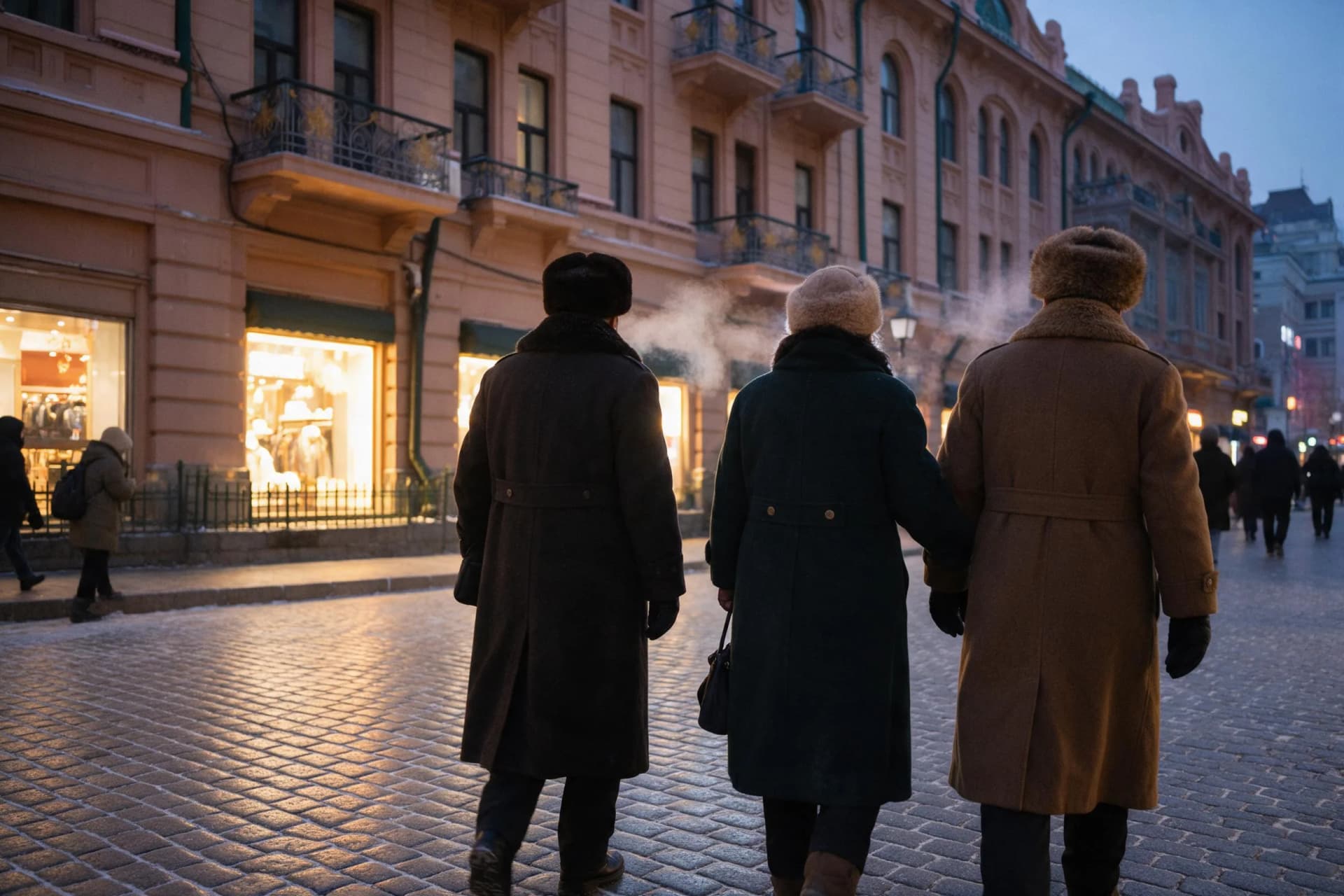
Central Street is the spine of that story. Laid with granite blocks in 1924, it runs roughly a kilometer and a half, and locals call the rough, rounded paving "bread stones." Look up as you walk: Baroque pediments, Art Nouveau balconies, shopfronts built by Jewish and Russian merchants. The Modern Hotel opened here in 1913 with its own orchestra and one of China's first cinemas, and it still serves afternoon tea. Stop at the Madieer counter for the classic ice cream bar, buy a Qiulin red sausage from the store founded by Russian merchant Ivan Churin, and pick up a loaf of lieba, the dark sourdough that Russian bakers brought and Harbin never gave back. In winter this street may be the best free museum in China.
Saint Sophia Cathedral at the north end began as a wooden church for railway soldiers in 1907; the brick, onion-domed building that survives was finished in 1932 and now works as an architecture gallery and concert venue. A few blocks away, the Jewish New Synagogue traces a community that once numbered in the tens of thousands. None of this is palace history. It is migration history: White Russians, Harbin-born Jews who later scattered to Israel, Australia and the United States, and a Chinese city that absorbed every wave and kept the architecture.
Harbin's table is a history lesson too. Guobaorou, the glossy sweet-and-sour pork that every Chinese restaurant now imitates, arrived around 1907, when chef Zheng Xingwen at the Daotai's mansion adapted Shandong cooking for Russian guests who wanted sweetness with their vinegar. Eat it here, crisp and sharp, then follow with borscht, smoked red sausage and a cold beer. For stall-level flavor, walk Central Street after dark: the Madieer window, the Qiulin food hall, and the small grills smoking in the side lanes. Our fact sheet lists the classic snack price so you can budget without surprises.
Then comes the reason most travelers book a winter flight. Harbin Ice and Snow World is a temporary city of illuminated palaces built each year from blocks cut out of the frozen Songhua River; the current season's dates and ticket price sit in the fact sheet below. Across the river, Sun Island's snow-sculpture expo carves whole legends out of packed snow. In town, Zhaolin Park keeps the older tradition of hand-carved ice lanterns alive, and the Songhua itself becomes a highway of sledges, ice swimmers and patient fishermen. Go after dark, wear two pairs of socks, and keep your phone battery warm.
Getting around is easier than the cold suggests. Metro Line 2 strings together Harbin Railway Station, Central Street, Sun Island and Ice and Snow World, so you can leave the car behind. The Airport Shuttle Bus is the budget link to Taiping International, while taxis and DiDi cost more and take about the same time in traffic. In the evening, walk the Songhua promenade or cross the old railway bridge that started everything. For skiers, high-speed trains run from Harbin West to Yabuli South, and the journey time is in the fact sheet.
Give Harbin three winter days: one for Central Street, Sophia Cathedral and the old Russian quarters, one for the ice and snow parks, and one for the river, the food halls and a day trip. Book Ice and Snow World tickets and Yabuli seats before you fly, load Alipay or WeChat Pay, and pack the warmest layers you own, because the city rewards people who come prepared. If you are still choosing dates, read our best-time guide for China, then check our high-speed rail guide before you book the train. Come in January. Harbin is cold, generous and unlike anywhere else.
Good to know
- Best months
- December to February for ice and snow; June to August for green parks and river life. January is the coldest and busiest month.
- Winter tickets
- Harbin Ice and Snow World standard adult ticket 328 yuan; Sun Island Snow Sculpture Expo 198 yuan, concession 128 yuan. The season normally runs from mid-December to late February.
- Airport transfer
- Taiping International (HRB) is about 35 km from the center. Airport Shuttle Bus around 20 yuan and 40-60 minutes; taxi or DiDi 80-150 yuan. No direct metro link.
- Metro Line 2
- Connects Harbin Railway Station, Central Street, Sun Island and Ice and Snow World. Scan Alipay or WeChat Pay at the gate.
- Yabuli by rail
- Harbin West to Yabuli South is 181 km, with the fastest service taking about 1 hour 4 minutes and roughly 22 trains a day in season.
- Street snacks
- Madieer ice cream bar about 5 yuan at the Central Street shop; Qiulin red sausage is sold by weight and vacuum-packed to take home.
Frequently asked questions
Is Harbin too cold to enjoy?
Not if you dress for it. Harbin's winter is dry and usually still, so thermal layers, a windproof coat, insulated boots and hand warmers make all the difference. Cathedrals, museums, teahouses and the metro give you warm breaks, and the best sightseeing happens after dark when the ice lights come on.
How do I reach the Yabuli ski area from Harbin?
High-speed trains leave Harbin West for Yabuli South through the day, and the ride is short enough for a day trip or a weekend. Our fact sheet lists the journey time and distance. Book seats early for winter weekends, when trains and hotels fill quickly.
Which neighborhood should I stay in?
Stay within walking distance of Central Street or Harbin Railway Station if you want the historic districts and easy metro access. Daoli District suits first-timers, while the Sun Island side of the Songhua is quieter and closer to the winter parks.
Do I need cash or a Chinese phone number?
Alipay and WeChat Pay work almost everywhere and accept foreign cards, so carry only a little cash for tiny stalls. Download a translation app plus an eSIM or roaming plan, since English is limited in taxis, shops and smaller restaurants.
Keep exploring
Plan with ChinaMira
Turn this into a trip
Use this guide as a starting point — we can handle the route, guides, trains and the visa invitation letter.