
Travel Guide
Dali Best Time to Visit: Seasons, Festivals and Crowds
Dali stays mild all year, so the right month is really about light, rain, and crowds. This guide walks through spring blossoms and the March Street Fair, the green summer rains and mushroom season, crisp autumn days on Erhai Lake, and quiet, sunny winters, plus the festival dates worth planning around.
The first time I stepped off the train from Kunming, Dali handed me two seasons in one afternoon. Noon was shirtsleeves weather; by the time the sun dropped behind Cangshan, I was digging a fleece out of my bag. That is the first thing to understand about when to visit Dali: the town sits high on the Yunnan plateau, the days are mild almost year-round, and the real swing happens between morning and night rather than between January and July. Pick your month around light, rain, and crowds, then pack layers no matter what the calendar says.
Spring, from March through May, is the window most travelers remember. The wheat and rapeseed fields on the Erhai plain turn green and gold, the old town's camellias and cherry trees open, and Cangshan keeps enough snow to look dramatic above a blue lake. Days are dry and bright, though the famous Xiaguan wind can sandblast a picnic, and the sun bites harder than the mild air suggests. This is also festival season: the March Street Fair, a Bai trading gathering that runs from the 15th to the 21st of the third lunar month, usually in late April or early May, fills the fields west of Dali Old Town with horse racing, singing, and food stalls. Watch the Qingming and Labor Day holidays, when domestic crowds spike sharply.
Summer, June through August, is the green season. This is when the rain arrives, heaviest in July and August, usually as short, hard afternoon showers that clear by evening and leave the air rinsed and the paddies shining. Summer is also the warmest stretch of the year, though warm in Dali means pleasant rather than hot, which is exactly why families from the lowlands come here to escape the heat. Two bonuses come with the wet weeks: Cangshan's waterfalls run full, and wild mushroom season transforms local kitchens from June into September. The trade-off is softer mountain views and more rain days, so build flexibility into any Erhai plans.
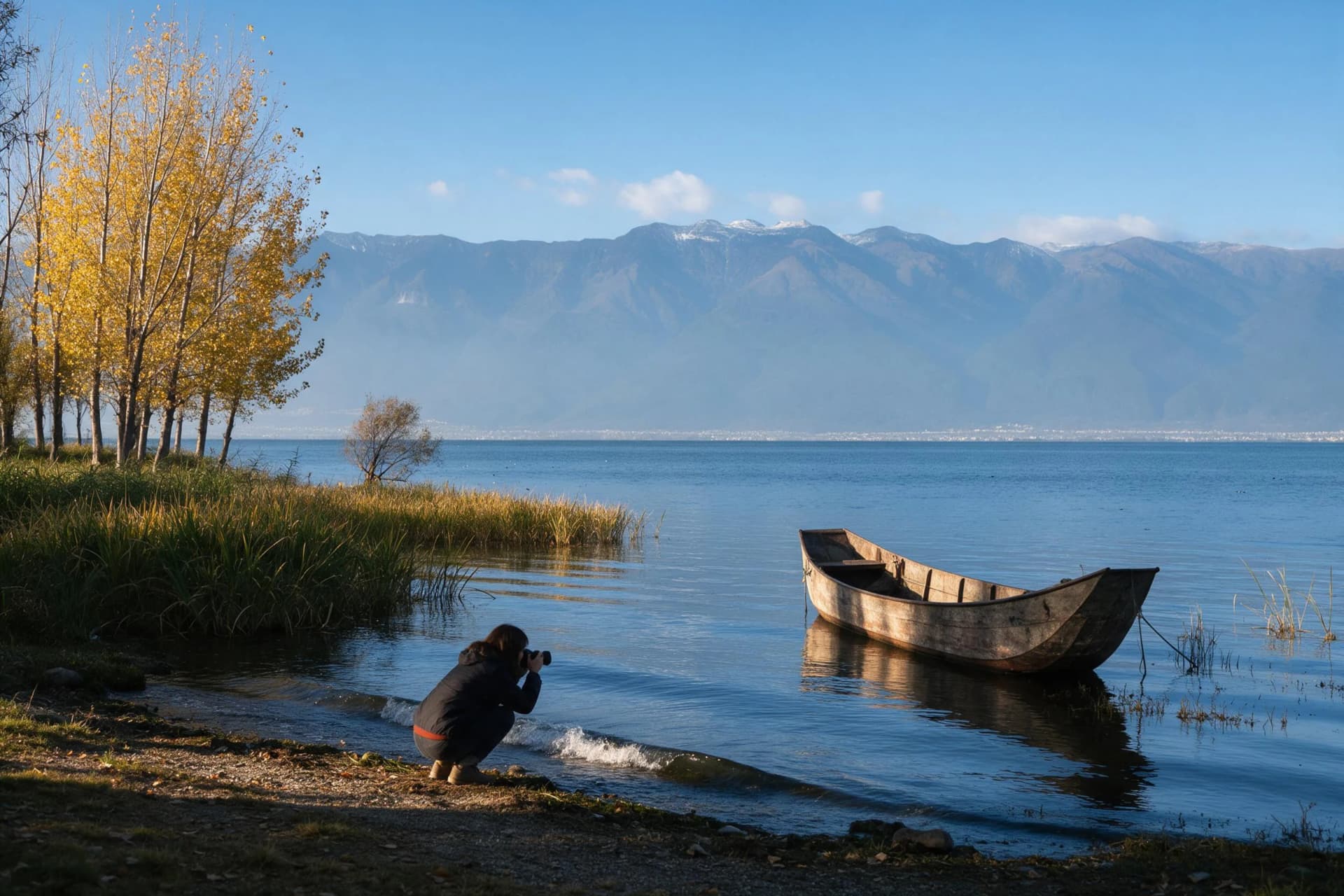
Autumn is the other sweet spot, and for photography it may be the best of all. September still carries some rain, but from mid-October the air turns crisp and transparent: the lake reads deep blue, Cangshan's ridgeline sharpens, and the poplars along the shore go gold. Early October brings the National Day holiday, the busiest travel week of the Chinese year, so the smart play is to wait until late October or early November, when the light is still beautiful and the crowds have gone home. Nights turn cold quickly, so bring a real jacket for evenings and sunrise shoots.
Winter, December through February, is Dali's quietest and cheapest season, and it is badly underrated. Days are often sunny and mild enough for a light coat, the skies are at their clearest, and snow dusts Cangshan's peaks while you eat lunch outdoors. The black-headed gulls that winter on Erhai arrive from Siberia, and locals feed them along the lakeside in Xiaguan. Expect cold nights and chilly guesthouses, and plan around Spring Festival, when the whole country travels and prices jump. My own favorite Dali morning was a January one: frost on the old town's flagstones, a bowl of hot rice noodles, and the mountain turning pink at dawn.
Local rhythm matters as much as weather. Besides the spring fair, the Bai Torch Festival in late July lights up villages around the lake with bonfires and torch parades, dramatic and crowded, and worth arranging your dates around if you can. Whenever you come, mornings are the traveler's friend: Dali Old Town is quiet before nine, tour buses arrive mid-morning, and the lakeshore empties again by late afternoon. Front-load the famous sights, keep the middle of the day for tea and courtyards, and save sunset for the water.
A few practical notes do the heavy lifting. High-speed trains from Kunming run frequently, and the journey time, fare, and the distance from Dali station to Dali Old Town are all in the fact sheet, so reserve seats a few days ahead in peak season. The same sheet lists the Erhai cruise and Cangshan cableway prices; book the boat early and ride the cableway before mid-morning, when cloud often swallows the ridge. Cash is rarely needed, since Alipay and WeChat Pay work almost everywhere, and the sun is strong in every season, so a hat and sunscreen earn their place in your bag.
If your dates are flexible, aim for the spring window or the dry autumn stretch, and let the mountain and the lake set the pace. To turn a season into a route, start with our three-day Dali itinerary for the old town, Erhai, and Cangshan, then browse the Dali food guide for where to eat between sightseeing. If Dali is one stop on a longer trip, the China high-speed rail guide explains how to book and ride the network, and our season-by-season China planner helps you line up the rest. Tell us your travel dates and what you want from the trip, and ChinaMira will build the Dali stretch around them, trains booked, rooms chosen, and a table reserved by the water.
Good to know
- Getting there
- High-speed rail from Kunming to Dali station takes about 2 hours and costs around CNY 155 in second class; the station is roughly 13 km from Dali Old Town.
- Weather at a glance
- Summer highs average near 25°C (77°F), January averages about 2–17°C (35–62°F), August is the wettest month at roughly 210 mm, and November–April usually sees under 50 mm a month.
- Erhai by boat
- The Erhai cruise between the Daligang and Shuanglang wharves costs CNY 142; Erhai Park charges a CNY 30 resource-protection fee.
- Cangshan cableways
- Scenic-area ticket CNY 35; Zhonghe cableway CNY 60 round-trip, Gantong cableway CNY 115 round-trip.
- Altitude and sun
- Dali Old Town sits near 1,970 m; UV is strong year-round, so pack a hat, sunglasses, and sunscreen even in winter.
- Book ahead
- Reserve high-speed rail seats and Erhai cruises a few days ahead in peak season, and reach the Cangshan cableway before mid-morning, when cloud often hides the ridge.
Frequently asked questions
What is the best month to visit Dali?
The dry spring window is the safest all-round bet, with the autumn stretch a close second. Both beat the summer rains for mountain views, and both are busier, so book trains and rooms early.
Does it rain much in Dali's summer?
June to August is the rainy season, with brief, heavy afternoon showers rather than all-day drizzle, so mornings often stay clear. The monthly rainfall totals in the fact sheet show how sharply August stands out.
Which festivals should I plan around in Dali?
The Bai spring fair around Dali Old Town and the midsummer torch festival are the two big ones, and both shift with the lunar calendar. Book rooms and high-speed rail seats well in advance for either.
Is winter a good time to visit Dali?
Yes, if you value quiet lanes and clear light over warm evenings. Winter days are sunny and dry, nights are cold, and Cangshan often wears snow; prices are at their lowest outside Spring Festival.